10 Most Shockingly Brilliant Movie Moments In 2014

Chris Pratt won Hollywood. Who'd have predicted that?

There were some painful inevitabilities in 2014: Michael Bay's films made a bucket-load of money despite being mostly terrible, South Korean (ALLEGEDLY) didn't take too kindly to Sony's The Interview and the last Hobbit movie proved that Peter Jackson unnecessarily over-reached. In terms of the front-runners of the year, it was no surprise that comic book movies basically ruled the box office, or that Benedict Cumberbatch's Imitation Game was little more than Oscar bait, but amongst the clanging inevitabilities and the lack of surprises there were some revelations. Despite the high frequency of comic book movies, sequels and franchise starters, the filmic landscape of the last twelve years packed a variety of surprises: some meant that films were over-rated, some under-rated, and some were so atypical that they utterly defied most expectations that came with them pre-release. This was the year of a talking tree, a talking bear and Ben Affleck's gigantic penis, and in all cases, the films that framed them were all disarmingly brilliant. Who would have thought that Chris Pratt would pretty much nail the entire year? Or that a film about a concrete supervisor would pick up Oscar buzz? Or that Steve Carrell would, come to that? And they weren't the half of the biggest surprises of the year...

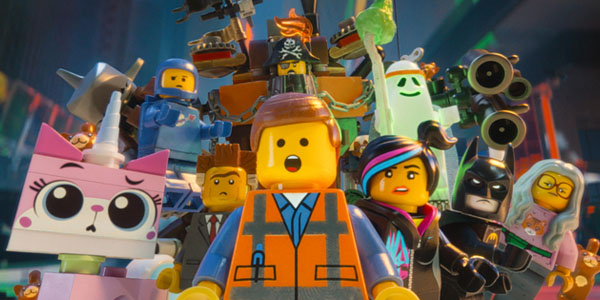
10. The LEGO Movie

What have Ouija, Cluedo, Battleships, Dungeons & Dragons and Transformers got in common? Yep, they've all spawned horrific films with varying degrees of financial success (thanks to the continued and improbable success of Michael Bay's defiant franchise). In that context, the LEGO movie should have been terrible. Indeed many sneering voices met the announcement that Warner Bros were turning the little bricks that could into a big screen production, with flashes of those cynically marketed Bionical DVD releases looming large in the background. But in hiring smart, funny directors and writers, and giving Chris Pratt licence to shine, Warner pulled off a master-stroke. Rather than the seemingly inevitable catastrophe, the film based on a toy broke the formula, relying on story and characters to tell a story in which LEGO seemed incidentally important (until the brilliant reveal at the end) and it all emerged as a charming, funny franchise starter that will surely make both Warner and LEGO a lot of money in the future.

9. A Tree, A Tubby Comedian And A Raccoon Rocked
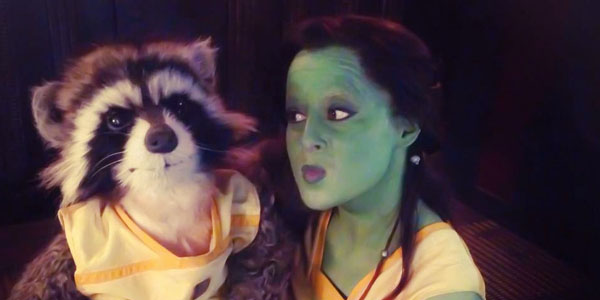
It has been said before, but it is worth reiterating nonetheless - Guardians Of The Galaxy was Marvel's bravest, most creatively challenging property in the entire MCU. And not only that, it came on the back of successes for the "main" MCU thread, which could have been taken as a stoic model for progression: in other words, Marvel didn't need to change up their formula or their cast too much to guarantee sales. But with sequels for Thor and even Iron Man disappointing in some respects, there was a slight suggestion that the company would have to shake things up a bit. Most expected Black Panther or Captain Marvel, or a departure from the "norm" that didn't require such fundamental changes, but instead they chose to go with a relatively obscure, odd-ball intergalactic team with a talking tree, a racoon, a WWE wrestler and that slightly lumpy guy from Parks & Recreation. How wrong those early suspicions were: how many naysayers gorged on their own cynical words. James Gunn took some of the strangest Marvel Universe characters and framed them with a brilliant, funny sci-fi that packed charm in, and played off the self-imagined Han Solo appeal of Pratt, while also deftly avoiding the Howard The Duck pitfalls that undoubtedly came with Rocket Raccoon. And the fact that the film was even remotely passable - let alone brilliant - was an utter triumph.

8. Neil Patrick Harris Played It Straight
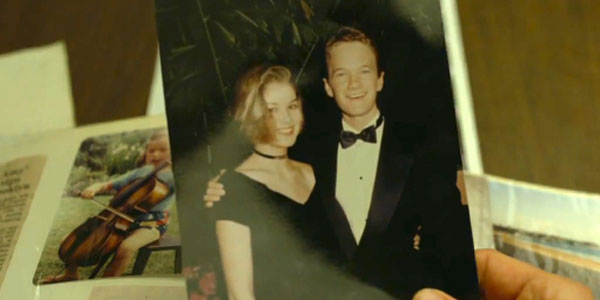
No, it doesn't mean that at all. One of the most surprising parts of the needle-like impact of Gone Girl was the brilliance of Neil Patrick Harris' understated performance as Desi Collings. Without his usual comic licence, the former Doogie Howser showed why he is actually considered a great actor in some circles. His casting as the creepy ex with a dangerous agenda was as left-field as they come, especially in the context of what he'd spent the last 9 years doing in How I Met Your Mother. It shouldn't have worked: Desi was the ultimate antithesis of everything Barney Stinson represented and the performance would require the actor to effectively forget everything he'd done for the better part of his career. But the gamble paid off and his Desi was the perfect mix of vulnerable and threatening; creepy to an extreme but without ever being showy, and while it did feel like some of his role was cut to dilute the character (and reinforce Amy's malevolence) it was one of the best supporting roles of the year.

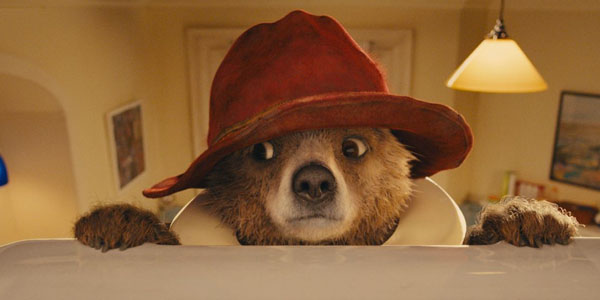
7. Paddington

Making films about talking bears doesn't generally go down all that well. Even Disney suffered something of a disappointment when Brother Bear came out in their uncharacteristically boring period, despite having scored big wins with Robin Hood and The Jungle Book. Even worse, reinventing classic children's properties hadn't really worked for Hollywood in critical terms: the Smurfs had been roundly criticised, Yogi Bear was a joke and Garfield made everyone realise that Bill Murray actually is fallible. So the idea that Paddington - a tender little idea protected by layers of nostalgia - might be a viable big screen star was a little difficult to take. Even with a pitch perfect cast - initially including Colin Firth as the titular Peruvian bear - it failed to really grip mainstream imaginations, particularly as director Paul King's only other project had been the understated, under-seen Bunny And The Bull. But wouldn't you know it; they only went and pulled it off. Currently, the film sits on 97% on Rotten Tomatoes, which it completely earned by enchanting its audience, charming them with humour and a touching little story, and impressing with brilliant animation. The fact that it could end up as 2014's highest critically rated film is astonishing. But the fact that it probably deserves it is even more so.

6. A Planet Of The Apes Sequel That Wasn't Offensive
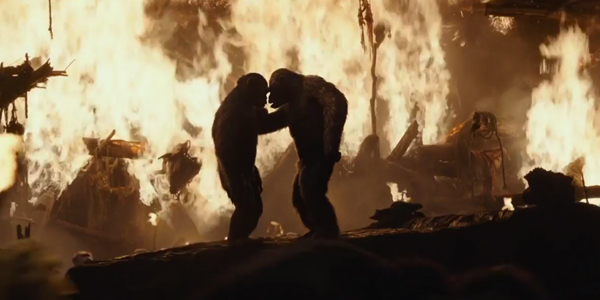
It seems like everything Andy Serkis touches is golden at the minute (aside perhaps from the Hobbit, but he was brilliant in that while it lasted), but even his presence as returning hero Caesar couldn't have allayed too many fears that the second new Planet Of The Apes film might follow the trend established by almost every single one of the sequels to the original film. The problem was always that the original film idea was as breath-takingly arresting as all attempts to hyper-extend it were offensive. Everyone wanted to see the immediate horror of a culture clash movie in which humans are the alien enemy, with the added kicker of the a familiar foe, but beyond the final revelation, there wasn't that much left in the tank. Did anyone really want to see how that society flourished? Could anyone write it compellingly? Nope. And the same was true of this new franchise: even though there was more story to tell after Caesar escaped back to the wild, did all of the bridges between this and the "first" Planet Of The Apes movie need to be built so consciously? Did we really need to see the day monkeys discovered wearing trousers? Or when they started to brush their teeth? Clearly not, but the sequel cleverly pushed the war element: this wasn't a Dawn so much as a Conquest for the planet, and even though the "human" moments between monkeys could have been a bit silly, the end result was a truly great sequel.

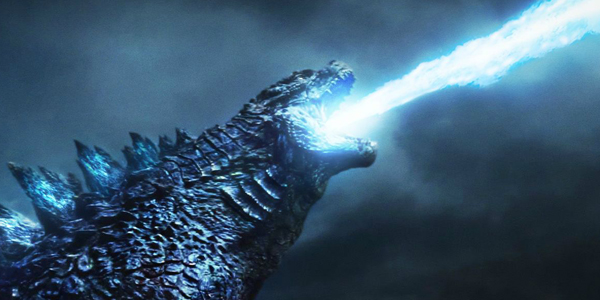
5. Godzilla

Gareth Edwards' franchise restarter should have been subtitled Or How To Revive The Unrevivable. After the big money silliness of the giant iguana starring 1998 version, it was roundly assumed that Godzilla didn't work without the B-Movie sensibilities of the original Japanese film-makers. It was never that Godzilla wasn't a good enough character, or that he didn't have enough fans; it was just that he wasn't really considered a viable option as a Hollywood blockbuster. But Edwards proved that the legendary monster didn't need to be adapted out of his surroundings to the degree that Roland Emmerich did in the misguided opinion that Hollywood's framework was better than the one that made the character so iconic in the first place. The new director did his homework and ingeniously cast Godzilla as the Earth's mightiest hero instead of just being another generic monster, and the rewards were enormous. Godzilla is a blockbuster idea again, and it comes down to smart film-making ideas, a simple, compelling story and a commitment to the right spirit. And that was a refreshing revelation.

4. Captain America Avoided The Poor Rule Of 2
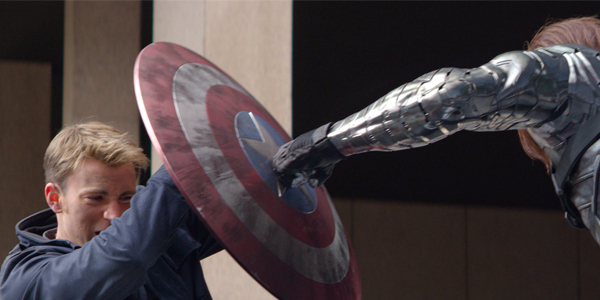
For all of the countless millions that the MCU have dragged out of very willing audience's pockets in the past 6 years since Iron Man landed in 2008, they haven't enjoyed plain-sailing by any means. Several of the films were misguided and critically panned - The Incredible Hulk remains the distractingly imperfect older brother locked in the basement - and sequels have seemingly confirmed the rule of diminishing returns. Iron Man 2 lost its way badly, despite having the same formula as the first one; and Thor: The Dark World was a comparative disaster given how much of a drop in quality it unfortunately boasted. Even with exactly the same elements, and exactly the same compelling characters and relationships neither worked because new stories required a fundamental change in the films' universe: Iron Man was uncovered and Thor was back on his home world. Suspicions arose on the back of those films that the new Captain America would go the same way: his vintage appeal was gone because of the leap through time, and that required a change of focus. But in channelling 1970s espionage and political intrigue movies, the Russos replaced the missing element with something even more compelling, and the sequel quickly became one of the best stand-alones of the entire MCU, and not just the best sequel.

3. Bryan Singer Pulled It Off

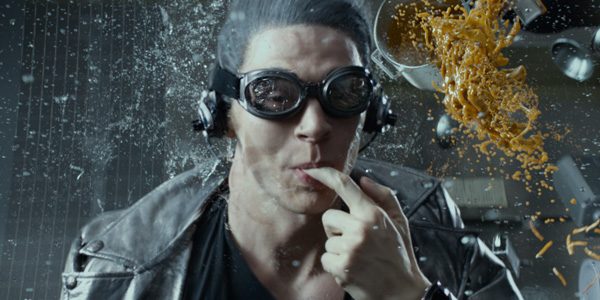
When Matthew Vaughn was rather unceremoniously pushed aside (he says he jumped, but of course he would) to allow for the Return Of The King, there was cause to believe that Bryan Singer would choose to undercook all of the elements that had made First Class so endearing, because they no longer belonged to him. There would inevitably be some nepotism for his own creations, and the audience would be left with a slate-wiper that unnecessarily abandoned Vaughn's great work. But that proved to be a suspicion too far: Singer clearly felt drawn to his new cast of characters, and used them well in the mix to bring two massive casts together without turning Days Of Future Past into the hollow name-checking ensemble it could have been. Singer could have chosen an Ocean's Eleven style talent gallery, but thankfully he made the story the biggest star, and pushed Wolverine as the key character in a way that unified both story threads and which made sense even despite some of the paradoxes and plot-holes created.

2. The Terminator Genisys Trailer

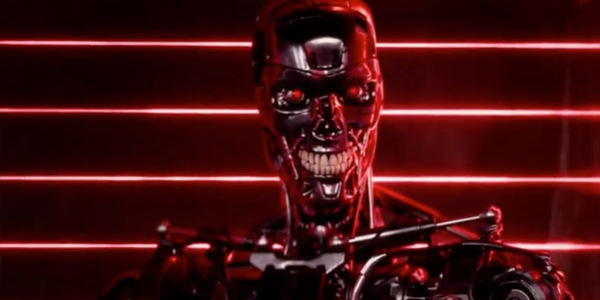
Four giant trailers landed in 2014; each of which boasted a different agenda, and all of which landed with different impact. First came the bootlegged Batman Vs Superman trailer from Comic Con, which proved the much-needed shot in the arm that movie event needed (even if it still frustratingly hasn't emerged officially), and then towards the end of the year, a busy period saw Jurassic World, Star Wars and Terminator Genisys get teased online. In all cases, fans needed something big: each franchise was in some way broken and even making the films was a massive gamble. Obviously the Star Wars "trailer" amounted to 88 seconds of fan-service culminating in a Millennium Falcon money shot (and was designed to sell the idea of the film, rather than the film in any concrete way), but Jurassic World and Genysis offered something more substantial. Ultimately Jurassic World was criticised for its edit, and was upstaged by its own in-universe website, but Terminator Genisys did exactly as intend: whipping up nostalgia-tinged excitement to get fans talking. Some cynics inevitably castigated it as a mess, but it was one of the best trailers of the year poisoned somewhat by expectations for the film that were based entirely on its most recent predecessors. And that's like criticising a tasty meal because of a rubbish one you once had with some of the same ingredients.

1. Dave Bautista's Drax

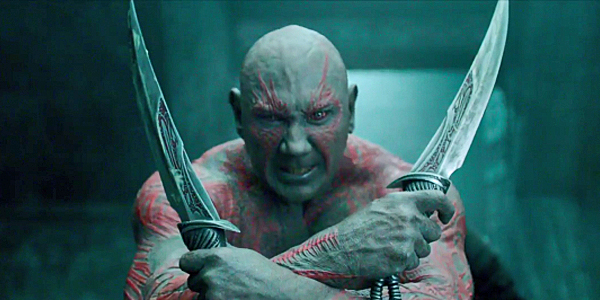
Dave Bautista shouldn't be a good actor: in many respects he's already proven that he isn't one in general terms, and his addition to the Guardians Of The Galaxy cast looked like a round peg being put in a round hole based only on physicality. In his hands Drax would no doubt be a growling lunatic with limited lines and most of the action, and while there certainly was an element of that, Bautista's comic performance was one of the key reasons the film worked as well as it did. The wonderful conceit that Drax didn't understand metaphors and took everything literally was a brilliant thing to push forward (though he conveniently forgot it when Peter Quill told him to "give a sh*t" late in the film, thankfully) and the straightness of Bautista's performance sold it perfectly. He was well beyond a one-note, one-dimensional character, and he even sold the emotional wounds that drive Drax (though not as touchingly as the revelation of Rocket's past). The entire framing of the character was nailed on: instead of having Rocket and Groot as silly sidekicks and comic relief, Drax played that part, clashing with almost everyone but forming a focal point, rather than just being a perfect looking support. Quite whether it will work for Spectre remains to be seen, but on the back of Drax there should be a lot more confidence in his suitability to that role. Which were the most surprisingly brilliant movie moments of 2014 for you? Share your revelations in the comments thread below.

Contributor
Contributor

WhatCulture's former COO, veteran writer and editor.