10 Signs An Upcoming Film Is Going To Bomb HARD
The telltale signs a new movie is destined to be a dud.

Though 2020 has been the most volatile and unpredictable year for Hollywood in many generations, even in "normal" times it isn't always easy to figure out which movies will succeed and which ones will flop.
But by studying the trends of the business, it is possible to make educated guesses about whether films will manage to turn a profit or simply end up dead on arrival.
There are a number of easy giveaways and telltale scenes to figure out if an upcoming movie is circling the drain - if it's destined to grossly under-perform at the box office no matter whether it's a good movie or not.
From business decisions which make it clear the studio has no faith in the project to poor marketing, dodgy release dates, and everything in-between, these 10 signs are sure-fire hints that an imminently-releasing film isn't long for this world.
That's not to say that commercial failures are forever beyond redemption - the 2011 Kevin James dud film Zookeeper has enjoyed a second life on streaming this year, for example - but simply that they've got to suffer through a shaky theatrical run first...
10. Delays, Delays, Delays

Though there are certainly acceptable reasons for a movie to be delayed - especially in 2020 of all years - it's almost never a good sign when a film gets continually pushed back.
If nothing else, it suggests that the studio hasn't got faith in the film's box office potential, particularly its ability to compete with movies releasing within the same period.
In extreme cases this can result in a movie not finally being released until two or even three years after it was shot, as happened most recently with The New Mutants, which hit screens almost three years after principal photography wrapped.
To the surprise of nobody, The New Mutants was neither a good film nor a box office success, and yet further proof that films which languish for years are generally troubled projects which the studio doesn't know what to do with.
There are rare examples to the contrary - such as Mad Max: Fury Road spending two-and-a-half years in post-production before releasing to rave reviews - yet this is otherwise one of the most reliable predictors of an incoming dud.
After all, does a single living soul expect that the upcoming fantasy blockbuster Chaos Walking - which began shooting in August 2017 - will be anything less than a $100 million box office catastrophe, pandemic or not?
9. Huge Budget, Untested Director

It should be common sense that on-the-rise filmmakers slowly build up to working on gigantic $200 million tentpole movies after first proving they've got the chops to work on smaller projects.
But Hollywood seemingly loves nothing like it loves a gamble, and so studios will occasionally roll the dice on an untested filmmaker by giving them more money than God to bring their dubious vision to life.
And more often than not, the results are disastrous commercially if not also critically.
Director David Twohy was inexplicably given $120 million to make The Chronicles of Riddick - more than five-fold the budget of its predecessor, Pitch Black - and it flopped hard, while the Keanu Reeves-starring fantasy-action disaster 47 Ronin flushed a cool $175 million down the toilet by handing it to Carl Rinsch on his directing debut.
Elsewhere, Josh Trank clearly wasn't ready to helm a movie as big as Fantastic Four with the studio forced to try and salvage it in post-production, while Paul Feig had no business directing a $144 million Ghostbusters movie, and Fox were fools to give Simon Kinberg $200 million to make Dark Phoenix in his filmmaking debut.
Letting talented artists work their way up to tentpole-sized movies is a vital part of the process more often than not, but by fast-tracking them to the big leagues, executives are usually setting money on fire.
8. The Dreaded January/February Release Date

January and February are historically known as Hollywood's major "dump months," where studios typically offload the projects they've got no faith in whatsoever.
Some of the most prominent early-year duds include the rancid Johnny Depp vehicle Mortdecai, Chris Hemsworth's tech thriller Blackhat, and most recently, Blake Lively's action flick The Rhythm Section.
It's not an exact science by any means, as The Silence of the Lambs won the Best Picture Oscar despite releasing in February and low-budget horror films like The Devil Inside have flourished in this frame, but more often than not, the dump months represent a total lack of interest from the studio, and therefore likely audiences also.
Yet the fact that the first two months of the year are so often used to dispose of rotten movies effectively conditions audiences to expect garbage, in turn making them less likely to turn up for on-the-fence projects released during that period.
7. Not Screened For Critics

There are few indictments more damning than a film simply not being screened for critics.
Generally even bad movies are screened at least a few days in advance for reviewers, and so to not even bother holding a screening suggests a complete lack of faith in its quality.
Generally the idea with not screening a film for critics is for audiences to see it on its first weekend and allow studios to rake in some fast cash before a fleet of bad post-release reviews kill its future commercial prospects.
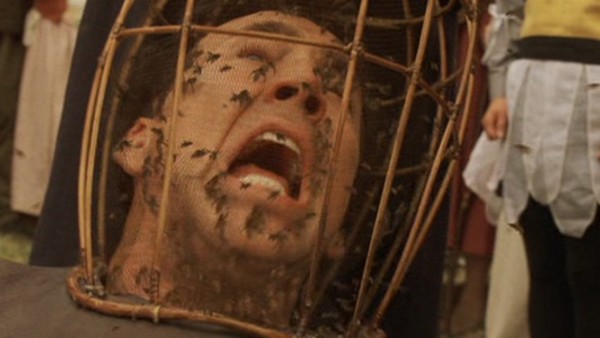
Yet here's just a few examples of films which weren't press-screened and went on to tank both critically and commercially: the Nicolas Cage-starring remake of The Wicker Man, G.I. Joe: The Rise of Cobra, Sucker Punch, R.I.P.D., and so on. You get the idea.
There are very occasional outliers, such as Piranha 3D receiving unexpectedly solid reviews and turning a decent profit, but if a studio doesn't want any reviews out there before release, a big fat bomb is almost definitely incoming.
6. A Troubled Production

The leak-heavy nature of most film sets nowadays means that word will eventually make its way online if a movie project is in trouble, generally long before it's actually been released.
And nothing quite dents audience excitement for a movie like reading deep-dive reports into a film's production on the eve of its release, typically detailing that it was made under enormous turmoil and the studio has effectively been scrambling to rescue it in post-production.
Heaven's Gate, Waterworld, Josh Trank's Fantastic Four, Dark Tower, Justice League, Solo: A Star Wars Story.
All of these films had well-documented production troubles and ended up paying for it at the box office, because after spending months reading reams of negative headlines, potential customers had no faith they would actually be worth stumping up their hard-earned moolah for.
Again, there are exceptions to the rule, such as Suicide Squad becoming a huge box office hit despite director David Ayer battling Warner Bros. every step of the way, and also Rogue One: A Star Wars Story grossing over $1 billion no matter that an estimated 40% of the film was very publicly re-shot.
5. It's A Belated Sequel

Hollywood is absolutely obsessed with digging up old properties for another go-around, and it's generally more fashionable these days to opt for some sort of sequel-reboot hybrid which allows said film to function as both a follow-up and an introductory entry for a new generation.
This approach is favoured so much because studios have seen time and time again how risky a direct, belated sequel tends to be.
There are countless tales of well-intended follow-ups that arrived years or even decades after-the-fact and simply missed the window of opportunity to capitalise on the zeitgeist.
Sin City was a major hit back in 2005, yet Robert Rodriguez famously took nine years to get the sequel made, by which point most fans had simply moved on.
Elsewhere, Tron: Legacy probably came at least a decade (or two) too late to be relevant to those who loved the original, Blade Runner 2049 boldly dared to be a mega-budget sequel to a cult classic box office bomb and paid the price for it, and Doctor Sleep failed to turn a profit because it was so aggressively tethered to a 40-year-old movie.
Though many of the aforementioned films received solid-to-great reviews, it stands to reason that straight-up, years-later sequels are a majorly risky investment.
4. "From The Producers Of..."

How a movie is marketed will tell you a lot about what the studio thinks of it, and whether they believe they've got a hit on their hands or not.
And nothing quite diminishes audience enthusiasm like marketing which relies on the oldest of advertising spiel chestnuts - "from the producers of..."
When the marketing can't even defer to a director or screenwriter but has to invoke the name of someone on the more business-y side of things, you know they're reaching with all their might to get you excited.
Most recently, horror film Antebellum aggressively touted itself as "from the producers of Get Out and Us," and though the film was admittedly released in the middle of a pandemic, it nevertheless tanked at the box office amid hostile reviews from critics.
It's nothing more than a desperate attempt to create a tacit link between a prior acclaimed movie and a new project, and rarely has any real bearing on the new release's overall quality.
At least it's slightly less meaningless than "from the studio that brought you...," which is when you really know a project is truly hopeless.
3. It's An Expensive Reboot Nobody Asked For

If studios aren't busy making belated sequels, they might decide instead to revive a defunct but recognisable property with an inevitable reboot.
And while dozens of properties have been successfully dusted off by matching an inspired premise with talented artists and a modest budget, sometimes studios get a little over-confident that name branding is enough to ensure sizable profits.
And so, there are innumerable examples of Hollywood resurrecting franchises for needlessly pricey reboots which, if we're being honest, none of us really asked for in the first place. To anyone with any idea of how the film industry works, box office failure is virtually guaranteed.
The 2016 Ghostbusters reboot was both wildly over-budgeted and strayed too far from the originals, while the upcoming Ghostbusters: Afterlife has been conceived on just a fraction of the price tag with direct ties to the first two films.
Then there's Guy Ritchie's King Arthur: Legend of the Sword, which blew $175 million on a gritty revival of the IP that few were interested in, before Robin Hood basically got the very same treatment, Hellboy made a feckless comeback without Guillermo del Toro or Ron Perlman, and last year's Charlie's Angels rehash only barely made its budget back before fading into the ether.
If you're going to bring a dormant series back to life, it's more sensibly accomplished on a modest(ish) budget - $30-70 million for most projects, and definitely under $100 million.
Instead, the aforementioned examples got lost in a sea of bloated, CGI-addled bombast, and audiences couldn't have given much less of a damn.
2. A Blatantly Desperate Marketing Campaign

Again, how a movie is marketed will say a lot about its commercial prospects, and it's usually pretty easy to sense the abject desperation with which a film is being sold to audiences.
Take the MCU: its trailers confidently hit the broad strokes viewers expect, while generally not giving too much of the plot away, and in some cases even directly misleading audiences about certain aspects of the plot. That's because they know their content and know it's going to be successful.
Compare this to the marketing for the latter half of the Terminator franchise, which has generally been intensely spoiler-heavy to the point that it's genuinely offputting, and in the case of Terminator Genisys they even (somehow) convinced James Cameron to record a featurette shilling for it.
In fairness, Genisys was saved from commercial ruin by its over-performance in China, but it's nevertheless a prime example of a series that knows it's burned bridges with its fans and is grasping at any possible lifeline to retain interest.
1. Always Trust The CinemaScore
If all else fails, trust the handy CinemaScore - a graded rating calculated by surveying paying customers who see the movie on its opening weekend.
Usually a day or two before the weekend's box office figures are revealed, the CinemaScore will be announced, and while an "A+" rating practically guarantees a film's box office success, once you start getting into "C" and below, the outlook gets decidedly bleaker.
Those few films with the dubious distinction of an "F" rating are basically dead-on-arrival where box office is concerned, with some more notable examples being Steven Soderbergh's 2002 Solaris remake, the Lindsay Lohan thriller I Know Who Killed Me, The Box, Killing Them Softly, and mother!
These ratings aren't an indictment of a film's actual quality at all, but simply that they've failed to connect with mainstream audiences, and typically suggest that the movie has probably been mis-marketed to audiences.
Though the CinemaScore isn't quite an exact science, it is nevertheless an extremely reliable predictor for a film's commercial prospects, and for those keeping tabs on a movie just as it's being released, will normally forecast a bomb in the making.