10 Small Details That Make John Carpenter's The Thing Perfect
So, what should we do now? Why don't we just wait here for a while... See what happens.

John Carpenter's The Thing is one of the greatest horror movies ever made, capturing a terrifying nihilism, compounded by the lonely setting of the Antarctic. From its opening scenes to the final moments, it has left many viewers both shaking with fear and their minds racing with theories.
One of the greatest strengths of the film is how it both shows extreme content and leaves so much up to the imagination. There are many moments where the audience is left to guess what exactly is going on, where and when some of these things happen and when is the nightmare going to end.
Carpenter was best known at that point for Halloween, The Fog and Escape from New York. While all three are excellent films, he would truly hit his stride with The Thing. While technically a remake of Howard Hawkes film The Thing From Another Planet, starring Kirk Douglas, it is very much its own beast, edging much closer to the original John W. Campbell novella Who Goes There?
While the film was not an immediate success, owing to its bleak tone and the enormous success of the year's other film about an Extra Terrestrial, it has since become regarded as a horror classic. It only just made back its production costs, costing Carpenter the directing duties on Stephen King's Firestarter. However, when both films are compared - one is clearly the stronger piece of work.
The film has been followed by a 2002 video game, a 2011 prequel and a remake has been announced just this year. All three are up against stiff competiton.
10. The Gore's Origin

Whether you are new to The Thing or a lifelong fan, one thing will stand out immediately in the film: the level of gore that is shown.
The practical effects by Rob Bottin, who was 23 at the time of making the film, are both stunning and nightmarish. They incorporate both synthetic elements and pieces of real animals sourced from butchers and abattoirs.
Yes, there are real organs on show in some of those shots.
Along with this, mayonnaise, strawberry jam, foam latex and KY jelly were added to the various models and monstrosities shown to add further texture to them. For the infamous scene that featured Norris' chest exploding upward, revealing the spider-Thing to the audience, this was a shot that was completed in two takes. The first take was too like a fountain for Carpenter's liking, and everything had to be reset.
Another issue with this is that many of the elements that went into creating the shot also filled the room with noxious gases, which were hardly the best for the actors' and crews' health. This had to be done as quickly as possible and yet Bottin was still tasked with enduring up to a full day of reset for each take. The chemicals also created flammable gases, posing another issue when Carpenter wanted MacReady to incinerate The Thing.
All things considered, it is little wonder why Bottin was hospitalised with exhaustion on completing the film.
9. The Helicopter Wobble

In the film, both the Norwegian and American bases use a Bell 206 Jetranger Helicopter. Now, that is for a simple reason - it's the same machine with different decals.
Kurt Russell's MacReady is the pilot for the American base. He is a Vietnam veteran with, if not a drinking problem, then certainly a fondness for the stuff, as shown in his face off with the computer chess game - played by Carpenter's then-wife, Adrienne Barbeau.
In the scene where MacReady is flying to the Norwegian outpost with Dr. Copper to investigate what happened, there is a noticeable wobble mid-flight. In-film, this is suggested as a side-effect of his hard drinking and possible PTSD, left over from his time overseas.
In reality, that's actually Kurt Russell flying the Helicopter. He was assisted by another pilot and the wobble was created at the moment when the pilot turned over control of the craft to Russell, creating an accidental moment on film that adds a deeper layer to the character.
They then pilot that same helicopter back to the American base, carrying with them the terrifying split-face Thing.
8. The Broken Seal

The couch scene in The Thing is one of the most tension-filled few minutes in the film. Watching MacReady work his way through the blood samples, one by one, is nail biting - and that jump that comes has knocked more than one person off their seats.
Why did it happen? As they surmise, each individual cell of the creature can be a unique and separate being, one that wants to defend itself. They settle on blood tests, comparing uncontaminated blood to test who is human. Except the creature is one step ahead.
They find that the blood stored in the lab has been destroyed. Immediately, they fall to infighting as, and the creature was aware of this, they assume that the only way for anyone to gain access to the blood is with Garry's or Windows' keys. Under normal circumstances, that would be correct - leading them to believe that one of them has been assimilated.
However, the eagle-eyed can see that the creature engineered this without having to use Garry's keys at all. The seal around the container is broken and, as they have already deduced, a single cell of the creature is an entity in itself. One cell could slip through that gap, destroy the blood and rest in knowing that the humans would naturally blame each other.
There is another theory that states Windows loses his keys when he walks in on Bennings being assimilated, adding another twist to the tale.
7. The Shadow Of The First Victim
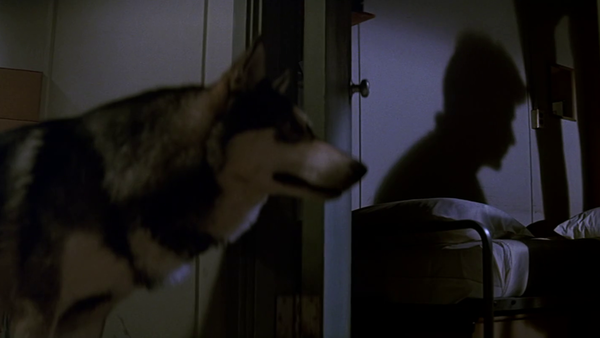
One of the great mysteries of The Thing is trying to figure who is assimilated and at what point. There are the obvious ones that are shown on screen, and then there are those that come out of nowhere.
One of the greatest shocks in the film comes from the revelation that Norris is a creature, yet much earlier on there is that one, highly disturbing scene.
Nothing overt happens. The Alaskan Malamute that had run so far across the snow simply walks calmly down the hallway, taking its time as it goes. Thanks to excellent animal training, there is very little to give away the fact that this is anything more than a creature on the hunt. It decides on one door, containing a single occupant. We see that occupant in shadow as the dog enters. The shadow's head turns. The scene ends.
This marks the true beginning of the horror that the men at the base would come to face, as one of their number has now almost certainly been killed and transformed. The scene is so quiet and so profoundly heavy that it is now a scene that, on second watch onwards, is hard not to start feeling anxious while viewing.
And there isn't a single word of dialogue.
6. That's Real Dynamite

In the film's climactic battle between MacReady and the Blair-Thing, events come to their explosive head when MacReady tosses the dynamite into the belly of the overlarge beast. It is a thrilling scene, showing off both Rob Bottin's terrifying design and the pyrotechnical fun had on set.
However, there was very nearly a different outcome to this scene. Kurt Russell was throwing real dynamite at the creature on camera. Apparently, no one had sufficiently warned him about the strength of the explosion he was about to face.
The creature blew up in terrific fashion, but the resulting blast sent Russell flying across the room. The crew rushed to his aid and thankfully found him to be unscathed, merely shaken. Carpenter made the decision to leave the scene as filmed in the movie, delivering not just a big blast of a final battle but also a very, very realistic reaction from Russell, moving entirely without the aid of a safety harness.
On a film that featured more than one accidental slip up, this one served the film greatly, leaving a scene that serves as the perfect way to lead us to the coda.
5. Eye Of The Beholder

This is a fact that can be taken both with a pinch of salt and as a certainty - depending on which member of the production team that you ask. For Carpenter, this is merely a fun theory. For cinematographer Dean Cundey, this one is bang on the money.
In the scene on the couch, the four men suspected of being Things are tied up and the blood test begins. However, look at their eyes. In the picture shown above, Palmer has a glimmer of light in those eyes. During this scene, he is the only member of the team that doesn't have that light.
This was, according to Cundey, a deliberate clue on his part as to the fact that Palmer was hiding a secret. However, this theory then becomes more strained, later in the film.
In the final scene, both men have light in their eyes like the one shown above, which would seem to suggest that both of them are human. However, this is where Carpenter shoots the theory down, saying this doesn't prove anything and that MacReady may still be the only survivor of the expedition.
In the end, it may be a theory that only applies to a single scene - but it is a detail so small that barely anyone would notice it, enhancing it all the more when they do.
4. The Thing's Heartbeat
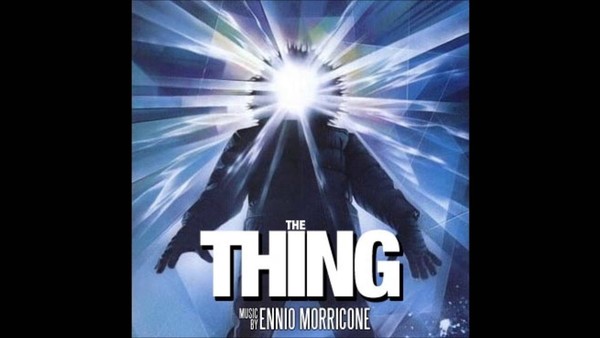
This is both small and overt, as the soundtrack may be one of the driving forces to fill the film with fear, yet it is so small in parts that it runs almost undetected while the action is unfolding on screen.
The enduring sounds of The Thing, as composed by Ennio Morricone, are the quiet thumping heartbeat that runs through the movie. This heartbeat plays in the same tempo throughout, suggesting that even as The Thing is terrorising and tearing through the men on the base, it constantly remains calm and collected, simply taking its time.
Morricone scored the film when it was not yet completed and as such, Carpenter himself wrote a few additional cues. Morricone later reflected that he had been very impressed with what he had seen, though he was a little confused as to what he was supposed to do. Carpenter had to rush off immediately after the screening, leaving Morricone with only a simple piece of advice - fewer notes.
Those notes which permeate the film pulse along with the audiences' own heartbeats, although surely the viewers' heart rates were running a lot faster than what they were hearing on screen. A newly pressed vinyl of both the score and Carpenter's lost cues is being released in May of 2020.
3. The Final Toast

The ending of the film is one of the most hotly debated elements of the the story, one served by a follow up video game and the 2011 prequel film. There are many layers to digest in this one.
First, is Child's a Thing or not? Depending on who you ask - No. The oft-discussed clue is the lack of fogging breath, though this has been debunked under closer examination. If the events of the 2011 prequel are to be believed, the fact that Childs is still wearing his earring would suggest that no, he isn't an imitation. Keith David has been quoted as saying 'I don't know who was or who wasn't a Thing at the end of that movie, but it sure as hell wasn't me.'
Carpenter believes that the video game is a true continuation to the film. In that game, Childs' body is found frozen in the ice. He is still human, rather than the Thing he is assumed to be - leading many to conclude that he was human the whole time.
The opposing side argue that there is little chance he would have been able to wander off in the snow and return without running into serious trouble, as he claims to MacReady. There is also another clue - Childs' coat has changed from blue to a lighter colour. Previous incarnations of the Thing have also seen clothing changes, presumably as their layers had been torn off mid-assimilation.
There may never be a definitive answer, adding to the bleak and nihlistic ending of this famous film.
2. The Cries Of The Dogs

This film is not a great one for dog lovers.
The first big reveal of the Dog-Thing comes at the expense of some very gorgeous Huskies, trapped in a cage with the monster that wants to devour and assimilate them. The flamethrower that rips through Stan Winston's design (Rob Bottin was simply unable to keep up with all of the demands while filming and Winston came on board to help) seems to put an end to the creature, thus saving the dogs. Happy ending?
The capture the sounds of the Dog-Thing in the cage, sound editor Colin Mouat stepped in with a very novel approach. He worked to create the wall of sound that came from the creature, something described as a hellish noise, terrifying to hear. To do this, he rounded up all of the dogs in his neighbourhood inside his house.
Then, donning a trenchcoat and a hat, he started to slowly walk around the building, allowing them to see him. They became agitated and so he continued, tapping on the glass as he went, driving the animals up into a frenzy. The noise that then came from these dogs was recorded and mixed together even deeper, eventually becoming the dreadful wailing heard in the film.
One can only hope he stood well back when opening the doors to his house afterwards.
1. What Is It?
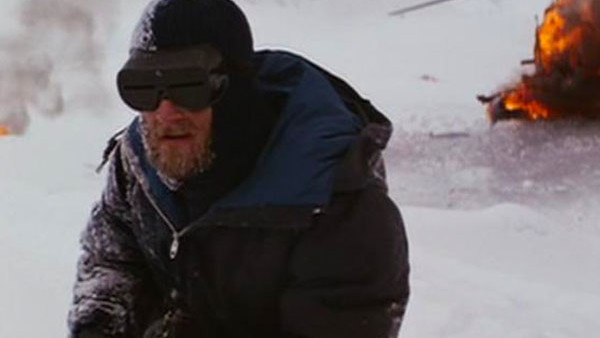
There is a clue hidden in plain sight right at the very beginning of the movie, though it is understandable that most audiences didn't pick up on it - at least, not those who couldn't speak Norwegian anyway.
The opening shot of the Norwegian helicopter chasing the Malamute across the snow is iconic. Once that dog catches up with the Americans, it runs straight into the arms of one of the men. The helicopter lands and the Norwegians hop out, shouting all the time. They cry:
"Se til helvete og kom dere vekk! Det er ikke en bikkje, det er en slags ting! Det imiterer en bikkje, det er ikke virkelig! KOM DERE VEKK, IDIOTER!"
For those who don't speak Norwegian:
"Get the hell away! It's not a dog, it's some sort of thing! It's imitating a dog, it isn't real! GET AWAY, YOU IDIOTS!"
This Norwegian (later named Lars in the prequel) has just given the men all of the information that they need to know. They don't understand him, leading not only to his death but all of theirs as well. While the prequel has its critics, the ending of the film brilliantly links both films, highlighting the awful futility of Lars' attempts to save these men and, in a wider sense, the world.