10 Strangest Horror Movies Of All Time

They don't make them any weirder than this.

The bizarre is in the blood of all horror, when you stop to think about it. It€™s a genre steeped in the unusual, the supernatural and the grotesque. It€™s lent its palette to artistic movements like surrealism and expressionism, who€™ve remixed the old horror tropes to lend them straight back with an extra new spin. Horror has grown up quoting myth, legend and fairy tales, providing a modern, adult take on old stories. It€™s arguably the most creatively fertile genre in fiction today€ yet to many, the more clichéd narratives give the genre a bad name. But it€™s not all vampires, werewolves and psychotic masked killers. Horror is from out of left field, telling skewed stories about twisted people and events. It should delight in subverting expectations, not meeting them. Horror isn€™t supposed to be safe: it€™s supposed to keep you guessing, make you nervous. Horror is supposed to be strange. In compiling this short list of the strangest horror movies I've ever seen, I€™ve tried to deliberately exclude generic slasher flicks with a silly but marketable gimmick: so Killer Condom is out, as is Black Sheep and others like them. Equally, there are plenty of cracking horror movies that adhere to a tried and tested formula before going loopy near the end, like Society and Orphan. This is not about those kinds of movies. Instead, I€™m choosing to write about the really odd films€ the off kilter and bizarre. Remember, it€™s by no means an exhaustive list, so feel free to add your favourites in the comments and let us know what€™s so brain-breakingly weird about them.


10. Wild Zero (1999)

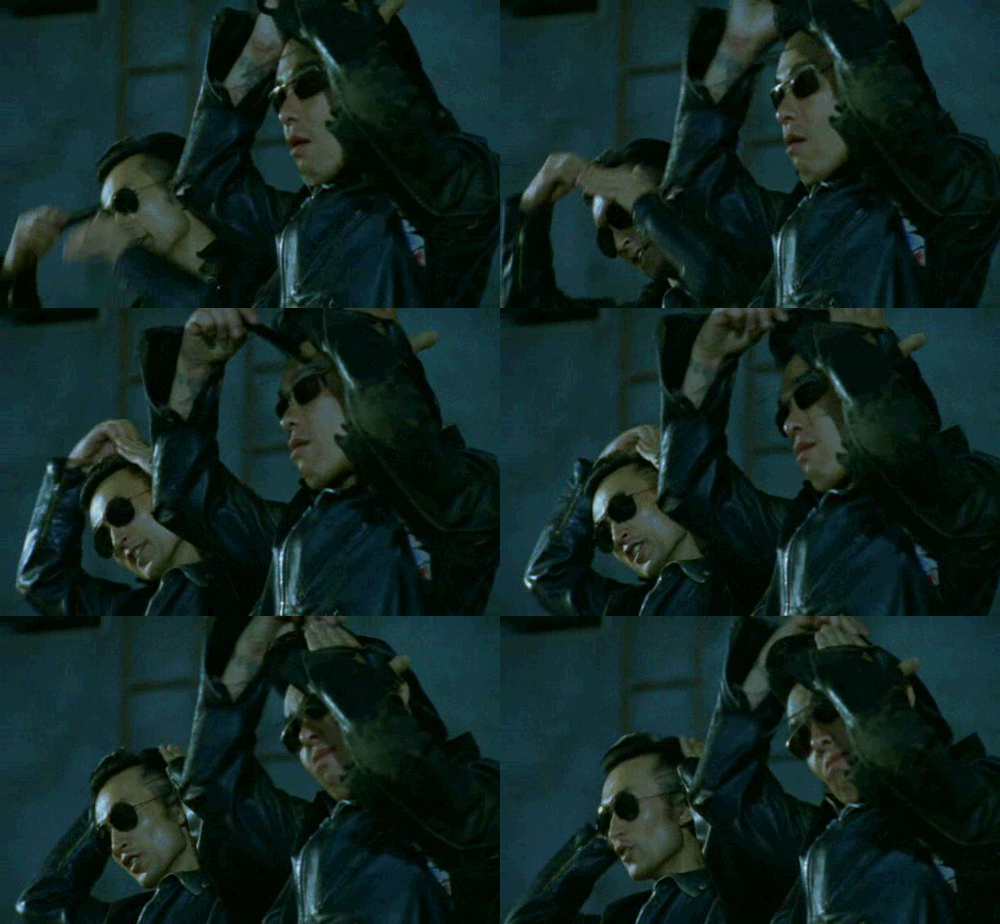
tumblr€œRock 'n Roll is NOT over, baby! Rock 'n Roll NEVER DIES!€ A personal favourite, this €“ one of the best bands in the world, Guitar Wolf, star as superhero versions of themselves in an alien-zombie-end-of-the-world spectacular named after one of their own songs. https://www.youtube.com/watch?v=YQ_D9OjDoQ0 It€™s the height of glorious stupidity. Guitar Wolf€™s biggest fan Ace helps them out in a fight and becomes their blood brother, given a whistle to call on them in his time of need. Shortly afterwards, he meets Tomio, a wandering Thai transsexual girl, and is instantly smitten: meanwhile, an alien meteor has just hit Earth, and is turning people into zombies€ Stuffed to the nines with over-the-top energy and manic ideas, Wild Zero is brilliant and fun and brilliant fun. It€™s also absolutely bizarre€ it features the world€™s first zombie on zombie kiss, as two lovers reunite after death€ an insane coke-addicted nightclub owner in tiny gold pants who€™s sworn eternal vengeance on Guitar Wolf for blowing his fingers off€ magical guitar picks thrown as zombie-killing shuriken€ and the way in which, at the climax, Guitar Wolf himself saves the world from the aliens singlehandedly will have you giving the movie a standing ovation. This film isn€™t just a vehicle for Guitar Wolf€ but they€™re the best thing in it. Bass Wolf and Drum Wolf spend most of their time striking poses and combing their incredible quiffs€
€ and Guitar Wolf himself kills zombies like their daddies owe him money. And did I mention that he saves the world?

9. Tenebrae (1982)

€œSomebody who should be dead is alive, or somebody who should be alive is already dead€€ Literally a film of two halves, Dario Argento€™s seminal Tenebrae (Latin for €˜shadows€™) is a film about metafictional killers finding inspiration in one another, and proceeding to terrorise Rome with straight razor and axe, amongst other things. https://www.youtube.com/watch?v=OkUpGi2N8wo Horror writer Peter Neal travels to Italy from America to promote his latest, a book called Tenebrae. Upon his arrival, someone contacts Neal to inform him that the novel has inspired him to go on a killing spree. Gradually, the supporting cast are violently trimmed, until the climax reveals the twist and changes the way you view the movie you€™ve just seen. It€™s a film obsessed with duality and mirroring, in which practically every scene is framed, shot and blocked to add subtext and depth to the narrative. It€™s a self-reflexive commentary on Argento€™s own reputation as a maker of violent films €“ in the opening scene, the killer€™s hands holding a copy of Neal€™s novel are Argento€™s hands. It€™s a cold and hallucinatory movie that implicates the audience in each of the stylised murders, breaking the fourth wall not through shameless mugging to camera, but by projecting the viewer into the film to stand and helplessly watch the killer work. Tenebrae is all of those things, and a stylish, compact giallo thriller from an artist at the height of his powers.

8. May (2002)

€œIf you can€™t find a friend, make one.€ A sweet, sad, and utterly bizarre tale from writer/director Lucky McGhee, May features its titular character attempting to engage with an outside world she€™s felt alienated from since childhood. Awkward and lonely, May€™s only friend is a doll named Suzie, encased in glass, given to her by her mother. As she tries to establish connections €“ friends and lovers €“ without the proper tools to do so, May is let down over and over by the inadequacies of others, and when Suzie is bloodied and assaulted, May finally decides to make a real friend of her own€ in her own way. https://www.youtube.com/watch?v=es0HnQqCqg0 Darkly funny and deeply touching, May is a heartwarming character study with a batcrap-crazy horror movie lurking in and around the narrative: a road trip through beautiful, uncharted country which constantly threatens to veer off into a ravine. What€™s really odd about this film is that McGhee€™s twisted central character €“ played with humanising, gauche tenderness by Angela Bettis €“ isn€™t the villain in a horror movie, although she does cannibalise dead people for spare parts. She€™s not a serial killer, although she does murder a whole lot of people. She€™s not psychotic, although she€™s damaged, with a traumatising past. She€™s just a girl trying to connect with someone, a person in need of a real friend, real love: someone to be with. The people around her aren€™t the villains, either €“ this isn€™t some hapless Burtonesque fairy tale where the monster is the hero and the villagers the bad guys. They€™re just ordinary people €“ people with some eccentricities, but people nonetheless. They don€™t deserve what happens to them, for the most part (neither does poor Lupe the cat)€ but the film€™s not about them. They can€™t be the friends that May needs, but she€™s got a use for them, regardless. After all, they€™ve got good things about them. May knows that. The final scene, in which May makes a real friend, would come across as ridiculous, even cringeworthy in another film€ but McGhee€™s earned the moment with the preceding ninety minutes of careful, masterful filmmaking, and rather than inspiring laughter, it makes you smile instead.

7. From Beyond (1986)

€œIt ate him... bit off his head... like a gingerbread man!€ Two scientists have developed a machine called a resonator, which allows anyone near it to see beyond normal human perception. The only problem is, once the resonator is active, the creatures that exist beyond can see us, too€ https://www.youtube.com/watch?v=5kENuvJ2MIA Stuart Gordon€™s brilliantly loopy and brilliantly loose adaptation of H.P. Lovecraft€™s short story of the same name essentially runs the same story as Hellraiser would the following year, only substituting overwhelming crescendos of gore and goo where Clive Barker posited stylish musings on the inversion of Freud€™s pleasure principle. The creature design is stupendously, appallingly weird, too. That€™s From Beyond€™s unique selling point, as both Dr. Edward Pretorius and Dr. Crawford Tillinghast succumb to the quiverings of their artificially enlarged pineal glands and transform into slavering, skinless monstrosities desperate to eat as many people as they can lay their mutating mitts on. Lovecraft probably wouldn€™t have wholly approved of a film that would prove so desperate to show what he preferred to tell, but frankly Lovecraft could moan about cold beer on a hot summer€™s day. From Beyond is insane, gibbering, mental-as-f*ck fun to watch, and any film which has Jeffrey Combs delivering lines like the one that kicks off this entry needs a place on your shelf.

6. Ghostwatch (1992)

"Round and round the garden... like a teddy bear€" Shot in the style of a live BBC news special, and starring genuine BBC television presenters, Ghostwatch blew everyone away when it was first shown on British television on Halloween, 1992€ so much so that it€™s not been repeated since. https://www.youtube.com/watch?v=Yfy9UHAIwgQ The programme involved actual BBC reporters purportedly taking on the live investigation of a London house which was rumoured to be the source of poltergeist activity. Cutting between €˜live€™ feeds from the house and studio talking heads, they uncover the apparent existence of a ghost that the children in the house had nicknamed €˜Pipes€™, after their mother€™s explanation for the odd noises they could hear. The apparition becomes more and more prominent as the special continues, manifesting in more and more frightening ways, until the reporters twig what€™s occurring. Just as a séance can pull a spirit closer to the real world, so the live reporting, being broadcast across the entire country to millions of people, had been acting as a vast séance over hundreds of miles, funnelling power to the entity which then escapes the house via the camera feed, to spread to the whole United Kingdom via the transmitter network: possessing the BBC studios, and legendary television personality Michael Parkinson into the bargain. The programme frightened viewers so much that the BBC received 30,000 calls in a single hour, the documentary/news format leading many people in the audience at home to believe that this wasn€™t a pre-recorded drama, but a genuine live special in which terrifying, unexplainable things were occurring. It was beautiful, and utterly weird, and a complete one-off. There€™s no possibility of ever accomplishing something like this again €“ modern audiences are so used to being swerved and conned by reality TV that they assume most things they see on television are a little bit rigged.

5. The Beyond (1981)

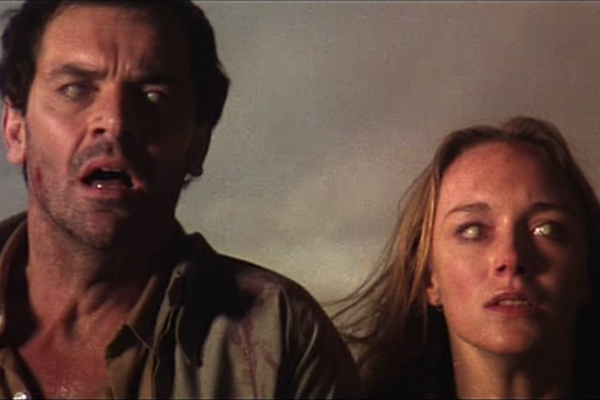
€œAnd you will face the sea of darkness, and all therein that may be explored€€ No relation to Gordon's From Beyond, Lucio Fulci€™s fantastic 1981 surreal horror was also inspired by Lovecraftian storytelling, as well as some aspects of the mythos that Lovecraft brought to the horror genre. The film deals with a hotel that acts as a portal to the world of the dead: in 1927, an angry mob murders an artist staying at the Seven Doors Hotel in Louisiana, believing him to be in league with the devil. Scores of years later, a young woman inherits the building and determines to renovate and reopen the Seven Doors. Little does she know that one of those doors is still open€ https://www.youtube.com/watch?v=vltPK0IfP4M So far, so haunted house €“ but that€™s probably the only degree of solidity in the film. The rest is fluid, a mercurial non-linear succession of images. Fulci was determined to bring the unsettling nature of dream and nightmare to the traditional horror format:
€œ€my idea was to make an absolute film, with all the horrors of our world. It's a plotless film: a house, people, and dead men coming from The Beyond. There's no logic to it, just a succession of images. The Sea of Darkness, for instance, is an absolute world, an immobile world where every horizon is similar.€
Fulci€™s producers, however, weren€™t up for distributing a surreal haunted house movie, and given that zombies were still big box office in Europe, had Fulci shoehorn in that final shootout at the hospital. He did so without missing a beat: the physical chase through the rational, sterile hospital, with a pistol a viable weapon against the dead, provide the protagonists some degree of agency, of power over their fates. The audience, in turn, are provided with their own degree of certainty that the horror can be avoided €“ that the protagonists can escape. Nothing could be further from the truth. The orphaned girl they€™re protecting is revealed to be possessed, and they€™re forced to murder her to get away. The gun is empty, and thrown away. Down a flight of stairs they go€ to find themselves back in the hotel€™s wasted, ruined basement level, something that shouldn€™t be possible. At that moment, the viewer knows there€™s no escape. The horror isn€™t the dead things pursuing them, but the sea of darkness that€™s descending down upon them, and there€™s no running away from a tsunami. They move forward through the broken, flooded shadows and step through a jagged hole in the wall, stumbling into a misty wasteland, a desertscape of open graves and bleached rocks. The wall behind them is gone€ no matter which way they turn, the same barren, hopeless vista is presented to them. Finally, horrified beyond belief, their eyes film over and unable to see, lost on a sea of darkness, they disappear from sight.

4. Dellamorte Dellamore (1994)
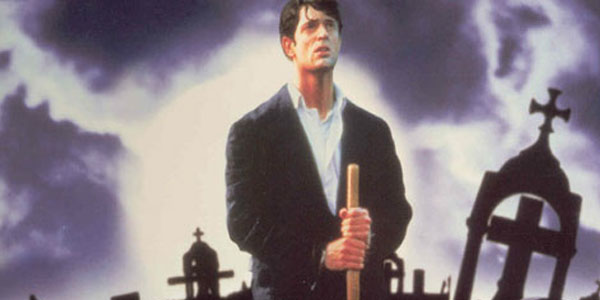
€œI should have known it. The rest of the world doesn't exist.€ Better known in the UK and America as Cemetary Man, Michele Soavi€™s loopy comic horror initially appears to be an Evil Dead style black comedy horror movie, about a young man acting as the caretaker and groundskeeper of an isolated town cemetary in Italy. https://www.youtube.com/watch?v=tS-GpYY6f2o Francesco Dellamorte€™s other, less savoury job, is taking out the dead when they begin to rise from their graves €“ sometimes with a spade to the head, usually with a dum-dum bullet between the eyes. Played with insouciant black humour by a young Rupert Everett, Dellamorte€™s hobbies include crossing out the names of the dead in the local telephone directory and trying to put together a skull-shaped puzzle, or a jigsawed skull (it€™s never made clear which). Grimly hilarious and nihilistic by turns, Soavi€™s film defies categorisation as a simply horror-comedy like Raimi€™s films. Dellamorte calls the dead €˜Returners€™, and his job is to put them down to protect the town: when he complains about the problem and demands an investigation, he€™s told to fill out paperwork, but decides it€™s less hassle just to shoot them. His best friend is his assistant, a cheerful man with learning difficulties who develops a wholesome, innocent romance with the severed head of the mayor€™s daughter. Death visits Dellamorte to ask him not to kill the dead, but rather the living instead to save time. Being constantly surrounded by the living dead is no way for a young man to live, and Dellamorte finds himself in love with a young widow that visits the cemetary. When she dies, killed by the rotting corpse of her husband, he begins to see her everywhere, as if she€™s returning constantly over and over. As his grip on reality slips, he begins to murder actual living people, but nobody seems to notice€ and when he attempts to leave town to start again, finds the road ends in a chasm, and there€™s nothing else to the world except for more mountains, more hills. So home he goes. It€™s difficult to overemphasize how brilliant Dellamorte, Dellamore is. The dialogue crackles with mordant wit, the absurdist, fatalistic action like a Halloween romance staged by Samuel Beckett. It€™s like no other film ever made€ so of course, very few people have ever seen it. Well, there€™s no excuse €“ it€™s on YouTube. Go ahead, I€™ll wait here until you get back.

3. Tusk (2014)

€œTo solve a riddle older than the Sphinx. To answer the question which has plagued us since we first crawled from this Earth and stood erect in the sun. Is man, indeed, a walrus at heart?€ It€™s difficult to know what to make of Kevin Smith€™s new lease of life as a filmmaker. On the one hand, since 2011€™s Red State, Smith seems to be far more invested in the process of filmmaking, and (the announcement of Mallrats 2 and Clerks 3 aside), is making more varied and interesting films these days. On the other hand, his reach consistently outstrips his grasp. After a career comprising eleven movies over twenty-one years to date, he€™s still not much more than a competent storyteller and director, his strengths lying very much in his idiosyncratic dialogue and gift for arch, profane comedy. Tusk is a little different, though. It€™s by no means a perfect film (he€™s never made one that€™s come close), but it€™s stylish, irreverent and horrifying by turns, with hints of genuine greatness. I€™m not going to spoil the concept, for those of you who haven€™t heard of it, but it€™s been compared €“ favourably €“ to a grotesque cross between Misery and The Human Centipede (although it€™s not as scary as the former, not as disgusting as the latter, and more interesting than both). https://www.youtube.com/watch?v=BCQJnOn0ru0 The plot centres around obnoxious podcast host Wallace, who delights in interviewing people for their stories, which he pulls apart viciously on his show. Travelling to a remote part of Canada, he finds his chosen subject has already killed himself, and is then persuaded to speak to retired sailor Howard Howe€ who drugs him and amputates his left leg. What follows is not for the faint of heart. Smith cleverly cuts between Wallace€™s horrific situation and flashbacks detailing his past as a complete douchecanoe, but it€™s debatable whether anyone could be considered to deserve what happens to him. Michael Park, a fantastic character actor with a long and accomplished CV going back fifty years, delivers his best ever performance in this film as the psychopathic Howe, and Justin Long isn€™t far behind as Wallace. The ending to Tusk may be a little less subtle than you€™d like, but by this point (if you€™ve gotten this far) you€™ll be willing to forgive Smith for falling back on his usual hamfisted approach to filmmaking a little: he€™s created a bizarre, funny, horrible little gem of a film that€™s completely unlike anything he€™s ever attempted before.

2. Tetsuo: The Iron Man (1989)

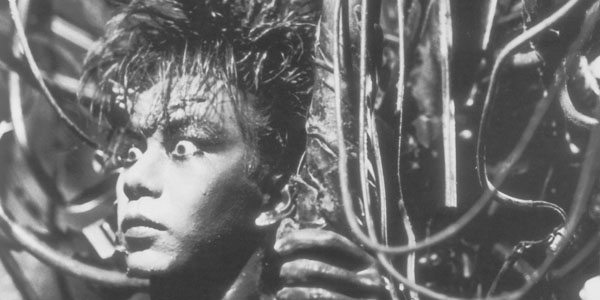
€œTogether, we can turn this f*cking world to rust!€ Strange, expressionistic, horrible and inspirational, the first and best of Shin€™ya Tsukamoto€™s Tetsuo trilogy is a black and white study in art-punk filmmaking, a horror movie for the post-industrial, pre-digital age. The machines that his protagonist is gradually transforming into are from the factory floor, all pistons, gears and moving parts €“ not the sleeker, miniaturised borging out that true cyberpunk fiction would embrace. William Gibson, Bruce Sterling et al introduced characters achieving a transformation through a more mellow transfiguration, a smooth, fluid change of mental state, all diodes and nanotech. Tsukamoto€™s Tetsuo is more concerned with an angry ripping to pieces of the old life, the old self, both metaphorically and physically (because Jesus Christ on a unicycle but some bad, nightmarish metamorphic voodoo happens in this film). https://www.youtube.com/watch?v=uROMTzJsfOI Characters become machines and fight one another in shrieking, chaotic tangles of crushed and mangled flesh and steel€ and yes, there are far more uncomfortable but similar scenes of a sexual nature. Like Tusk, the end result is brilliant, weird and idiosyncratic, but results in a film that you may only want to watch once, and possibly not even that€

1. Uzumaki (2000)

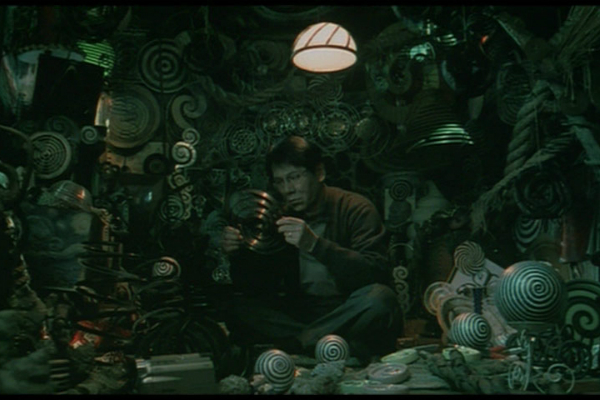
€œThere€™s another spiral€ in the deepest part of your ear€€ A small island community is terrorised by an abstract shape, which begins to have occult effects on the citizens. Obsessed with spirals, people begin to see the shape everywhere they go: in the curls of someone€™s hair, the corkscrew patterns on a snail, in food, in whirlpools and staircases and washing machines and round and round and round€ https://www.youtube.com/watch?v=j9U4JqO5hxo Based on the manga of the same name, nothing about Uzumaki makes sense, because it€™s not designed to give pat explanations to the audience. Sure, it makes reference to a cult of snake-worshippers who used to practice their religion at the pond, and as spiralling stormclouds touch down on the surface of the water, there are hints of some form of god that has its resting place there. But really, these are just narrative pads, points that anchor the non-linear narrative just as Fulci€™s haunted hotel anchors The Beyond. The four parts, or arcs the film is divided into do something similar, providing structure to the film €“ €˜A Premonition€™, €˜Erosion€™, €˜Visitation€™, and finally €˜Transmigration€™ all suggest a dynamic build, the supernatural occurrences and possession getting worse, more pronounced. The high school students begin to transform into snails, as the weather gets worse, the green palette that suffuses the film becoming more and more pronounced. The hero€™s classmate has hair curling in intricate spiral shapes, hair that takes on a life of its own and begins to corrupt the children that come into contact with it. When the sky itself appears to have been corrupted by the curse of the spiral, spiral shapes appearing in the clouds along with the ghostly faces of the spiral€™s victims, the community appears doomed, twisted into the shape of the vortex... Creepy, compelling and absurd without ever sacrificing the atmosphere of dread to the comedy, Uzumaki is one of the most bizarre, horrifying, intriguing films of all time. What€™s the strangest horror film you€™ve ever seen? Tell us all about it in the comments€

Contributor
Contributor

Professional writer, punk werewolf and nesting place for starfish. Obsessed with squid, spirals and story. I publish short weird fiction online at desincarne.com, and tweet nonsense under the name Jack The Bodiless. You can follow me all you like, just don't touch my stuff.