10 Most Sympathetic Movie Hitmen
Sometimes, we're on the side of the killers.
 MiramaxHitmen can't catch a break, can they? In movies, hitmen cannot go anywhere without falling victim to one sort of misfortune or another. The blue collar workers of the criminal world, either they are nameless henchmen to be disposed of by a protagonist with ease, or a hapless protagonist who is a minor player in a world that he has no control over. Not every hitman can be Anton Chigurh, after all. Let's face it, one of the reasons we love gangster films is the various roles they find for hitmen - they can be competent businessmen, they can be ruthless sociopaths, or they can be just regular guys doing their jobs. Whether they are incompetent wannabe gangsters or smart schemers, it is far too easy to end up rooting for the henchman to come out on top. It makes perfect sense, given many are put in particularly harrowing situations simply because they make a living being pawns of much more powerful and smart criminals. They are the ultimate gangster underdogs. To celebrate the endurance of hitmen as a staple of the gangster genre, this list explores the hitmen who (often through a particularly unfortunate spot of violence) are so hapless and unlucky that we cannot help but feel sorry for them, no matter how many heinous acts they commit in the name of their job.
10. Joe - Looper
 TriStar PicturesWhile Rian Johnson's Looper is primarily an exercise in twisty time-travel plotting, at the center of it all is a character who would be just another gangster - if not for the premise of the film. There is no hitman in film that has had to confront such a strangely existential conundrum - having to face off with oneself. In many ways, Joe is a lot like a sic-fi version of Henry Hill - hooked on drugs and thinking he's a rockstar amongst a bunch of ordinary schmucks. As a "Looper", he is assigned to dispose of people for gangsters of the future, which is quite a lucrative gig, apparently. He kills people from the future with no remorse or emotional qualms, despite knowing in the back of his head that he'll be assigned to kill himself one of these days. Joe isn't really a sympathetic character until he meets his older self. When these two Joes meet, they provide an excellent picture of this man's life - the young and rash version of Joe talking to the older and more mature one. While he doesn't linger too long on the existential problems posed by his mission, he finds himself coming into conflict with his future self's goal - the murder of a future Kingpin in the form of an eight year old child. Young Joe's solution to the conflict is both heartfelt and redemptive in the best way possible for his type of person, but it in no way makes us forget how heartfelt his older version's motivation was.
9. Rocco - The Boondock Saints
 Indican PicturesTroy Duffy's 1999 cult film The Boondock Saints has a remarkably divisive reputation - some love it as an over-the-top black comedy, some vehemently despise it as a cheap Tarantino knock-off. But one area in which most people will agree is that it is filled with memorable characters. One of these characters comes in the form of Rocco, a hapless low level mafioso in Boston, Massachusetts. Rocco is a hilariously pitiful character. A friend of the titular Boondock Saints (brothers Connor and Murphy MacManus), Rocco is desperate for advancement in the local drug cartel, but he is treated with absolute contempt by his fellow gangsters, who give him the patronising nickname "The Funny Man" for his awkwardly racist jokes. Rocco, after being betrayed and sent into a death trap, finally snaps and joins the MacManus brothers on their holy crusade against crime - although he is not nearly as successful at it. If The Boondock Saints were a band, Rocco is the Ringo - despite having critical connections, he is completely incompetent compared to everyone else in the film. He is an idiot, but his frustration at the world of organised crime comes from a real place - feeling rejected by their world, he decides to try his hand at being vigilante. He is always caught between smarter and more competent foes, which in some ways makes him the most human character in the film.
8. Clive Cornell - The Guard
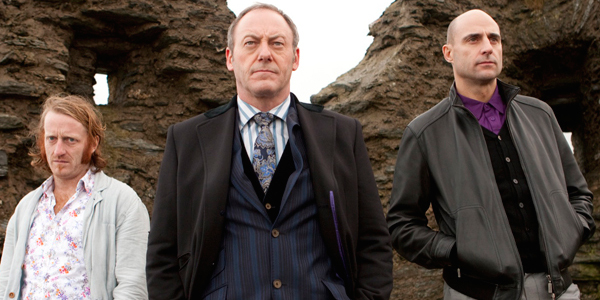 Sony Pictures ClassicsThe Guard is a film that is remarkably conservative about its antagonists - despite wearing the trappings of a crime thriller, this Irish black comedy succeeds with only three central antagonists, the most interesting of which is Mark Strong's Clive Cornell, a stoic british gangster with an sarcastic streak a mile wide. While he is given relatively little backstory, Clive Cornell has a palpable presence whenever he appears on screen. Brought on by Irish drug lord Francis Sheehy-Skeffington (played by Liam Cunningham) to assist with a drug shipment, Clive Cornell is a droll outsider in every scene he appears in, whether it be commenting on the nationality of his favourite writers or expressing his general frustration with the Irish way of doing things. All in all, this character would barely be a footnote if not for Mark Strong's characteristically solid performance. A bleak and remarkably existential monologue he gives to his two associates on his deep-seated feelings of burnout goes a long way in establishing this man as a human being rather than just another henchman. You almost feel glad for the guy when the climax arrives, because he seems so happy to go back to doing what he loves best - shooting people.
7. Mr. White - Reservoir Dogs
 Miramax FilmsThe entire cast of Reservoir dogs could easily fill this list (with the exception of Mr. Blonde) - Tarantino constructed his debut feature film as a deconstruction of how we see characters in heist films. All the gangsters in the film are fitted with stylish suits and classy nicknames, and act with macho bluster for the first extended scene of the film - which surprisingly takes place in a cafe rather than a shoot-out. As the film goes on, the macho fronts these characters put up come falling down one by one until they are just ordinary people caught in an extraordinary circumstance. The most sympathetic of these men in black is Larry Dimmick, A.K.A. Mr. White. His character is essentially the protagonist for the first two thirds of the film, before it dissolves into ensemble material toward the end. Harvey Keitel is the perfect actor to cast for a role like this - hard on the outside, yet extremely rational and honourable on the inside. His constant support of Mr. Orange is a testament to how far this character will go to preserve honesty and level-headed behaviour even when everything is falling apart around them. Mr. White shows the most moral integrity of any character in Reservoir Dogs, particularly in his defense of Mr. Orange and his adherence to old fashioned morality, even if it is slightly skewed by him being a gangster. It is almost impossible not to feel bad when he learns his trust in Mr. Orange was severely misplaced.
6. Vincent Vega - Pulp Fiction
 MiramaxIn many ways, Vincent Vega is the most iconic sympathetic hitman - despite working for a ruthless gangster in Los Angeles, he is a laconic & philosophical dude who hangs on long conversations about foot massages and overpriced milkshakes in between the brutal spots of violence that characterise his career choice. Considering he is the brother of the sociopathic Vic Vega (Mr. Blonde from Reservoir Dogs), Vincent seems like a genuinely decent guy. He gossips about his boss, gets into ethical disputes in the workplace, and gripes to his local drug dealer about some jerk vandalising his motorcycle. By this description, you wouldn't even guess that his job happens to involve killing people for money. But when that bit comes up, Tarantino knows a foolproof way to keep Vincent from becoming dislikable. Tarantino's ace in the hole with this character is his crushing haplessness. The most ironic moments in Pulp Fiction come from the frequent times when things go horribly, horribly wrong for Vincent, and he has to work madly to get himself out of the jam that he got himself (and his partner) stuck in. He is phenomenally unlucky, and that bad luck translates into extreme sympathy for the audience. It is fitting that he died because he didn't bring his gun to the toilet with him - doesn't mean it doesn't make us upset.
5. XXXX - Layer Cake
 Columbia PicturesThis is a man who prides himself on being a cut above your average gangster. Daniel Craig's cocaine dealer in this 2004 gangster film has no real ambition other than to make a decent amount of money and get away clean. Throughout the entire course of the film, we never learn his name because he plays things so close to the chest. Is he a hitman in the strictest sense of the term? At the start of the film, no. A mid-level dealer, he is pretty ready to begin his retirement when his misfortune - and his official time as a hitman - begins. This smart and unambitious man spends the entire runtime of the film getting batted around by people who are embroiled in their own power plays and petty turf wars, which XXXX wants no part of. Despite all this, he ends up being wrapped up by the conspiracies and rising confidently to the top of the heap - almost completely by accident. What makes this character so sympathetic is his inherent desire to steer clear of the sort of greed and pettiness that spells the downfall of larger gangsters. He doesn't want to do hits for the big bosses or gain any sort of power. He is content being a business man, which makes him an extremely sympathetic victim of the London crime strata. In the end of the film, he is brought down not by the trap of the crime world he worked so hard to avoid, but because he stole another man's girlfriend. It is a supremely ironic moment, and one that elicits gasps of shock from an audience that has grown to care about this anonymous drug-runner.
4. Billy Costigan - The Departed
 Warner Bros.Of all the characters on this list, Billy Costigan is the only one who isn't really a criminal. By legal terms he is, but in reality he is a mole for the FBI planted in Frank Costello's South Boston outfit in order to bring down the drug kingpin once and for all. His struggles with his own temper and morality render him an extremely three-dimensional character amidst violent sociopaths. The Costigan family is a family that has deep connections to the mob down in Southie, a reputation that William Costigan tries his best to shed when applying to be a police officer. However, those very connections - which cause him constant grief and agitation - are the reason he is chosen to infiltrate Costello's outfit. Billy's role in Frank Costello's gang is an extremely tasking one, requiring this man to betray his ethics time and time again in order to prove to Frank that he is rotten to the core. Despite being an extremely flawed character, Billy Costigan is the most sympathetic one in Scorsese's crime drama. Coping with extreme stress and a volatile temper to match, his internal struggle to balance out his extreme personality with a double life creates great drama - especially when he is hunting down a mole with the exact reverse position as him. His brutal demise is one of the most gut-wrenching moments in the entire film, because of how close he came to getting away triumphantly.
3. Carl Showalter - Fargo
 Gramercy PicturesCarl Showalter is easily the most abrasive person on this list. 90% of his screen time in this Coen Brothers masterpiece involves him complaining about some aspect of the (admittedly quite hilarious) job he has been tasked with completing, alongside his terse psychopathic partner, Gaear Grimsrud. Driving to Fargo and back, the events that befall this fast-talking criminal make him equal parts annoying and sympathetic. At the outset of Fargo, Carl is hired by Jerry Lundegaard to kidnap Jerry's wife as part of an outrageously elaborate plan to steal money from her rich father. Carl and Gaear give up on asking why, and just go along with the kidnapping, expecting to get paid and not have to kill anyone. This all goes horribly wrong when first a police officer, then a pair of locals, are killed for spotting them on the road. Carl tries more and more desperately to get the ransom from Jerry's in-laws, with quite grisly results. Throughout the runtime of this film, Carl goes back and forth between irritating and pitiable, but finally falls on the side of sympathetic when he too falls victim to Grimsrud. After being shot in the face, him and Gaear argue over how they will split the money, an argument that concludes with Carl receiving an axe to the head, before getting disposed of in an... unconventional way. As annoying as he may have been, no man deserves to be fed to a woodchipper. That is just wrong.
2. Ray - In Bruges
 Focus FeaturesNo one writes a witty suicidal quite like Martin McDonagh. The Irish-born playwright and filmmaker has made a career out of defying his audience's tonal expectations. In Bruges flips back and forth between dark comedy and bleak drama at an alarming rate, and no character weathers the storm quite as well as Colin Farrell's hitman with a heart of gold, Ray. On his first job in London, Ray is tasked with killing a priest, and inadvertently shoots a little boy through the head during the hit. Wracked with guilt, he is forced to hide out in the Belgian town of Bruges, where he confronts both his growing depression and his frustration with tourism. Not only that, his boss (Harry, a man of a very strict ethical code) is intent on killing him for the job he botched. Ray is crass, rude, and suicidal, but somehow Colin Farrell's performance and Martin McDonagh's script make the character extremely pitiable. Ray is the closest cinema will ever come to a sympathetic child killer. He did not mean to shoot the child, and it is clear throughout the course of the film how much this crime is weighing on his soul. Because of this, every crass joke he makes becomes not a negative aspect of his character, but a very honest way to escape from his own guilt and crushing grief. Especially since he's trapped in his own personal purgatory In F*cking Bruges.
1. Jules Winnfield - Pulp Fiction
 Miramax Films It was inevitable. Every list like this that features Vincent Vega has to feature his counterpart, Jules Winnfield. Jules is the heart and soul of Pulp Fiction, and not just because he is played with fiery commitment by Samuel L. Jackson, but because he has one of the strongest character arcs in a film full of strong characters. Jules is the quintessential honest hitman - starting the film acting like a stone cold killer, and ending the film with a new sense of purpose. Jules is easily the single most quotable henchman of all time, despite only appearing in three segments in Pulp Fiction. While he shines bantering with his partner, it is in their "professional" scenes in which he steps into the limelight. His performance is almost a definitive statement on what it is to be a movie hitman - chat for a few minutes while walking to the job, "getting into character", and then pulling out all the stops and scaring the sh*t out of your victim. Jules gains most of the sympathy from the audience toward the end of his storyline - since he is not as hapless as Vincent, he is often relegated to playing the straight man of their double act. However, when they experience the mysterious "act of god" following their conflict with Brett and friends, he pulls back from his initial behavior and becomes more introspective, to the point where he can analyse his own favourite bible verse, using it to come to terms with his own identity as a hitman. Now that is quite a lot to think about while mitigating a Mexican standoff. If there are any exceptionally sympathetic mobster minions you think we left out, feel free to mention them in the comments below!