10 Things You Didn't Know About The Marvel Cinematic Universe

The facts of (Marvel) life.
Nowadays, the Marvel Cinematic Universe is probably about as popular as other very popular things - you know, like Jesus or One Direction. Over the past eight years, the comic book behemoth that is Marvel have successfully crafted one of the most impressive cinematic constructs ever conceived by people who are interested in devising things of that sort - a fully-fledged and interconnecting universe built out of multiple characters appearing in and across multiple movies that is constantly evolving before our very eyes. Hurrah! If you've missed the Marvel boat and - for some reason - are yet to glimpse a movie in the MCU canon, all we really have to say is: you're seriously missing out, pal. After all, the MCU is so impressively dense with information that it's sometimes difficult to keep up with everything that it's throwing at you. And yet, for the most patient and observant fans, there are an endless array of rewards to be found if you put in the time. But even the most patient and observant fans are bound to miss stuff sometimes. To celebrate that notion, then, just us as we take a look at 10 things that you probably didn't know about the Marvel Cinematic Universe. And if you did know these things, consider yourself a true fan... and in need of another hobby.

10. Samuel L. Jackson Is Still Working Through An Insane Nine-Picture Deal With Marvel
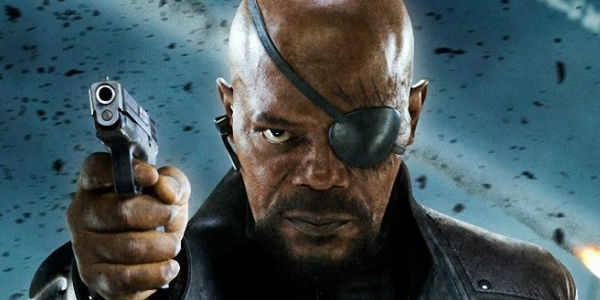
There's a running gag regarding Samuel L. Jackson and the fact that "he's in everything," because - let's face it - he actually is. Said gag is only cemented by the fact that Jackson, who has appeared in almost every MCU venture to date, originally signed a contract to appear in a whopping nine movies as Nick Fury, one of which could - at some point in the not too distant future - become a solo outing for the iconic actor. Which he'd no doubt love, of course (and our fingers are certainly crossed that it actually happens). Anyway, Jackson popping up in the MCU flicks has become a keen staple of the franchise, almost to the point of parody (though we don't mind that, really). Still, the fact that Jackson signed up for so many flicks at the dawn of the MCU proves that he had faith in its future - and he still has four contracted appearances to go!

9. The MCU Was Originally Called The "Marvel Cinema Universe"
Yeah, so it's a slight change, but it still makes for a somewhat interesting fact. When he first unveiled the core concept that defines the Marvel Cinematic Universe, then, Kevin Feige - President and Overlord of Everything Marvel - referred to the MCU as the "Marvel Cinema Universe," which is super similar, except that it doesn't quite have the same ring to it. Later, the studio branded it as the "Marvel Cinematic Universe." Granted, Fiege was yet to hone the franchise as we know it today when he first unveiled that working title of the soon to be gargantuan project, and presumably - in partnership with the marketing department - decided to extend the middle word to imbue it with a little added epicness (you know, in the same way that Mark Zuckerberg dropped the "the" in The Facebook to make it better). They certainly made the right choice.

8. The Combined Gross Of All The Movies In The MCU Is $7.1 Billion Dollars
Just over $7 billion dollars. That's how much the movies in the MCU canon have made when you count up all those box office receipts and add 'em together. Granted, in the beginning, there were those who said that the MCU was a bad idea - that it was too ambitious, and that it wouldn't translate well to the cinematic medium. To those people, Marvel would presumably like to say: "Um, $7.1 BILLION DOLLARS, B*TCHES!" As you might easily surmise, the highest-grossing movie of the bunch is The Avengers, which pulled in an insane $1.5 billion dollars, with Iron Man 3 and Guardians of the Galaxy ranking in second and third place with impressive takings of $1.2 billion dollars and $765 million respectively. Unsurprisingly, The Incredible Hulk is the least grossing MCU flick with just $236 million dollars. As the weakest flick, this makes sense.

7. The MCU Is The Second Highest-Grossing Movie Franchise Ever (After Harry Potter)
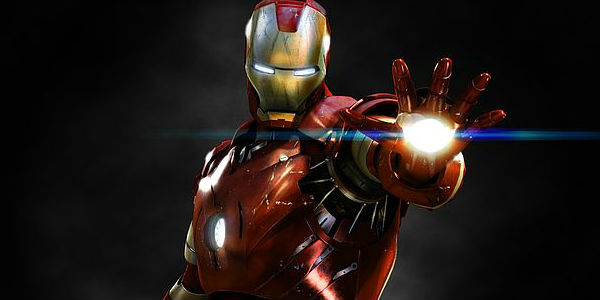
It might not be super surprising to learn that the MCU has done so well financially, but it might come as something of a shocker to discover that it is, in fact, the second highest-grossing movie franchise of all-time (and the highest-grossing film franchise in the US of all-time). It comes second only to that of Harry Potter, which has amassed an astounding $8 billion dollars (and counting). But that's probably soon to change. What's more interesting to learn, perhaps, is that the MCU franchise - with just 10 movies to its name currently - has amassed more cash than the entire James Bond franchise (which consists of 23 films), which has grossed a mean $6 billion. The MCU also beats out the Star Wars, Batman, Transformers, and Middle-Earth franchises. Give it another couple of years, then, and it's likely to be the highest-grossing series ever.

6. The Criteria For Hiring MCU Directors Is That They Have To Have Made "Something Singularly Sort Of Awesome"

Have you ever sat down to a MCU movie and wondered why Kenneth Branagh or those guys who directed a bunch of Community episodes are helming some of the biggest blockbusters ever made? Us, too. Thing is: that's precisely the reaction that Marvel Studios are going for, apparently. They're purposely looking for directors who can help them to break the mould - to move things into unique and innovative territories. "You don't have to have directed a big, giant visual-effects movie to do a big, giant visual-effects movie for us. You just have to have done something singularly sort of awesome," said Kevin Fiege on the matter. "It's worked out well for us when we've taken people that have done very, very good things. Very rarely are one of those good things blockbuster superhero movies." The criteria is pretty simple, then: be notably awesome.

5. Phil Coulson Has Appeared In The MCU More Than Any Other Character
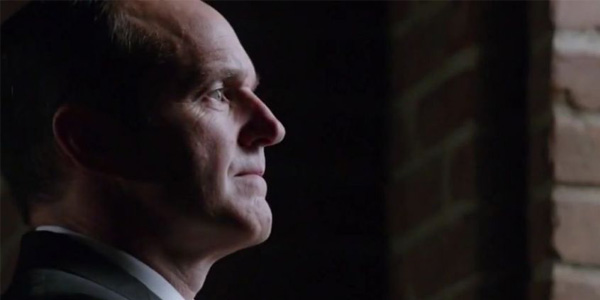
Despite the fact that he's played by a relative unknown actor in Clark Gregg, isn't a superhero, and never appeared in an actual Marvel comic book, it's S.H.I.E.L.D. man Phil Coulson who has appeared in the MCU the most frequently amongst its many, many characters - something that you probably didn't realise until you read it right here. Which, in a weird way, marks him as something of the main poster boy for the franchise. Okay, so perhaps that's a little hyperbolic, but you get the idea. Coulson met his "end" In The Avengers, of course, having appeared in small cameo roles in pretty much every MCU flick up to that point, but was later revitalised as a major character in TV's middling Agents of S.H.I.E.L.D. He's also appeared in his own Marvel "One-Shot," and has developed something of a cult following. Basically, Phil Coulson is a badass.

4. Edgar Wright Inadvertly Helped To "Shape" The Marvel Cinematic Universe
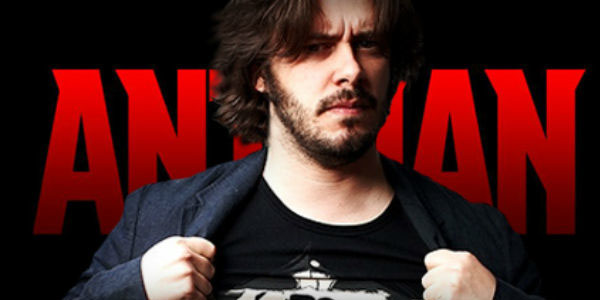
Despite that fact that talented director Edgar Wright left Marvel's Ant-Man due to creative differences, a project he had been working on with Marvel ever since 2006, there's a lot more to the story other than what we know about his disillusion with the movie's tone. Although Wright only signed on officially as Ant-Man's de facto director in 2012, he had been developing it for years beforehand, and in doing so, left his mark. Simply put, it was - according to Marvel God Kevin Feige - Edgar Wright's pitch for Ant-Man in 2006 that helped to define what would eventually become the MCU. "We changed, frankly, some of the MCU to accommodate this version of Ant-Man," he said. "Knowing what we wanted to do with Edgar and with Ant-Man, going years and years back, helped to dictate what we did with the roster for Avengers the first time."

3. Kevin Feige Came Up With The Idea For The MCU When He Realised Marvel Still Had The Rights To Most Of The Avengers
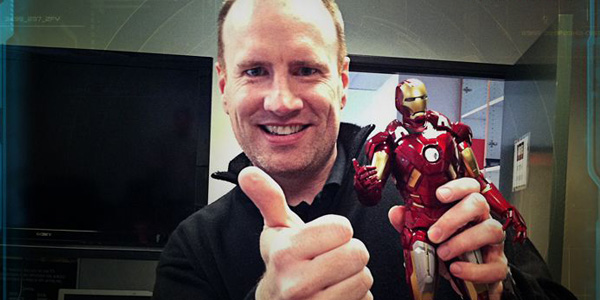
Back in 2005, Marvel were making relatively little profit through the licensing of their most iconic characters, like Spider-Man and the X-Men, to big movie studios. Keen to produce their own films, however, the eureka movie struck when Kevin Fiege - Marvel bigshot - realised that, although they lacked the rights to some infamous superheroes, they still retained the rights to the key members of... you guessed it: The Avengers. Upon discovering this, Fiege - a self-confessed fanboy - pondered the possibility of a shared cinematic universe, consisting of several solo movies, leading into a crossover, much akin to the Marvel comic books of the 1960s. To make it so, Marvel took out a huge loan ($525 million, if you're wondering) and set about on crafting the first movie in what would become one of cinema's biggest ever movie franchises: Iron Man. Yay!

2. Joss Whedon Serves As A Creative Consultant On Every Movie
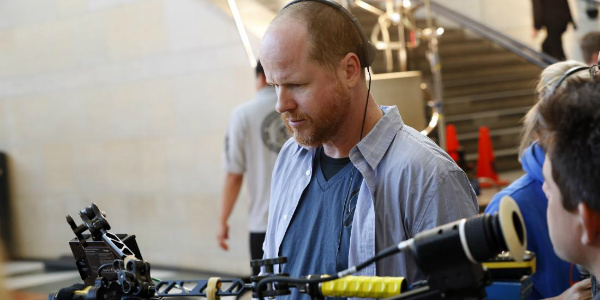
Given that he was responsible for bringing together the Avengers in the long-awaited and arguably best movie in the MCU canon, it's not really all that surprising that Joss Whedon has his finger in all the MCU pies: which is to say, Whedon isn't just involved with The Avengers movies - his job as a "creative consultant" over at Marvel involves him wandering around and offering advice to the other directors. Ever since 2012, Whedon has served in this role, and will do so until at least 2015. In his own words, then: "I read the scripts and watch cuts and talk to the directors and writers and give my opinion. Occasionally there could be some writing. But I€™m not trying to get in anybody€™s soup, I€™m just trying to be helpful." Expanding on his role, he added: "If I can help and not get in the way of the actual filmmakers, that€™s what I€™m going to do."

1. Shared Universes Just Weren't Really A Thing Until The Avengers (And Now They're Frickin' Huge)
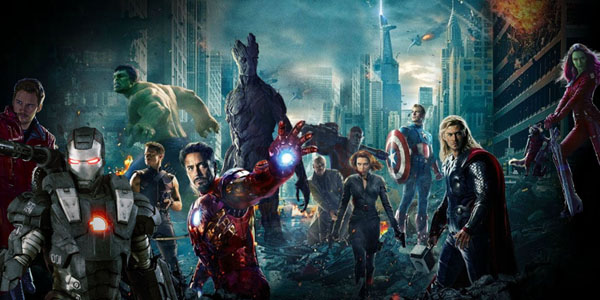
Though there's no arguing with the fact that the MCU is the most successfully rendered "shared universe" to have ever graced the cinematic medium, it's also true that - before The Avengers - the notion didn't really exist in Hollywood at all. There had been a few "novelty" takes on the format, of course, what with movies such as Alien Vs. Predator - but even with that flick we felt that the movie didn't take itself all that seriously. As a result of Marvel's inspired success with shared universes, major Hollywood studios have come around to the idea in a big way. As of this year, we're getting a DC Cinematic Universe, a Spider-Man shared universe, and a potential X-Men/Deadpool shared universe - certified proof that there's a lot of money to be made if movie studios are willing to bring their characters together in motion pictures of the kindred variety. Like this article? Learn anything new? Got anything else to add? Let us know in the comments section below.

Contributor

Sam Hill is an ardent cinephile and has been writing about film professionally since 2008. He harbours a particular fondness for western and sci-fi movies.