10 Things You Didn't Know About Pulp Fiction

John Travolta was paid how much?!?

Pulp Fiction has just turned twenty years old. While that may unfortunately make some readers feel a bit old, it also makes it a good time to look back at what was a milestone in the world of film. Made on a relatively small $8m budget, Pulp Fiction would go on to make $214m at the box-office and in essence became the Star Wars of independent film. A non-linear movie in which characters sit around and talk about foot massages and burgers had done monster business and it set the stage for the independent boom of the mid-1990's. Yes, Pulp Fiction was one of the most successful independent films of all time, made (even bigger) stars out of the film's cast and announced Quentin Tarantino as the hottest director in Hollywood. The film was effortlessly cool and won over even the surliest film critic with its sharp dialogue, unique story and the way in which the film referenced everything from long-forgotten science fiction B-movies to classic Italian neorealism. Pulp Fiction is iconic, no question about it. The film's poster has adorned the walls of millions of University students and is one of the most parodied images in film history. As famous as the film is, there are still some things you might not know about it. Like the glowing briefcase that features throughout the film, it's time to shed some light on this post-modern masterpiece.

10. Vincent Vega's Deadly Toilet Trips

While many people probably think their trips to the toilet can have deadly consequences, this is quite literally the case for Vincent Vega: every time he goes for a number one or a number two bad things inevitably happen.. Vega is seen on the toilet a lot in Pulp Fiction (constipation is a nasty side-effect of heroin use, you know) and there are several cases of him leaving a restroom and having bad things happen around him. For example, when he exits the bathroom at Mia Wallace's house he sees that she is overdosing. When he comes out of the toilet at the restaurant, wouldn't you know it but there's a robbery taking place. Vincent is even shot dead by Butch after using the fight-throwing boxer's bathroom. It is also interesting to note that whenever he needed to go to the bathroom, there was always a 'pulpy' book for him to read.

9. My Sharona

Pulp Fiction's soundtrack is one of the things that makes it so cool. The song choices are so on-point, whether it's Kool And The Gang's Jungle Boogie in the opening credits, Chuck Berry's You Never Can Tell for the celebrated Jack Rabbit Slims dance sequence (which Uma Thurman disliked originally) or Al Green's sultry Let's Stay Together. Music is important to Pulp Fiction and it is one of the reasons why the film is as effective as it is. Tarantino puts a lot of thought into his music choices and this film was no exception. He usually gets what he wants but on Pulp Fiction, one song eluded him. That song was The Knack's My Sharona, to be used in the scene where Butch and Marcellus Wallace are threatened with some uncomfortable penetration by Zed, his brother and the terrifying Gimp. The song never made it to the film, however, and instead ended up being used in Reality Bites (also released in 1994), as Tarantino explained in the book Quentin Tarantino: Interviews:
"The licensing people had to decide between us and Reality Bites. They ultimately made the good choice...the song ended up being too comical for Pulp. But it's got a good butt-f****** feel to it"
Quite.

8. Uma Thurman Initially Turned It Down
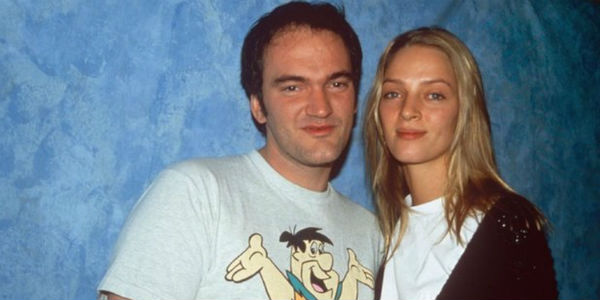
Uma Thurman didn't just have a problem with the use of the Chuck Berry song in the Jack Rabbit Slims dance sequence. After reading the script, she didn't want to be in the film at all. Yes, Thurman originally turned down the iconic role of Mia Wallace. But, after only meeting Thurman once, Tarantino had made up his mind and wanted her for the part. So when Thurman turned it down, he went about wooing her and eventually convinced her to do it after reading her the script over the phone. Thurman was nominated for an Academy Award for Best Supporting Actress and launched onto the A-List for her performance and has become the 'face' of the film in the majority of the promotional material for it. She's probably glad she took the part in the end.

7. Robert Rodriguez Did Some Uncredited Directing

Not content at just directing and writing the film, Quentin Tarantino took the part of Jimmie to show off his (lack) of acting chops. QT had always wanted to be an actor and has frequently cast himself in his own films in order to live out that dream. With Tarantino on screen for a few scenes, that left nobody behind the camera. So Quentin's friend and fellow director Robert Rodriguez stepped up and took the helm while Tarantino was busy trying to act. Although he didn't direct a substantial amount of the film, it is interesting that another young, up-and-coming directing was drafted in to do some work on the film. Rodriguez was, of course, not given credit for directing the scenes.

6. Jules' Bible Passage Is Made Up

That speech that Jules gives when he's really angry is so cool, right? Who knew the Bible could be badass? Well, as it turns out, Jules' Bible speak is largely made up and it actually very closely resembles a similar speech that appears in the Sony Chiba martial arts film The Bodyguard (1976). If you listen carefully, you'll also notice that Jules' speech changes all three times that he says it. Only the final two lines actually feature in Ezekiel 25:17. Whether made up or not, the speech is one of the most iconic moments of the film and one of the greatest speeches in film history.

5. The Steve Buscemi Cameo

MiramaxMiramaxSteve Buscemi was not a major star when Pulp Fiction was released and had, at that point, only really appeared in minor roles in smaller films including Tarantino's Reservoir Dogs. Not many people bring up the fact that Buscemi was in Pulp Fiction because they simply don't know about it. His appearance, as waiter 'Buddy Holly' in the Jack Rabbit Slims restaurant, was brief. Although his blink-and-you'll-miss-it appearance didn't last long, Buscemi still got the chance to spout some of that famous Tarantino dialogue, asking Mia Wallace if she wanted her $5 milkshake to be a "Martin And Lewis or an Amos And Andy'"(vanilla or chocolate).

4. What's In The Briefcase?

One thing that inevitably annoys people after they've watched Pulp Fiction is that you never found out what's in that bloody glowing briefcase. Is it just a MacGuffin, a plot device that actually has no real significance? Fans don't seem to think so and have spent years trying to guess what's in the mysterious briefcase and have posited several theories. One popular theory is that the briefcase actually contained Marcellus Wallace's soul. The reason? The number combination used to open it is 666, the number of the devil, and the bandage on the back of his head (where the soul is mythically removed). In reality, the bandage was there to cover up a scar that actor Ving Rhames suffered while shaving. In the original Pulp Fiction script, the case was said to contain diamonds, but Tarantino removed that after he decided it was too similar to Reservoir Dogs. Another out-there theory is that the case holds the gold suit worn by Elvis (Val Kilmer) in the Tarantino-scripted True Romance. Tarantino has never revealed what's actually in the briefcase and has said that he never will, leaving it up to the viewer to decide what's inside.

3. John Travolta Was Paid Less Than $150,000

John Travolta was a big star in the 1970s after appearing in lead roles in hit films like Grease (1978) and Saturday Night Fever (1977). The 1980's were less kind to Travolta and his star began to fade and the offers stopped coming in. He still had a huge fan in Tarantino, mind, who loved Travolta's performance in Brian De Palma's vastly underrated thriller Blow Out (1981) and cast him in the role of Vincent in Pulp Fiction. Now we all know that famous actors who appear in popular films usually go home with a decent chunk of change for their efforts. Pulp Fiction was an independent film and only cost $8m to make, $5m of which was spent on actors' salaries. Bruce Willis, Christopher Walken and Uma Thurman were taken care of. John Travolta, on the other hand, earned a relatively tiny $140,000 for his work on the film, ten grand less than was spent creating the set for Jack Rabbit Slims Still, Travolta was hardly complaining when he was nominated for an Academy Award for Best Actor and found himself back in the Hollywood good books.

2. Many Stars Were Considered For Roles
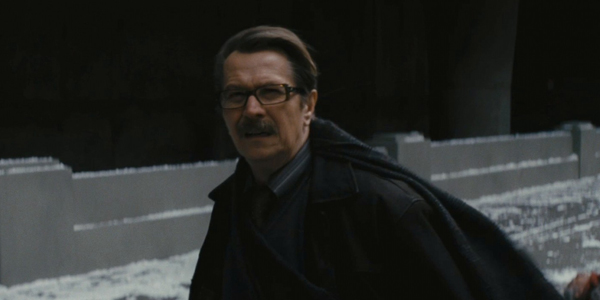
It is hard when watching Pulp Fiction to imagine any other actor in the principal roles. Could anyone other than Samuel L. Jackson really play Jules? Anyone really see somebody else as Mia Wallace? Didn't think so. But the casting of the film nearly turned out very, very differently. The script was a hot property back in the early '90s and many actors realised the potential the film had and wanted in. Johnny Depp, Christian Slater, Gary Oldman, Meg Ryan, Holly Hunter, Daniel Day-Lewis, Michael Madsen and even Ellen DeGeneres were all almost cast in various roles in the film. Tarantino had to fight hard to get John Travolta as Vincent ahead of Harvey Weinstein's golden boy Daniel Day-Lewis and after getting Uma Thurman interested, Tarantino then had to make sure the part wasn't given to Meg Ryan instead. The casting of the film and the acting performances are a huge part of its success and reputation. It's hard to believe that Daniel Day-Lewis and Meg Ryan would have quite the same impact as Uma Thurman and John Travolta, isn't it?

1. The Foreign Influence

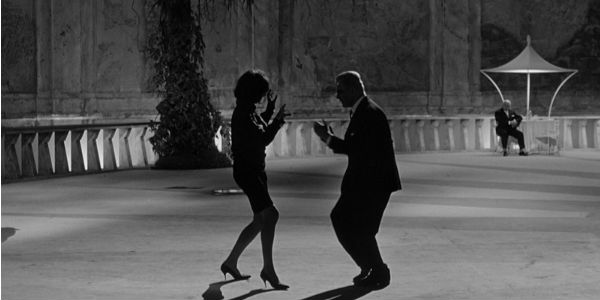
Pulp Fiction is full of references to other films and pieces of pop culture. A lot of the pleasure derived from watching Pulp Fiction is counting the references and making the connections. Tarantino is a noted cinephile and reportedly tries to watch, on average, three films per day. Foregoing DVD and Blu-Ray, Tarantino buys the actual film prints and screens them at his own cinema for himself and friends. He reportedly watches everything from classic Film Noir to made-for-TV 1970's horror films (and everything in between). Tarantino is also an appreciator of World Cinema and Pulp Fiction is littered with references and homages to some of the greatest foreign films of all time. Tarantino even named his production company, A Band Apart, after Jean-Luc Godard's film Bande à part. Godard's film is also said to have inspired the Jack Rabbit Slims dance scene - it bears a resemblance to The Madison Dance. Another scene that clearly influenced the Jack Rabbit Slims scene is the dance sequence from Federico Fellim's classic 8 1/2 (1963). While the scene in Pulp Fiction is clearly a pastiche/homage and not outright ripping off, not every viewer will be alert to the reference. Check out the comparison video below for further proof. https://www.youtube.com/watch?v=c498ue1AlBQ Any other cool Pulp Fiction trivia out there? Share it in the comments below.

In this post: 
Pulp Fiction
 
Posted On: 
Contributor
Contributor

Student of film. Former professional wrestler. Supporter of Newcastle United. Don't cry for me, I'm already dead...