10 Things Peter Jackson Wants You To Forget About The Hobbit

Don't look Azog directly in the eye...
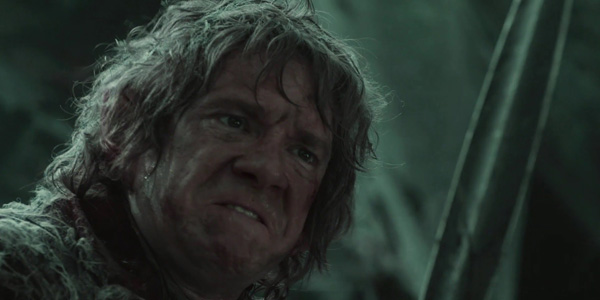
There's no denying the massive appeal of Middle-Earth, the fantastical world created by distinguished Oxford professor J. R. R. Tolkien. He poured his heart and soul into his works, and the result is a literary realm that feels as real as the world we inhabit. With such a dedicated worldwide fan base, it really comes as no surprise that The Lord Of The Rings movie trilogy is one of the highest-grossing film trilogies of all time. The films themselves have a legacy of greatness; all three instalments were nominated for the Academy Award for Best Picture of the Year in the respective years of their release, with The Return Of The King claiming that prize. To date, it is the only fantasy film to win an Oscar for Best Picture of the Year. Considering the wild success The Lord Of The Rings enjoyed, it was inevitable that its prequel, The Hobbit, would also receive the blockbuster treatment. Expectations were high as everyone eagerly anticipated the release of the first Hobbit film, An Unexpected Journey. One thing became evident as An Unexpected Journey and The Desolation Of Smaug unfolded on our screens - Peter Jackson altered the story so much that it was almost unrecognizable as The Hobbit. While he was more or less faithful to the plot of The Lord Of The Rings, Jackson has taken liberties galore with The Hobbit. Although there are multiple divergences from the book, there are at least ten that stand out prominently and are so obviously different that Jackson probably hopes no one will read the book and realize what he changed.

10. The Dwarves Lack Their Colored Hoods

Hobbit Group This is a minor quibble compared to the major offenses that'll be highlighted later in this article, but it still shows a lack of attention to detail from a director who adhered so closely to descriptions given in The Lord Of The Rings novels. When you first meet the Dwarves in the original Hobbit story, they are identified primarily by the colors of the hoods they wear - and there is quite a variety of color among Thorin Oakenshield's company. There are Dwarves with scarlet, yellow, brown, and green hoods; Thorin himself is distinguished by his blue hood with the silver tassel. In the two Hobbit movies released so far, however, these hoods are nowhere to be seen. Their clothes are rougher and do look like the kinds of garments that poor, homeless Dwarves might wear, but the hoods could still have been incorporated into the costumes. If nothing else, the different colors could have helped the audience keep track of the company members!

9. Radagast Is Not In The Book
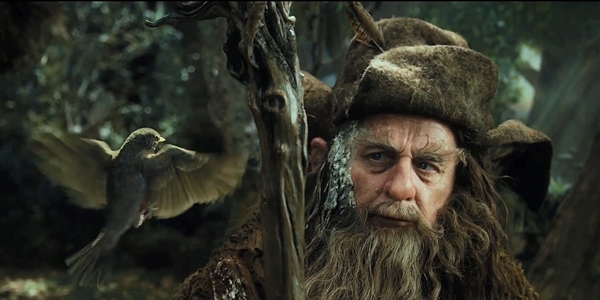
Radagast An Unexpected Journey introduced us to Radagast the Brown, one of Gandalf's fellow wizards. A lover of nature and animals, Radagast dwelt at Rhosgobel, which was close to Mirkwood. He was the one who first discovered how much of a threat the Necromancer posed and managed to warn Gandalf, who in turn warned Elrond, Galadriel, and Saruman. Thanks to Radagast's warning, Gandalf was able to discover the Necromancer's true identity. There's a battle in store for the White Council, but thanks to Radagast's vigilance, the Council was alerted to a grave threat in the nick of time. There is one problem with this scenario - Radagast does not appear in the book. His first appearance is not until the novel version of The Fellowship Of The Ring, and even then he makes only the briefest of appearances, having been sent by Saruman to locate Gandalf and urge him to go to Orthanc (which, of course, was a trap). In The Hobbit as it was originally written, Radagast makes no appearance, and the existence of the Necromancer is fairly well known. Even Bilbo, as sheltered as he was, seemed to have heard of him.

8. Legolas Is Not In The Book
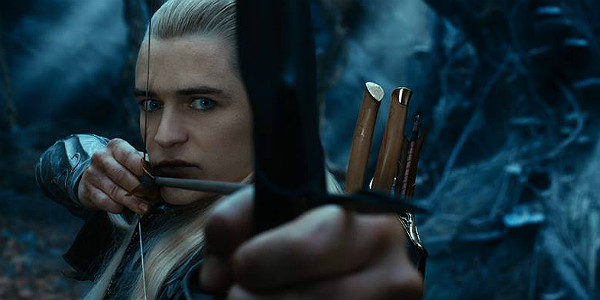
Legolas Arguably one of the most popular characters from the original movie trilogy, Legolas was an Elf prince from Mirkwood who accompanied the Fellowship when they first set out from Rivendell on their quest to destroy the Ring. He joined forces with Aragorn and Gimli to rescue Merry and Pippin from the Uruk-Hai and played an instrumental role at the Battle of Helm's Deep. His Elven reflexes made him faster and stronger than his companions and allowed him to perform extraordinary feats of martial prowess that left audiences' mouths hanging open in awe and admiration. Needless to say, expectations for the planned Hobbit movies skyrocketed when it was announced that Orlando Bloom would be reprising his role of Legolas for the prequel movies. This was a move that initially made some sense; the Dwarves were held prisoner in his father Thranduil's kingdom, so it was to be expected that he might put in an appearance or two. However, his involvement in the movie narrative proved to be much more pervasive than that; he has an active role in the subplot and is once more a major character, a far cry from the book where he doesn't appear at all.

7. Beorn Is Not The Last Of His Kind
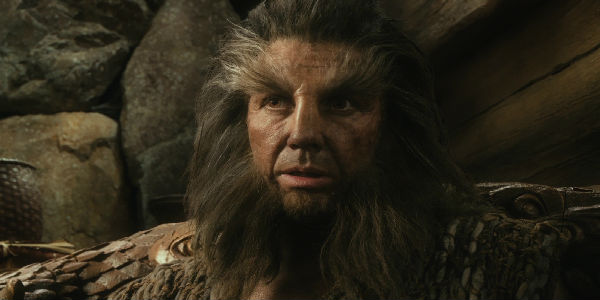
One of the many allies Thorin Oakenshield and Company make on their quest to reclaim Erebor is Beorn the Skinchanger, a Man who has the ability to transform into a bear at will. Beorn is fearsome, but his intimidating exterior masks a good heart and a love of animals. He is keenly interested in Thorin's quest - more specifically in the reason the Orc chieftain Azog is dogging their steps. You learn that his interest is due to the fact that Azog killed and enslaved many Skinchangers, Beorn among them. His tortures and slaughter took their toll on Beorn's people; he is the only Skinchanger left alive. All of this would be an incredibly moving backstory if it weren't for the little detail that none of this was in the book. Beorn never mentions Azog or that his people were once the slaves of the Orcs. In fact, he never mentions his people at all. While that might seem like an indication that he is the only Skinchanger in existence, Gloin mentions Beorn's son Grimbeorn in The Fellowship Of The Ring, meaning that there was at least one female Skinchanger around for Beorn to marry.

6. The Dwarves Forgot About The Light Of Durin's Day
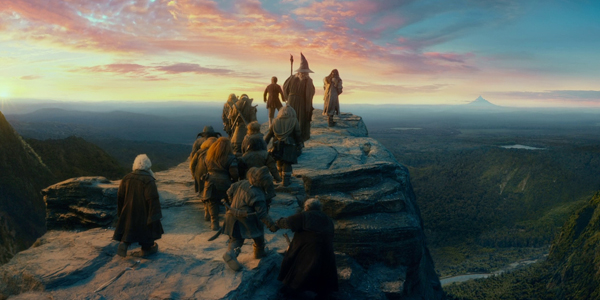
The Dwarves were working under a tight deadline; they had to get to Erebor by Durin's Day if they wanted to be able to open the secret door. According to the runes on the map, the last light of Durin's Day would shine on the keyhole and allow them to unlock the hidden door, thereby re-entering Erebor with a lower likelihood of being detected by Smaug. They reached the mountain right on Durin's Day but were discouraged when the sun set without highlighting the keyhole. Bilbo alone did not give up hope, and he was the one who realized that the last light of Durin's Day was the moonlight. How did the Dwarves not realize this? Durin's Day was the first day of the Dwarves' New Year, the most important day on their calendar. It makes no sense that they would not be aware of what the last light really was. This contrasts sharply with the book; the Dwarves knew about the light of Durin's Day (here it is distinguished as the day when the last moon of autumn and the sun are in the sky together) and knew what was required to find the keyhole. Having the Dwarves be so ignorant of one of their most important holidays was nothing more than an attempt to create more intrigue and drama in a movie that already had plenty of both.

5. Bilbo's Spider Song Is Missing

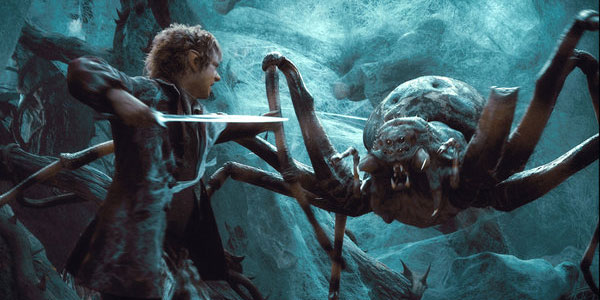
Again, this is one of the more minor complaints concerning the changes Jackson has made to the overall narrative, but its absence is still disappointing to anyone who is familiar with the book. The Desolation Of Smaug shows Bilbo fighting off the giant spiders of Mirkwood with some help from the Ring; its invisibility provides him with a great advantage over the spiders - they can't see him, so they don't know what they're fighting or where it is. In the book this scene is further expanded with Bilbo's singing; he makes up a song to use in taunting the spiders. The song antagonizes the spiders and goads them into striking out irrationally. One by one Bilbo uses his song to lure them away from the Dwarves and fight them off. It was a comic little song and added some levity to an otherwise tense situation. Seeing as they had included the Dwarves' kitchen song and the Song Of The Lonely Mountain in An Unexpected Journey, it was surprising to see that they neglected to include Bilbo's spider song.

4. The Dwarves All Went To The Mountain Together
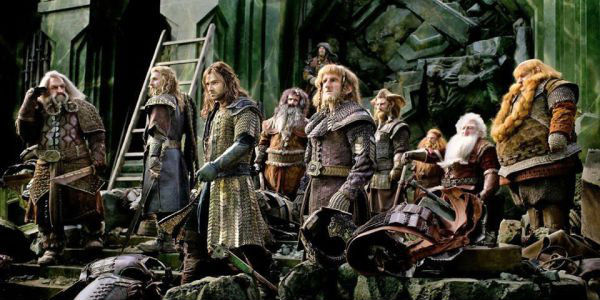
The Dwarves finally made it to Lake-town, and from there it was just a short journey to the mountain itself. Everything the Dwarves had dreamed was close to coming true. Then Kili woke up too ill to make the journey, and Thorin insisted he stay behind until he had recovered. Fili knew how heartbroken his brother was at being forced to stay behind and volunteered to stay with him. In the end, four of the company remained at Lake-town - Kili, Fili, Oin, and Bofur (who overslept and missed the boat); the rest of them set out for the mountain. Needless to say, this is not how things played out in the book. There were no Orc fights and no poisoned arrows, meaning that Kili never got sick, and no one had to stay behind. Every member of the company was able-bodied and in perfect health for the final stage of the journey.

3. There Was No Epic Chase With Smaug
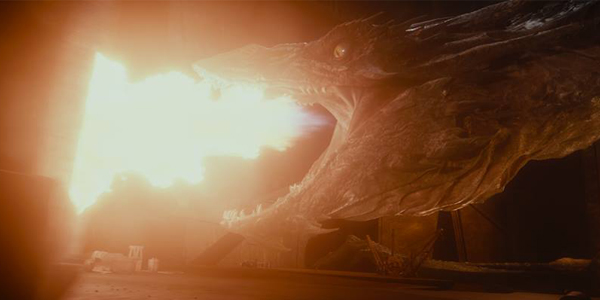
When the Dwarven company finally reaches the Lonely Mountain, they send Bilbo in first to see if Smaug is awake. He wasn't at first, but Bilbo accidentally awakens him. He manages to temporarily distract the dragon by speaking in riddles, but it isn't long before Smaug goes on the rampage. He pursues Bilbo and the Dwarves throughout the cavernous halls before the heroes manage to cover him in molten gold. Unfortunately, this does little to stop him. As thrilling as the chase scene played out, it was also completely different from the book - namely the fact that it happened at all. Bilbo's encounters with Smaug were primarily the riddle-based conversations. The Dwarves remained outside until they were certain Smaug was away, and at no time did they pour molten gold on him. It was awe-inspiring on the big screen, but it unfortunately had no connection to the book.

2. Tauriel Is Not A Tolkien Character
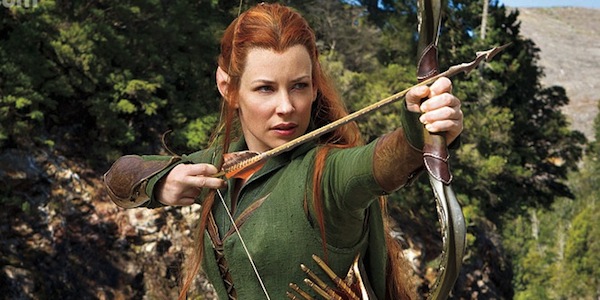
The Hobbit Tauriel In The Desolation Of Smaug we meet Tauriel, an Elven archer who serves in the ranks of King Thranduil. She assists in the capture of the Dwarves when they trespass into the Elves' realm in Mirkwood, impressing a certain young Dwarf with her spider-slaying skills. Like all Elves, Tauriel is initially distrustful of the new prisoners, but her growing relationship with Kili causes her to start thinking differently about the Dwarves. Also, the incursion of the Orcs into Mirkwood convinces her that the Elves need to team up with Thorin and help hm and his companions defeat the Orcs since they are a threat to all Middle-Earth. But Thranduil refuses to listen, and Tauriel sets out on her own, convincing Legolas to join her. Anyone who has not read The Hobbit but wants to after watching the movies will be surprised and, perhaps, disappointed to find that Tauriel is nowhere in the book. At all. Nor does she appear in The Fellowship Of The Ring or The Silmarillion; she is a creation of Jackon's, not Tolkien's. Introducing an original character was a risky move but could have added an interesting dimension to the story. Instead, the contrived Legolas/Tauriel/Kili love triangle makes the movie series feel like lavish, multimillion dollar fan fiction.

1. Azog Was Killed At The Battle Of Moria
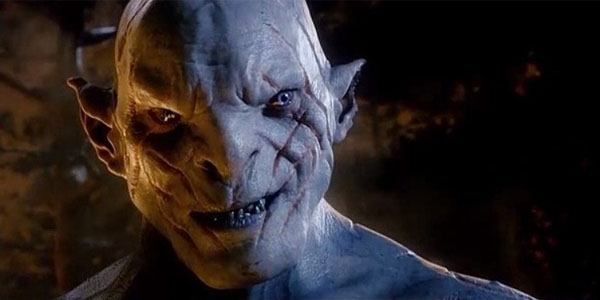
It doesn't take long for danger to overtake Thorin and his companions on their quest to retake Erebor. The danger comes in many forms, but none of them are as deadly as that of Azog the Defiler. Known as the Pale Orc, Azog was the chief of the Orcs that dwelt in the old Dwarf kingdom of Moria, which Thorin's grandfather Thror attempted to reclaim after Smaug invaded Erebor. This attempt resulted in Thror's death; Azog, though badly injured, survived and nursed his thirst for revenge. When he learned that Thorin had resurfaced, he set out to exact his revenge against Thror's grandson. Azog's pursuit of the Dwarves makes for an exciting subplot, but it also completely changes the story of The Hobbit. Azog does not appear at all in the book for the simple reason that he is dead. According to the appendices in The Lord Of The Rings, Thorin's cousin Dain killed him at the Battle of Moria (the same battle where Thror died). With Azog dead, about 90% of the movies' plots and action scenes cease to exist; changing his fate at the Battle of Moria puts the three Hobbit movies more into the realm of an alternate timeline than an accurate adaptation. Can you think of anything else Peter Jackson has changed that he probably wishes we would forget from the original story? Let us know in the comments section!

Contributor

Paula Luther hails from Pennsylvania and has been an avid Whovian since 2008. She enjoys writing (obviously), reading, dancing, video editing, and building websites. She has also self-published two books on Amazon, "Bart the Bard" and "Android Mae and Other Stories".