10 Transgressive Movies That Went Beyond The Boundaries
 The term 'transgressive cinema' was coined by underground film maker Nick Zedd who made several edgy black and white films which crossed moral boundaries. Indeed the term transgressive is used to describe any form of cinema, literature and art which goes beyond social mores and sensibilities. They are designed to be offensive and shocking. Transgression in art forms can be traced back to French author George Bataille, the Marquis de Sade, Dadaists and surrealists. In cinema, transgression began the moment Luis Bunuel filmed his infamous eyeball slicing in Un Chien Andalou and followed that up with the blasphemous L'Age D'Or. Over the decades transgression has deepened in cinema to provide us with films as subversive and brutal as Pasolini's Salo, Wes Craven's Last House on the Left and Gaspar Noés Seul Contre Tous. I have outlined below 10 films that are transgressive works of cinema. They may not all be 'good' films but they are definitely unwholesome...
10. Frontiers (2008)
 When a far right candidate is elected President of France, there is widespread civil disorder. A group of young people take the opportunity to pull a robbery but it goes balls up and one of them - Sami - is shot. The group splits up and Yasmine and Alex take Sami to the hospital while Tom and Farid take the loot to a family run inn and are seduced by two girls there. The hospital tips the police off about the robbery. Sami tells Yasmine (who is pregnant) to run off and keep the baby. Yasmine and Alex phone Tom and Farid for directions to the inn. The owners of the inn (Goetz, Gilberte and Klaudia) then brutally attack Tom and Farid. When Alex and Yasmine arrive at the inn, they too are attacked and chained up in a muddy pig pen. Alex frees Yasmine and she runs away. Alex gets his achilles tendons cut for this misdemeanour, he later requests to be put down peacefully and he is granted his wish. Farid is boiled alive and Yasmine recaptured. Yasmine soon realises that the family are practising Nazis. There is a showdown at the end where Yasmine manages to escape the house after much gun toting and giving the family members the slip. She surrenders to the police when everyone is dead. With lovely themes such as children abandoned in a mine shaft, Frontiers goes all out for a transgressive movie. I actually found it really boring - nowhere in the league of other New French Extremity films such as Inside and Martyrs. The editing is terrible and the whole set up quite immature. There are no likeable characters to root for in the movie - you don't really care what happens to them. The Nazi themes in the movie are poorly executed and don't make any sense. I actually think that I fell asleep whilst watching this film. The gore, which could have been a saving grace, is infrequent and stupidly done. The whole film is a rip off of The Texas Chainsaw Massacre - a very poor and contrived rip off. It tries desperately to be a shocking transgressive movie but is really lame and boring.
9. Naked
 Directed by noted British film maker - Mike Leigh, Naked is a much darker and violent film than the rest of his film oeuvre. It follows the exploits of Johnny, who rapes a woman in a Manchester back alley and then flees to London. Johnny is an extremely intelligent man who is educated and eloquent. He is frequently condescending and nasty to the people round him who he clearly feels are his inferiors. Johnny is arrogant, full of himself and verbally cuts to pieces anyone who stands in his way. He likes rough sex and seduces his friend's flatmate for the sheer hell of it. Johnny then goes on an odyssey through London's seedy side, parroting his nihilistic philosophy to anyone who will listen. He is haunted by the spectre of his ex-girlfriend's landlord - Jeremy who is a complete and utter psychopath. At the end, Johnny suffers dreadfully at the hands of some casual thugs and is turfed out of his flat - fading back to the underbelly of society. Various theories are possible in explaining Johnny's behaviour. He may be untreated bipolar and parts of the film hint at childhood sexual abuse. The film succeeds as a transgressive masterpiece due to the performance of David Thewlis as Johnny, a man who just about hates everyone and everything. His bile filled rants are quite entertaining and reveal an intelligent, if warped sensibility about the world around him. Personally, I think Johnny just speaks the truth (albeit in a harsh and smug kind of way) and people around him can't face up to it because it is too bleak for 'ordinary citizens' to listen to. They therefore find it repellant. But it's the truth! I guess truth hurts. Never has such a transgressive but honest film been made. Searing, passionate honesty all thanks to the director having balls the size of church bells and a top class performance of David Thewlis as the fiercely intelligent and rancourous anti-hero.
8. Philosophy Of A Knife (2008)
 Like its fellow transgressive film, Men Behind the Sun, Philosophy of a Knife deals with the Japanese atrocities committed against the Chinese in medical unit 731. This film follows the birth of the camp right up until its demise in 1945. Eyewitnesses give testimony as to the horrors of the camp. Part documentary, part reconstruction, the film is seen through the eyes of a young Japanese nurse and a Japanese officer who is conflicted between doing his duty and his love for a Russian girl for whom he feels deep sympathy. His horror increases as he is forced to experiment upon the agonised inmates of unit 731. It helps to know beforehand what you are getting into whenever you choose to watch Philosophy of a Knife. The transgressive brutality and sadism of the film will deeply shock you unless you know what to expect from its depths of horror and misery. But even then, being 'prepared' does not adequately set you up for the sheer pain and cruelty of the film. There are caesarian sections to rip foetuses from the womb, sexually transmitted diseases, chemical experiments, radiation experiments. Thank God the movie is in two halves so that you can catch your breath between each section of gloom and doom. Maybe the four hour long length of the film is too much? Definitely not a date movie (unless your name is Clare Simpson ha ha!)
7. Don't Deliver Us From Evil (1971)
 Don't Deliver Us From Evil languished in relative obscurity for decades. Several years ago, I saw the poster for the film and immediately wanted to see it. I had something like a 15 year wait until a film company released it on Region 1 DVD. Tantalisingly advertised as "The French film banned in France!", Don't Deliver Us From Evil is one of the most transgressive films you will ever see. It concerns the lives of two young convent school girls who are dedicated Satanists. They break up for the holidays and decide to spend the summer together. Their behaviour soon escalates out of control. They commit arson, tease a mentally challenged man, kill pet birds and hold a Black Mass. When they get back to the convent, they immolate themselves on stage during a school performance. A film that deserves better recognition and more praise than it currently has, Joel Seria's transgressive masterpiece is an absorbing piece of cinema which will shock and appal you as the girls' evil ways get out of hand. I can see how it ran into trouble with the censors. There are several scenes of outright blasphemy and the idea that two school girls could be so wicked to both people and animals, is hard to stomach. I think the problem people have had accepting this film is that two young girls are Satanists and they act of their own accord, without any outside influence. They determine their own devilish deeds. Very transgressive deeds that are well worth your time and money.
6. Gummo (1997)
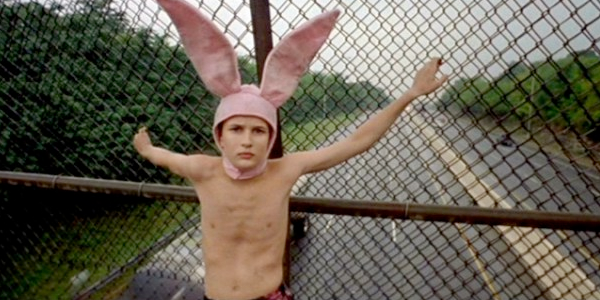 The directorial debut of Harmony Korine which did not get a large theatrical release but generated a lot of controversy due to its graphic content and highly stylised narrative. The film does not have a linear plot, rather it is a series of vignettes about some white trash kids who are living in a backwoods town that has been wrecked by a tornado. Tummler drowns a cat and then later has sex with a girl whom he figures out has a lump in her breast. Tummler and his friend Solomon go around looking for more cats to kill. They bring feral cats to a local butcher who wants to sell them on to a local restaurant and warns them a rival cat catcher is on the loose. The boys sniff glue. The gruesome twosome track down the cat poacher Jarrod, who is poisoning the cats. They break into his house and find photos of Jarrod in drag, taking care of his severely ill grandmother. She is on a life support machine which the boys turn off, reckoning she would be better off out of this world. Throughout the film we are introduced to several bizarre characters and situations - a gay dwarf, a man who pimps out his Down Syndrome sister, Bunny Boy, skinheads fighting, kids selling candy door to door, arm wrestling, satanic rituals. The film ends with yet another cat killing by Tummler and Solomon. There isn't much of a plot to Gummo, a case of style over substance. But it is deliberately nasty and transgressive in its execution. A girl describes being raped by her father over the soundtrack. It is hard to poke fun at the characters in the film due to the highly sensitive subject matters that they face. Harmony Korine has a deliberate taste for subversion - the film is startling in its form and themes. I didn't like the cruelty against cats - that was actually the hardest thing in the film to swallow - above the characters' own troubles. Coming across as a gigantic "f**k you" to Hollywood, Gummo, though highly transgressive, is a film to be admired for its chutzpah.
5. Santa Sangre (1989)
 More weird and transgressive goings on from Alejandro Jodorowsky, this time involving a complex narrative of flashbacks and flash-forwards to tell the sad tale of Fenix, a boy brought up in a circus who has been hospitalised in a mental ward. We learn that he had a rough childhood - he was traumatised by his father cutting his mother's arms off and then his father killed himself. His mother is a religious fanatic who belongs to a sect called 'Santa Sangre' - Holy Blood. Fenix escapes the hospital and goes back to his mother who uses him as a pair of arms and conducts revenge and murder on a grand scale, against Fenix's will. Santa Sangre is not a film that you will forget in a hurry. It is not to everyone's taste due to its transgressive and disturbing nature. The film, produced by Claudio Argento (brother of Dario) is lovely to look at, it is intensely colourful and makes even the most wretched of locations look beautiful. The film, through its transgression, forces you to confront your worst fears - loss of limbs, loss of genitals. You couldn't really call it horror. Like the bulk of Jodorowsky's films, it is a black, surreal drama. It has several haunting images that will stay with you long after you watch it - such as the elephant slaughter scene. Pure transgressive genius from Jodorowsky.
4. The Piano Teacher (2001)
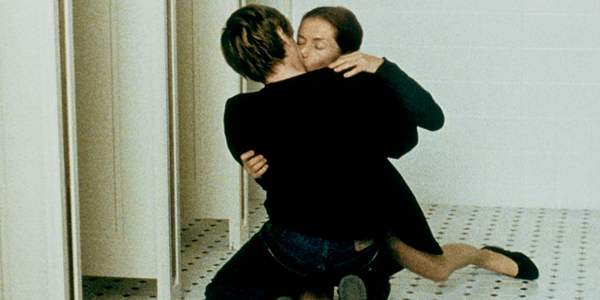 Directed by Michael 'Funny Games' Haneke, The Piano Teacher features versatile French actress Isabelle Huppert as Erika Kohut, a piano professor in a swish Austrian music institute. Although she is in her 40s, Erika lives with her elderly domineering mother. Her father is confined to an insane asylum. The film gradually reveals all of Erika's transgressive sexual behaviour and activities which include SM, voyeurism and sexual self mutilation. Erika meets 17 year old Walter Klemmer. There is an attraction between them and Walter becomes Erika's student. Erika is insanely jealous of a girl called Anna, who is close to Walter. In an act of pure wickedness, she puts shards of glass in Anna's pockets - ruining her career as a pianist due to the injuries sustained. Walter is determined to get into Erika's knickers. He is not so desperate that he accepts her violent fantasies and acts them out with her - rather he is turned off by them and rejects Erika. She stabs herself in the shoulder and it is implied that more acts of self mutilation will occur. Isabelle Huppert is what make this transgressive masterpiece so good. She is an incredible actress who will do anything to portray her character so realistically on the screen - giving up all of her ego to be as true to the role as possible. She was rightly awarded and critically praised for her work in the film. Although she is a transgressive pervert, it was hard to watch the rejection of Erika by Walter. She is so cold, so alienated and controlled by her mother that listing the sexual fantasies she has and showing them to someone, that is an act of deep trust and intimacy. To be humiliatingly dumped after this must have been very hurtful - and indeed Erika feels the need to self mutilate - to punish herself further and remain alienated and trapped in her own private hell. Not a jolly film to watch, it is instead a sober character portrait of a lonely, sexually transgressive woman who is destined never to achieve happiness.
3. I Saw The Devil (2010)
 A young woman called Joo-yun gets a flat tire in some very snowy weather. A man in a bus - Kyung-chul - on the pretense of being a good Samaritan, tells her he will help her but instead murders her and strews her body parts all over the place. When Joo-yun's body is pieced together, her fiance Soo-hyun who is a secret service agent vows to track her killer and make him pay. He is given a list of four potential suspects. After rifling through Kyung-chul's possessions he finds Joo-yun's ring. He plants a tracking device on Kyung-chul's bus, and begins attacking Kyung-chul every time he kills, rapes or maims people. A befuddled Kyung-chul joes to his friend Tae-joo's home for advice. Tae-joo is a cannibalistic murderer with bodies galore in his freezer. He tells Kyung-chul that his mystery assailant must be a relative of the young woman. Soo-hyun arrives at the house and beats the two killers to a pulp. A semi conscious Kyung-chul realises he is bugged and who the perpetrator is. When he is recovered, he leads Soo-hyun on a merry dance and then kills Soo-hyun's father and sister. A distraught but vengeful Soo-hyun rigs up a device that will decapitate Kyung-chul when his family call. We see Soo-hyun crying in the streets. A film which is full of transgression, I Saw The Devil makes for an extremely graphic and disturbing view. It is a hard boiled revenge thriller which is extremely violent - seriously violent - and not a masked man chasing after a bikini clad girl violent. The acting in the film is very good and hits the nail on the head. Min sik Choi gives a blisteringly nasty turn as Kyung-chul and he really steals the show in the film, turning a revenge thriller into a showdown of good against almost supernatural evil bad. My only problem with the film is that at 140 minutes, it is quite a hefty piece of cinema to digest. The director should have honed his editing skills but the film is still a masterpiece of transgressive cinema and a believable portrait of a serial killer.
2. Bad Lieutenant (1992)
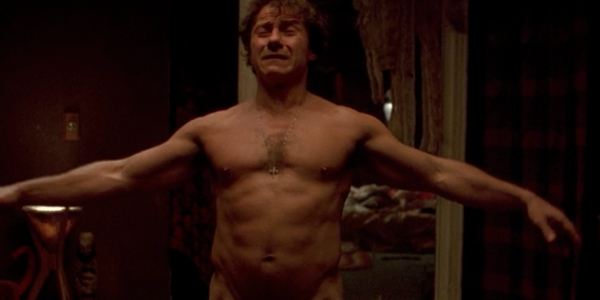 Harvey Keitel gives his soul in his performance as the titular Bad Lieutenant. After bringing his kids to school, he snorts some cocaine and goes chasing after some drug dealers to score crack. He then has a threesome after he gets drunk. A nun is raped by some hoodlums. They defiled her with a crucifix and the Lieutenant gets to see the medical examination of the nun who is not bitter at being raped, seeing it as God's will. The Lieutenant runs into gambling problems, and he becomes more and more out of control with regards to his drinking and drug use. At his nadir, he pulls over two teenage girls without licenses and makes them simulate oral sex while he masturbates. He visits the church where the nun was raped and finds her praying in front of the altar. He offers to kill her attackers but the nun says she has forgiven them. The Lieutenant has a complete breakdown and has a vision of Christ in the church. He flings himself at his feet, confessing his sins and begs for forgiveness. Shortly after this event, he is murdered. The success of Bad Lieutenant largely depends on Harvey Keitel's impassioned performance. He must have been through the ringer giving it his all, and his transgressive actions in the film must have made him want to scrub himself with bleach. Director Abel 'Driller Killer' Ferrara is also heavily involved in why the film works so well. He makes the film darkly atmospheric, seedy, grim and disturbing - creating a perfect backdrop for Keitel's antics. The Lieutenant does not really deserve redemption or absolution for his sins. This is why the ending is so downbeat - the film could never have ended on a positive note. The Lieutenant went way beyond the barriers of transgression, and transgressive people usually die.
1. Martyrs (2008)
 Yes, I have reviewed Martyrs before in an article about the New French Extremity but it is such a deeply transgressive film, I am reviewing it from scratch for this list. Young Lucie manages to escape from a disused abattoir where she has been kept captive and tortured by unknown assailants. She is placed in an orphanage and becomes very close to another young girl called Anna. Anna soon realises that her friend is haunted by a Grudge-like ghost who gives Lucie considerable torment. Fifteen years later Lucie bursts into a seemingly normal family's home and blasts them all dead with a shotgun. She calls an appalled Anna to help her clean up but Anna is doubtful as to whether this family have played the part of baddies in Lucie's life. Anna discovers the mother still alive and tries to help her but Lucie nips that plan in the bud by killing the mother. Extremely disconsolate that her demons won't go away no matter what she does, Lucie kills herself. Anna wanders around the house and finds a ladder to to a torture dungeon. It seems our family were not as sainted as they appear. Anna finds a poor woman who has been tortured to pieces. She tries to help her but really the woman is beyond her assistance. Suddenly some heavily armed people burst through the door, shoot the tortured woman and interrogate Anna. They reveal that they are part of a cult who wish to discover what goes on after death. By subjecting women to excruciating pain, they want to reveal a transcendental insight into the world beyond ours but so far, there have been no martyrs - only victims. The group seize Anna and force her into the dungeon, they ruthlessly torture and humiliate her in scenes that are painful to watch. Hallucinating a conversation with Lucie, Anna is told to give into her pain and embrace it. She is considered a perfect test subject and is flayed by a surgeon. Anna is now officially a martyr and the elderly woman who runs the cult is eager to hear what Anna has to say. Anna whispers into her ear and when the lady is asked later on by her followers what life after death is like, she sys "Keep doubting" and shoots herself in the head. An exceptionally nihilistic film, Martyrs plays less like a horror film and is more of a pure trip into hell. There can be few films that are as desperately transgressive and brutal in their execution. The whole thing is uncomfortable to watch from beginning to end. The idea of torturing women so they can reach a nirvana-like awareness of what life after death is like will appeal to few casual cinema goers. It is, however, fascinating for fans of transgressive films. Few go as far as Martyrs and few are as affecting. A horrible spectacle to behold, but utterly engrossing at the same time in a kind of "What the heck is going to happen next?" way.