10 Tricks That Made Mad Max: Fury Road So Awesome

How'd they do that?
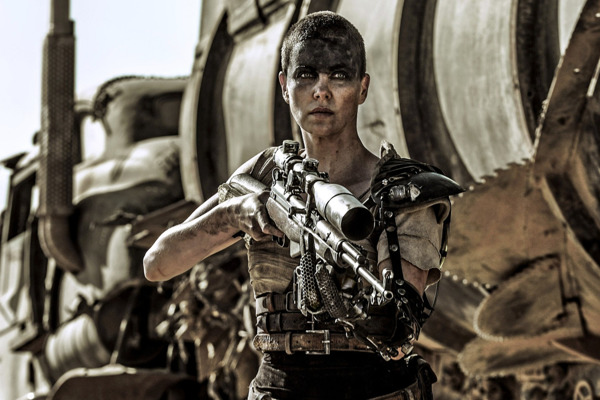
Oh, what a lovely day! Or rather, days. To see Mad Max: Fury Road is to condemn yourself to watching it about five more times in the ensuing weeks, or so Twitter is to believed. The pandemic has been spread so much that the film - a sequel to a 1985 classic with an entirely different cast - has grossed $286.6 million at the box office to date. Coupled with an unprecedented 98% approval rating on Rotten Tomatoes, Mad Max might be one of the most successful and critically acclaimed action films of our lifetime. Well, the most beloved and highest-grossing action film that doesn't take place in the Marvel Cinematic Universe, anyway. How did they do it? How did they manage to build up so much hype, goodwill, and critical acclaim with a film that's basically just one long action sequence? Nobody looks upon the Transformers films so charitably, and Taken is definitely more of a guilty pleasure. Somehow, Fury Road transcends all of those things. Well, it's down to a handful of very clever, very devious little schemes. A practical stunt here, a prominent feminist writer looking over the script there, a complete dismissal of the rest of the franchise on top. All that, and staggering stories of how the film was made, follow.

10. Real-Life Stunts Made The Action Scenes Feel Real
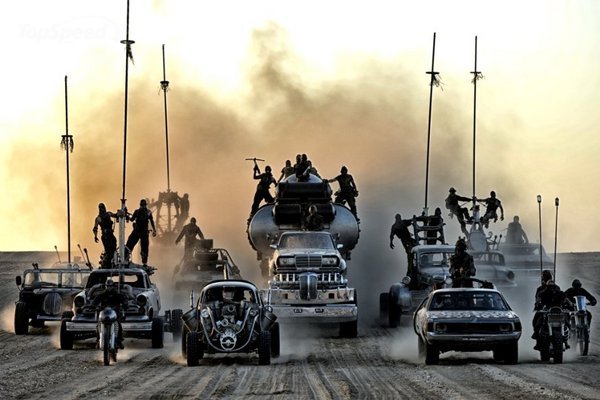
Everything is fake in Hollywood, from smiles to tans, and that only gets worse as technology gets better. Nowadays, it's far more cost-effective and risk-free to avoid the use of practical effects and dangerous stunts in favour of just generating such scenes within a computer, with the actors needing only to have their faces grafted onto a CGI model after. Unless you're working with real top-of-the-line gear, however, and shooting a particular way, the human brain can still tell the difference between real and computer-generated images, whether it's Escape From LA or Avatar. Not that there's a lack of computer graphics in Mad Max: Fury Road, just that they kept them to a minimum. As the B-roll behind the scenes footage shows, a lot of the car chase that makes up the bulk of the film used a real fleet of bizarre, beaten-up vehicles racing through an actual desert. Real explosions were used, people really got tossed off roofs, and even those War Boys on the see-saws were done for real.

9. Every Single Character Had A Back Story, So You Actually Cared
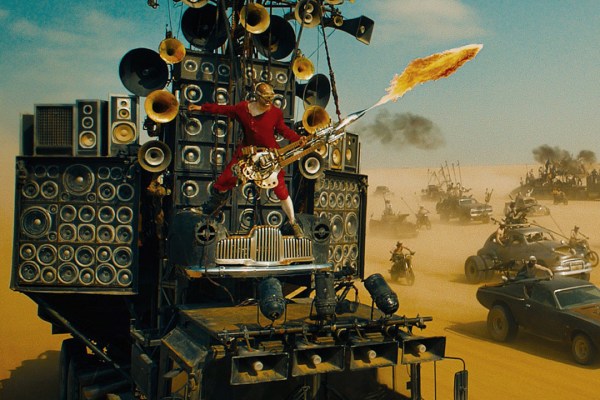
The height of the madness in Mad Max is almost certainly the so-called Doof Warrior, the War Boy perched on the front of a truck carrying a half-dozen drummers who plays tasty licks on his guitar, blasted out of a stack of amps behind him. A guitar which just so happens to shoot flames out of the top of its neck at opportune moments. A flamethrowing axe that really worked, by the way. Using practical effects was just one aspect of "grounding" as over-the-top and ludicrous film as Fury Road, however. That guitar wasn't just there because it looked cool; like everything in Mad Max, it had a real, practical purpose in the fictional world, accompanied with a backstory. "It all hopefully has some sort of logic," said director George Miller about the numerous colourful background characters in the film. "It got to a point where if I picked up a prop, the person who made that prop or the performer working with that prop had to tell me its backstory." Stuff wasn't just in there because it looked cool (although it helped). Everything had its place, so everything feels at least semi-real.

8. A Long Lead In Time Meant They Could Get Things Right
The pace of Hollywood filmmaking is a breakneck one. Once a film has been greenlit it's rushed into production as quickly as possible, with casting, pre-production and location scouting taking place even if there's not a finished draft of the screenplay ready to be shot. It's not unusual these days for a huge blockbuster to have scenes drastically re-written and handed out on set. Which is why you end up with films that are often structurally and tonally messy, with characters arc that don't feel complete or satisfying and lots of bad one-liners. It's because the writers were literally making it up on the spot. Mad Max: Fury Road is basically the opposite of that, being some fifteen years in the making, and a good thirty years after the last instalment in the franchise. Any number of setbacks caused the film to be delayed, which may have actually benefited Fury Road in the long run - more time could be spent refining every single aspect of the film. That's why the plot is so tight, the action so well-choreographed, the characters all perfectly developed, and the costume and vehicle design so on-point. They didn't have to rush.

7. Shooting Over 480 Hours Of Footage Meant They Got The Good Stuff
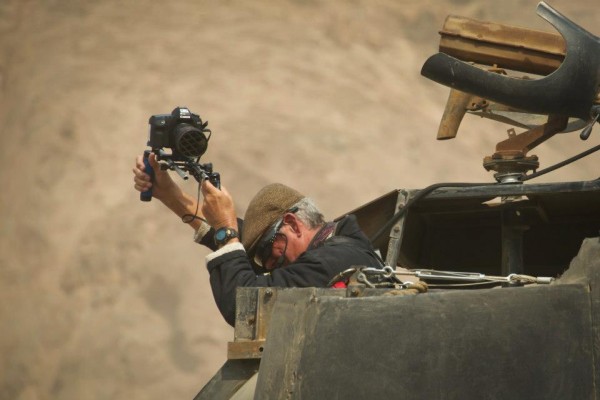
Fury Road is, essentially, one long sequence. Which means that, in the words of Charlize Theron, €œwe shot one big scene for 138 days.€ It made things difficult for the actors at times €“ Furiosa herself said €œeveryday you show up and you don€™t really know where you are in that scene€ €“ but it meant George Miller could make sure everything was right. And when you're shooting for that long with a lot of practical effects and stunts, there isn't really a margin of error. Still, Miller managed to squeeze a heck of a lot of shooting into that period, with the €œone long scene€ thing meaning they didn't have to move to different settings or swap in other actors all that much. All in all, it's estimated that over 480 hours of footage of Fury Road exist. That's about three weeks. Most films can't afford to have that much unused footage.

6. New Audiences Were On Board Since It Ignored The Previous Films
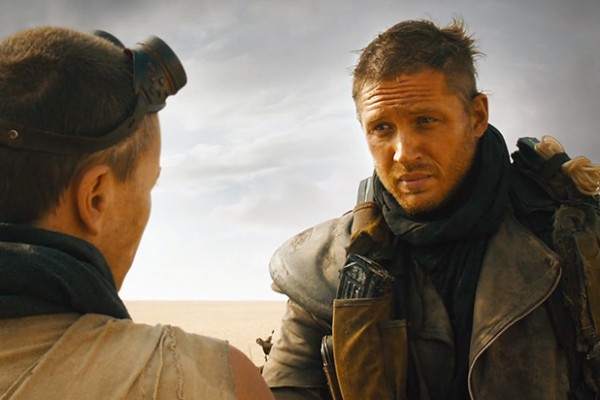
Avoiding confusion is the watchword of Fury Road, with barely any attempt to connect the film to the rest of the franchise. Whilst the original Mad Max trilogy remain cult classics, there's a whole generation of movie-goers who haven't seen a single Road Warrior flick before heading in to see what is technically the fourth in the series. The genius of Fury Road is that it doesn't care. Unlike, say, the new Star Wars films which are likely to be completely impenetrable if you're not familiar with at least the Original Trilogy (if not the prequels), this Mad Max might as well be an entirely new character. He certainly doesn't look much like the old one. Tom Hardy is technically playing the same Max Rockatansky from Beyond Thunderdome and the like, but it's never beholden to them, allowing flashbacks to exist as character background rather than hints at a larger continuity viewers have to be aware of.

5. The Feminist Angle Was Cemented By Script Pass From Eve Ensler

The latest Mad Max already had something of a reputation before it hit cinemas, with early reports suggesting Tom Hardy's eponymous character was pushed into the background in favour of Charlize Theron's Imperator Furiosa and that there was a strong vein of feminism running through the film's plot and main themes. That was enough to get Men's Rights Activists in a tizzy, wondering how an "American classic" (Mad Max is Australian) could be ruined by idiotic Hollywood execs (it's made by the same director as the rest of them). They would have been even more livid if they knew that the writer of The Vagina Monologues worked on the film. Eve Ensler has some significant issues herself, but getting a prominent second-wave feminist to look over the script and suggest some changes according to her own, real-life experience with sex slaves certainly imbued the film with a degree of realism when it comes to the fate of Immortan Joe's wives.

4. Lowering The Frame Rate Made The Action Even More Intense
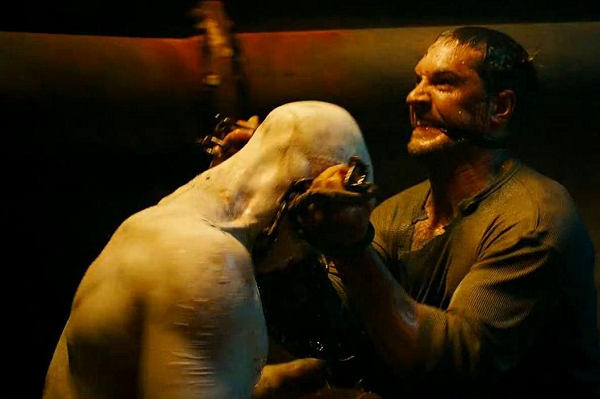
Discussion of frame rates used to be the sole preserve of video gamers with too much time on their hands, complaining about lag and jerky animation of characters when console processors were overworked. They've become more of a topic in films thanks to the likes of The Hobbit films being projected in 48 frames per second. That was a significant difference from the industry standard of 24 fps, with some audiences complaining it made the film look unnatural and €œsped up€. Fury Road goes for a similar effect using the same method, although George Miller always intended for certain scenes to look unnaturally sped up, in an effect called "speed ramping". It's a trick that was used in the old films as well, and here it was achieved not through the old-fashioned method of hand-cranking the camera, but by removing key frames. Because of this, the action takes on a heightened, jerky, almost cartoony movement, which appears throughout and makes Fury Road look even more OTT.

3. Making A Visual Masterpiece? Storyboard Over Script
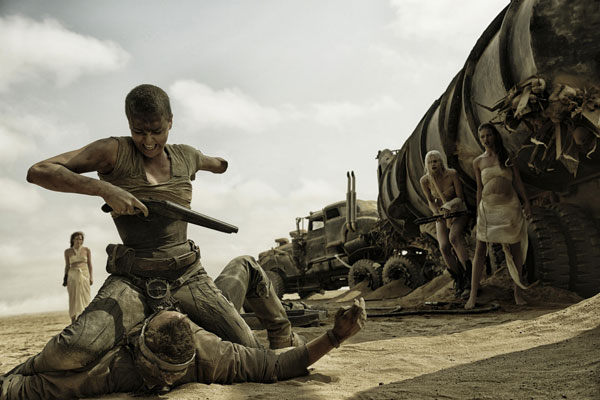
Whilst Mad Max: Fury Road almost certainly had an in depth shooting script €“ George Miller, Nico Lathouris and comic book artist Brendan McCarthy didn't toil over it for a decade for nothing €“ it perhaps didn't figure too heavily into the actual shooting of the film. Which makes sense, because there isn't a whole lot of dialogue featured in its 120 minutes. Because Fury Road is essentially one long action scene, Miller chose to present the film in storyboard form from the start, and work it out that way. €œYou don't have to write, 'look left,' 'look right,' or whatever € you can draw it," said Miller. "We sat in a room and basically laid out 3,500 panels. So much of the movie is what you saw today.€ That was sometimes difficult for the actors, too €“ Theron bemoaned turning up to set without knowing what was going on that day, recalling €œThere were times when I was like, 'George! What are we doing?!'€ €“ but it meant that Fury Road has some of the best-choreographed, easy-to-follow action sequences in modern cinema.

2. Viewers Don't Get Lost When Everything's Front And Centre
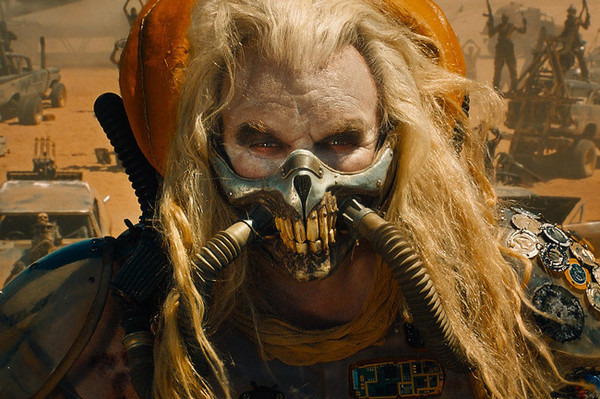
Really, the reason people are so blown away by Fury Road isn't just that it's an action-packed thrillride with amazing stunts and plenty of glorious explosions. It's that amidst all that madness, you can actually tell what's going on. Your average Michael Bay-or-derivative will shoot as much action, but it'll be completely unclear what you're seeing. And apparently, it was yet another simple trick that George Miller set upon to achieve that clarity, in his infinite wisdom. As Director Of Photography John Seale explains, €œwhatever was the centre point of that shot had to be in the centre of frame. In the faster cutting...your eye won't have to shift to find the next subject.€ It's not that this new Mad Max doesn't feature the fast editing style of Michael Bay and his cronies, it's just that it manages to frame every shot so that you're never lost in a scene, you know what you should be paying attention to, and even when the War Rig is surrounded by a dozen bad guys, you can find Furiosa in all that chaos.

1. Constant, Unceasing Motion Means You Never Get To Relax
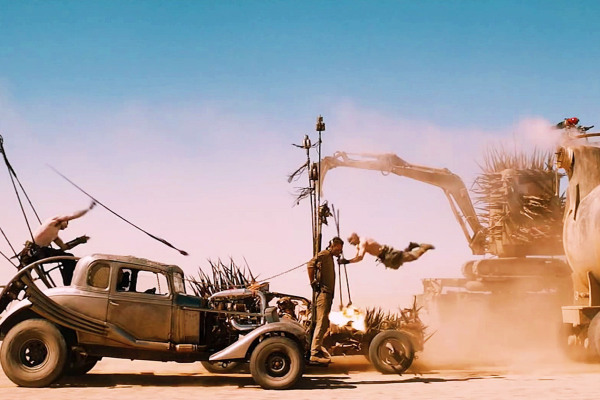
Fury Road is a film that grabs you by the scruff of the neck and doesn't let go. It's a white knuckle ride that hits the gas pedal and never takes its foot off. Literally, there's rarely a scene goes by in this Mad Max that doesn't feature constant motion. There's a brief moment of tranquillity at the beginning, with Max listening to the oncoming War Boys. And that's about it. From then on out, everything is either the set up to a chase, or the chase itself. Max runs from captivity. He's caught again, and is strung up as a blood bag amidst Nux and the other War Boys running around preparing for battle. Furiosa is driving the War Rig, and if she's not, she's wrestling Max or pulling off Immortan Joe's face. The film keeps your heart pumping throughout because there's always something going on. Exposition is stripped to the bare essentials, with most details about the world picked up via context, character design, environments and off-handed comments. And, refreshingly, there's no romantic sub-plot. Mad Max: Fury Road is the purest expression of an action film precisely because it's all just one, long action sequence. One that you can follow, is mainly lead by women, was filmed for real, and looks amazing. It all seems so simple... What're your thoughts on Mad Max: Fury Road? Share your thoughts on the authenticity below.

Contributor
Contributor

Tom Baker is the Comics Editor at WhatCulture! He's heard all the Doctor Who jokes, but not many about Randall and Hopkirk. He also blogs at http://communibearsilostate.wordpress.com/