10 Valuable Life Lessons Disney's Frozen Taught You

Moral messages you can take straight to the heart.
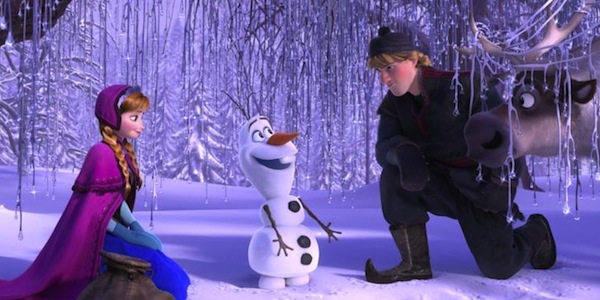
There are some films that know how to hit you right in your emotional centre, and more often than not, those films are made by Disney. Whether it's Hercules or Mulan, Toy Story or Up, or even Marvel's Avengers Assemble, pretty much all of Disney's movies know how best to tug at the heartstrings and give you a nice moral message all in one go, usually with some pop culture references to help the medicine go down. Frozen is no different, and is probably the most successful, being the highest grossing animated film of all time. The adaption of Hans Christian Andersen's The Snow Queen is chock-full of life lessons that little girls (and boys) will keep with them forever, and that's not just talking about always taking the opportunity to build a snowman. The story of scatty Princesses Anna trying to rebuild the family ties with her sister Elsa is filled with messages about parenting, relationships, and knowing what to do when faced with a powerful monarch that has cryokinetic powers. Because that's the magic of a Disney movie - the ability to make a commercial success that will also warm your heart when you're watching it on repeat - even if it's the only thing on at Christmas.

10. You Don€™t Need A Relationship To Be Happy

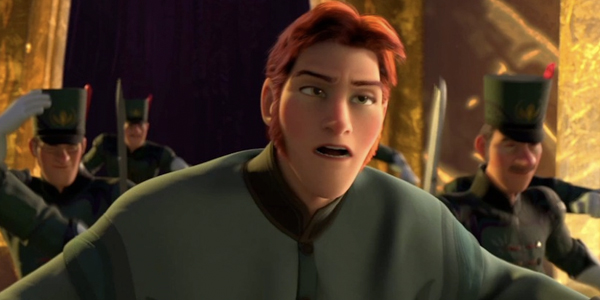
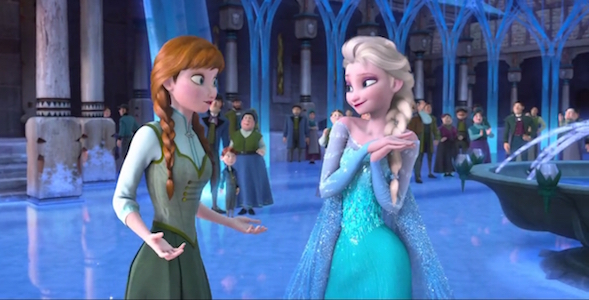
€œOnly an act of true love can thaw a frozen heart,€ is the centre of Frozen's entire narrative. It provides the tension in the beginning of the film, and the memorable and moving plot twist at the end. Was this any other Disney film, the 'true love' would be the handsome prince, swooping in to save the princess from whichever was happening at the time. In Frozen, of course, it's subverted. The handsome Hans turns out to be the villain, and the sororal love between Anna and Elsa is what frees Anna from her icy doom. Thousands of little girls learnt, at that moment, that they don€™t need a man in their life to save the day in order for them to get their €˜happily ever after€™ - that they can rely on their friends and family for all the support they€™ll ever need. Frozen€™s female empowerment is an icy breath of fresh air, showing how women do not need to be defined by the man in their life, but can stand tall and rule their very own queendom. That€™s why Anna punching Prince Hans in his smug, conniving little face is one of the most satisfying parts of the film €“ one small fist for a princess, one giant sucker-punch for feminism and woman-kind.

9. Don€™t Suppress Your Emotions

Homer Simpson once said that the best thing to do when you are angry is to €œJust squeeze your rage into a bitter little ball and release it at an appropriate time€, and because it€™s the lovable oaf of the Simpson family saying it, you know that it€™s bad advice. Unfortunately, it seems Arendelle doesn€™t get TV, because if they did Elsa would have realised that €œConceal, don€™t feel€ is never a good way to deal with your emotions. Frozen tells its audience (and rightly so) that if there is something you feel is wrong with you, or that you are confused or scared, then you should tell someone. A problem shared is a problem halved; narratively, that€™s why Elsa€™s release when she leaves the castle to build her ice palace is so exciting €“ Elsa has shared her problem with the audience, and becomes a whole new person as a result. While she might feel alone, she€™s €œalone and free€. Even then, Elsa is not alone for very long, as Anna comes immediately looking to support her. That€™s a reassuring message for everyone watching this film: while you may feel like nobody will be there to support you with your problems, you should never keep them bottled up. Someone will always care.

8. Your Parents Aren€™t Always Right

King Adgar and Queen Idun clearly aren't the best of parents. Supporting and caring the one minute but as soon as Elsa makes a mistake with her powers €“ and as she€™s a little kid, that€™s to be expected €“ the €œConceal, don€™t feel€ message they preach relentlessly is one that will scar Elsa for life. And when they leave for their voyage, which unfortunately results in their death, there apparently leave no instructions for Anna or Elsa about ruling a kingdom. Elsa is simply left with this overwhelming fear of her powers, and unable to seek comfort from anyone. Which just goes to show that parents do not always make the right decisions. €œPeople make bad choices when they€™re sad, or scared, or stressed€, according to the €˜love experts€™, and €“ although it might not seem like it when you are a child €“ parents are just the same. Sometimes their reaction to something unknown is fear or anger, and while a parent will always try to do what is best for their child, occasionally, they will get it wrong. If only King Adgar and Queen Idun had not let fear consume them and, as a result, damage Elsa€™s growth. Parents should always accept their children for who they are, even if that comes bundled with the ability to make snow at will.

7. It's Not Good To Be Alone

"No man is an island entire of itself; every man is a piece of the continent, a part of the main" - John Donne's famous first lines of his poem are true in Frozen, and true in life. When Elsa shuts Anna out of her life, it creates a schism between the sisters that cannot easily be rebuilt; especially since Grand Pabbie replaced all of Anna's memories of Elsa's powers, and so Anna had no explanation of why Elsa was being so ... well, cold. If Elsa had only let Anna into her room, and into her life, then perhaps the Anna would not have been so reckless in accepting Prince Hans' proposal. The deleted scene below shows the two sisters interacting more; trying on each others clothes and acting how - according to Chris Buck and Jennifer Lee - siblings would act towards each other. They decided to remove this scene because "we have divided, we had to keep them divided", and it is this display of warmth that - while bad for the narrative of the film - shows the audience that no matter how scared you are about something, friends or family will always be there to help. https://www.youtube.com/watch?v=kZNg-7KPFDo

6. People Will Like Who You Are

No matter what sort of person you are, there will be people that like you. Whether you are sporty, geeky, or are able to make snow flurries or sentient snowmen, someone will appreciate the person you are. When Elsa finally returns to Arendelle, the people are overjoyed to see the return of their queen and, without even a second's hesitation, understand her trouble and welcome her back to the throne. The final scenes of Frozen are the most telling - the queendom holds nothing but admiration for the ice decorations that Elsa creates upon her return (as well as an ice skating rink). And speaking of sentient snowmen, Olaf is a perfect example of this. A character that is, unknowingly, seeking his own destruction, Anna and Kristoff decide not to tell him about what happens to solid water when it gets warm; the result is that Olaf gets his own personal flurry at the end of the film, and can finally experience summer. Frozen teaches children everywhere that, as long as you stay true to yourself and do the best that you can, people will respect you and help you because of that. Especially if you're a magical princess.

5. Slow And Steady Wins The Race

While Frozen is not usually the story told to get this message across, the film very clearly contains this moral in reference to Anna's decisions. Anna choosing a husband that she had only known for a day is clearly a very bad way to start any relationship, and audiences were rewarded for sitting through the sickly-sweet "Love Is An Open Door" by having Prince Hans become the villain. But even outside of her love-life, Anna rushes into decisions throughout the film without having thought of a plan. Without a moments hesitation, she took a horse and chased into a blizzard after Elsa; and while this might seem very noble and heroic, she does not take any time to pack supplies or consider what she is going to say to Elsa when they eventually meet. If Anna had not stumbled upon Wandering Oaken€™s Trading Post and Sauna, it€™s almost a certainty that she would have died in the snow. When the main character needs to buy winter boots midway through their expedition, that is a poorly planned outing. One of Frozen€™s more subtle messages, then, is to always plan. Whether it€™s going off into a snowy mountain, rescuing your sister from her own magical powers, or just choosing a boyfriend €“ the last one of which can be the scariest of all!

4. Don€™t Judge A Book By Its Cover

Frozen is all about not judging people by appearances. Whether it's the apparently charming Prince Hans or the summer-loving Olaf or Elsa's powers appearing dangerous, one of the major messages from this Disney film is that life can always surprise you. Even Kristoff's troll family was something of a sucker punch to Anna and Olaf and, delivering one of the wittiest songs in the film, explain that while people may not look perfect on the outside, inside there is always something good waiting to be discovered. In fact, that sort of mystery and discovery was the essence of the marketing of Frozen €“ it appeared to be just another typical Disney film, but with two princesses instead of one, so that children would have double the number of toys to ask for at Christmas. The relationship between Elsa and Anna is barely revealed in the trailer, and the good-guy/bad-guy divide is not established outside of the audience's own prejudices; and yet the film€™s revelations about the family dynamic makes it much more memorable. It€™s existence as a film is the best argument for its own message.

3. Do What You Love And The Money Will Come
If you can say one thing about Kristoff, it's that he is a dedicated businessmen, even if that business is not the best idea. The apparent impossibility in selling ice in the Scandinavian mountains was met with even more challenge when Elsa creates her eternal winter, but nevertheless he continues with his job. When we first meet him properly in Wandering Oaken€™s Trading Post and Sauna, he is still trying to get supplies to continue his vocation - albeit with difficulty, as the change in supply and demand has clearly affected his wallet since he is not able to afford the supplies he needs. But Kristoff does not concede defeat in the face of a hardship, but sticks at his ridiculously challenging job throughout the film, and eventually becomes Official Ice Master for the kingdom of Arendelle, with the added bonus of an improved sled to make up for the one that was destroyed by the combination of Anna, wolves and gravity. Frozen goes to show everyone watching that if you stick to the things, and the people that you love, then eventually you will be rewarded for your dedication. And if, along the way, you can accumulate more friends than just a reindeer and a few love-obsessed trolls, all the better.

2. If You Don€™t Like Something, Change It

"Let It Go", the most iconic song from Frozen, also contains the best message for being independent and making your mark on the world. Just before the chorus, Elsa exclaims that there is €œNo right, no wrong, no rules for me. I€™m free€. And then, free of the oppression she has had to endure because of the fear her parents had about her cryokinesis, she proceeds to build a giant palace made entirely of ice. In this act of icy architecture, Elsa embodies the message that if you do not feel comfortable with the system that you are in, then ignore the rules. Do your own thing, and you will be one step closer to finding a better way and being happy. However, rules are there for a reason; telling children that they should just ignore some rules that might be there for their own protection is not exactly the most responsible of messages. But examining Elsa's actions as she says those magic words, one understands that she is not breaking the rules, but making her own. If you want to make the world better, you cannot do it through destruction, but rather through construction. Build your own safe space, rather than trying to unfairly dominate another, and you will be free.

1. Always Support A Strong Woman

There are three main male presences in Frozen: Kristoff, Hans and the Duke of Weselton (Weasel Town). One of these men are not like the other, Hans wants to abuse the patriarchal system of monarchy in order to become King of Arendelle; the Duke, who sees a powerful Queen Elsa, is struck with fear; Kristoff on the other hand, meets the strong and determined Princess Anna and decides to support her. The difference between the good guys and the bad guys is divided by whether they decide to support, or attempt to destroy, the two most powerful women in the film. Hans is cruel and smug when he reveals his true intentions, having seen a vulnerable princess and taken advantage of her emotions. Yet Kristoff, even when criticising Anna, like her choice of fiancé or her rock climbing ability, he is never demeaning, despite having superior knowledge about surviving in the winter. When trying to return Anna to Arendelle to get her €œtrue love€™s kiss€, he puts his own feelings aside to try and help. And the narrative rewards him for this: Kristoff gets a promotion, and he and Anna begin a healthy relationship. Hans is arrested and left to the mercy of his 12 brothers, and Weselton loses the opportunity of all future trading with the Queendom. Frozen€™s final, and most powerful, message is that the idea of a male dominated world €“ or even a male dominated Disney film €“ is outdated, and those that don€™t realise that will come off worse. Are there any others we've missed? Let us know in the comments!

In this post: 
Frozen
 
Posted On: 
Contributor

Guest hasn't written a bio just yet, but if they had... it would appear here.