10 Ways To Fix The Biggest Superhero Movie Problems
 Im not one for self-promotion, but I have written a few articles that have touched lightly on this topic, so I had to contain my excitement when it came to talking about this issue directly. I will do my absolute best to not simply rant in full fan-man anger for a few thousand words, but to offer reasonable arguments as to where comic book movies are, whats worked and what hasnt. I cant pinpoint exactly where the idea to take comic book characters to the big screen started, but an argument can be made that the attempt to do so is as old as both the comic book medium and the cinema with old black and white serials of many classic characters. If this is the case, then why are filmmakers still trying to figure out how to do this with consistency? Well, lets have a look at ten persistent issues facing comic book movies at this time, and how we can make positive changes.
10. Mandatory Origin Stories
 This issue comes in first but is, by far, one of the most maddening aspects of the comic book movie genre. Im often left scratching my head when some stuffed shirt producer that boasts substantial cinematic acumen explains why an origin story for a character that can be googled is necessary. The recurring theme in the article is the idea that a story is a story and that people are splitting hairs in terms of delivery which is a false dichotomy. Did Indiana Jones have an origin story in the first film, or did we see this bad ass adventurer appear on screen in front of us and then hit the ground running (literally)? If Jones had been wearing a skin tight leotard would the audience suddenly demand to see his fictional birth certificate? There are many ways to explain where a character came from and how, but there is also no rule that states the writer has to even mention it fully, let alone begin there. Why did The Amazing Spider-Man need a retelling of the origin that took up a massive chunk of the film? Even if the writers wanted to change the particulars, couldnt Pete have explained the differences to Gwen in like a minute and a half? Why on earth did we A) need to see Peter commit a seemingly unending series of impossible blunders and B) need to see it for like 30 minutes! The minute some guy tells me that we need to reboot Batman and then proceed to do an origin story Im done, at this point who doesnt know Batmans origin (a question I could have posed 20 years ago)? Same goes for Superman and other iconic characters. The new Superman movie looks good, but I am disappointed that Im going to have to sit there and wait while they go over old s#!t. The X-Men movies included several origins, and the big punch in the face was that the origins werent even accurate! Why then? I still dont know who Han Solos parents were, everything I know about Han Solo before A New Hope is contained within 3 minutes of conversation and a comic book story featuring Quinlan Vos, and I really like Han Solo. There is nothing about filmmaking and storytelling that suggests that an origin story is ever necessary, no matter how wild the character is. At this point someone in the room has to say that weve been there and done that, everyone knows how (insert hero) came into being lets use that time more wisely. Especially when everyone knows that the studio is going to spend a fortune on promotion anyway. Game of Thrones has a massive following that is undeterred by the fact that Wikipedia spoils the ending.
9. Casting To Likeness
 I have a friend who shall remain nameless that feels that the only person alive that can play Luke Cage is Terry Cruz, and that if J. August Richards is in fact Luke Cage he will be pissed. This is the mentality of comic book fans that make the jobs of movie makers nearly impossible, and the opinion of someone who inexplicably went to film school by the way. Yes, I was a bit disappointed that Zoe Saldana has been picked to play Gamora the most dangerous woman in the universe, but not because I had a dream pick in mind, but because when I think of an unstoppable killing machine who was raised and trained by the most notorious villain in existence I dont think cute, rail thin Saldana. At the end of the day however, Saldana is a great actress and could totally pull off the role. Her skill as an actress trumps her physical resemblance to the character. If you read some of the notes to Kingdom Come, artist/writer Alex Ross explains his approach to Superman, describing him in the way he was first introduced by his creators. If they could have asked Siegal and Schuster what Superman should look like, they wouldnt have picked Christopher Reeve. George Reeves looked far more like the comic book character. Ross described Clark, not as a muscle bound body builder with zero body fat, but more of a massive and powerful trucker. The guy that kicked the crap out of Clark in Superman II technically looked more like Superman than Reeve did. Basically, if I were to cast Superman based on likeness then I would look no farther than pro wrestling. Now, its not impossible to find the right mix of charisma and presence in the modern day WWE, but lets be serious. A balance has to be reached, one where we find a happy medium between the right actor and the right look. Robert Downey Jr. was a God send, but that kind of kismet cannot be counted on. Remember that Hugh Jackman is over six feet tall, and not in his forties. Harvey Keitel was rumored to be on Marvels wish-list for Wolverine early on, and the other rumor is that the front man from Danzig was a lock for the role except for some kind of legal trouble, let that marinate for a bit.
8. Forced Genre Destruction
 The great irony to comic book movies is the phrase conventional wisdom because it would suggest actual wisdom. However, it has become apparent that when the meeting for making these films start, logic and common sense are immediately shown the door. Comic books are a relatively young form of literature, which means that it often borrows heavily from pre-established genres using comics as a visual medium. The fact that the term comic book is synonymous with super hero is a misnomer in and of itself as one is a medium and the other is a subject, and are mutually exclusive (required reading: Soon I Will Be Invincible, an original novel about super heroes and villains). Filmmakers should know better than to assume that a movie based on a comic should be treated as comic booky when it clearly isnt. Jonah Hex is one hell of a comic book, and character. There are people who wouldnt read a comic book if it meant bringing about world peace, but would devour Jonah Hex. Even his appearance in the Batman Animated Series allowed the animators to play it straight and make a 30 minute western that couldnt be denied. When I heard that Hex was going to be a movie I was interested, when I heard that Josh Brolin was starring as Hex I had to change my shorts. I couldnt believe how lucky I was to be alive when this movie was on its way, and then I saw the first trailer which featured a horse mounted with twin Gatling guns that actually fired. The comic book movie stigma had struck again, the imbecilic desire to make a story that is marginally a straight western into some sort of western themed fantasy because its a comic book. Road to Perdition was a comic book too, but you didnt see Tom Hanks suddenly whip out a space gun at the 40 minute mark. Filmmakers should consider the idea that comic books can be anything, it is a vehicle for telling a story and not a style of storytelling specifically. There was a time when comic books were plentiful and super hero comics werent. I really want to see the mediums mixed while paying attention to the tenants of the genre. How come The Punisher cant be a straight vigilante story like Death Wish? Can we see Superman kicking alien ass Independence Day style? There are so many ways to utilize stories that were born in comics without treating them in such harsh fashion.
7. Pointless Cameos
 Look, either do it or dont. No comic book fan, being honest, was impressed that Union Jack was in The First Avenger but not really, or that Doc Sampson was in The Incredible Hulk minus everything about him except the douchyness. Every time I see some obscure reference to the comics in films my first thought is, Who is that for? The answer is for them, the film makers must know that we question their supposed comic book acumen as we watch their films, so they place little tidbits to remind us that they have in fact read a comic. Thats nice and all, but instead of easter eggs, why not show your comic book background in the actual movie? Why do I have to even say this??? I really wish Marvel Comics hadnt shot themselves in the foot decades ago and sold their IPs to Sony and Fox. I also wish Batman didnt suck so hard that I dont care about his crappy overhyped movies (Batman cant talk like that and expect to be taken seriously, period.). So Marvel sold out literally and DC sucks, making the one thing I always wanted completely impossible, well almost. How come on the view screens aboard the Helicarrier we couldnt see footage of other Marvel heroes in New York fighting aliens? How cool would it have been to see Nova streak by in any number of city shots across the movies? Maybe a conference call with Mr. Fantastic? There are countless ways to speak to the larger Marvel universe using quick cameos, in the same way its done in the comics. Bob Harras reportedly lost his job as editor of the X-Books when the X-Men films didnt result in a boost in sales. This proved that Marvel and to a lesser extent DC have not a single clue amongst them. If I walk out of Thor and all of the comic book fans are immediately pointing out how the film is nothing (and I mean nothing dammit) like the comic, then where is the curiosity to read the comic supposed to come from? I obviously dont need to read the comic to understand the movie. By going out of their way to disassociate the films from the books they are guaranteeing that the two mediums will not really support each other. Cameos are a primary tool (at least one that isnt totally underhanded) for comic books to drum up interest in other books, and the films could easily get in on that action.
7. Let The Comics Themselves Set The Racial Tone
 Im not a violent man, but I would very much like to meet the guy who argued that Donald Glover should be Spider-Man and punch him in the face. Because he sparked a debate about race on grounds that completely miss the point and make all the arguments to follow useless. It addresses an issue at the wrong point in its development and therefore garners zero actual solvency. If the issue is that there isnt enough diversity in comic book movies then that speaks to a lack of diversity in the source material, if you dont address the source then the problem never gets addressed. For all the arguments that comic books are progressive in their storytelling, there is an extreme lack of racial representation and reasonable examples of gender equality. By the time the decision to make Johnny Storm black in the films is made it is too late, and the comic book companies are simply pandering in order to expand their movie going audience, if you read the comics then it sucks to be you. Marvel has had decades to create more minority characters and responsibly used female characters; instead we have stereotypical minorities and a collection of super sluts. The attempts to make a change along those lines have been few and far between and often times plain disgusting. The Truth and Blue Marvel books are the biggest offenders in terms of shining a light on African American characters, complete with at least an African American creator or two. However the results were deplorable, they turned the Super Soldier program into an allegory for one of the most heinous scientific efforts in American history (The Tuskegee Experiment), and decided that it would be cool that the most powerful hero of all time was Black, but a complete coward. Thanks but no thanks. The argument has been made that if you want more diverse comic book movies then they should make more diverse comics, that argument goes unanswered because it would take actual work. We live in a convenience heavy, quick fix society and this is what that attitude looks like. Idris Elba was cast as Hiemdall in Thor, and Marvel dared us to get upset. They were prepared to get on their high horse and disguise their efforts to get black people to care about the film by hiding behind being progressive. Heres the problem, there is a pantheon of black gods in Marvel Comics, their Egyptian of Course but the problem is (you guessed it) they are pretty much represented as villains. Yeah, all the polytheistic gods are represented in Marvel comics at one point or the other, but only the black ones are inherently evil. If Marvel wants to claim the moral high ground of racial progress, they might want to stop being racist first, it couldnt hurt.
5. Creators With Little Or No Comic Book Backgrounds
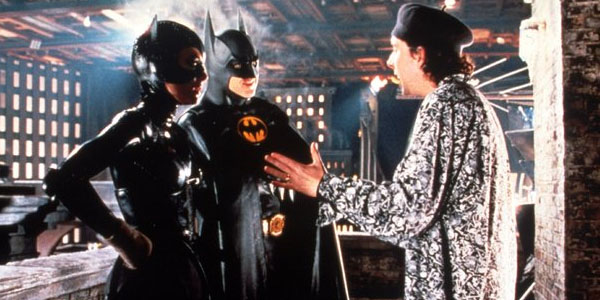 There was a bit of a Twitter back and forth not long ago between Kevin Smith and Tim Burton. I wont go into detail but the final exchange was by far the most telling. Burton: I wouldnt be caught dead reading a comic book! Smith: Which totally explains Batman! Not being completely immersed in a medium is one thing, but having utter contempt for it should eliminate someone from being chosen to work on the project. Its kind of why they dont hire Hockey coaches to manage Baseball teams. The fact that the comic book industry cant get a movie by Kevin Smith done (despite the fact that theyve hired him to write their comics) further explains the lack of reasonable thinking involved in the business. I was amazed that Joss Whedon actually got to helm The Avengers, after he killed it with his run on Astonishing X-Men. I was convinced that his apparent skill and understanding for the super hero genre would eliminate him as a director, you know because Marvels M.O. is to see what makes sense and then do the opposite. The real problem isnt that there arent enough directors and writers with comic book interests or back grounds out there, its just that Marvel ignores them and listens to some guy who looks upon a comic book reader as a disgusting little ATM machine. Look up Kevin Smiths version of his time working on a Superman film and youll begin to see what I mean. The irony is that films are largely hit or miss, and typically one movie has to not only make its own money back, but cover the cost of other films made by the studio that tanked. Comic book movies havent been becoming more and more prevalent because of the quality of the stories, but because they can easily be franchised which is where studios make their money (Fast and Furious 7, I rest my case). The guys who get called in because of their Hollywood expertise have seen just as many movies crash and burn under their watch as movies where theyve nailed it. They get thrown into the mix because studios are cowards who are hedging their bets. Marvel has put itself in position to stop being Hollywood and just tell their story, Guardians of the Galaxy will let us all know if theyve learned anything.
4. Live Action Doesnt Equal Film
 One of the biggest disappointments in comic book adaptations has actually been in the form of animation. If Marvel says that special effects and cost impairs their ability to be faithful to the source material I can totally buy that, but animation mitigates all of those issues so whats the excuse then? DC has taken advantage of the animation market with more consistency than their cross town rivals, but have played fast and loose with their interpretation of the source material. Ive heard many arguments as to why its necessary to almost arbitrarily change stories that are obviously being marketed to the readers, but none of them have been satisfactory. Ask any comic book fan and they would go on and on about how cool it would be to actually see The Death of Superman in animated form, but what did they get? Some crap. Why? If they could make that hour and a half of complete horses#!t then DC could have just told the damn story. They own all their IPs, so they could have included every character and major event from that story. How compelling was the argument that they could do a better job than Dan Jurgens, and how come whoever made that argument wasnt immediately shown the door or at least executed by Jurgens himself? Jay Baruchel blogged about the cancelled JLA project that was going to be filmed in motion capture CGI style like Beowulf. I immediately felt cheated, how could such a dream project that could have faithfully captured the essence of the super hero genre come that close to completion just to be dumped so I could sit through six plus hours of Pack-a-Day Batman (You have no idea how hard it is to type with your fists balled up)? I always felt like I could look past really dumb comic book movies if the companies nailed it in animation, because those are worthy film mediums in their own right, but no. Marvel isnt the House of Ideas, its the house where dreams go to die.
3. Three Hours Might Be Mandatory
 People who complained about The Lord of the Rings being 3 hours long a piece are usually laughed at, and with good reason. Many fans of the films and books could have easily done another hour or so each. Avengers could have been another hour easily and I wouldnt have complained. Whatever happened to intermission? You mean that theyll pause for ten minutes so I can take a leak? Oh Joy! Seriously if the story feels too complex to tell in under two hours, then why not go for three? If the film is good then the extra time is immediately justified. The second Nolan Batman film might not have been so horribly overrated if it hadnt tried to squeeze 45 minutes of storytelling into roughly six minutes. People who say that loved that piece of crap (admittedly Heath Ledger saved that film) likely would have still felt that way if the movie was longer, heck they may have loved it so much more that my harsh review would have resulted in my death. Er Its time we looked at our dwindling attention span for what it is: completely horrifying. The State of The Union Address is one of the most important addresses the American President gives annually, the length of the speech has gotten shorter and shorter at an alarming rate through the years, despite the fact that one could argue that America has only grown in complexity over the years and that the President would need more time to explain things, not less. Why cant Marvel and DC take it upon themselves to make longer movies that are entertaining and also address the issue that maybe spending three hours or so being entertained isnt the end of the world? There is no benefit to the lack of the ability to pay attention. So the next time someone complains about having to sit through a three hour movie, sit on them for four. Even me, I hate three hour movies, but its because I have a cigarette issue that needs attending, give me a smoke break and Im all yours.
2. Give The Audience Some Credit
 There are many reasons filmmakers give for messing with the source material, one of which is putting the story in a way that the audience will understand. If this was really an issue then the horror genre wouldnt exist. A soon as it was revealed that a little old lady was killing youthful campers who had super strength from pent up sexual frustration at the end of the first Friday the 13th there should have been rioting in the streets. Audiences can put up with a whole damn lot, except for Showgirls, no one deserves that. If they couldnt, the film genre could not have survived this long. That throws a lot of the writing decisions right out of the window, including retelling origins. First of all, an origin is a quasi-necessary evil in storytelling. I say quasi because not every character in a story needs or gets an origin. Whats Perry White's origin? Who even cares? Origins are thrown in because the writer has to start somewhere, how the character becomes the character is as good a place as any. However the origin typically does more harm than good, and never ever helps the character grow. Bruce Wayne sitting in the rain next to his dead parents is the anchor that holds Batman in place; its the primary justification for why the character can never change. If I had a nickel for every time I heard Spider-Man do the great power line I would have bus fare at the very least (cmon dude inflation), after a while it just gets old. Filmmakers have decided to make matters worse by improving on the origin, which takes balls on a level that no one has the right to claim. Improving an origin is like improving a child birth, the only real option is to somehow make it not child birth. Retelling the unavoidable aspects of a story that dont always have a lot of bearing on the story the writer wants to actually tell is wasteful and insulting to the audience. There are too many genres and films to even assume that the story is going to go over the audiences heads. Look at it this way, does putting tights on a hero immediately delete the idea of the classical hero from a viewers brain? Robin Hood wore tights. John McClane overcomes impossible odds to save the day (without a detailed origin mind you), if he wasnt a cop but instead a bad ass with a mad on for criminals are audiences going to leave the theater hurt and confused? People who make comic book movie have a ton of excuses, which is a sign of being lazy.
1. Respect For The Source Material
Now we come to it, lets be honest we all knew it would come down to this. Yet, I would like to offer a slightly different perspective on an argument that has been beaten into the ground thus far. Comic books and animation are very much Americas entry into the medium of literature and storytelling. It might be because of this that they are both considered as an afterthought to the world at large, whats sad is that those that have worked in both industries also disregard them as kid stuff at best. Its hard to take something seriously when the core audience is determined as a non-consumer minority. Its this blatant disregard for the medium itself that lends to the mistreatment of the source material. What is Stan Lees name? This isnt a trick question, if his name was actually Stan Lee I wouldnt ask. His name change is supremely important as Lee is considered the god father of the modern super hero comic. Stan Lee makes no secret as to how the famous moniker was created and why. Around WWII Stanley Martin Lieber was an aspiring writer with dreams of writing the next great American novel, when the job of writing comic books came up Lieber took the job, but didnt want his real name associated with such a childish medium, he had a reputation to protect after all, thus Stan Lee was born. Thats right, my hero thought that comic books were a bunch of crap that serious writers should look down upon, Ill wait while that sinks in. If Stan The Man Lee himself thought little of comic books and their importance what hope did the medium have of being taken seriously? Most comic book fans dont hold comics in the same regard as traditional literature, even though the story structure of Batman isnt all that different from Sherlock Holmes or any other great detective. Sure, Stan Lees original comic book stories were remarkably unsophisticated but that had as much to do with Lees work load than any limitations created by the medium. Lee was writing several books at once on a tight schedule. However, anyone whos taken a creative writing course knows that for the most part story structure is pretty universal. If anything comic books present a greater challenge because of the idea that one story exists in a persistence universe where other stories are all (ideally) working in concert, the level of difficulty in performing such a juggling act should be applauded and make being such a juggler a worthy literary pursuit. Its the pictures in the end; the one thing that defines a comic is also the thing that leads to its disregard. The drawings are seen as a crutch for the simple minded. However no one seems to have made the argument that the pictures are what should make one consider comics as a superior form of social storytelling, until now. What does Sherlock Holmes look like? Exactly? Its hard to say, there is a pretty detailed description but because there is no actual image it is up to the reader to fill in the blanks. Communication without a visual representation is marginally imperfect and therefore isolates the reader. Two people can read the same novel and have a completely different visual interpretation of it, creating a hurdle to be overcome before any discussion of the work can begin. On the other side a comic book sets the visual aspect in stone so that the readers are all on the same page so to speak, it is literally a shared experience that novels cant achieve. Ever wonder why comic books have such a bonding effect amongst its fans? Why there are conventions all over the world where people come together and commune? Maybe its because we all really see the same thing. As Ive said before, comics embody many of the storytelling elements that came before it, tragedy and comedy, crime and punishment ect. If a comic book can tell a Shakespearian tale, heck can even do Shakespeare, then shouldnt it be a given that the medium can be responsible for delivering original material of high literary quality? If such a thing can be achieved, then shouldnt the stories be held in as high a regard as Shakespeare itself? There have been many retellings of Othello, Romeo and Juliet and Hamlet all of which leave the actual relationships between the characters and events themselves reasonably untouched, thats called respecting the source material. Now, look at X-Men and tell me (honestly) that its been treated with the same care. When a comic fan defends the X-Men franchise they are supporting the idea that the story as it was written isnt very important which begs the question, how are they a fan? As comic book fans, writers and artists we have to stop disregarding what we love as secondary. We have to see the inherent value in what we do and what we love or its not worth doing. Stan Lee doesnt disregard comics anymore, but he didnt make a strong enough effort to fight for change in public perception of the thing that made him an icon. Disney just recently fired its entire 2D animation staff, a move that many consider to be the signs that the medium is dead, and no one blinked. Thats what it looks like when we dont see the value or importance of our own creations. Why weve only seen one prime time major network cartoon that wasnt a comedy in the last 50 years. Stories are stories; the medium we use to tell them shouldnt define their quality.