10 Ways You're Ruining Movies For Yourself

Think modern cinema's rubbish? Well it's all your own fault.
Hey you. Yeah, you. What do you make of the current state of movies? Getting a bit sick of remakes that remove whatever substance the original had in favour of audience baiting selling points? Think the latest movie everyone's raving about is predictable and unengaging? Want to cry every time you see Micahel Bay's name attached to a new reboot of a beloved franchise? Well, we hate to tell you this, but it's all your fault. You see, far from being an insignificant consumer, you can have a major impact not only on what movies get made, but also whether you actually enjoy what ends up in cinemas or not. But don't worry, there's something you can do about it. Today we're giving you ten ways you're ruining movies along with how you can fight it. While much of the blame for cinema's ills can be aimed in the direction of money obsessed studios and directors in it just for the money, as audiences we ourselves can improve the films we watch. Some of these are habits you can change straight away, others require on effort on the part of the entire film-going community, but they should highlight how much power over your enjoyment of cinema you have.

10. Watching Every Trailer

There's a real irony to trailers. On the one hand we all know they contain much more of the plot that we'd like, but on the other we can't help but pour over their contents as the hype machine for a film builds. Although one trailer contains just enough to hint at events, watching multiple versions can provide enough context to have unwittingly ruined vast swathes of the plot. And it's really hard to not see multiples. First you get a series of fifteen second tweets counting down until the release of the teaser, then the teaser itself, then a proper trailer, followed by several variations that between them give you everything you need to work out even minor beats. Things are so bad we now get trailers actually called 'Final trailers'; there's so many we have to actually be told when it's the last one. Even campaigns that start off enticingly vague can end up giving everything away as we speed towards to release; Guardians Of The Galaxy got everyone hooked on a feeling with their first couple of tone-setting teasers, but as the release approached we were seeing everything laid bare. In some cases it's not your fault in watching them - each cinema visit forces five or more spoiler-fests in front of you - but with the internet so rumour based watching every scrap of info that gets released is incredibly easy. What can you do: After the teaser all you're getting is an increasingly in depth run down of the plot and all the major set pieces spoiled; watch the first trailer then make an effort to avoid the rest.

9. Piracy (Even At A Minor Level)

Everyone knows that piracy is illegal and most understand it's morally wrong, but that doesn't stop swathes of people downloading unauthorised copies of the biggest films. While it may seem to be just an easy way to save a bit of money, it can directly have a damaging effect on what the industry produces. Whether direct sequels or similar works to film get made depends entirely on its box office haul. It's not the best barometer of a movie's actual success with audiences - everyone who saw it could have hated it - but it gives studios an idea of demand. Clearly piracy would muck up this method. The DVD-quality copy of The Expendables 3 that leaked online a few weeks ago was downloaded an estimated two million times. To the studio that's a potential loss of tens of millions of dollars. Of course, not everyone who downloaded the film would have paid for a ticket, but there's no way to measure that, meaning they may add on those dollars and think a fourth outing may be good. On the converse you could pirate a film that's actually good, but by doing that you're not registering any support of it, meaning getting another one is that little less likely. Piracy removes your ability as an audience member to have your say about what you want to see. What can you do: Don't engage in it. At all.

8. Reading Spoilers

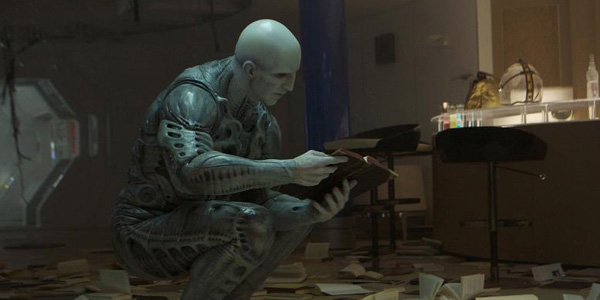
Before the internet the extent of spoilers tended to be someone, in person, giving away a plot point from an already released movie. Nowadays it's people from all corners of the world reporting up-to-the-minutes updates of films we're two years away from seeing. Seriously, if we see another shot of Ben Affleck on the set of Batman V Superman we'll scream. The biggest culprit is already Star Wars Episode VII. Every day brings with it a new rumour and odds are soon they'll go from vague plot details to something totally movie ruining. Even the might of spoiler-shy J.J. Abrams can't stop hungry Star Wars fans. It's happened with plenty of recent films, where some piece of truth slips by all the hokum; as well as having a terrible run of increasingly revealing trailers, the speculation for Prometheus ultimately left little to the imagination. The problem is, when a film's so far away we become increasingly spoiler prone, desensitised to the danger. We're so desperate for anything that rumours keep us going, not realising that we're sowing the seeds of, well, spoiling the film. They are called spoilers for a reason. Outside of the context of the film, we don't know whether a piece of information could be a bit of first act set-up or a major plot twist in the finale. What can you do: Not reading them is easier said than done - often the real meat is in the article title. Be very careful where you stray on the internet.

7. Letting Nostalgia Run Hype

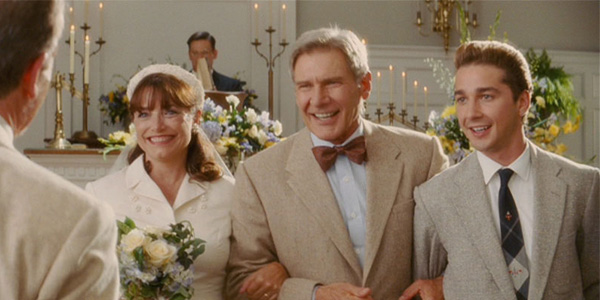
What was the biggest problem with Indiana Jones And The Kingdom Skull? After stating surviving a nuclear blast in a fridge and the whole alien mess, most people would say the terrible special effects. Well we're sorry to tell you, but the effects in the original weren't always the best. It's the same with people complaining about Hayden Christensen's performance in the Star Wars prequels when there were certainly some dodgy acting moments in the originals. We're not claiming either of those late-in-the-day follow ups came close to their predecessors, but are highlighting that many of those films' perceived issues aren't actually the real problem; they're really just an example of how much the cinema-going public is dominated by nostalgia. There's something very enticing about giving into cinematic nostalgia, but all it does it blind us to genuine flaws; we all know how rose-tinted glasses can colour our view of previous films, but it can also make more recent films with a passing relation to something we hold dear automatically appear inferior by just being different. The next few years will see a new Star Wars, a new Terminator, a new Blade Runner and you can bet each one will be met with some vague and wishful statements about failing to capture former glories without actually dealing with the product at hand. What can you do: You can't really fight nostalgia, but at least being aware of how it can influence us can help.

6. Blaming Adaptation Issues

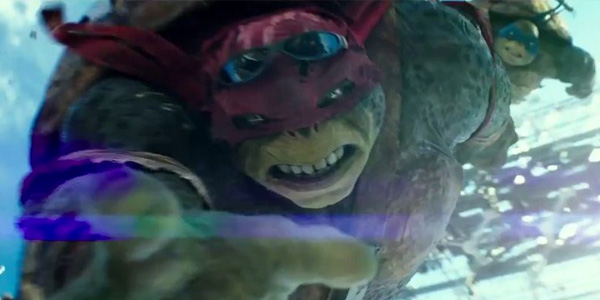
What went wrong with the recent big screen versions of both Transformers and Teenage Mutant Ninja Turtles? A succinct answer would be Michael Bay. A purveyor of all things leering, Bay's robots-in-disguise movies have succumbed to his usual audience-wearing down tropes, while TMNT, which is yet to hit British shores, reportedly falls into many of the same traps. Although that's not what fans of the original series would say. In their mind the real root of the problem is that the heroes have been reimagined. There's even defences of Bay's Transformers out there stating that if you get past the angular take on the Autobots there's stuff in the films to enjoy. Ignoring that it's that 'stuff' that's the real issue, quite how the robots are disguised has little effect on the film's quality. Do you know why it isn't an adaptation issue? Because the idea isn't some fabled, Gatsby-level work. Teenage Mutant Ninja Turtles isn't Darren Aronofsky mucking about with the Bible, but the director of Battle: LA dicking around with some nineties nostalgia. Mutant turtles who are ninjas? Robots that transform into cars? They're bonkers and to get hung up on the confused mythology of it all misses the fact that these films are merely poorly made. It feels a particularly strange complaint in Turtle's case given that since that franchise's very early days it's been twisted and reinvented multiple times producing different takes on it; the immensely popular cartoon is far from the base source. What can you do: Take a step back and actually evaluate why a film is bad.

5. Distracting Yourself

Everyone knows phones are an irritation when combined with movies. Have one go off in a packed cinema become a social pariah, while the light from that idiot two rows ahead checking Facebook makes focusing on the screen (which both of you have paid to specifically look at) impossible. The real impact of using a phone during a film, however, is on you, the one who's actually using it. Whenever you stop paying attention to the film to look at your device you're not only missing some of the action, but you're pulling yourself out of the on screen world, making what could be a really intense film appear confusing. Films with fast-paced, intricately plotted stories require an audience's full attention - this is probably why so many people found Inception and Source Code confusing - while checking that text in the middle of Gravity will only destroy the tension that Alfonso Cuarón has been carefully building up. This is why being able to watch films on a myriad of devices - phones, tablets, probably watches soon - isn't the future of movies it's so often praised as being; is 12 Years A Slave going to be as effecting when you're pausing every second to check Candy Crush? What can you do: Turn your phone off. That hilarious Snapchat will be there when the film's finished.

4. Avoiding New Ideas

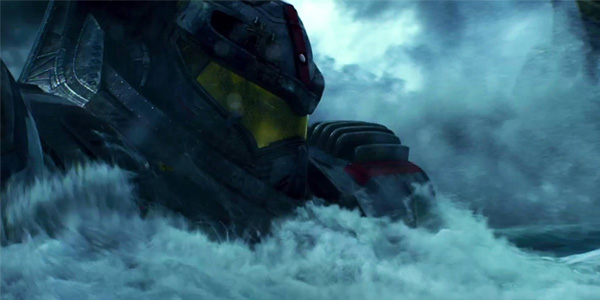
So far this year the highest grossing film not based on an existing property (Guardians Of The Galaxy doesn't count because it was still pushed by Marvel) is Edge Of Tomorrow, the fun, if ultimately formulaic Tom Cruise sci-fi that mashed Groundhog Day with Starship Troopers. Were the likes of Maleficent or The Amazing Spider-Man 2, which made more money, better than it? No. Did it have any major flaws that would lead to a mediocre box office run? No. Did audiences steer clear because it was a new concept. You can bet your mech suit they did. It's a sad paradox that general audiences moan so much about franchise cinema, but then only go to see films that are sequels, spin-offs or reboots. Pacific Rim may not have been a blockbusting game-changer, but it didn't deserve to be discarded by audiences to just about scrape its budget back. When Godzilla can get a sequel on opening weekend , but another, equally competent film takes until fans mass-buy the DVD is ridiculous, particularly when the majority of audience's brand recognition with Gareth Edward's monster movie was the terrible nineties version. This has always been true to some degree, with more auter-led film-making losing its box office grasp once the double-whammy of Jaws and Star Wars set up the blockbuster model, but it was never the case a film needed to be part of something pre-existing to get audience's attention. What can you do: Take a gamble. At worst you waste a couple of hours, at best you help nurture a new franchise.

3. Seeing Films Knowing They'll Be Bad
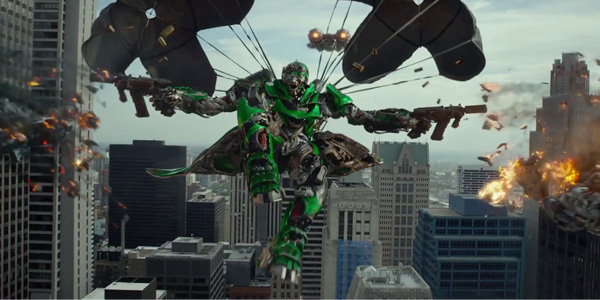
There are people out there who, for reasons that still baffle us (seriously, how are people disillusioned enough to claim the films have comprehensible action sequences) who enjoy the Transformers movies. Much of their gross may come from foreign markets where American movies are regarded differently, but a good chunk still comes from the conventional domestic box office, meaning there's people you pass on the street who must go into the films actually expecting entertainment. One explanation is that, judging by the reaction the films receive, a good chunk of those watching the films are doing so knowing they're in for a painful couple of hours. And, we're ashamed to say it, but we're guilty of this. There's a morbid fascination in seeing how bad terrible-looking movies really are. Not in a so-bad-it's-good way or as a guilty pleasure, but genuinely to see just how low the medium of film can sink. Aside from making you want to throw up from sensory assault, this practice has some really negative effects. As we've already discussed studios use the box office takings as a measure of the viability of a sequel, so in going to see the latest obviously awful movie all you're really doing is meaning we get more and more of this crap. What can you do: Fight the masochistic urge and stay home.

2. Using Netflix As Your Main Film Source
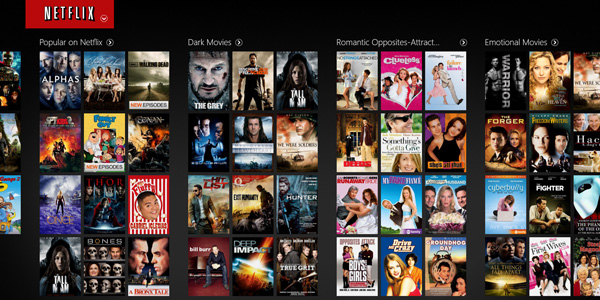
Isn't Netflix awesome? For £5.99/$8.99 a month you can access to a massive library of TV shows to watch whenever and wherever you feel. There's Breaking Bad, Archer, Sherlock, Mad Men and so, so much more, along with their in-house shows, House Of Cards and Orange Is The New Black. Brilliant! If you're using it for movies, however, it's a totally different picture. If you wanted you could ditch conventional TV in favour of Netflix, but you certainly couldn't with films. What's on offer is certainly impressive compared to what can fit in one person's DVD collection, but as a central hub for cinema it just doesn't cut it (particularly in the UK); The Godfather but no Part II; no Marvel movies except Iron Man 2; a ridiculously high number of Asylum knock-offs? No thank you. As each film requires a licensing deal with the distributor, naturally not every film ever could be on the site, at least as the current market stands (although we'd pay through the nose for that service). It's just important customers are aware about this before making it a one-stop shop for cinema; soon they'll be thinking the extent of Robin William's career is Popeye and Hook. What can you do: Use Netflix as a supplementary service. If you really fancy seeing a film, go buy the DVD.

1. Promoting A Fan-Boy Mentality

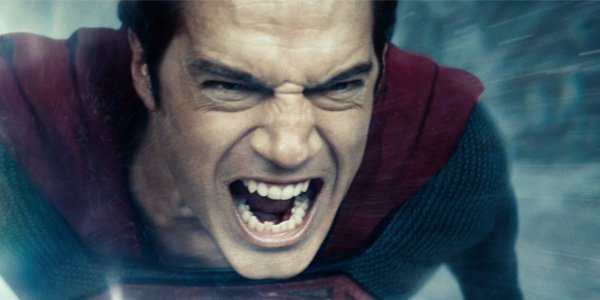
We don't like Man Of Steel. We do like Captain America: The Winter Solider. We think that not because we've got some undying love for Marvel that makes us hate anything from a rival company, but because Cap 2 is an entertaining film with some brilliantly shot action sequences while Zack Snyder's Superman reboot is a dour exercise in how to take yourself too seriously; essentially one is good, one is bad. One of the worst elements of modern mainstream movie fandom is the idea that instead of people evaluating movies objectively, they make their decision at the production logos and won't be swayed by what comes after. It's a big screen version of the conventional divide between Marvel and D.C. in comic form and means any discussion regarding superhero movies risks devolving into a bout of personal attacks and mud-slinging. The thing is, there's no reason for it to exist. It's a self-perpetuating irritation that, despite the majority of audiences not being shallow enough to fall into fan-boy camps, we begin to believe these factions exist. It's petty, it's childish and it risks making discussing movies less about their content and more about questioning what motivates other people to like them. Five years ago everyone loved The Dark Knight. Now everyone loves The Avengers. Do you think these are two distinct groups divided by their production studio allegiance? Don€™t be daft. Fan-boys are out there but for the most part people just want good, entertaining movies. What can you do: If you haven't already, grow up. What do audiences do that have a negative impact on cinema? Let us know what you think down in the comments.

In this post: 
Prometheus
 
Posted On: 
Contributor
Contributor

Film Editor (2014-2016). Loves The Usual Suspects. Hates Transformers 2. Everything else lies somewhere in the middle. Once met the Chuckle Brothers.