11 Heroic Acts In Movies That Changed Absolutely Nothing
"Show me a hero and I'll write you a tragedy."
You really have to admire anyone who decides to make a hero of themselves. It must take a considerable effort to decide to put superpowers to good use for the benefit of humanity, when you're faced at every turn with the haunting reminder that using them for evil would make life a hell of a lot easier very quickly. The pay-off is obviously appealing, since adulation is the greatest currency in the known universe - even if it's no help in putting food on the table - and as humans, we're always holding out for a hero, as the great philosopher Bonnie Tyler so succinctly put it.
Sometimes, that heroism rubs off and normal people are compelled to stick their necks out to make a stand, and to make a name for themselves, like the lone German man standing up to Loki or that man who went out shopping and ended up stopping an advancing column of tanks. These people deserve to be adored, and showered with appreciation from a great height, because their actions and their sacrifices had a positive impact on the world.
But then there are those who stride out as heroes to absolutely no benefit at all; jumping on grenades that were never going to explode anyway, or even worse laying down their lives when the battle is already won, or without any effect whatsoever. They might be still heralded as heroic, but that doesn't hide the fact that they were also largely useless, and their great acts of heroism were entirely redundant.
To celebrate these unfortunately pointless heroes, we're looking at the examples from Hollywood history of characters who valiantly made sacrifices for a world that just went on spinning exactly the same way anyway.
Honourable Mention
Tony Stark - The Avengers
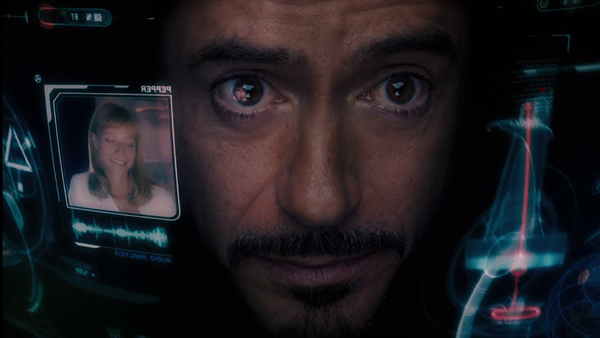
It would be churlish to suggest that Tony Stark's self-sacrifice to save the world from the Chitauri, by ramming a nuclear weapon up their universe's tail-pile, but the tone of the sequence is played as a misdirection that is supposed to mean as much to Stark's character arc as to the fate of New York.
Throughout his arc in the MCU, Tony has been presented as conceited and self-centred, and ultimately as an inferior leader because he wouldn't dive on a grenade to save his team - with the implication being that Captain America would, much to Iron Man's chagrin - so when he chooses to sacrifice himself to save everyone, he's getting the right full-stop to that narrative arc.
He even tries to say goodbye to Pepper in a particularly emotional sequence, but it ultimately means nothing, because in not allowing Tony to kill himself, Marvel robbed him of the follow-through on his epiphany, and he largely does back to being the same old Tony (with a few war wounds) in Iron Man 3 - impulsive, arrogant and self-serving.
11. Clarence The Angel - It's A Wonderful Life

It's A Wonderful Life is clearly all about change, and specifically the impact that even the slightest changes - like the wiping out of a life deemed insignificant and toxic - would have on the universe. For a Christmas film, it's also relentlessly grim: not least because its idea of a happy ending is to have the main character simply grin and bear everything that drove him to suicide in the first place, and its first key narrative moment comes as Jimmy Stewart looks all set to throw himself off the bridge to certain death.
Luckily Clarence the angel intervenes, distracting George and takes him on a journey through an alternate universe where he never existed, and terrible things happened to ungrateful people who never though to show George how valued he was in the first place. He pulls off that little distraction technique in a surprisingly odd way, throwing himself into the self-same river that George intended to end his life in.
In short, Clarence dived in to stop George from jumping in the water and killing himself, thus prompting the now distracted George to jump in the river, achieving the exact same thing he was going to do anyway. So what changed? Is the film suggesting that George would somehow have died from the thing that patently didn't kill him when he actually did it? Yes perhaps he would have sought another suicide method if he failed, but the point is that Clarence didn't actually need to pretend to kill himself to stop George jumping in, because the short-term outcome remained exactly the same.
10. Vicki Stands Up To Jason - Jason Goes To Hell

Here's an invaluable tip for you from the horror movie vault: if there's a slasher/undead murderer/demonic ghoul on the loose, attempting to kill your friends, no matter how much you fancy yourself a have-a-go-hero, drop everything you are doing and run as fast as you can in the opposite direction.
Forget friendships, forget honour, and forget attempting to impale said killer with any handy kitchen apparatus you might have to hand. All is folly, and you will find yourself on the receiving end of a head squeeze that bursts the top of your head like a ripe zit, as Vicki found in the most ridiculous Friday The 13th sequel. When Jessica and Steven flee the possessed Robert at the diner, Vicki stands up to the monster, despite the fact that the rest of the staff have just been comically tossed aside and casually murdered, in order to buy her friends some time.
Inevitably, despite a heroic stand-off in which Vicki gets a few shots in herself, she goes the way of everyone else not at the top of the bill, and gets her head popped for good measure. But like Duke's attempt to buy Jessica some time later in the film, Vicki's sacrifice counts for precisely nothing. Somehow impregnated with the knowledge of where his victims are always going to be, Jason still finds them, and still faces off with them the same way as would have happened if Vicki had turned coward and ran away with her brains still inside her face.
9. Jericho Kills Himself - End Of Days

At the end of religious apocalypse movie End Of Days, Arnold Schwarzenegger's grizzled cop - the ludicrously brilliantly named Jericho Cane, in case anyone missed the religious notes of the film - ends his protection of devil's quarry Christine York (who Beelzebub wants to hump to create a demon baby and bring about the end of the world) by becoming possessed himself and attempting to rape his charge.
The film is about as hokey as religious action films come, as Arnie's Jericho is told all he needs to stop Satan is faith (which confuses his need to use a rocket launcher against him in the film's penultimate set-piece), but the silliness does at least establish the internal logic that humans can fight off Satan's influence if they have the will-power (and the faith in God). Gabriel Byrne's banker obviously doesn't have the power to fight back, because he's a slimey banker, but Arnie isn't a bad guy, even though he definitely turned his back on God when his family was murdered, so he's able to wrestle with Satan and stop himself from impregnating Christine (Satan always handily chooses virile men apparently).
With the clock about to run down on Satan's sexy window of opportunity for another millennium, Arnie fights off the devilish control and impales himself on a sword, stopping the Devil from regaining control, and sending him back to Hell without his ruinous offspring being conceived, which happens roughly five seconds after Jericho kills himself.
So basically, Jericho could have just stood perfectly still for a few seconds, having regained control of his loins, and Satan would have been banished back to Hell. Killing himself changed the outcome in absolutely no way.
8. Clarice Stops A Serial Killer... By Helping A Serial Killer Escape - The Silence Of The Lambs

Clarice Starling is the poster-girl for achievement through perseverance, and the adoption of unconventional methods to capture predators. She should also have probably been struck off for her part in accidentally helping a serial killer escape and murder two police officers (and presumably some more unseen victims), and then doing it again in the sequel, while fostering some worrying implied sexual feelings towards him.
But she does take down Buffalo Bill without much help (other than the sometimes useful hints of Lecter), and saves his last victim from becoming a sleeve on his lady suit, so maybe we can forgive her the other transgressions? Nope. Buffalo Bill might be off the streets, but in the bigger picture, he's only half the monster that Hannibal Lecter is anyway. So while it might seem that Clarice's score is back to zero, since she stopped one killer, and then all but guaranteed that another would escape, it's all about the quality of the killer.
Lecter makes Bill look like the amateur he is: Bill is impulsive, emotional, and his capture is inevitable, because he's not as smart as he thinks he is, whereas Lecter is basically the devil. Having three Bills active and killing is still better than having Lecter on the loose, so in the grand scheme of things, Clarice's big case did very little to redress the balance of justice.
7. Data Killed Himself To Stay Young - Star Trek: Nemesis

Star Trek: Nemesis wasn't ever supposed to be the final movie outing for the Next Generation cast, as there was still a film on the table at the time of its production. But then the box office spoke, and the film was deemed a global failure, with the producers citing "franchise fatigue" and spelling the end for the entire property until the reboot came about.
Nemesis was however supposed to be the final film for Brent Spiner - the series' android officer Data - who stated ahead of release that he no longer wanted to play the character as he was getting old and felt he could no longer convincingly play an ageless character. He consequently demanded he be killed, which lead to the rather extreme decision by Data to fly across space and sacrifice himself to take down Shinzon's ship, when alternative approaches existed that wouldn't have killed him.
Clearly that narrative silliness was done in order to acquiesce to Spiner's demands, which turned out to be pointless anyway when the TNG movie series was abruptly ended. And importantly, even if the Nemesis sequel had been made, Spiner would still have had to turn up to film since the script introduced B-4, another android played by Spiner who replaced Data at the end of the film, rendering his functional death entirely bloody redundant.
6. Alexander Knox's Attempt To Help Fails Horribly - Batman 1989
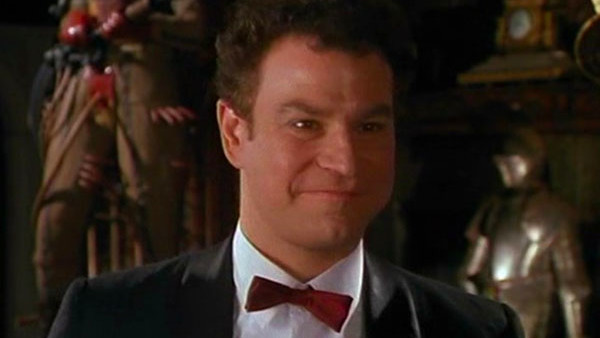
Gotham Globe reporter Alexander Knox pretty much only exists in Tim Burton's Batman universe for comic relief: he's annoying, only mildly entertaining and nowhere near as funny as he should be (though he is still probably one of the funniest characters in the entire Batman film franchise, which isn't all that much of an achievement).
Somewhat uncharacteristically for his type of character, Knox does get his own moment of heroism though, when the Joker's parade is revealed to be a plot to gas all of Gotham's citizens. Initially he was ear-marked to die in the sequence, but the producers liked him so much they gave him a reprieve and allowed him to be one of the only citizens not to be overcome by the Joker's Smylex gas.
Knox manages to defy the Joker's plot by using nothing more hi-tech than a handkerchief over his mouth, and tries to take on some of the clown's goons, who become unfeasibly scared of him and for some reason don't use their superior training to beat him to death. He is thus heralded a hero, right up to the point where he ends up on the front of Vicki Vale's car bonnet when she crashes and knocks him unconscious.
It's obviously the thought that counts, but Knox would have been a lot better just running away with his make-shift mask in place for all the good his heroic stand did. He didn't even get the girl.
5. The Hero Train Passengers - Spider-Man 2
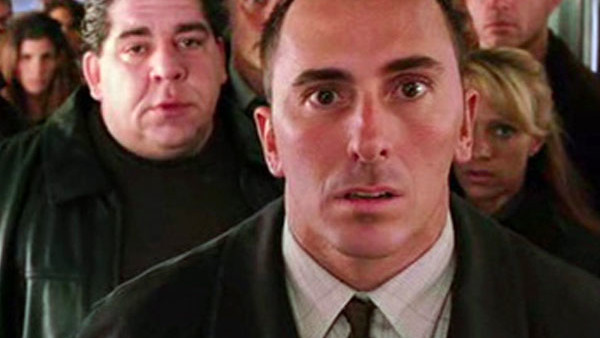
When Doc Ock has the upper hand on Spidey and has set him on a one-way train journey designed to kill him, despite knowing that Harry Osborn wants to exact his own revenge for the death of his father, the web-slinger once more relies on the kindest of New York's residents to save him from his enemy, as he did in the first movie.
New Yorkers being New Yorkers, the residents muster as much pluck as they possibly can and attempt stop the returning Octavius from taking the exposed, maskless Spidey away to Harry. Unlike in the first film, when the angry citizens are able to at least partly put Green Goblin off his stroke and buy Peter some time, in the sequel, the interaction goes something like this:
Citizens: "You'll have to go through us first!"
Octavius: "Fine."
The point of that sort of heroism is symbolism of course, but at some point you should probably weigh up the likely outcome, and just stay sitting down quietly, especially as the concerned citizens achieved precisely nothing.
4. Kevin's Mom Puts Herself Through Hell To Get To Her Son... Arrives One Minute Before Everyone Else - Home Alone
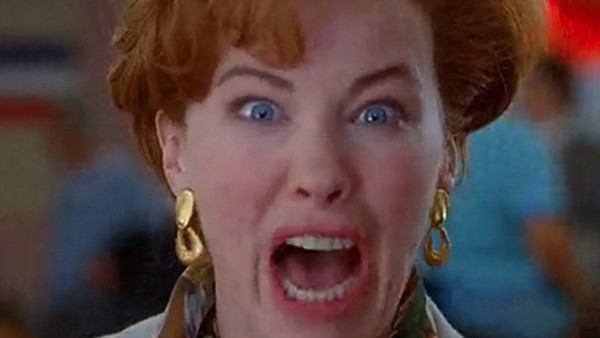
In the grand scheme of things, the heroic sacrifice that Kate McCallister makes for her son in Home Alone is not the most extreme, as she doesn't lose her life, or any limbs, but within the logic of the film, and more crucially within the emotional logic of the film, it is a major sacrifice.
Appalled that her not atypically terrible parenting skills have lead to her youngest and most vulnerable child being left at home, Kate desperately attempts to make it cross country to provide aid and love to her prone progeny, including negotiating with the world's worst old couple, who flat out refuse to swap tickets with her, because they're old and horrible (one tries to extort, the other just couldn't give a solitary damn). Eventually, she realises she must do the unthinkable and travel with a polka band in heinous conditions, suffering heinous music, with heinous jokes as her entertainment.
Her trek is only marginally worse than that of Tom Hanks' crew in Saving Private Ryan, which was probably inspired in some way by Home Alone, and she arrives battered and emotionally bruised, happy in the knowledge that if she'd waited with her family, she would have arrived home to Kevin a whole two minutes later, and a lot happier.
3. Magneto's Entire Army Dies For Nothing - X-Men: The Last Stand

The definition of "heroic" here is up for debate, but there's no doubting that Magneto and his Brotherhood Of Mutants believed themselves to be in pursuit of the most just cause in Brett Ratner's wayward threequel. They were the self-appointed heroes of mutant kind, united in their efforts to stop humankind from wiping them out at a genetic level, like a world full of self-righteous Hitlers, and they were willing to do whatever it took to protect their kind from total annihilation.
Magneto used that commitment to his advantage, sending his army of pawns to their deaths against the human army and Professor X's band of X-Men who for some reason ignored all precedent to believe that humans could live in peace with mutants if they were just given enough chances. Tens, if not hundreds of mutants met their end on that battlefield, as Magneto and his two powerful sidekicks - Pyro and Phoenix stood and watched - despite the fact that Phoenix could have basically blinked and made all of the army and the X-Men cease to exist in roughly a nano-second.
All of those Brotherhood heroes died for precisely no reason. They didn't gain any advantage, and they didn't even need to sacrifice themselves in the first place, which is precisely why Magneto gets such a bad rep.
2. The Terminator - Terminator 2

In one of the most enduring sequences of sci-fi movie history, the end of Terminator 2 sees the titular cyborg giving an uplifting thumbs up as he heads to his fiery doom in the same smelting pot that has just killed the superior T-1000.
Despite being the perfect bodyguard who could have saved Sarah Connor and her son further issues, the Terminator is resolute that he has to be destroyed to save his parts from falling into the hands of the wrong people (the Skynet inventors), which works out really well since Skynet is then never invented and the whole future timeline where the machines take over is completely averted and everyone lives in peace, casting only slightly suspicious looks at their toasters.
Except that doesn't happen at all does it? The Terminator's death fails to achieve the only reason it actually had, as Judgment Day is merely changed to another date later on the calendar and the world still falls to war between man and machine. So all that emotion, and the hugely symbolic thumbs up pose, and all it managed was to put off the inevitable for a little while, when a Terminator would have been remarkably helpful for the Connors around the house.
1. Ripley - Alien 3

There's something about throwing yourself into a fiery lake of doom that makes for an iconic image: Arnie's T-800 knew it, Gollum knew it, and the female bad-!*$% to end all female bad-asses - Ellen Ripley - also knew it.
By the end of Alien 3, Ripley was a shadow of her former self, haunted by the needless deaths of her little space family when her fellow survivors are mercilessly killed off off-screen, and probably unable to ever have a pleasant nights sleep having developed serious, irreversible PTSD, so when she learns she's carrying a xenomorph embryo and has a chance to be killed, as long as she helps Dillon and his crew to kill the other adult creature, she was probably more than happy.
Ultimately, Ripley ends up having to kill herself and the embryo to make sure that the alien can't grow up and be used as a biological weapon, and everyone lives happily ever after. Until the sequel, when Ripley is roused from her peace, along with the alien, and has to contend with idiots who want to use the xenomorph for study, because they have no idea about anything.
Which other heroic acts in movies ended up meaning nothing?
Did you enjoy this article? Share your appreciation in the comments thread below, and why not check out our run-down of the 10 Movie Heroes Who Actually Didn't Affect The Plot in their own movies.