11 Reasons You're Wrong About Solo: A Star Wars Story
For a series that doesn't care about odds, this film sure overcame them.

No matter how you look at it, Solo: A Star War Story hasn't had the easiest of journeys. Talk of a troubled production, the departures of directors Phil Lord and Chris Miller and then all the hubub surrounding its supposedly disappointing box-office have all coalesced to paint a picture of a film that's had to overcome everything in order to succeed, only to fall - ostensibly - at the final hurdle.
But Solo doesn't fall when it most matters. Instead, it makes the jump to hyperspace with a compelling narrative, some fantastic performances and an equally fantastic aesthetic spearheaded by Bradford Young. Yes, it might not reach the dizzying heights of Rogue One or The Last Jedi, but it is irresistible once it gets going, providing a trip to a galaxy far, far away that's sure to provoke as much as it will excite.
There are obvious flaws to note of course; all too often the film takes the easy option when it comes to fan service, but it’s not bad by any stretch. The fact the film even exists is something to marvel at, and with disaster having been prophesied for months on end, the cast and crew of Solo should all hold their heads up high, and bask in a job well done.
SPOILERS AHEAD!
11. No, The Box-Office Doesn't Matter

It's apt that a film about a character who doesn't care about the odds would end up overcoming them with little fanfare, but it's no less frustrating.
Solo, for all its merits, flaws and quirks, has rather quickly been defined by its box-office haul - which, despite grossing over $160 million, is apparently enough to write it off entirely. While there's no denying that it's disappointing, when did the main focus of conversation for newly-released films instantly switch to how much money it managed to make, and not genuine criticism itself?
There's little doubt that Disney will be forced to re-assess their spin-off plans after Solo, but it shouldn't be dominating discourse as much as it currently is, and certainly not in some puerile attempt to silence those who left the theatre with a sense of enjoyment.
10. It More Than Justifies Its Existence

You don't have to search far and wide to see that not many people were desperate for a Solo spin-off.
Of all the planned projects Disney had brought to the table, this was the one that raised the most eyebrows - and why shouldn't it have? Coming off the back of Episode VII - a film that not only brought Harrison Ford's character back to the masses, but then killed him off as well - backlash to another film featuring the character was inevitable, whether it had been a prequel, sequel, or otherwise.
Most important of all, perhaps, were criticisms that argued that there was nothing worth telling about a young Han Solo. At the very least, fans thought that other Star Wars characters - like Princess Leia and Obi-Wan, for instance - were more deserving of a place in Disney's anthology films. While that might be true, Solo has more than earned its right to exist, with the film featuring a story that not only expands upon the Star Wars lore, but deepens our understanding of one of its most beloved characters as well.
Whether or not it should've been released prior to those other anthology spin-offs is another matter entirely, but it's more than apparent that the film had a story worth telling.
9. The Fan Service Is Actually Handled Well (For The Most Part)
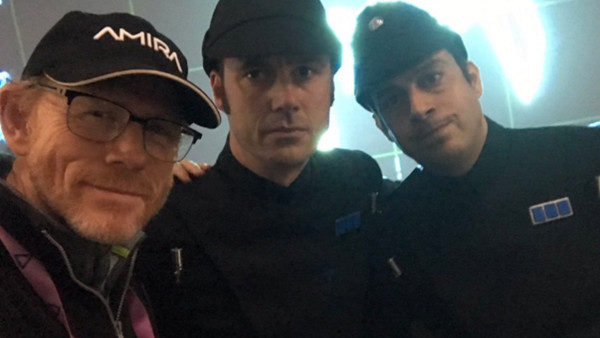
Much has been made of Solo's most gratuitous, fan service-y moments, but they aren't nearly as groan-inducing as some would argue.
Name reveal aside (which is admittedly rather silly), there's a sense of inevitability to the film's reveals. That isn't to say that it's predictable, but to act as though the film somehow couldn't address Han and Chewie's first meeting, the Kessel Run, or Lando losing the Falcon to Han would be very unfair. All are seminal moments in Solo's life, and though they've been depicted in the comics countless times before, it's not the same as a fully-fledged cinematic interpretation.
Further still, those moments are all handled remarkably well: Chewie's first meeting with Han is equal parts hilarious, memorable and rousing; the Kessel Run delivers plenty of thrills and spills, and the moment where Han gets back at Lando in the last game of Sabacc encapsulates the pair's testing friendship perfectly.
Everyone might've known that they were already coming, but Solo succeeds in spite of that. To not only meet expectations, but to exceed them entirely, is a brilliant feat.
8. The Kessel Run Sequence Is Genuinely Compelling

The Millennium Falcon might've always been the ship that made the Kessel Run in less than twelve parsecs, but to see it do so first hand was particularly impressive.
When it comes to storytelling, some things are best left untold. The Kessel Run, for the vast majority of Star Wars' existence, looked to be one of those things, with Han's claim serving little purpose in the Original Trilogy other than to intimate the qualities of his ship and the distance it's somehow able to circumnavigate.
As soon as a Solo film was announced, however, it became apparent that the Kessel Run was something that Star Wars fans would get to see firsthand. Unthinkable, perhaps, was that it would come to form a pivotal moment in Han's life, serving as the point from which he realises his piloting ability and proves all his doubters wrong. The sequence itself is also breathtaking, with Han outmanoeuvring an Imperial blockade, a tentacled monster, and a colliding asteroid to achieve the impossible and deliver the Coaxium - at that point in time - to Crimson Dawn.
Placed in that context, that line from 1977's Star Wars takes on a whole new meaning. This was the moment where Han Solo was made - and Star Wars is better for having shown it.
7. Paul Bettany Is One Of The Better Star Wars Villains

Unfortunate though it may be that the talented Michael K. Williams was removed from Solo due to being unavailable for the film's reshoots, replacements don't get much better than Paul Bettany, who plays the part of Dryden Vos with appropriate volatility and nonchalance.
Vos, despite meeting the criteria for the film's big bad, is just another fish in the vast, vast sea that makes up the Galactic Empire. Even he answers to someone else, but while he's just another cog in Crimson Dawn's machine, the character still manages to impart a lasting impression.
Visually, Vos is easily one of the better looking Star Wars bad guys. Costume designers Glyn Dillon and David Crossman deserve credit there (as they do for every character's garbs in the film), painting a picture of a criminal who revels in excess and violence. Bettany himself also manages to convey Vos' explosiveness wonderfully, balancing the character's inherent charisma and charm with the disturbing nonchalance with which he approaches violence.
He might not be the most bombastic bad guy going, but he's a more than competent adversary for Chewie and Han.
6. It Elevates Our Understanding Of Han
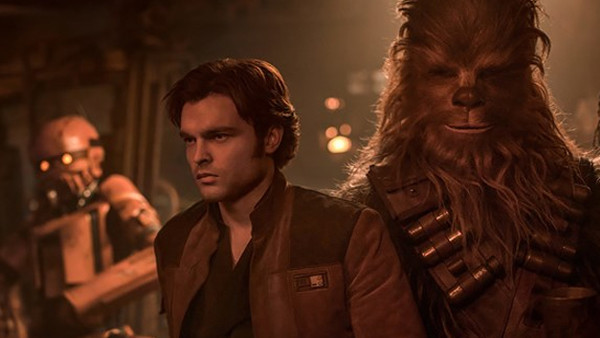
At a glance, seeing how Han Solo became the biggest cynic in the galaxy doesn't exactly make for an interesting premise. Han had always been a cocky, skilled, if not slightly-insecure smuggler who secretly harboured a selfless streak to him. The less that was said, the better, and Harrison Ford conveyed a whole lot in his performance each and every time he stepped into the character's boots.
And yet, Solo: A Star Wars Story somehow manages to improve on that characterisation. Like Rogue One before it, the film forces fans to reexamine how they approach the Original Trilogy, and while it never seemed like a story worth telling, owing to the fact that Han was already such a bright spot of the franchise, the character emerges for the better thanks to the efforts of actor Alden Ehrenreich, writers Lawrence and Jon Kasdan, and director Ron Howard.
Now, the Solo of the Original Trilogy is a character who's not only had to fight for his reputation, but one who also used to display his good side in full view. Underestimated in every regard - even by Luke Skywalker in their first meeting - Han's status as a man who, odds be damned, can achieve the impossible, is enhanced by the spin-off, and there's even genuine pathos to the journey as well.
For years, "Han shot first" has been a rallying cry for fans chagrinned by the most notorious of changes George Lucas brought to his Original Trilogy. Now, it takes on a whole other meaning as the moment where Han learns Tobias Beckett's final lesson, and acclimatises to the environment we meet him in years later at Mos Eisley.
5. The Heist Sequence Is One Of The Franchise's Most Inventive
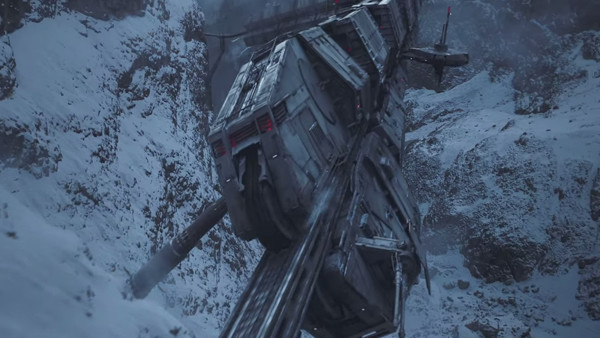
Between Ant-Man, Baby Driver and the upcoming all-women Oceans film, the heist genre is making a bit of a comeback. Its influence is also felt in Solo, which delivers not just one heist sequence, but two!
The first, which caps off the film's opening act, revolves around a train hauling Coaxium on the planet Vandor. It twists, turns, and forces those perched above to hang on for dear life - and with Beckett et al. hooked on with cables, chased down by a bunch of magnet-wearing stormtroopers, the action is enthralling from start to finish.
Shootouts, lightsaber duels and space-bound dogfights have all featured heavily throughout the franchise, but never has a sequence been as refreshing as this. The famous pod-race from The Phantom Menace comes close, but when it comes to creating an innovative action scene, the Vandor Heist has to be up there with the franchise's best.
4. Ehrenreich Completely Defied Expectation

When it comes to Star Wars, everyone involved will have to deal with an element of pressure. The franchise is so revered, so well known that, to get it wrong, would spell lasting criticism for all involved. No one absorbed more of that pressure with Solo, however, than the man who played the eponymous smuggler himself - Alden Ehrenreich.
Throughout the film's production - and to a degree its marketing as well - talk of Ehrenreich's performance dominated anxieties. To assume a part Harrison Ford pretty much made was no easy feat, and with talk of acting coaches being needed too, those initial trailers and TV spots didn't inspire the largest amount of confidence.
Come the film's release however, Ehrenreich silenced all his critics with a performance that not only deepened our understanding of Han Solo, but one that was compelling enough to sit alongside Ford's too. It's that good, and to that extent, Ehrenreich is probably the best thing about the film.
It's still Han, but not quite as you remember him. In finding a balance between imitation and something different, then, Ehrenreich more than proves that he's the man for the job.
3. Beckett's Betrayal Makes Sense

Woody Harrelson's portrayal of professional criminal Tobias Beckett was another highlight of Solo, and while his betrayal at the end of the film has been labelled as something of an anti-climax by some, in the context of Solo's narrative, it makes plenty of sense.
Beckett is a criminal by trade, and though he's also Han's mentor, his experiences have been shaped by a life of betrayal, thieving and murder. The family unit he's assembled when we find him - comprised of the criminally underused Val (Thandie Newton) and Rio (Jon Favreau) - is still one wedded to the vicious underbelly of the Star Wars mythos, and once Val passes away, self-preservation becomes the name of the game.
More important, perhaps, is that Beckett imparts one final lesson before he departs. His betrayal and subsequent death serve as a timely reminder to Han about the game he's set to play - one that doesn't have time for family, or at least the kind he envisioned when they first met on the battlefields of Mimban.
It makes sense to feel disappointed that Han's mentor turned out to be a bit of a villain in his own right, but in exemplifying the overall themes of the story, it's the perfect ending to that arc.
2. Darth Maul's Reveal Makes Plenty Of Sense

While Darth Maul's inclusion in Solo did seem a tad self-indulgent, it did serve a purpose in further reiterating the thematics of Solo's story.
Speaking to Io9, screenwriters Lawrence and Jon Kasdan spoke of how Maul's inclusion further intimated the scale of Star Wars' criminal underworld, and how that, no matter how far you rise up the chain, "evil or good, you’re not in control of your destiny... Everybody serves some greater God or is mastered by something.” Maul, serving as a neat callback to one of The Phantom Menace's two redeeming features, encapsulates that in the extreme.
Maul's inclusion also sets up either one of a Solo sequel or an Obi-Wan spin-off. Given the financial reaction to Solo it's likely that the latter is the more probable choice, and though Maul's journey ended in lethal fashion in Star Wars: Rebels, there are still more stories to be told with the character - why else would they include him?
1. It's Absolutely Stunning To Look At
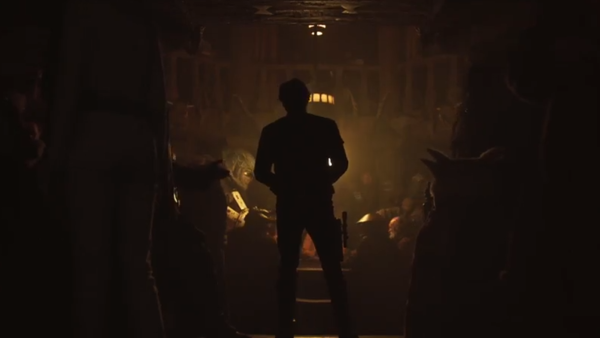
Bradford Young is one of the finest cinematographers in the biz, and his work in Solo shines throughout.
Solo isn't Young's first sci-fi feature - he worked with Denis Villeneuve for Arrival - but it might be his most visually impressive. The atmosphere the film exudes is one of Star Wars' best, and it owes that to Young's work, which paints a decidedly darker picture of the galaxy far, far away than most interpretations have dared attempt, save for Rogue One, which featured a far less expansive set of locales than the most recent Star Wars spin-off.
It's just a remarkably well-shot movie, and it's a theme that runs throughout all of its scenes, whether they're large, action-based spectacles, or quieter moments of reflection.
Star Wars has always been a mythos built on an incredibly unique visual style, and while they've always been pretty to look at it, the way Solo is shot pushes it into the top-tier of Star Wars movies - at least on a visual level.
The galaxy far, far away has never looked so good - even if it is a little rough around the edges.
Share your own thoughts on Solo down in the comments section.