11 Utterly Ludicrous Fan Theories (That Are Actually Quite Convincing)
Yes they're utterly bonkers, but they could well be real...
Sometimes fan theories actually improve films, but quite often they sound like exactly what they are - the wild ravings of someone unsuited to filmic intepretation or too emotionally invested in a terrible film to see their theories are little more than empty, ridiculous bluster.
We're not looking at things like the excellent and completely plausible Codename: James Bond theory (which would have worked up until the point Skyfall decided to show Bond's parents' graves), or the Ferris Bueller/Fight Club theory. Those carry too much weight, and those chosen for this list are one step above the lunacy scribbled on the walls of public toilets, but which do have compelling seeds within them.
Yes they're utterly bonkers, but they could well be real...
11. Bruce Wayne Died
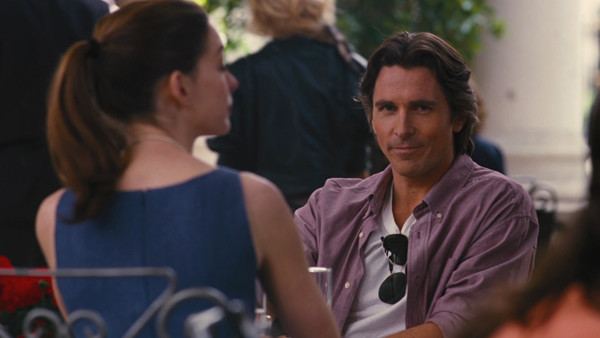
The Theory: Let's start with a popular one: at the end of The Dark Knight Rises, a grief-stricken Alfred concocts a false reality in which his charge Bruce Wayne survive, faking his own death in order to ride off into the sunset with his new love interest Selina Kyle. He never actually sees Wayne at the cafe at the end, which would help explain the inauthentic feel of the happy ending, and the utter betrayal of the character genesis up to that point.
On another Inception style level, it's actually possible to suggest that for the entirety of Nolan's trilogy, Bruce Wayne's increasingly unbelievable life was in fact imagined entirely by Alfred, the guilt-ridden butler who failed to prevent young Bruce's death when he fell into the well in the grounds of Wayne Manor. Driven mad by his failure to his masters, who abandoned Wayne Manor, Alfred concocted a life for his young charge whereby his falling into the well informed him becoming a superhero (absolving Alfred of guilt), which was still warped by the butler's grief (hence the darkness and the frequently miserable events).
In the end, the poor butler took his life when his grief became too much, and he was finally able to give Bruce the traditional happy ending he always wanted to.
The Proof: There are several strands that come together to prove at least the first part of the theory: Bruce Wayne would never turn his back on being Batman, because his story arc wasn't about finding himself and happiness (as it had apparently become by the end of Rises), it was about the tragedy of never being able to sufficiently avenge the death of his parents.
There is scant evidence that Selina Kyle is Bruce Wayne's soul-mate in the film. Why would he decide to run away with her? Auto-pilot or not, the nuclear-blast would still have killed Batman.
The second strain of the theory has no real proof, but it's still ridiculously compelling when you think about it. It couldn't have just been poor writing and inconsistent characterisation that allowed Bruce Wayne to survive surely?
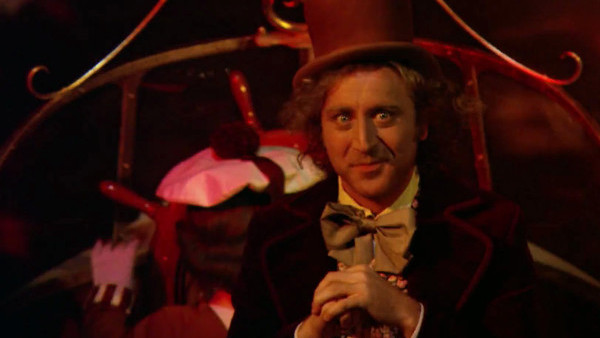
10. Willy Wonka Was A Killer

The Theory: Enraged by the deception of his workers and the incessant spying of his competitors, and turned insane by years of self-imposed alienation, Willy Wonka decided to take his vengeance in Angry Deity style by murdering some of the world's children in a fiendishly complex plot of murder. He intended all of the calamities that befall the children in the factory - hence his obvious apathy for their fates, and planned their punishment in a Saw-like skewed morality tale.
Along the way he also decided to indoctrinate an heir to his murderous thrown, carefully choosing a boy grown in a life of abject poverty and misery who he could show the evils of the world to before handing over his responsibilities. Which is why Charlie gets off Scot-free.
The Proof: How else did the Oompa-Loompas have pre-prepared and heavily choreographed song and dance routines including the names of the victims? It was all carefully planned.
9. OB1 (KNO-B)

The Theory: Obi Wan Kenobi is a clone of Ben Kenobi, and his story is not as simple as it is initially presented. Rather than simply cloning Jango Fett, there was a secret order to clone Jedi, and young Jedi Ben Kenobi was chosen for his vast powers when the Republic came under threat from the Trade Federation. The solution turned out only to be temporary however when it was discovered that the clones were too susceptible to damage and simply vanished when dealt a fatal blow.
It was Obi-Wan or OB1 to give him his clone serial number, who joined up with Qui-Gon as his Padawan, while the original Ben Kenobi takes an alternative path (including fighting in the Clone Wars), which eventually leads to him being given orders to exile himself on Tatooine to keep an eye on Luke Skywalker.
The Proof: On one level, it's simple: old Ben Kenobi doesn't remember having any droids when he meets R2-D2 and C-3PO, suggesting that it wasn't he, but his clone who encountered them during the events of the Prequels Trilogy.
8. It's A Wonderful Life Is Actually A Tragedy

The Theory: The apparent happy ending to Frank Capra's festive classic is nothing more than a grand deception, played on both George Bailey and the audience. George is deeply unhappy, and not simply because of Mr Potter's actions; his entire life is one of melancholy and compromise, and his real happy ending - as morose as it sounds - would have been to be allowed to kill himself and escape his responsibilities. Instead he's convinced to save himself - pressurised by an altruistic duty to help Clarence get his wings - and forced to comply with the very things that make him unhappy - his societal responsibilities and such.
George is forced to fall in line, to abandon his dreams and to be happy about that, without the possibility of release. It's effectively like Truman going back to live his life in the TV show and ignoring the possibilities outside of the boundaries, or Neo plugging himself back into the Matrix after discovering he is the One. And on a grander scale, the film is an allegory for how real life and responsibilities will inevitably get in the way of every dream you have. It's enough to drive anyone to suicide.
7. The Shining Is A Moon Landing Hoax Explanation

The Theory: According to the Film Room 237, Stanley Kubrick was hired by the US government to fake the Apollo moon landing, and the director made The Shining to explain himself. Jack's constant complaints about his job responsibilities thus reflect Kubrick's own experience of being forced to comply with government orders. The film is apparently littered with references, including Danny's Apollo 11 sweater.
The Proof: There are a number of signposts in the film that suggest Kubrick's hidden message, as infamously suggested by Jay Wiedner, but here are just a couple: In King's novel, the haunted room is number 217, which changed to 237 for the movie to reflect that the average distance from the Earth to the Moon is 237,000 miles (ish). The twins - who replaced the single slain child of the book - represent NASA's previous Gemini programme. "All work and no play makes Jack a dull boy" should in fact read "A11 work and no play..." referring to Apollo 11. For more "compelling" evidence, go and watch Room 237.
6. Q Is Wesley Crusher

The Theory: Remember Wesley Crusher, the rubbish son of Dr Beverly, who The Next Generation fans seemed to hate an awful lot more than the show creators? Well, he wasn't quite as rubbish as he initially seemed, as one fan theory suggests that he would evolve into the being known as Q. Having left with The Traveller during "Journey's End" to discover other planes of reality, Wesley becomes more than a mere human, learning his companion's abilities and becoming supremely empowered.
Eventually he ascends to become a Q, and travels back in time to the most important time of his life to influence his own personal growth by shaping Jean-Luc Picard (his father figure), as well as taking some personal vengeance for his occasional mistreatment by Starfleet. Presumably, at some point Crusher chose to return to Starfleet (as implied in a deleted scene from Star Trek Nemesis that reunites Crusher and Picard), which could very well have been a mere extension of his thirst for total knowledge. Either that or he is the ultimate square who turned his back on superhuman powers to work for Starfleet.
The Proof: Why else is Q so obsessed with Picard? That deeply homo-erotic bond between the two characters is in fact a latent expression of paternal love: and Q's frequent testing of Picard is less a test of mankind in general and more a realisation of Wesley's Oedipal desire to best his only father figure.
His adult powers would also explain how a simple boy, who failed the Starfleet entrance exam first time round, and was almost expelled from Starfleet for ineptitude later could save the entire Enterprise. And that's a much nicer theory than he was just Creator's Pet.
5. JK Rowling Is Actually Rita Skeeter

The Theory: Though some suggest that JK Rowling wrote Hermione as her own character-mirror, another, less heroic character offers the real key to her own magical backstory. Rather than a simple writer with big ideas who struck gold with her wizarding story, Rowling is in fact Rita Skeeter, the despicable wizarding world journalist who wrote the damaging biography of Dumbledore and was forced to leave the wizard's community as a result after the final events of The Deathly Hallows.
In vengeance, Skeeter took a Muggle name to hide from any wizards who would do her harm, and vowed to uncover the secrets of the wizarding world in a warts-and-all expose that blew the lid off the greatest deception ever pulled off. Trouble is, the Muggle world believed it all to be fantasy, and categorised the modern history of wizards as a fiction book. Rather than complain, once the cheques started to come in, the notoriously greedy journalist decided to simply live off her fortunes, though changing to adult fiction after a warning from the Ministry Of Magic.
The Proof: Even in the context of normal writers - and frequently rejected ones at that - Rowling's story of how she came up with Harry Potter seems pretty implausible. This is a much more satisfactory explanation.
4. R2D2 Was The Greatest Spy In The Universe

The Theory: Rather than the slightly-comical droid who stumbles his way to being a hero on several occasions, R2-D2 is in fact one of the galaxy's greatest spies, locked in deep cover with the perfect distracting front (C-3PO) and travelling the galaxy passing messages to rebel sympathisers and evaluating potential recruits.
Artoo always holds the Death Star plans inside him, and must reach the rebels so they can be put to use, but he is forced to take a diversion and seek out Obi-Wan Kenobi for his assistance, via a planned Jawa droid-napping. When the two meet, Obi-Wan pretends he doesn't know R2 (though he does acknowledge him with "my little friend") to maintain the droids cover and to not give Luke a hint that his father is a dark Sith lord (and perhaps giving him ideas).
The Proof: Why else is Artoo's memory not wiped? Bail Organa knows R2 is far more valuable with his information intact, and who would suspect a droid after all? His status as master spy also explains his hacking abilities, and his James Bond like dry wit.
3. The Flintstones Is Set In The Future
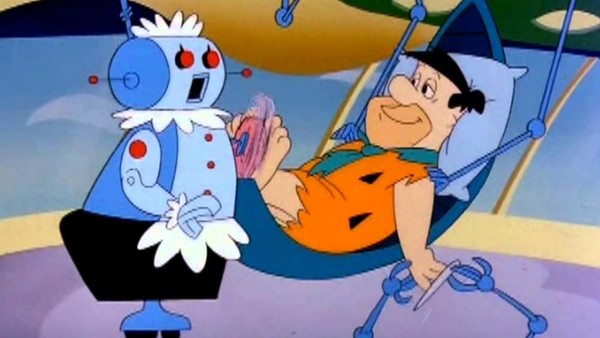
The Theory: The Flintstones is set in a post-apocalyptic future, in which modern technology has all but been destroyed, and mutant genetically-engineered dinosaurs (chosen for their size and durability in comparison with later animals) roam the Earth, partially in harmony with humanity. That explains how humans have engineered supposedly "pre-historic" versions of modern technology - the reality is that they have ingeniously engineered old technology using the limited technology available, and use biological alternatives where lack of materials requires.
The Proof: Well, they have TVs, for a start, and their dinosaurs can speak English. This is a post-historic world alright.
2. The Emperor Wasn't Such A Bad Guy

The Theory: Another Star Wars theory, and this time relating to the motivations of the supposedly villainous Emperor. He was actually hugely misjudged, having envisaged his mass-armament of the Empire as a deterent for the coming Yuuzhan Vong Invasion that would happen some 25 years or so after the en of Return Of The Jedi. The Death Star was merely one of his chief defence mechanisms, which he used to suppress the Rebellion as a secondary concern. All of his evil-doing was a long-game strategy: the Senate was a mess and needed forceful leadership, and the Jedi weren't helping. Pro-activity would mean something had to be done, an the Emperor took the tough decision to prepare them for a real invasion the hard way.
The Proof: It all comes down to the Death Star - a weapon so unsuitable to taking out the Rebel Alliance (a force of no-fixed abode), that it failed and was taken out by a single Force-enhanced Rebel. The reason the Death Star featured that fatal design flaw was that it was never designed to take on such meager foe - it was a defence measure designed to take on the Yuuzhan Vong forces, who had the capability of quickly turning planets against their own systems, and who had control of giant worldships of their own.
The Emperor's plan ultimately failed because he misjudged a foe he didn't consider his primary enemies, and who he never sufficiently planned for. And without his hardened defensive strategy, the New Republic failed to save the galaxy and the nearly 365 trillion sentients who died during the invasion of the galaxy.
1. The Friends Cast Were All Patients In A Mental Asylum

The Theory: Every single one of the Friends is in fact a patient in a mental asylum, and they have fabricated perfect lives as a delusion to hide from the harsh realities of their conditions. In every case, a trigger incident or underlying event is explained in the course of the show's ten seasons: Chandler was irreversibly scarred by his parents' dysfunctional relationship and the revelation of his father's transgender issues; Monica was bullied for being over-weight and has severe second-child issues and Ross has crippling abandonment issues (hence his creation of a lesbian ex-wife and a monkey that is forced to leave him.) Meanwhile Joey crumbled under the pressure of being the only boy in a family of girls, and over-compensates with his promiscuity and his acting (his cry for attention realised in fantasy,) Rachel is a self-destructive sociopath with Daddy issues, and Phoebe failed to overcome the suicide of her mother, concocting increasingly odd fantasies, including having her own brother's triplets to cope, as well as to extend her imagined family.
They are all poor lost souls who imagine their own realities, and finally by the end have some resolution in their fantasies and can move on. Joey is no longer struggling for attention, having made it as an actor, Phoebe has a real family in the shape of Mike, Monica finds someone who personifies her own issues of body image in Chandler (remember his issues with her being fat), Ross gets the girl, Rachel openly manages to defy her controlling father by presumably marrying Ross and Chandler gets a stable relationship.
The Proof: Think about it - there is absolutely no way the Friends cast would have enough time to accomplish all of the things they manage in a typical day: they sit around drinking coffee during normal working hours (almost always in the same prime seats), they all have their dream jobs (eventually) and they live in dirt-cheap apartments in prime real estate locations. It's all fantasy. It would also explain the characters' sexual promiscuity, which is often presented as an indicative symptom of abnormality, especially in sociopaths.
Are there any other ludicrous fan theories that you think are actually quite convincing? Share your own thoughts below in the comments thread.