12 Biggest Missed Opportunities In Comic Book Movie History

You only get one shot... do NOT miss your chance to Blow!
At present it is easy to forgive the minor miscasting or questionable narrative choices that occur in comic book movies. For every trifling disappointment there is a triumphant pay-off to be found in films such as The Winter Soldier and Guardians of the Galaxy, which have received virtually universal seals of approval from the fan community since their release. Even in great superhero flicks though there can be head scratching moments which make you think how much they would be improved if they€™d utilised certain characters in more effective ways, or made a different narrative choice, or in extreme cases, even if a different version of the property, with an entirely different creative team, had been greenlit instead. What follows are twelve of these moments, opportunities that could have improved the film in question or projects that never saw the light of day, that could have shaped the comic book cinematic landscape as effectively as Marvel€™s interconnected project. Twelve superheroic "what ifs?" that make you think "Hrm, yeah they could have done that a whole lot better".

12. Not Referencing The Joker In The Dark Knight Rises
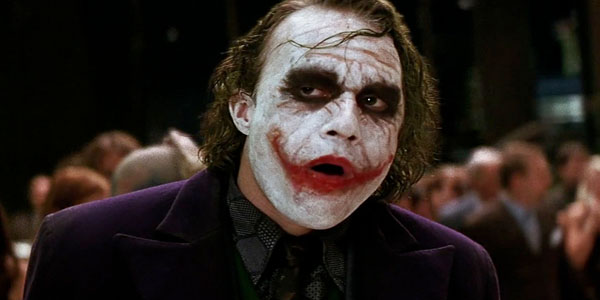
Given the depth of public appreciation of Heath Ledger€™s widely lauded posthumous Oscar winning performance as the Clown Prince of Crime, we were never going to see a recast of this most iconic and essential role. Nobody expected that but what we could have received was some kind of hint as to the Clown faced terror-monger€™s whereabouts in the Gotham of The Dark Knight Rises. In a way the Nolan Bat-verse has never felt like it was brought to a satisfying conclusion because of this issue with the Joker. Dark Knight Rises suffers in comparison to the previous two entries, as being the €œTusk€ to The Dark Knight€™s €œRumours€ as it was clearly an impossible job to follow up Batman€™s most definitive foe with any character. One approach could have seen Gotham overrun with a proliferation of villains in the wake of the Joker - tapping into the idea that it is Batman€™s presence in the city that has given birth to the city€™s rogues gallery - starting with the Joker. This would have at least given the character a narrative legacy. What was most certainly a great opportunity to bring some closure and pay a debt of fan service would have been to include an Easter Egg scene of some form, a scarred smile disappearing into the shadows whilst his laughter echoes into the night, something that would have told the audience €œhe€™s still here€; the kind of doff of the cap that Marvel roll out effortlessly in every film they produce.

11. Joss Whedon's Wonder Woman

If there's any justice in the world then the executives at Warner Bros who rejected Joss Whedon's Wonder Woman project are now being subjected to A Clockwork Orange's Ludovico Treatment, having The Avengers streamed constantly to their unblinking eyeballs whilst the box office figures are handily superimposed over the top. For many Whedon's Wonder Woman ranks alongside Gilliam's Watchmen as one of the great unrealised superhero projects. It€™s true that at the time the project was first pitched Whedon had yet to make his feature debut with Serenity but for anyone with a semblance of a brain, its clear to see from his track record of creating strong female characters there could scarcely be a better marriage of source material and director. Not so if you were a production exec kicking around Warner in the noughties! If Whedon's take on the Amazonian had have come to fruition it may now have been an integral part of an interlinked DC cinematic universe garnering the praise the MCU enjoys, but sadly it just wasn't to be. It wouldn't be a surprise if it emerges that the Gal Gadot version from Batman V Superman: Dawn of Justice can link some of her genetic material back to Whedon's pitch though, and it will be worth keeping an ear open for Whedon's comments on the character when the film is finally released.

10. Bryan Singer Leaving X-Men: The Last Stand To Do Superman Returns

As can be seen by his triumphant return to the director€™s chair in X-Men Days of Future Past, Bryan Singer€™s X2 was not a fluke, and we are finally getting to see how Singer's X-trilogy may have progressed had he not ditched the Mutants for a crack at Supes. As much as DoFP rights some of the wrongs wrought by Ratner's misfiring Last Stand, it ironically can€™t erase the film from the timeline, nor can it spare us Singer€™s snorefest Superman Returns. Obviously DoFP isn't the film we would have received in lieu of Ratner's Last Stand so a question mark remains as to whether Singer€™s full stop on the initial X trilogy would have been more satisfying than Ratner€™s, though the evidence suggests it would have. Presuming it wouldn't have been bogged down in the middle by a sub-plot involving Genoshan real estate. As with Matthew Vaughan's First Class (who vacated the chair after Singer) we were at least given another chance to see a new X-film by Singer, with the damage wrought by Last Stand and later X-Men Origins: Wolverine thankfully not proving terminal. Both the subsequent films demonstrate (if we needed any further demonstration) that somewhere in the alternative history multiverse exists a critically acclaimed fan-serving X-Men 3, which doesn€™t include the line €œI€™m the Juggernaut B!tch!€

9. Killing The Joker In Tim Burton's Batman
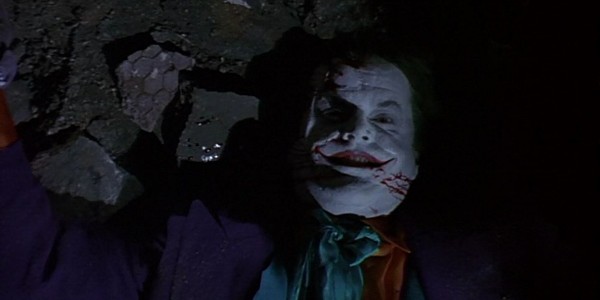
There are several obvious motifs that make the Joker so iconic and recognisable but beyond those that any school kid could tell you there are those tropes familiar to comic fans alone, which are equally integral to the character. One of his most defining narrative characteristics, which he admittedly shares with one or two other villainous types, is that even when it looks like he€™s been killed, it is always left open that he may have survived. An integral part of the Batman milieu Arkham Asylum was even created to serve this very consideration. Given this, it makes you wonder how the production team behind 1989€™s Batman arrived at the idea of having him fall to his death from an unfeasibly great height, and end on a close up of his lifeless and shattered body. Granted this was at a time when the potential for franchising comic characters and ongoing cinematic continuity wasn't as valued and understood as it is now but what this story choice did is open up a Batman universe with a huge void where his main antagonist should be. Like Heath Ledger€™s version of the character it would have been acceptable for Jack Nicholson€™s Joker not to reappear in the series but having the idea that he was still out there somewhere (or locked away in Arkham) would have been more in-keeping with the Batman comic universe, and added greater sense of completeness to the cinematic version.

8. Sam Raimi's Venom

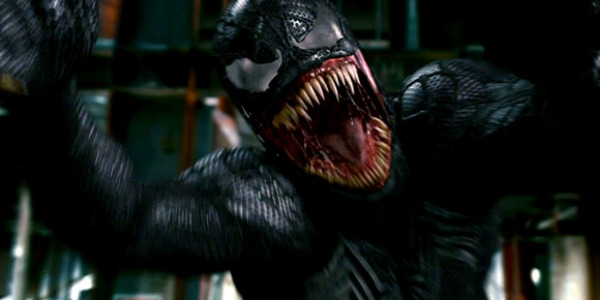
Comic book movie history is littered with disappointments. It is arguable that there isn€™t a single cycle which doesn€™t rollercoaster from incredible highs to deeply flawed misfires. Even the awe-inspiring inter-connected MCU is not without its failings (Iron Man 3 you know who you are) but what has surely come to be considered one of the most uneven trilogies is Sam Raimi€™s Spider-Man series. Spider-man 2 is rightly acclaimed as one of the most accomplished and satisfying examples of superhero cinema. How Raimi went from this near perfect film to a film that gives Batman and Robin a run for its money in the abortive stakes, is the result of a Mexican stand-off between Sony and Raimi over fan favourite Spidey villain Venom. If only one of the duelling parties had shot, instead of lowering their guns, there might have been a positive resolution to the Raimi-verse, but instead we ended up with a compromised situation where Raimi shoe-horned in Venom, a character he had no affinity for, into an already overcrowded villainous landscape. In this instance it is easy to side with the suits, Venom is a great character, visually exciting and a suitable foil for Spidey, if only Raimi could have been convinced of this eschewing the need to include Sandman and reduced Harry€™s role, we may have seen the character receive the treatment demanded as a solo villain, and therefore Spidey 3 would have been a much more satisfying and uncluttered experience.

7. Darren Aronofsky's Batman: Year One

For anyone who has read the script for Darren Aronofsky€™s Batman: Year One this entry may come as somewhat of a surprise. The script deviates from Frank Miller€™s source material (and the Batman mythos in general) in significant ways, namely by stripping Bruce Wayne of his fortune and having him living in a crappy apartment above Al€™s Garage, as well as having the Bat symbolism of his origin tied into the mark left by a ring he wears. The ring has a €œW€ insignia which leaves a kind of bat symbol mark on the recipients of his blows, leading to the media dubbing him €œThe Batman€. It a sounds a bit strange, especially when imagined against the deeply satisfying and reverent origin story we received in the shape of Batman Begins, but for what we missed in off-kilterness you can€™t help but wonder what we may have gained in innovation? Aronofsky€™s Bat was going to be a hard €œR€ rated, noir-inflected version of the character, the first truly adult-oriented cinematic version of the character, which no doubt set off bat-alarms with the lunchbox peddlers at Warner. Also for all the license taken with the origin, the aim of the story was to take this version of Batman to the point of being closer to a version of the character we recognise. By the end of the story Bruce has discovered he is the heir to the Wayne fortune and has become the Bat proper. It may have upset a few purists but Aronofsky€™s Batman: Year One would have been welcome for its bold and fresh approach to the material, and undoubtedly would have been a sight to behold.

6. Paul Greengrass€™s Watchmen

This one is filed in the same compartment as Aronofsky€™s Batman: Year One in being a version of the film far less beholden to the property as the eventual version we received, but one which could have brought a real freshness to the material, which could have made for a more interesting and challenging version. Zak Snyder€™s Watchmen is a film where both its strengths and flaws can be traced to its reverence to the source material. When Xeroxing a masterpiece it is obvious some of the qualities of the preceding work will carry over but it will also suffer by comparison, as it can never be anything but a poorer quality imitation. What Greengrass had in mind was a contemporising of the themes of Watchmen, moving away from the cold war backdrop, and bringing us something with greater relevance to the political climate of the time. It could have been a greater misfire than Snyder€™s version but it could also have given us an adaptation akin to something like The Shining, which bears scant resemblance to the preceding work but results in an artwork that sits alongside the original as its own work of cultural significance.

5. Batman Beyond

During the barren cinematic Bat years between 1998€™s Batman and Robin and 2005€™s Batman Begins, many different creators filed through the Warner production offices attempting to get their take on Batman greenlit. As well as the aforementioned Aronofsky project, other notable versions included Joel Schumacher€™s attempts at atoning for his neon drenched crimes with the darker, Scarecrow featuring, Batman Triumphant, and more intriguingly Paul Dini and Bruce Timm€™s live action version of their animated series Batman Beyond. For those unfamiliar with Batman Beyond it was a bold and innovative re-imagining of the Batman universe, as projected into a cyberpunk future Gotham, replete with references to speculative fiction classics like Blade Runner and Akira. The hook of the story is having the mantle of the Bat taken by a young down-on-his-luck kid: Terry McGuinness, who shares more DNA with Spidey than Bats. Terry is mentored by an elderly Bruce Wayne, who finds himself in the Alfred role. For the aborted film version there was talk of Bruce being played by Paul Newman or Clint Eastwood. It remains to be seen whether Batman Beyond€™s time will come round again, but as a way of differentiating from the failure of Batman and Robin it may have been a franchise kick-start that had the same rejuvenating power as Batman Begins later achieved.

4. Replacing Brainiac With Gus Gorman In Superman III
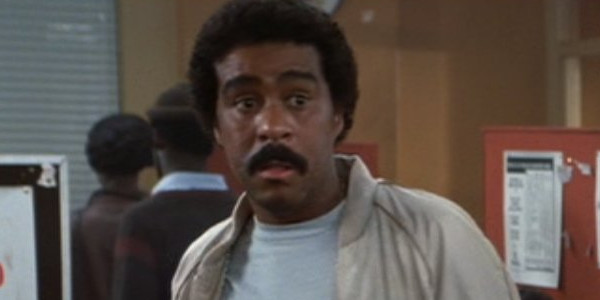
Before Batman and Robin came along to be the focus of fanboy ire everywhere the go-to superhero films to rag on were the final two entries in the Christopher Reeve Superman franchise: Superman III and Superman IV: The Quest For Peace. In early drafts of the film the idea was to go back to the comic books to find a villain worthy of filling the void left by Terrence Stamp's Zod and Gene Hackman's Lex Luthor. This was all long before the idea was mooted to cast comedian Richard Pryor in the role of computer hacker Gus Gorman. Initially before Pryor's involvement Gus was included in the script but the function of the character was to have him as the human pseudonym for Brainiac, who would eventually reveal himself and take over the world€™s computers in an attempt to destroy Superman. As we know this never came to pass but the legacy of that early approach and hangover of the Brainiac drafts is visible in the supercomputer central to the film€™s climax. There is no saying whether Brainiac€™s inclusion would have rescued the film entirely but it would have surely tempered the comedic tone, which saw the film descend into parody more often than not. Interestingly enough Brainiac is still yet to make an official appearance in Superman cinema, though his existence was hinted at in The Man of Steel.

3. Killing Off Harvey Dent/Two Face

Considering the entry concerning killing off Jack Nicholson€™s Joker this similar entry on one of The Dark Knight€™s €œvillains€ could be suitably categorised as ironic, given that the character Chris Nolan chose to kill off at the end of Dark Knight Rises would have acted as the perfect replacement for the narrative alterations brought about by Heath Ledger€™s untimely death. Although Dent was a strong presence throughout The Dark Knight it would€™ve been interesting to see him enjoy something of a career in crime before putting him out of his dualistic misery. In narrative terms Dent€™s death works, his arc comes to a fitting close allowing for the story to move on in the next entry, but having the character€™s true descent mirror that of Batman€™s in the final entry - even as part of the League of Shadows plotline - would€™ve given the character screentime befitting his status as one of Batman€™s top tier villains, and would€™ve helped fill the Ledger shaped hole to boot.

2. Cap To The Future

This is a missed opportunity that could€™ve been avoided by the simple inclusion of a montage (should've watched Team America). Placing a sequence showing the passage of the war and hinting at the missions undertaken by Captain America would have still allowed for the necessity of Cap being frozen, and the narrative to link up to the Avengers, but would also have left room for more exploration of the character€™s war years. To a degree this has been compensated for by Agent Carter, which will allow further exploration of that wartime Marvel world, but it has limited flashback story telling somewhat in the Cap stories proper. So, no Cap and the Howling Commandos and no opportunity to see him in action in the other theatres of War in World War II. If the rumours of the Red Skull€™s return in the third Cap film are to be believed this could have been a useful device in this context but at least the Skull€™s reappearance could see a return to the Nazi-stylized branch of Hydra and evoke that wartime setting once again.

1. Alan Cumming€™s Nightcrawler

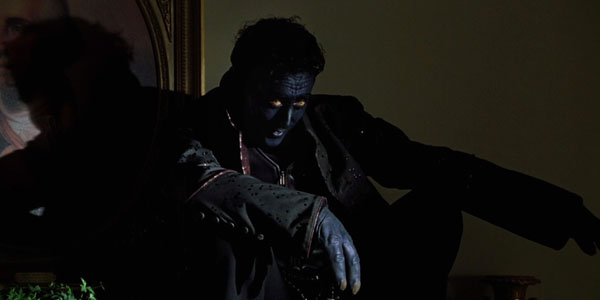
With the multitude of mutants that have graced our screens in the seven screen X outings so far, one stands out as note perfect in every way, Alan Cummings€™ take on Nightcrawler in X2. There are some great performances in the X canon, but on the whole they feel like cinema-specific versions of the characters, that work great for film, but feel far removed from their printed page counterparts. Everything about Nightcrawler in X2 feels like it is the comic version made flesh€ Bar the lack of Red, black and white wing-collared jumpsuit. It isn€™t just the quiet dignity Cummings brings to the role that make it stand out, the €œBamf€ effect, showcased in the opening White House sequence was one of the most perfectly executed versions of a superpower to date at that point, and stands out as a precursor to what we later saw in the awe inspiring Quicksilver sequences of DoFP. The brilliance in this iteration of the character is why his lack of presence in the subsequent X universe has left a void. Much has been written about Singer and Cummings not exactly getting on during the production of X2 and this is no doubt the key reason behind Nightcrawler€™s disappearance. Cummings has expressed interest in returning to the role though and Singer has name checked the character also, so it remains possible that this is one missed opportunity that could be rectified in the future.

 
Posted On: 
Contributor
Contributor

As well as the odd article, I apply my "special mind" to scriptwriting for Comics, Films and Games... Oh and I cut down trees, I skip and jump, I like to press wild flow'rs, I put on women's clothing, and hang around in bars. Follow me on Twitter @DrRobertOtnik