12 Crazy Facts You Just Have To Accept To Enjoy The Indiana Jones Franchise

"You call this archaeology?”
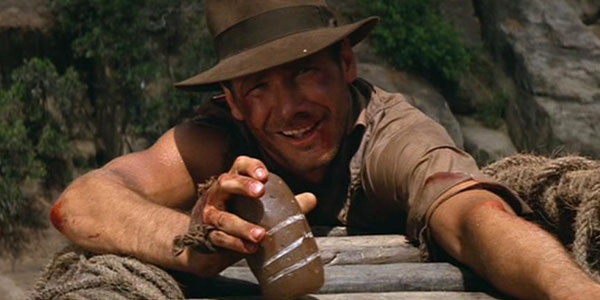
The Indiana Jones franchise has never pretended to be grounded in anything resembling reality; after all, George Lucas got the idea for Raiders of the Lost Ark from watching the movie serials of the '30s, whereupon square-jawed heroes dressed in fedoras and leather jackets moved from one elaborate scenario to the next. Lucas gave the keys to the Indiana Jones franchise to his friend Steven Spielberg, who - along with collaborators Harrison Ford, Lawrence Kasdan and John Williams - forged an icon. The Indiana Jones franchise has always relished its position as both gritty and fantastical - the great thing about the series is the way in which it switches between moments of sheer darkness, terror and horror, to moments built around slapstick and funny dialogue exchanges. Pretty much, Indiana Jones is what cinema is all about - though you do have to accept a whole lot of crazy things and suspend your disbelief to a fair degree in order to get the most out of what has to be one of the greatest movies franchises of all-time. Here we outline 12 particularly crazy things that audiences have to look past, should they want to enjoy Indiana Jones for what is, instead of pouring over all the little aspects that don't make a lot of sense, are culturally insensitive, or force you to swallow your pride each and every time you see them occurring. The Indiana Jones films, of course, are the kinds of pictures that you can revisit over and over again; by now, die-hard fans should have gotten past these weird and questionable inclusions. Take your cues from them.

12. Indy Is Near-On Inessential To Raiders Of The Lost Ark

Though The Big Bang Theory brought this little slice of trivia to mass attention in one of its best known episodes, true Indy fans - of which Sheldon, apparently, is not - have already been confronting the fact that Indiana Jones is pretty inessential to the likes of Raiders of the Lost Ark for years. Seriously: if he hadn't bothered to have gotten involved in the story in the first place, the resolution would have been mostly the same. What's worse, had Indy never been involved, the outcome might have been a whole lot better: that's not say, if our favourite archaeologist hadn't meddled with the Nazis as they tried to get the Ark, they might have taken it directly to Berlin (instead of to that island), where Hitler would have been presented with it, thus melting him into oblivion. It's a cold, hard truth, but Indy could have prevented Hitler's death.

11. Capuchin Monkeys Can Be Turned Into Nazi Collaborators

It's not the craziest thing in the world, but it's not exactly normal, either. So the monkey in Raiders is - all things considered - pretty intelligent, given that it nearly succeeds in poisoning Indiana Jones at one point and - as far as we can tell - understands the concept of "betrayal," given that she befriends Marion for a while, only to turn against her at a moment's notice. In short, then, this monkey is super intelligent. This monkey has also been taught how to give the Nazi salute, which is both hilarious and deeply disturbing - is the little gal aware of what said salute stands for? Has she done her research? Is it possible for a monkey to side with Hitler? To embrace a political viewpoint other than "more bananas, please"? Essentially, this creature is working as a Nazi double agent; you have no choice but to just accept it.

10. Nobody Ever Seems Bothered About Killing Anybody Else
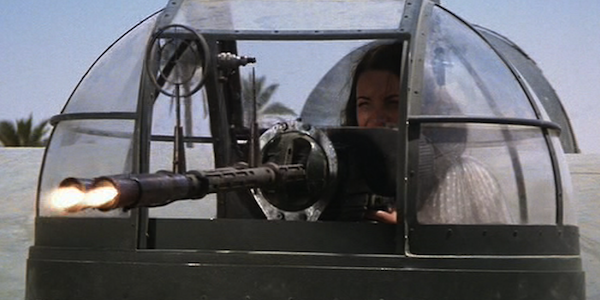
One of the most notable things about the world of Indiana Jones stems from the complete lack of empathy that emerges when one character does away with another; nobody - and we mean nobody - ever seems bothered in the slightest whenever they murder another human being, either on purpose or by accident. Characters here are totally free of remorse - even the ones who don't kill other people on a regular basis. You could put this down to two things, of course. Firstly, these movies were based on serials, which shared a similar, apathetic attitude towards human life. Secondly, it's the '30s; were people just not as bothered about other killing other people back then? Who knows? Seriously, though: Indy, Marion, Henry Jones, Willie Scott - a nightclub singer, for God's sake - don't seem fazed at all when they shoot, maim or stab folk.

9. Indy Just "Knows" Not To Look At The Ark
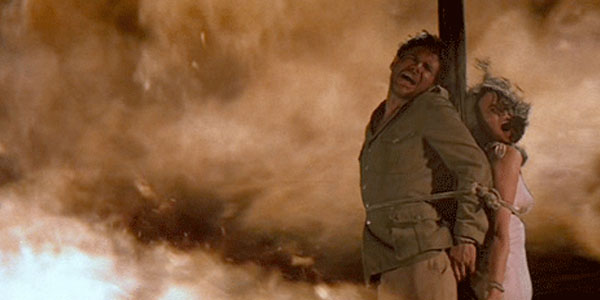
Indiana Jones is a pretty smart guy; we know this because he seems to have attained information on everything archeology-related, can read lots of ancient scripture, and - oh, yeah - teaches archeology at a prestigious U.S. college. Despite not believing that the Ark is really a thing at the beginning of Raiders, though, Indy somehow acquires crucial information that eventually leads to the saving of his own life. In short, then, during the climax of the movie, the Ark of the Covenant is opened up and a bunch of Nazis are treated to a full facial... of the death kind. Whilst those guys are melted horrifically, however, Indy - the resourceful scientific type that he is - somehow knows what to do. "Don't look at it!" he shouts to girlfriend Marion Ravenwood. "Don't look at the Ark!" This totally works... but how the heck did he know?

8. Casual Racism, As Far As The Eye Can See
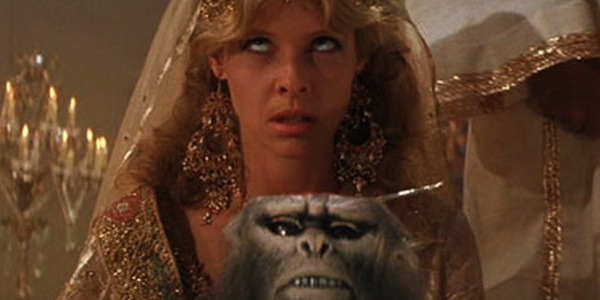
The Indiana Jones franchise isn't really known for its sensitivity towards other cultures - in fact, pretty much everybody featured in these movies who aren't from theStates are rendered as stereotypes. You could certainly make a case for this as something done entirely on purpose, given the '30s setting - and thus "attitude" - of the Indiana Jones pictures, but this is 2014, and you probably aren't going to get away with doing that. So whilst Raiders of the Lost Ark casts a not too pretty shadow over the inhabits of places like Nepal and Egypt, rendering them as super cliches, Indiana Jones and the Temple of Doom makes "traditional Indian customs" look like a series of nightmares. And most of the customs glimpsed here aren't even big India, like eating chilled monkey brains, cockroaches, and dishes entitled "Snake Surprise." No wonder Spielberg had to shoot the film in Sri Lanka instead.

7. Mola Ram Is A Villain Without Any Sort Of Plan
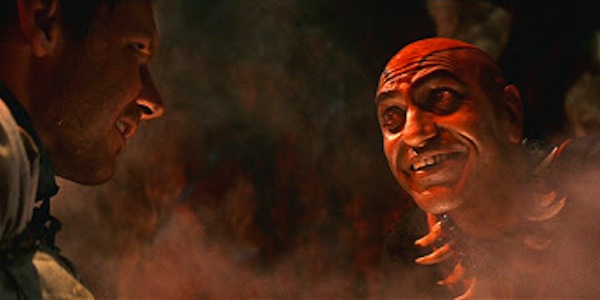
Mola Ram is the big bad guy in Indiana Jones and the Temple of Doom. As the leader of a cult long-thought to have gone the way of the dodo, his terrible plan involves collecting up a series of magic rocks called "Sankara stones," using which he plans to... uh, what does he plan to do with those magic rocks again? According to Mola, he can use them to destroy all of the Gods; how, exactly, would that work? Mola's plan - in full - is literally "gather up the rocks, then rule the world." Had Indy never turned up in time, chances are that - having found them all after years of child slave-based digging - Mola would still be sat in the catacombs below Pankot Palace twiddling his thumbs. The movie literally doesn't bother to inform us on the details of this Thuggee mentalist's "big idea." How does he propose that six rocks will let him rule the world?

6. Short Round Can Take Out A Full-Sized Adult With One Kick
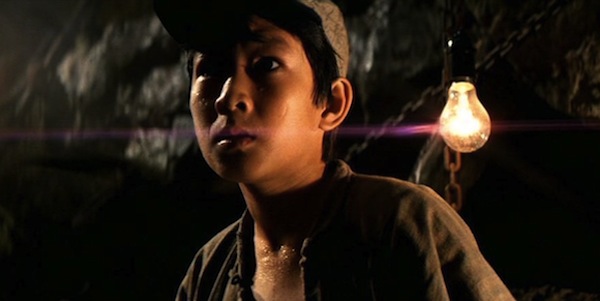
The physics showcased within the Indiana Jones movies aren't exactly "realistic," but they're close enough to Earth standard. For some reason, though, Indy's sidekick - 10-year-old Short Round - seems to have the hidden powers of a superhero, given that - during two notable scenes in Indiana Jones and the Temple of Doom - he takes out several manic, adult-sized guards using his feet. Which is to say, he just kicks them. Don't get the wrong idea: Short Round is a fantastic little fighter, but the stuff he pulls off here is verging on the absolutely ridiculous. Essentially, this Indy adventure is asking us to buy into the fact that a child could dispatch well-trained guards with murderous tendencies with a well-timed kick. Seriously: at one point he unleashes what can only be described as a "roundhouse," which causes a thuggee to just, like, die.

5. Multiple Gods Exist, And That's Okay
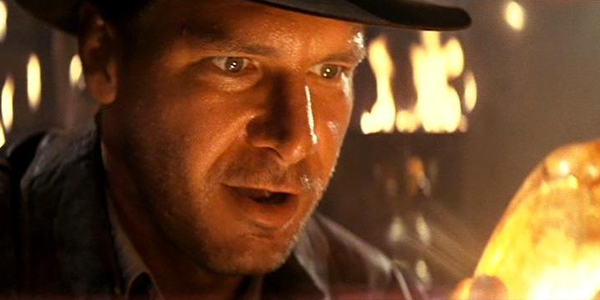
One of the most inherently jarring things about the Indiana Jones franchise stems from its conviction that multiple "Gods" - or "higher entities" - can co-exist with one another at the same time. Of course, debating the feasibility of a single God existing is pretty mental anyway, but you'd think - going by the events depicted in Raiders of the Lost Ark, at least - that the Indy universe accepts a Christian higher power. Given that we witness the power of the Ark in one memorable scene, too, it's made pretty clear that "God" (in his Christian form) actually exists in the world that these movies are set in. By the time Indiana Jones and the Temple of Doom swings around, though, Spielberg asks us to accept that a Hindu God co-exists alongside the established Christian entity, what with those flaming Sankara stones depicted in the finale. What gives?

4. Marcus Brody Is Entirely Inconsistent As A Character

In the original Indy flick, Marcus Brody is poised as Indiana's go to guy - a scholar on the same intellectual level as his long time friend. He didn't feature much, save for a few expositional scenes, but audiences were at least left with the impression of an entirely competent and knowledgable scholar. This impression, however, wasn't supposed to last; Indiana Jones and the Last Crusade changed Marcus completely. Instead of the smart curator featured in Raiders, we're treated to a character of bumbling proportions, as Marcus - now a little older and a little greyer - serves as a bonafide joke. "Brody's got friends in every town and village from here to the Sudan, he speaks a dozen languages, he'll blend in, disappear, you'll never see him again," Indy explains to a Nazi pursuer. Then we cut to Marcus aboard: "Does anybody here speak a word of English?"

3. Indy Constantly Changes His Mind About What He Believes
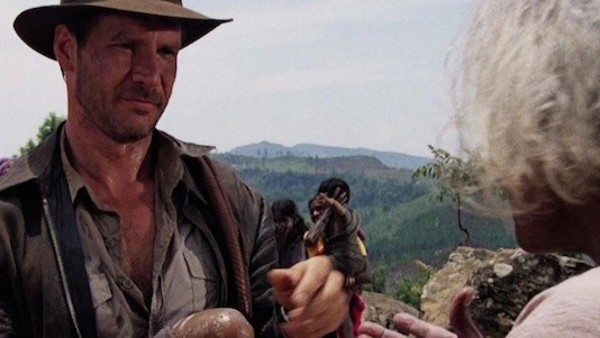
As an archaeologist - and as a scientist - it's not entirely surprising that Indy gets into situations that cause him to question his beliefs from time to time. That's exactly what science is all about - discovering new things and moving forwards, adapting to new discoveries and theories as you go. But Indy's memory seems to be short lived: he continually forgets about the things that he seems to have already changed his mind about. The biggest example of this can be glimpsed in Indiana Jones and the Temple of Doom: at the beginning of the movie, Indy is skeptical about the occult; by the end of the movie, he's seen enough to believe in a little "magic." He even admits in the closing scene that he understands the power inherent to the mystical Sankara stones. And yet, in Raiders of the Lost Ark, which is set a year later, he's back to cynical mode, riding off the occult. Huh?

2. Those Booby Trap "Clues" Were Total Bullsh*t
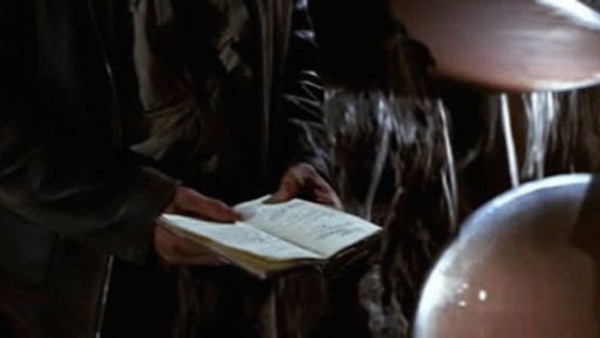
For much of Indiana Jones and Last Crusade, the plot focuses in on three "clues" that will allow only a true believer to access the Holy Grail. Pretty much, these helpful hints are intended as a means of letting somebody bypass a series of booby traps. The problem is, despite the fact that Indy spends hours of the movie chasing his father's grail diary (where said clues been written down), they amount to almost no help at all. Which is to say: the first clue informs Indy that "only the penitent man will pass," which our hero translates to "kneel before God." He does so, narrowly avoiding a saw blade to the neck. But then another saw blade attempts to cut him in half afterwards, causing him to roll out of the way. But "roll out of the way after kneeling" wasn't part of the clue. Indy just had to improvise to do that. The "super important clue" wasn't helpful at all.

1. Everything That Happened In The Fourth Movie Is Canon

Here it is: the absolutely worst and most disgusting thing that you have to believe in order to enjoy the Indiana Jones franchise. Drum roll, please. Yes: it's the fact that the fourth movie, which includes a plot about a UFO and an alien race that came to Earth for reasons that are terribly and badly explained, is actually part of the franchise. Indiana Jones and the Kingdom of the Crystal Skull is, for all intents and purposes, entirely canon. It's not just that the movie involves aliens that makes it so unfit for the Indy saga; it's also caked in relentless CGI, lacks the true spirit of its predecessors, features cringeworthy performances, clings to forgettable and annoying characters, and skips on the fun factor. It's impossible to think of Indy nowadays without thinking about this awkward addition to the franchise: all you can do is close your eyes and pretend it never happened. Like this article? Agree or disagree? Got any other points to add? Let us know in the comments section below.

Contributor

Sam Hill is an ardent cinephile and has been writing about film professionally since 2008. He harbours a particular fondness for western and sci-fi movies.