12 Extreme Horror Movies You Need To See Before You Die

No guts, no glory.
€œSome movies go too far. Others start there.€ That€™s the tagline for Uwe Boll€™s Postal (2009), but it€™s also a good definition of extreme horror, where everything is cranked up to 11 and the walls are usually painted crimson. You don€™t find these films playing alongside summer blockbusters; they play festivals and arthouses, quietly acquiring a reputation while their pricier competitors fade from the audience€™s memory. The excessive levels of physical and sexual violence means that extreme horror is defiantly anti-Hollywood, but even so, a mainstream horror film will every so often still attempt to €œgo there€. The results always prove that Tinseltown should stick to superhero flicks. Take Wes Craven€™s The Last House On The Left (1972), for example. Whatever your opinion of the film, it has a raw energy all of its own and is one of the few exploitation films that can be legitimately read as a comment (albeit rather ineptly expressed) upon violence itself. It's success spawned a 2009 Hollywood remake which, with its studio budget and name cast, was only ever one step away from being a generic teens in peril movie. So if you€™re looking for an alternative to the current crop of €œbeen there, done that€ multiplex horror pictures, here€™s where you start, but be warned: viewing may cause severe damage to your brain cells.

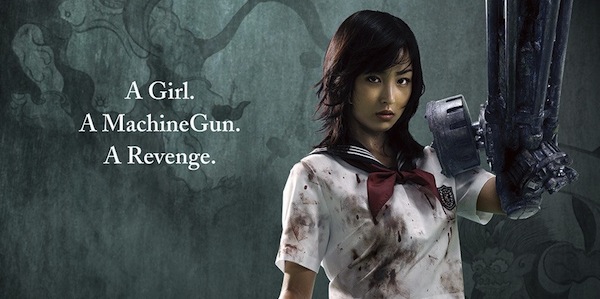
12. The Machine Girl (2008)

When a girl in a movie directed by Noburu Iguchi, who gave us Zombie Ass: The Toilet Of The Dead and Mutant Girls Squad, informs her brother that €œviolence doesn€™t solve anything€, you know it€™s only a matter of time before she€™ll avenge his murder by machine gunning everything in sight. When the local Yakuza clan realize what she€™s done, Ami (Minase Yashiro) has her arm cut off as punishment, so she seeks medical advice from her local mechanic (wouldn€™t you?), who stitches up the wound with a needle and thread. Ami also gets a replacement limb in the form of a custom-made machine gun that can blast flesh from bone and blow gaping holes in its targets, which so terrifies the Yakuza that they hire a group of samurai warriors in bulletproof football helmets and shoulder pads. Indefensible, senseless and as subtle as a chainsaw, Machine Girl exists for no reason other than to see how much gratuitous bloodshed it can squeeze into its running time. There€™s really no reason not to like it.

11. Frontiers (2007)

Proving that French culture isn€™t all Gerard Depardieu movies and Marcel Pagnol adaptations, Frontiers starts off as a blistering social commentary, takes a swing into dark horror and ends up in Texas Chainsaw Massacre country, only with the rednecks replaced by Neo-Nazi cannibals. Making his feature debut, Xavier Gens (Hitman) takes no prisoners and delivers one of the best meat movies never to feature Leatherface. Better structured than Hostel and more palatable than Martyrs, Frontiers is one of the few €œtorture porn€ movies to really stand out. There are all the usual decapitations and characters who are eaten alive, but how many films have as their villain a Nazi war criminal who kidnaps women with the intent of breeding a new master race (and abandons them in a mine when they disappoint him)? It€™s this kind of blackly comic material that makes you wonder if Gens is wasting his time in Hollywood.

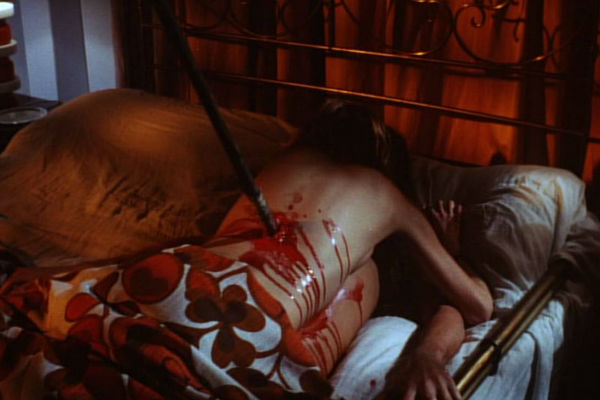
10. A Bay Of Blood (1971)

Also known as Bloodbath, Carnage and, confusingly, Last House On The Left II, Mario Bava€™s classic was reviled on its release, with even Christopher Lee voicing his concern at the picture€™s content. Under its American title, Twitch Of The Death Nerve, the film found its audience in Drive-ins and grindhouses, where it played for years. It€™s the archetypal slasher film where people are stalked and murdered in a remote mansion by a barely-seen killer, but later films such as Friday The 13th would do away with Bava€™s convoluted plot and instead concentrate on the grisly murders, which Bay Of Blood has in abundance. In all, 13 characters meet their end in the film, making it Bava€™s most violent picture. Of particular interest to fans of Friday The 13th Part II will be the machete to the face and the young lovers who are impaled mid-coitus, both of which it reuses.

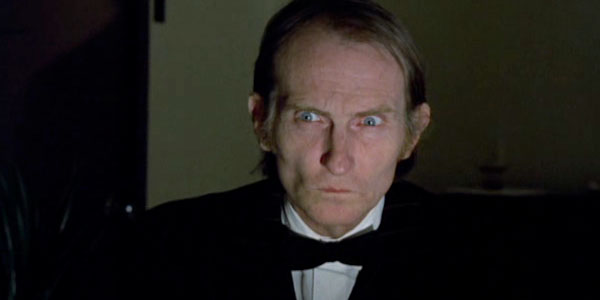
9. Deranged (1974)

Deranged is another movie based on real-life killer Ed Gein, €œThe Wisconsin Ghoul€, whose dietary habits (and mummified mother) also inspired Psycho and The Texas Chainsaw Massacre. Jeff Gillen and Alan Ormsby€™s film differs by adhering more closely to the facts and presenting the narrative in a matter-of-fact style, even having a TV reporter address the viewer directly in certain scenes. In the lead role (which Christopher Walken reportedly auditioned for), Roberts Blossom (the crazy old man in Christine) does a fine job as €œEzra Cobb€, who digs up the corpse of his mother (€œMa Cobb€ €“ macabre, get it?), learns about taxidermy and starts robbing graves when he requires new materials. He€™s also a dab hand at making furniture out of human bones, and in one sequence displays his wares to a kidnapped girl. €œJust tryin€™ to show ya I got talent!€ he tells her.

8. Audition (2001)

A director best known for dull, overpraised gangster melodramas and over the top Manga adaptations, Takashi Miike delivers his low-key masterpiece with Audition, a movie that in the tradition of all the best horror films creeps up on you. When a lonely widower attempts to begin dating, he uses a filmmaker friend to €œaudition€ prospective girlfriends, and eventually settles for Asami (Eihi Shiina), unaware she has a past that€™s best described as €œcomplicated.€ But if you think this is going to be a psychodrama of the Fatal Attraction variety, guess again €“ Glenn Close never put needles in Michael Douglas€™s eyes or displayed a penchant for amputation. When first shown in Japan, Audition caused walkouts, with one outraged female viewer telling the director €“ to his face €“ that he was a very sick person. If you think that sounds like a recommendation, buy the DVD.

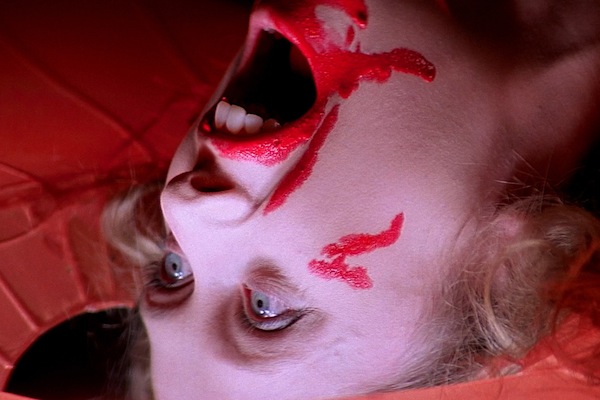
7. Suspiria (1977)

Those who admire Dario Argento don€™t like his films for their colourful characters and intricate plots, but for his mastery of cinematic technique, which is vividly displayed here. In a bravura opening sequence, a woman is butchered by an unseen assailant while Goblin€™s score thunders on the soundtrack, which might not sound like much on the page, but a late-night screening with an appreciative crowd will prove otherwise. Suspiria is defiantly anti-Hollywood: the characters aren€™t particularly likeable, it€™s not shot like a music video and doesn€™t lend itself to a franchise. Also, the kills are genuinely nasty, particularly the sequence where one victim exsanguinates while trapped in barbed wire. Needless to say, a remake is in the works, to which the only response can be an amused shrug. Whatever its intentions, it can€™t possibly match the artistry on display here.

6. Martyrs (2008)

Somewhere in France, a seemingly pleasant suburban family (including their children) are killed in cold blood by a shotgun-wielding young woman. Calling her friend, she explains that they were the people who kidnapped and tortured her 15 years earlier. That€™s just the opening 20 minutes of Martyrs, a movie that doesn€™t care what you think €“ it€™s not interested in playing by the rules. You can say that it blows its credibility early on, relies too heavily on repetitive scenes of torture and that the final explanation for the crimes is senseless and laughable, but it never shies away from its exploration of the depths of human depravity, and therein lies its power. If it copped out with a €œsafe€ ending, Martyrs would be easy to dismiss (and send up), but it has a single-minded desire to €œgo there€, and whether or not you want to follow, or think the journey was worth taking, you have to admire its resolve, if nothing else.

5. Basket Case (1982)

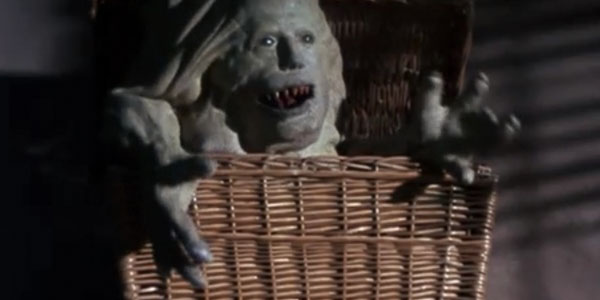
Dedicated to Herschell Gordon Lewis, Frank Henenlotter€™s $35,000 debut is as cheap and tasteless as its pedigree would suggest, but less ineptly made. Disarmingly inventive, and shot on the sleaziest locations possible, Basket Case brings to mind the early films of John Waters, whose 70s Baltimore was as scuzzy-looking as Henenlotter€™s New York City. Described by Duane Bradley (Kevin Van Hentenryck) as looking like a squashed octopus, Belial is in fact his Siamese twin, who he carries around in a wicker basket to the understandable puzzlement of strangers. Separated against their wishes, Belial survives being unceremoniously disposed of in a trash bag to convince Dwayne to take revenge against the doctors responsible as well as their father, who Belial personally despatches with a circular saw. When the movie played 42nd Street, Henenlotter was thrilled to see stills from his picture adorning a garish plywood archway, full of spattered blood, even though the caption (€œHis brother is a deformed twin!€) gave the plot away. By Henenlotter€™s own (somewhat harsh) admission, nobody enjoys Basket Case because it€™s great filmmaking but because it€™s a fun time. Considering its pedigree, how could it not be?

4. Evil Dead Trap (1988)

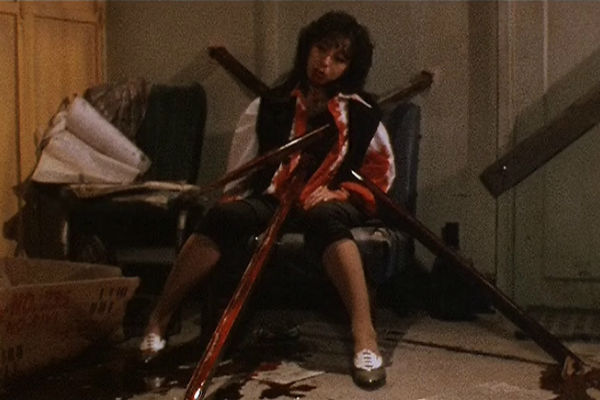
Leave it to the Japanese, the only filmmakers more exuberant than the Italians, to make a sick and twisted movie that starts out like a run-of-the-mill slasher and ends with one of the most outrageous twists you€™ve ever seen. Just like the 80s Italian gore films, you don€™t admire the proceedings for their logic and originality, but for the succession of startling set pieces set to a memorable score. When what purports to be a snuff film arrives on the desk of a ratings-hungry TV presenter, she and her crew journey out to the deserted army base shown on the tape, unaware that it€™s home to a sicko with a penchant for torture porn. When these idiots decide to split up and wander off alone down dark corridors, that€™s when the movie shifts into high gear. The first to be toe-tagged (somewhat predictably) is the lascivious production assistant who€™s skewered by spikes that inexplicably burst through the walls and floor, a sequence sure to captivate fans of Argento€™s Suspiria. All that€™s missing are the black gloves.

3. Henry: Portrait Of A Serial Killer (1990)
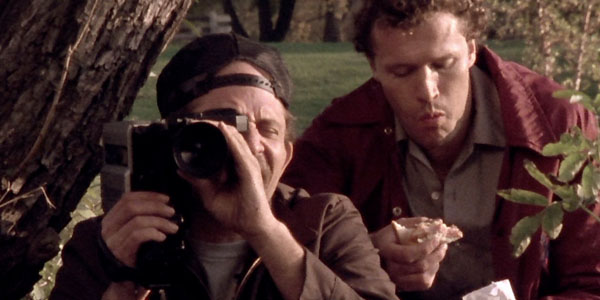
Given $100,000 to make a horror movie, John McNaughton asked himself a simple question: €œWhat€™s really scary?€ Freddy Krueger, with his dreadful puns, most certainly wasn€™t, so McNaughton looked to real life for inspiration and settled on the story of Henry Lee Lucas. Lucas was a lowlife who along with his pal Otis claimed to have murdered more than 200 people, so together with playwright Richard Fire, McNaughton told a fictionalized (but not sensationalized) account of his life, careful to emphasize Henry€™s lack of empathy €“ a quality that Michael Rooker (in his first lead role) really brings out in the character. One of the most disturbing scenes (truncated in the original UK release) features Henry and Otis watching a videotape of themselves at work, commenting on the events onscreen as they terrorize a family. Bear in mind that this nearly a decade before Blair Witch et al €“ and a damn sight more horrifying.

2. Red, White And Blue (2010)

Released in the same year as the Elm Street remake, Simon Rumley€™s movie would, in a fair world, have blown that turkey out of the water and bagged a few awards in the process. It€™s a simple story of how 3 very different people meet and how their choices result in escalating violence. When aspiring rocker Franki (Marc Senter) realizes he€™s contracted HIV from the promiscuous Erica (Amanda Fuller), he snaps and kidnaps her, little realizing that she has a platonic friendship with Nate (Noah Taylor), an Iraq War veteran skilled in interrogation. Billed as a €œslacker revenge movie€, Red White & Blue is, simply put, the best written, best acted and best directed movie you€™ve never seen. After playing a few festivals, it disappeared before eventually resurfacing on DVD with absolutely no fanfare whatsoever €“ the critics were too busy gushing over Paranormal Activity and Insidious to notice.

1. Cannibal Holocaust (1980)

Courtesy of fans such as Eli Roth, Cannibal Holocaust is finally getting the respect it deserves as it the granddaddy of all those €œfound footage€ movies that came along in the wake of The Blair Witch Project. The Legend Of Boggy Creek (1971) may have employed the pseudo-documentary format years earlier, but few would deny that Ruggero Deodato€™s is the more powerful. €œThose who filmed it were devoured alive by cannibals!€ shrieks the no-nonsense tagline, which is apt because this is a no-nonsense film where at no point do whiny teenagers stand around discussing horror films or giving €œironic€ commentary on the proceedings. Ah, the good old days. Handheld and grainy, the footage of (real) animal abuse and physical torture has a you-are-there immediacy that to this day has not been equalled, never mind topped. Slick movies like Rec and Cloverfield might be better edited, but what Deodato€™s movie lacks in finesse it more than makes up for in conviction.

In this post: 
Horror
 
Posted On: 
Contributor

Ian Watson is the author of 'Midnight Movie Madness', a 600+ page guide to "bad" movies from 'Reefer Madness' to 'Poultrygeist: Night of the Chicken Dead.'