12 Films Studios Tried To Bury
Cult classics, box office turkeys, and other movies Hollywood tried to keep from us.
 20th Century FoxThe movie industry is pretty much a crapshoot. In these tough economic times studios are relying more and more on "safe bets" - movies that are sequels, remakes, or adaptations from other media - because they have built in audiences and there's less margin for error than a totally original idea that makes it to the screen. Even then, though, there's no guarantee that each film they produce is going to be a hit, or even be able to recoup its budget; and, when you sink millions (sometimes billions) of dollars into each production, that's quite the loss you're making, potentially every few weeks. Sometimes studios catch potential turkeys before they get to the general public (and the critics), and try their best to cut their losses by making sure as few people as possible see it. Clearly they're not gonna make a decent return on these pieces of crap, there's no reason to have audiences see it and therefore be put off seeing any more of their movies in the future. January and February are the studios' "dump months" of choice - a time when everyone is too wiped from Christmas spending and it's too cold outside to consider a trip to the cinema. There are other time where the reasons for a studio burying a film are less clear. There are perfectly good films that were nonetheless fobbed off in a dump month, decent flicks that were released with little to no promotion in limited numbers of screens, and even completed movies that were simply shelved and never released. Here are just twelve examples of films that studios tried to bury, for reasons that will (hopefully) become clear...
12. Snowpiercer
 Radius-TWCEven putting aside the likes of Godzilla and the Marvel movie releases of the summer, we're not sure there's a film this year whose release has been so closely followed as Snowpiercer's. Adapted from French graphic novel Le Transperceneige by director Bong Joon-ho, who previously helmed The Host and Mother, this South Korean-American co-production looks brilliantly bonkers. In a dystopian future where the Earth has suffered another ice age, the few remaining survivors stay alive by travelling on a huge train, powered by a perpetual-motion engine, which circles the globe on a never-ending journey. On that train there is a class structure not unlike our current one, with the privileged few living in comfort at the front of the train, and the downtrodden commoners stuck at the back, living in their own filth. With a cast including Chris Evans, John Hurt, Tilda Swinton, Jamie Bell and Joon-ho veterans Song Kang-ho and Go Ah-sung, plus a $39.2 million, Snowpiercer seems just the right mix of creative risk and Hollywood bankability. If only the Weinstein brothers felt the same way. Since the infamous producing duo secured the rights for the movie's distribution in the US, genre film fans have been concerned about what state Snowpiercer would get released in, if at all. There were threats of the 125 minute run time being sliced in half and voiceovers being added, but in the end they simply decided to release the film uncut, albeit in a handful of theaters, with almost no publicity. Snowpiercer won't get the audience it deserves because...we don't know, the Weinsteins have no faith in it? They're massively trolling internet film fans? Who knows?
11. Who Killed Bambi?
 WikipediaThis one is a little more easy to believe. At the height of punk in the late seventies 20th Century Fox saw dollar signs amongst the tatty leather jackets and paperclip piercings, resolving to make a punk rock version of classic Beatles comedy A Hard Days Night starring - of course - the premier enfant terribles of the nascent music genre, the Sex Pistols. Frontman John Lydon and bassist Sid Vicious agreed, but on the proviso that the film was produced by the team who made their favourite movie, Beyond The Valley Of The Dolls: director Russ Meyer and screenwriter Roger Ebert. Yes, before he became the patron saint of movie criticism Ebert was another struggling screenwriter, his biggest hit to that point that first collaboration with gonzo pervert filmmaker Meyer (that's not hyperbole, by the way; the vast majority of Meyer's films are about women with bountiful chests and, er, not a lot else). So the pair jumped at the chance to make Who Killed Bambi?, whose low budget and anarchic roots presumably meant they could get away with anything they wanted. That's certainly the direction Ebert and Pistols manager and svengali Malcolm McLaren went when they penned the script, which you can read in full on Ebert's blog. Filming eventually took place, although there's conflicting reports about just how much of the script was committed to celluloid before Fox got their hands on it and shut the production down. Enough was shot, at least, for the studio to realise that it couldn't possibly be salvaged into something less offensive through editing, instead giving up on the project entirely. There's even a legend that Fox board member Grace Kelly personally blocked the film's release; really, though, what did they expect from the Sex Pistols?
10. Slither
 Universal PicturesOne of the many, many surprising things about Marvel's upcoming Guardians Of The Galaxy - despite it being a property even most nerds haven't heard of, it stars Vin Diesel as a tree and Bradley Cooper as a raccoon, and a bald Amy Pond - is who's in the director seat. James Gunn has had an interesting career, penning the screenplays to Zack Snyder's Dawn Of The Dead remake and the two Scooby Doo movies, which... aren't all that similar. In 2009 he directed Super, which saw Office star Rainn Wilson and Ellen Page team up as a pair of mentally ill people who decide to become superheroes, with disastrous results (it's basically the black comedy version of Kick-Ass). The biggest sign that Gunn is a totally bizarre choice for Guardians of the Galaxy, however, might be his 2006 directorial debut Slither. A semi-remake of eighties flick Night Of The Creeps, this fantastically gross and gory horror-comedy saw a small South Carolina town dealing with an alien invasion which takes the form of slugs that invade people's bodies and turn them into terrifying monsters (like The Walking Dead star Michael Rooker, barely recognisable above). It's not a film that would've appealed to a particularly wide audience anyway, but it certainly would've made back it's relatively humble - for Hollywood - budget of $30 million if it had only been given a chance. Except, according to Gunn, it wasn't. Considered a "a box office flop" whose performance "might have killed off the horror-comedy genre for the near future," Slither has since become something of a cult classic, which wasn't for want of trying on the studio's behalf. Not only did Universal barely advertise the film, it didn't really know how to advertise the film, says the director: "the film was difficult to market. It was a mixture of genres the horror film, the independent black comedy, the gross-out film and that was difficult for people to understand through a two minute trailer."
9. Sunshine
 Fox Searchlight PicturesDanny Boyle has since recovered his crown as the king of British cinema, thanks to the Oscar-winning success of Slumdog Millionaire (the most unlikely "feel-good hit" we've ever seen) and his star turn as director of the 2012 Olympics opening ceremony, but there was a time when his stock seemed to be falling a bit. The low budget zombie flick - shut up, they're totally zombies - 28 Days Later was a surprise hit, following that up first with heartwarming family drama Millions and then his first really big-budget Hollywood film Sunshine. Inspired by some of the best movies in the sci-fi canon, citing 2001: A Space Odyssey, Alien and Solaris as direct influences, Sunshine coupled Boyle's distinct directorial style with an apocalyptic scenario and an international cast including Cillian Murphy, Rose Byrne, Chris Evans (that guy again!), Benedict Wong and Michelle Yeoh. It was generally met with critical acclaim on its release, audiences and reviewers alike being won over by the intense, dark story of the Icarus II, a ship sent to reignite the dying sun by dropping a nuclear bomb the size of Manhattan into it. Whilst it did decent business in Britain the film fared poorly in other overseas markets, to the degree that Fox Searchlight Pictures got scared and pushed the US release of Sunshine back from April to July, and ended up dumping it in just ten theaters initially (eventually growing to 492 the next week, before rapidly declining back down) and barely even heralded it through advertising or trailers. Not a massive box office bomb in the end, but certainly one that could've - should've - done a lot better than it ever got chance to.
8. The Day The Clown Cried
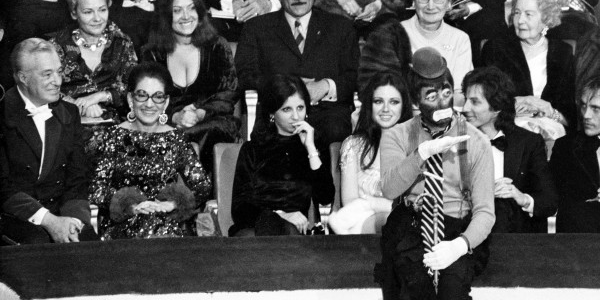 AnorakOkay, so a lot of the buried films on this list so far have been kinda inexplicable - who wouldn't wanna see a Danny Boyle sci-fi-horror film, after all? - but when it comes to this "lost" Jerry Lewis comedy-drama, its lack of release isn't at all surprising. What is surprising is that anybody thought it was a good idea in the first place, let alone that a comedy institution and household name like Lewis would not only star in but write and direct it, or that it would be fully completed before being shelved permanently once everyone involved recovered the good sense that had abandoned them for the duration of the production. So what's so bad about The Day The Clown Cried? Two words: holocaust comedy. Beating the Oscar-winning Life Is Beautiful by a good 25 years, the film was intended to smuggle a tragic depiction of Nazi war crimes under the cover of another hit Jerry Lewis comedy. We think. The few people who have actually seen the film have cited its wildly fluctuating tone as one of the most bizarre things about it, as Lewis's washed-up German circus clown being recruited to lead kids, Pied Piper-style, to their deaths in the gas chamber. The film ends with Lewis's clown accidentally ending up in the "showers" with them, fading to black on the children giggling at his antics as he realises that no miracle is going to come and save them. Good Lord, just writing that makes us feel totally hollow and disturbed, can you imagine actually seeing it? Well, keep on imagining, because The Day The Clown Cried is never getting a release. We doubt that any studio would've wanted to touch it anyway, with Lewis owning the only cut of the film and refusing to release it, with the studio holding onto the original negatives and similarly playing schtum. Which might be for the best.
7. Attack The Block
 Optimum ReleasingJoe Cornish's directorial debut was one of the most exciting British films released this decade, and possibly one of the best genre movies of recent times full stop. Having cut his teeth on TV and film parodies on the Adam & Joe show, a handful of music videos and the scripts for The Adventures of Tintin: Secret of the Unicorn and Ant Man with friend Edgar Wright, Cornish threw himself into this amazing John Carpenter-esque tale of council estate kids facing down an alien invasion, with hilarious jokes and a surprisingly sympathetic portrayal of the ostracised "chav", never indulging in easy stereotypes. Also, Nick Frost played a stoner. With Edgar Wright attaching his name as executive producer, hopefully ensuring fans of Hot Fuzz and Shaun Of The Dead to the film, and having been a modest box office success in the UK and abroad, it seemed like Attack The Block was a shoo-in to do well across in the States. After all, it's reference points were American filmmakers like Carpenter, Tobe Hooper, Joe Dante and Walter Hill. What put the US distributors off, though, were the quintessentially South London accents and slang used by the characters, doubting that audiences would understand them. They even considered subtitling the film, something that happened with Danny Boyle's Trainspotting years before, to make the thick Scottish brogues more palatable to the average Yank. At SXSW Cornish addressed the audience directly on the issue during a Q&A, an overwhelming majority of them saying they had no problem understanding the film. "My gut feeling is maybe they underestimate you guys," said Cornish. "With 20 years of hip-hop culture, with The Wire, did you feel this was difficult? No? Well, tell your local distributors that that's the case." The studio weren't as confident, released the film in just eight cinemas with no publicity, and it sunk without a trace.
6. Song Of The South
 DisneyZip-A-Dee-Doo-Dah, Zip-A-Dee-A, my oh my, what a wonderful day, accusations of racism heading Disney's way, Zip-A-Dee-Doo-Dah, Zip-A-Dee-A. Song Of The South is a rare example of a film that the studio didn't bury on release, but whose availability has been severely repressed in the intervening years, thanks to some... shall we say problematic depictions of black people in what's otherwise a fairly standard Disney musical, combining live action actors with animation in an adaptation of the Uncle Remus stories collected by Joel Chandler Harris. You're gonna have some trouble with any film that involves black former slaves in Reconstruction-Era Georgia, especially when the film in question isn't a serious historical drama ala 12 Years A Slave but a whimsical family film with talking animals and singing. Let alone a film that inspired a ride at Disneyland (Splash Mountain) and won an Oscar for a song sun by a black man in 1947, when civil rights were, er, not the way they are now. Since then the film has rarely been shown in full, instead being aired on TV in a severely edited form that leaves only the animated musical sequences and not a whole lot else. So what's the problem with it? Well, it's unrelentingly racist. In a post-Civil War south setting, Song Of The South shows a totally unrealistic and offensive slave-master relationship, where James Baskett's Uncle Remus is a kindly old man who just loves hanging out on a plantation. Which is good, because he literally doesn't have a choice. Because he's a slave. This is a Disney film about how much fun it was to be a black slave. And so, it's never been released officially on home video in the US, and only on VHS in the eighties and nineties elsewhere
5. The Iron Giant
 Warner Bros. PicturesWhilst not the most faithful adaptation of the Ted Hughes source material, The Iron Giant is one of the best children's films of recent years, with some stunning animation and genuinely heartfelt scenes between a kid and a huge, alien robot voiced by Vin Diesel (that guy again!). Directed by Brad Bird, veteran of the Simpsons and later Academy Award winning helmer of Pixar's The Incredibles and Ratatouille, and with an all-star cast rounded out by Jennifer Aniston, Harry Connick, Jr, and John Mahoney, it should also be one of the most famous and successful children's of recent years. Which, somehow, it's not. The project had a troubled production, beginning in 1994 and only really starting to take shape when Bird came on board with scriptwriter Tim McCanlies in 1996, it got to the point during animation that the director had to enlist the help of students from California Institute of the Arts to actually complete the film. When it was finally done by 1999, the budget had ballooned to between $50 million and $70 million dollars, meaning it would have had to be a serious box office smash to recoup the money spent on making it. Which it didn't, instead grossing just $31.3 million worldwide and thus being considered a serious box office bomb. Once again, though, the Iron Giant never really stood a chance. After the similar failure of huge animated movie The Quest For Camelot the year before Warner Bros, weirdly, got cold feet with regards to cartoons. Executives didn't get it, they kept pushing the film back and ignoring potential merchandise tie ins and Burger King advertising, eventually releasing it without much fanfare. According to Bird, once they saw the reviews, they were "a little shamefaced." Too little, too late.
4. Motherhood
 Freestyle ReleasingAfter all her years in the acting business and creative and commercial successes under her belt, Uma Thurman should be a sure bet for filmmakers.Katherine Dieckmann's Motherhood had some potential to be good, too, as the director channeled her own experiences as a struggling parent in a big city into Motherhood's story of a struggling parent in a big city. An independent production with a low budget of $10 million (low compared to, say, Transformers 4), it was one of two small films financed by the New York City-based iDeal Partners Film Fund. In fact, iDeal was started precisely to release low-risk films, movies that would definitely make a return on their investment during the credit crunch age, with low budgets, productions which took advantage of tax incentives and which starred "commercially-tested actors" such as Thurman. As it happened, Motherhood received a limited American release in 2009 by Freestyle Releasing and, even worse, was shown in just one cinema in London the following year, making just £9 from a single audience member on its opening night and £88 on its opening weekend, with eleven people seeing the film in all. No less than veteran film critic Barry Norman suggested that "it's a reasonable assumption that there was a marketing and advertising catastrophe, and people didn't know it was showing." Motherhood was actually only the second biggest flop in UK cinema history, but the first was a small indie film that made £7; this was a reasonable-sized Hollywood production. Which eleven people saw. Because the studio messed up.
3. Cocksucker Blues
 WikipediaThe Rolling Stones are, by all accounts, total maniacs. Urban legends, memoirs and other films have documented the drug-fuelled, sex-crazed insanity of the world's biggest (still living) rock band, but the first time their true hot messes were about to be unveiled the band, and the studio that financed the documentary, put a stop to it. Which is a rare moment of coquettishness from the infamously shy-and-retiring Keith Richards, a man who once claimed to have snorted his own father's ashes. The colourfully titled Cocksucker Blues (named after a Stones rarity which was renamed and released as Schoolboy Blues), the film directed by famed photographer Robert Frank showed the band's 1972 American tour in support of their classic album Exile on Main St. With unfettered VIP access to the band on stage and behind the scenes, the film was shot by Frank, members of the band and their entourage, as cameras were left around dressing rooms and tour buses for anybody to pick up and film with. Which means that the finished movie included footage of groupies shooting heroin, Keith Richards stumbling around off his face, Mick Jagger snorting coke backstage before a gig, and all the other examples of wild rock 'n' roll hedonism which had previously been the subject of scuttlebutt; now, rendered in clear, defined moving images. Deciding the film showed them in a poor - and possibly incriminating - light, the band blocked its release, despite the fact they commissioned it themselves. Frank is only allowed to show it four times a year, in an "archival setting", and if he's present. Which is some pretty effective burying.
2. Idiocracy
 20th Century FoxMike Judge doesn't have the best luck. Despite creating two of the most successful animated comedy shows in TV history - Beavis & Butthead and King Of The Hull - he hasn't been able to parlay that magic touch to his big screen outings, his workplace classic Office Space becoming a sleeper hit on home video, and the recent Extract failing to alight the box office despite a wonderfully weird and dark premise coupled with a cast that included comedy stalwarts Jason Bateman, Kristen Wiig and, um, Ben Affleck in a dodgy wig. The biggest bungle of Judge's filmmaking career, however, was the fate of his 2006 effort Idiocracy. It's not surprising, really, why 20th Century Fox would be anxious about throwing their full weight behind the movie. A darkly satirical look at the future of American culture, the film saw Luke Wilson's army corporal and Maya Rudolph's prostitute put in suspended animation, only to wake up five hundred years later when America looks a bit different to how they left it. As in, the average IQ has dropped to the point that the president is a professional wrestler, Gatorade has replaced water, and Starbucks has become a drive-through massage parlour. With a general misanthropic disdain for his fellow countrymen and some particularly sharp takedowns of huge corporations like Costco - plus a shot at the falling quality of the film industry with the Oscar-winning Ass: The Movie (a 90 minute shot of a bare bottom) - Fox were less than impressed with the finished product Judge handed over. Finished in 2005, Idiocracy had its release date pushed back repeatedly before being released in seven cities, expanding eventually to 130 theatres nationwide - compared to the usual 600+ for most films - and the studio released no movie trailers, no ads, and no press kits. Which is pretty idiotic, fittingly.
1. Every Terry Gilliam Film Ever
 20th Century FoxTerry Gilliam has produced some of the most inventive, strange and amazing films in the history of cinema - and if you ever got a chance to see some of them, you'd agree. Thing is, the amount of the director's filmography that's widely available is kinda slim, owing to the numerous occassions that studio wrangling and release strategies have completely buried them, or even stopped them from being finished in the first place. Which is probably why he's been lowered to reuniting with his fellow ex-Monty Python members for their money-grabbing reunion shows at the O2 Arena, coming soon! The story of his transcendent, 1984-inspired dystopian black comedy Brazil has been well told, with enough studio hoo-ha to provide material for a whole book. Literally, Jack Matthews wrote a book called The Battle Of Brazil, detailing the struggles between Gilliam and Universal Pictures. The downbeat ending didn't test well amongst executives, demanding a new happy ending and some serious cuts to the film's running time, which the director was obviously resistant to. After delaying the film's release for months, Gilliam took out a full-page ad in Hollywood newspaper Variety, urging Universal to release Brazil in its intended version. Brazil actually got released, and whilst Universal didn't do much to publicise it, the furore that Gilliam had whipped up certainly helped it from being totally forgotten. Worse was his experience with The Adventures of Baron Munchausen, a decidedly lighter affair that still ended up being totally abandoned by its distributor. The director himself remembers "we were ultimately the victim of Columbia Tri-Star being sold to Sony, because at that time all they were doing was trying to get the books looking as good as possible." Munchausen was delayed from release because the new execs were getting back at the old execs, basically. They spent no money advertising the film and produced the bare minimum of prints, less even than the weirdest art film gets. Since then Gilliam's fortunes have fluctuated, his 2005 fantasy film Tideland, which was edited against his wishes and summarily dumped following mixed festival reviews, and his latest The Zero Theorem, another dystopian sci-fi which was finished in 2013 and has yet to find a US distributor. Gilliam has not only had loads of his films buried by studios, but it looks like he might get buried himself. Like this article? Let us know in the comments section below.