12 Most Influential Blockbuster Movies Ever Made
 Although titles such as Gone With The Wind, Ben Hur, The Sound of Music and several entries in the James Bond franchise had easily taken over $100m at the box office dating all the way back to the 1930s, the template for the blockbuster movie as we know it today didn't really take shape until four decades later. Prior to this, movies were generally rolled out to a limited number of theatres before expanding over time if they were well-received, and could ultimately end up playing for months on end. It seems ridiculous now in the age of media saturation and theatre counts of 3000 and above, but this was the way it was for decades. The 1970s saw the inception of the 'high-concept' pitch; a movie that could be easily described and therefore easily marketed to mass audiences through a wide release. Then came the onslaught of print and television advertising, along with dozens upon dozens of merchandising tie-ins. By the end of the decade, the template for releasing big studio movies was almost unrecognisable. Based on that definition of the term, this article will take a look at the 12 most influential blockbuster movies ever made, listed in the order of their release...
12. Jaws (1975)
 The prototypical Hollywood blockbuster, Jaws was unleashed upon an unsuspecting world in the summer of 1975 at over 450 screens, and a month after its release it was playing in double that amount. Backed by an unprecedented campaign of heavy television advertising, the movie would go on to become the highest-grossing movie in history with over $470m worldwide (which works out at nearly $2 billion when adjusted for inflation). Just like that, the 'event movie' was born. However, many were predicting Jaws to be an unmitigated disaster before it went on to become the biggest movie of all time. Relatively inexperienced director Steven Spielberg went an incredible 100 days over schedule, which saw the budget come in at $9m, over double the initial cost of the project. The tortured production also suffered innumerable problems with their mechanical star Bruce, and the human actors suffered from seasickness and an increasing dislike of each other. Ultimately these problems would only enhance the final product and as we all know, the result is one of the greatest movies ever made. Featuring both one of the most iconic themes and posters in movie history, the unique marketing blitz also saw Jaws released with a wide array of tie-in merchandise and inadvertently persuaded a generation of moviegoers to stay out of the water. The movie also popularised the wide release system that is now standard practice for studio blockbusters and established the summer as the best time to release these high-concept pictures. The era of blockbuster cinema had arrived.
11. Star Wars (1977)
 If the release of Jaws two years earlier had heralded the arrival of blockbuster cinema, then Star Wars changed the entire industry. Not only did the movie smash box-office records around the globe to become the biggest movie of all time, it also revolutionized the field of visual effects, spawned arguably the largest and most dedicated fanbase of any property, and opened the eyes of studio executives to the vast possibility of merchandising tie-ins. Only after they let George Lucas keep most of the profits, of course. Lucas founded Industrial Light and Magic to achieve his vision for Star Wars, and the effects house would go on to become one of the most respected in the industry, although the fledgling company struggled with the groundbreaking effects work that his vision required. As with a lot of great movies, the production was a troubled one; the budget spiralled from $8.5m to $11m, problems beset the Tunisian portion of the shoot, and Lucas was forced to deal with an undisciplined crew and increasing studio pressure to meet deadlines. In fact, the director had such little confidence in his project that he traded friend Steven Spielberg 2.5% of the movie's profits against the latter's Close Encounters of the Third Kind, believing it would be a bigger hit. Of course when Star Wars was finally released in May 1977 it became nothing short of a phenomenon. As well as enthusiastic critical response and unprecedented commercial success, the movie was nominated for ten Academy Awards (winning six) and would become a watershed moment in cinematic history that paved the way for effects-heavy, action-packed summer blockbusters. Not to mention that it has influenced filmmakers from John Lasseter to James Cameron, with almost everybody in between. Over 35 years later, Star Wars remains as popular as ever.
10. Die Hard (1988)
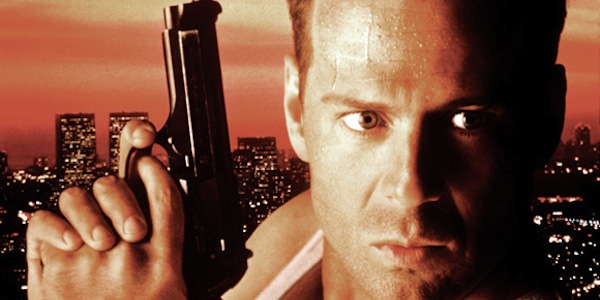 Action cinema of the 1980s had been dominated by the larger-than-life physiques and cringeworthy one-liners of Arnold Schwarzenegger and Sylvester Stallone, and the genre was in real danger of falling into self-parody by the end of the decade. Then along came everyman hero John McClane and Die Hard; a movie that revolutionized both the action movie and the action hero, and is still hugely influential over 25 years later. It's hard to believe now, given that it became the actor's signature role, but Bruce Willis was nowhere near the first choice to play John McClane. Still best known as a television actor thanks to Moonlighting, bigger names including Schwarzenegger, Stallone, Clint Eastwood, Richard Gere and even Burt Reynolds had turned down the role before Willis was cast. The studio had such little faith in his ability to sell the movie that his face was almost entirely omitted from any marketing materials, with the Fox/Nakatomi Plaza taking center stage. In hindsight, not a great move as the untested blockbuster duo of Willis and Alan Rickman would provide us with one of cinema's greatest heroes and villains, respectively. Although not a massive smash hit upon release, Die Hard still managed to gross over $140m from a $28m budget. Rightly regarded as one of the greatest action movies ever made, the movie spawned the 'Die Hard on a (insert location/mode of transport here)' sub-genre that continues to this day with 2013's two 'Die Hard in the White House' movies, and heralded the decline of over-muscled action heroes in favor of ordinary people in extraordinary situations. Despite the declining quality of the sequels, the original remains quite possibly the most influential action movie ever made
9. Terminator 2: Judgment Day (1991)
 As well as being the first $100m movie, one that would usher in the age of the mega-budget blockbuster, James Cameron's Terminator 2 also began the CGI revolution. After creating a convincing digital character for 1989s The Abyss, the technology took a huge leap forward with Robert Patrick's liquid metal T1000. Within a few years computer effects were all the rage in major studio movies, indebted to the director and ILM's pioneering work on T2. Although the T1000 appears in liquid metal form for less than 5 minutes of the movie's 140 minute runtime, it still took a team of 35 people to create the CGI components, such was the unprecedented nature of the task at hand. The effects would quickly infiltrate popular culture, being parodied everywhere from Wayne's World to The Simpsons to Hot Shots: Part Deux! More than 20 years on, the effects looks a little primitive (which is to be expected) but Terminator 2 remains one of the most enjoyable blockbusters ever produced. The movie was a huge success upon release, taking almost $520m at the worldwide box office. As well as the groundbreaking CGI, Stan Winston's practical effects remain flawless, Arnold Schwarzenegger cemented his T800 as one of cinema's most iconic characters, Linda Hamilton became the greatest female heroine since James Cameron got his hands on Ellen Ripley and the action set-pieces are nothing short of spectacular.
8. Jurassic Park (1993)
 While Terminator 2 signalled the beginning of the CGI revolution, Jurassic Park kicked things up to a whole new level. Seamlessly mixing computer-generated dinosaurs with their animatronic counterparts, the effect was nothing short of jaw-dropping. Audiences agreed, as the movie overtook director Steven Spielberg's 1982 classic ET: The Extra Terrestrial to become the biggest movie in history with a gargantuan $914m worldwide. The complicated nature of the visual effects saw pre-production of the movie take over two years, but it was definitely time well spent; the first shot of the brachiosaurus is as stunning now as it was the first time you saw it. Even 20 years on, the CGI remains flawless* and Stan Winston's practical effects further enhance the scale and sense of danger that the prehistoric monsters project. Despite Spielberg's initial skepticism of fully computer-generated dinosaurs, the decision paid off spectacularly and the end result is one of the greatest adventure movies ever made. As well as becoming the biggest movie ever when it was released, Jurassic Park also generated billions in merchandising thanks to licensing deals with over 100 companies, and remains hugely profitable to this day as this year's 3D re-release proved by adding over $100 million to the movie's coffers, taking it past the coveted $1 billion mark. The influence of Jurassic Park saw a generation of children (me included) become obsessed with dinosaurs, and saw a massive surge in the use of CGI in Hollywood blockbusters, led James Cameron to found Digital Domain with Stan Winston, and most (in)famously convinced George Lucas that the technology now existed to work on the Star Wars prequels. *How come a 20 year old movie still features better CGI than a lot of current releases? Answers on a postcard, please.
7. Toy Story (1995)
 Given that computer-animated movies are now released with increasing regularity, its hard to forget that the genre itself is less than 20 years old. It's even harder to imagine that the movie that started it all went through such a troubled pre-production that it almost never saw the light of day. After spending two years working the original idea into a script that was finally green-lit in January 1993, production was shut down in November after a test screening of the movie's first half to Disney executives yielded disastrous results. The script was drastically reworked before production resumed three months later, with the story now resembling the buddy-movie dynamic between Woody and Buzz Lightyear we all know and love. Despite only clocking in at 80 minutes, the movie required a team of 110 (including 27 animators) that clocked up over 800,000 hours to render the finished movie. There was an air of trepidation surrounding the November 1995 release, and Disney only contributed a marketing budget of $20m despite all of the associated merchandising deals. Of course, Toy Story was a resounding success and grossed over £360m worldwide against a $30m budget, as well as receiving universal critical acclaim. John Lasseter was awarded a Special Achievement Academy Award for the groundbreaking movie, and it also became the first animated movie nominated for Best Original Screenplay. The resounding success of Toy Story ultimately established Pixar as one of the industry's premier studios, spawned one of the greatest trilogies of all time, and of course saw the incredible rise of computer-animated movies, now one of the most commercially successful genres. A huge gamble that paid off to become one of the most influential movies ever made.
6. The Matrix (1999)
The Matrix was a shot in the arm to the action genre when it was first released, and became both hugely influential and massively parodied. The idea that our world is a projection created by machines to harvest human energy sounds a little ridiculous on paper, but the result was a groundbreaking sci-fi action movie that took over £460m at the box office. Of course, when most people think about The Matrix, they think bullet time. Filmed against a greenscreen with a rig of cameras shooting at 12,000 frames per second, the effect was unlike anything that had been seen onscreen before. Of course, this led to the technique being spoofed in 'comedies' such as Kung Pow: Enter the Fist and Scary Movie as well as ripped off in much lesser movies including Charlie's Angels and Equilibrium. The announcement of back-to-back sequels also saw the increasing trend of every potential blockbuster being labelled as 'the first in a potential trilogy'. The success of The Matrix spawned dozens of imitators, and saw a more distinct Eastern influence enter Western action cinema, particularly when it came to wire-based fight scenes. Any problems with the script were more than compensated by the groundbreaking action sequences, and despite the disappointing sequels The Matrix remains both one of the best and most influential blockbusters of all time.
5. X-Men (2000)
 With comic-book movies being released on an alarmingly regular basis these days, it's hard to believe that by the late 1990s only Superman and Batman had made the transition from page to screen with any real critical or commercial success. Although the rise of the comic book movie can arguably be traced back to the release of the R-rated Blade in 1998, the first mainstream box-office hit in over a decade came with Bryan Singer's X-Men. After being stuck in development hell since 1989, Singer was announced as director in late 1996 but it would be almost three years before the $75m-budgeted movie even began shooting. Featuring a sprawling ensemble cast (including the now-famously unknown Hugh Jackman), the movie suffers from an over-abundance of world-building (which is to be expected given the convoluted nature of the plot) but the chemistry between the actors is great and the CGI and wire-augmented action scenes are hugely enjoyable. A critical and commercial success, X-Men would take almost $300m at the box office and just like that, the superhero boom began. Within five years we had an X-Men sequel, two more entries in the Blade franchise, two Spider-Man movies, Daredevil, Hellboy, The Punisher, Elektra, Catwoman, and The Fantastic Four to name but a few. If X-Men hadn't been a success when it was released, studios may not have been so willing to greenlight an abundance of superhero flicks. Without this movie, would the Marvel Cinematic Universe even exist?
4. Harry Potter And The Philosopher's Stone (2001)
 Apologies to any American readers out there, but it's not the Sorcerer's Stone. Warner Bros. bought the rights to the book for £1m, which turned out to be a rather shrewd investment seeing as the series went on to spawn eight movies over ten years and become the biggest franchise in history with box-office takings of over $7.7bn. Despite somewhat mixed critical reaction, the opening installment became the second biggest movie in history at the time, with a total gross north of $970m. It may have seemed a gamble at the time to spend $125m on a movie based on a children's book series with three young unknowns in the lead roles but between the rights being purchased in 1997 and the release of the movie, 'Pottermania' took off in a huge way with the first four books available before the first screen adaptation, ensuring a huge fanbase was already in place. Despite the limitations of the main trio, the supporting cast was packed with renowned British actors, with stunning production design and cutting-edge visual effects covering up Chris Columbus' pedestrian direction. As well as kicking off the most successful series of movies ever made, Harry Potter and the Philosopher's Stone also led to studios optioning any fantasy book series they could lay their hands on in the hope of creating a ready-made franchise. In the last decade, dozens of literary adaptations have made their way to the screen in the hope of duplicating the 'Harry Potter effect' with only the Twilight and Hunger Games movies gaining any real traction, countless others having fallen at the first hurdle.
3. The Lord Of The Rings: The Fellowship Of The Ring (2001)
Green-lit way back in 1997, Peter Jackson's adaptation of JRR Tolkien's seminal fantasy series was nothing short of a mammoth undertaking. As well as shooting what had been labelled as 'unfilmable' on numerous occasions, the production would film all three movies back-to-back over 16 months in the director's native New Zealand with a combined budget of $281m, as well as utilizing state-of-the-art visual effects to realize their vision for Middle Earth. I'd say it turned out quite well in the end. Finally released in December 2001, the first installment of the trilogy was an massive success, grossing $871.5m to universal critical acclaim. An immense technical achievement, the combination of practical and visual effects blended seamlessly to create a fully immersive world, with the unsung heroes of the movie undoubtedly being WETA Workshop who were responsible for most of the prosthetic and costume effects. The success of the movie reignited an interest in the fantasy genre, with each entry in the Lord of the Rings trilogy grossing more than its predecessor, a cinematic achievement that culminated in the Return of the King winning all eleven of the Academy Awards for which it was nominated. Many believed such an undertaking would never be duplicated in the movie business. At least for a few years, until they announced The Hobbit...
2. Batman Begins (2005)
 Eight years after the disastrous Batman and Robin almost killed the franchise, Christopher Nolan made his blockbuster debut with spectacular results. Not just one of the best superhero movies ever made, or the first part in one of the all-time great trilogies, but the yardstick by which all reboots are now measured. Ditching the neon and nipples approach that blighted Joel Schumacher's time at the helm, Nolan instead opted to take the franchise back to basics. Everybody knows Batman's origin story, but this was the first time we had seen it unfold onscreen. It is a testament to the quality of the movie that it's an hour before Christian Bale even dons the cape and cowl, but this Batman movie copes just fine without the title character. Despite the somewhat patchy action sequences, the distinguished cast are great across the board and the movie deserves its reputation as the greatest reboot of all time. Although it took less than than $375m against an $150m budget, Batman Begins was a critical and commercial success given the catastrophic nature of the last film in the franchise. Of course, this led to almost every reboot citing Batman Begins as an inspiration; Casino Royale, Terminator Salvation, Star Trek, Rise of the Planet of the Apes and Sherlock Holmes are all recent reboots that have directly cited Nolan's movie as an inspiration.
1. Avatar (2009)
 James Cameron returned to the director's chair 12 years after making the biggest movie of all time to.... make the biggest movie of all time. Whatever your opinion on the 'Dances With Wolves meets Ferngully' shortcomings on the narrative side of things, the visual results were nothing short of spectacular, not to mention hugely influential on the entire industry. An idea the director had since 1994, it took almost 15 years for technology to catch up to Cameron's imagination. But when you're James Cameron and the technology to realize your vision simply doesn't exist, you create it yourself. In addition to shooting the movie on a 3D camera he had helped develop, Cameron also utilized cutting-edge motion capture techniques that he had himself devised during pre-production. A motion-capture stage six times larger than any other was used during filming, which also allowed the director to view the finished animations directly transmitted to a monitor. At one stage, the $238m-budgeted movie had a crew that numbered almost 900. When Avatar was finally released, it went on to obliterate box-office records on its way to $2.78bn worldwide, making Cameron the director of the two biggest movies in history. This almost single-handedly caused a massive resurgence in 3D, with many studios post-converting their big releases into the third dimension with wildly varying degrees of quality (and success). Cameron's use of the technology also led to high-profile directors such as Ridley Scott, Steven Spielberg and Martin Scorsese using the format for the first time. Any movies missing that you think should be included? Sound off in the comments below.