12 Perfect Casting Choices That Launched Major Film Franchises

Would the X-Men film franchise still even exist without Hugh Jackman?

Typecasting is a dirty word to an actor. To be typecast means that producers, casting directors, directors, other actors and especially the film-going public can€™t see you in any other role. However, what some actors rebel against, others use to pay the bills, even years after the original role has long since disappeared from view. So here€™s a list of twelve actors who were perfectly cast for the roles they were given, and have become indelibly stamped in our minds whenever we think of that character, for better or worse. The criteria here is that the star in question must have carried the role for at least three films and become so identified with it that it€™s hard, if not downright impossible, to consider someone else for it. Let's get to it;

12. Sean Connery €“ James Bond Series

We€™ll give Daniel Craig credit; he€™s revitalized a decades-old franchise that was starting to get too wrapped (again) in the technobabble and gadgets from Q Branch. But for the Boomers who were around when the character first appeared, the only real James Bond is Sean Connery. Series author Ian Fleming wasn€™t originally thrilled with the selection of Connery as James Bond; he felt that the bodybuilding Connery was €œan overgrown stunt-man,€ according to Wikipedia. Fleming changed his mind after the premiere of Dr. No; he created a half-Scottish, half-Swiss heritage for Bond in the later novels. The role wasn€™t initially appealing to Connery, but he understood that his fledgling career would take off if the films were a success. He starred in the six of the first seven Bonds, then retired, disgusted with the character and because the public thought his name was James Bond. He was enticed to come back for the 1983 remake of Thunderball, slyly retitled Never Say Never Again. After Connery€™s departure, the series€™ producers signed Roger Moore on as his replacement. Moore made seven Bonds over the following twelve years, but his more debonair Bond was always compared unfavorably to Connery€™s rougher man of action. Timothy Dalton tried to get the character back to the original Fleming definition, but was not as well accepted by the film-going public. Pierce Brosnan showed some promise, but the role was becoming less secret agent and more science fiction by his final entry. Craig has come closest to capturing the original magic, but he€™s got to make a few more entries in order to catch up to Connery.

11. Robert Downey Jr. €“ Tony Stark/Iron Man

Before it was released in 2008, most non-comic readers equated the term €œIron Man€ with a song by Black Sabbath. But that was before Robert Downey Jr. put on the suit. Most of the superheroes we€™d seen up to 2008 were rather stiff and moral (the DC brand), or youthful and inexperienced (the Marvel brand). Downey€™s Tony Stark was neither; he was a hard drinking, womanizing socialite who just happened to be one of the smartest (and richest) men on the planet. In his review for Iron Man, the late Roger Ebert noted that €œTony Stark is created from the persona Downey has fashioned through many movies: irreverent, quirky, self-deprecating, wise-cracking.€ It€™s that persona that makes us buy into the epiphany that Tony Stark has in creating the Iron Man suit and using it to fight evil. Director Jon Favreau noted that, €œ(Downey) understood what made the character tick. He found a lot of his own experience in Tony Stark.€ Given Downey€™s experiences with substance abuse and alcoholism, plus the sense of self-aggrandizement that comes from being part of Hollywood royalty, this is an apt statement. It€™s true that audiences are entertained by the action in the Iron Man and Avengers films. But part of the enjoyment also comes from the effortless way that Downey unflinchingly exhibits the brash persona that is Tony Stark.

10. Clint Eastwood €“ Dirty Harry

You€™ve got to ask yourself one question: 'Do I feel lucky?' Well, do ya, punk?
With those words, Dirty Harry, as portrayed by Clint Eastwood, seared himself into the American psyche. San Francisco Inspector Harry Callahan was a throwback, a dinosaur, a fascist, a Neanderthal with a badge. He was also the American West lawman brought into the 20th century, disgusted with kindler, gentler ways. Criminals were vermin, and he was the exterminator. While most of us would like to think that we could be noble and fair in dispensing justice, our primal adrenaline surged as Harry brought down the bad guys with his Smith & Wesson. With that steely-eyed glint and gruff voice, Harry said, €œGo ahead. Make my day.€ And audiences cheered as the bad guy body count climbed for five films.

9. Harrison Ford €“ Indiana Jones

When they were casting for Raiders of the Lost Ark, director Steven Spielberg wanted Harrison Ford to play the part of Indiana Jones. Producer George Lucas vetoed the choice, not wanting Ford to become €œthe guy I put in all my movies.€ The role was offered to Tom Selleck, but he had to turn it down due to his commitment to the TV series Magnum P.I. Spielberg, along with producers Frank Marshall and Kathleen Kennedy, changed Lucas€™ mind and Ford was in. Audiences and critics loved the film, which was a throwback to the old Saturday movie matinee serials. The 1984 prequel, The Temple of Doom, was able to incorporate a lot of ideas that had been discarded for Raiders. It wasn€™t as well regarded, and the film€™s violence led to the creation of the PG-13 rating. Five years later, Sir Sean Connery was added into the franchise as Indy€™s father in The Last Crusade. Rumors persisted of a fourth film being added, but didn€™t come true until 2008€™s Kingdom of the Crystal Skull. Ford was given an iconic look for the film, with a signature hat and leather jacket. And while he is quite at home using a pistol, his preferred weapon of choice is a bullwhip. In the classroom, he€™s something of a nebbish professor; in the field, he€™s an unquestioned man of action, who goes to great lengths to retrieve archeological treasures. Audiences got to see the elements that made him what he is in a sequence at the beginning of Last Crusade, and in greater detail in the TV series The Young Indiana Jones Chronicles.

8. Mel Gibson €“ Mad Max

Mad Max was made independently on a budget of $400,000. It went on to earn nearly $100 million worldwide, which gave it a 20-year spot in the Guinness Book of World Records as having the highest profit-to-cost ratio for any motion picture. Mel Gibson was originally cast in the role because director George Miller only wanted to cast unknowns who didn€™t have other associations. He was paid $15,000 for the first film in the dystopian series. It€™s an origin story of sorts, with Max as a highway patrolman who is targeted by a rogue group of bikers after their leader dies in a car chase with Max. Mad Max 2 (retitled €œThe Road Warrior€ in the U.S.) has Max traveling throughout the post-apocalyptic wasteland in a never-ending search for gas; he hooks up with a group of oil refiners trying to defend themselves against a marauding band of bikers. Beyond Thunderdome has Max trying to counter the moves of Aunty Entity (Tina Turner), who has set up a seedy outpost town in the wasteland. Since then, Gibson has gone on to other iconic roles, most notably of L.A.P.D. Detective Martin Riggs in the Lethal Weapon buddy-cop series (along with Danny Glover); and a biopic of Scottish nationalist hero William Wallace in Braveheart, which also earned Best Picture and Director nods for Gibson.

7. Hugh Jackman €“ Wolverine In The X-Men Films

Originally, the role of Logan/Wolverine in the first X-Men film was given to Scottish actor Dougray Scott. However, the filming of Mission: Impossible II, in which Scott was playing the villain Sean Ambrose, went over schedule, the role was recast three weeks into filming, with the Australian actor Hugh Jackman. Since Wolverine was the most popular character and the lead for the film, it was a big risk, but it was one that paid off. In the first film, despite being the lead character, Wolverine has very few lines and most of them are terse putdowns. However, the character required a fierce presence because of his combative nature. Jackman prepared for the role by watching the Dirty Harry and Mad Max films. He was also insistent about doing his own stunts as much as possible. A trip to the barber in order to match Wolverine€™s spiky hairstyle, plus the addition of adamantium claws and an attitude, made him as favored a character in the film universe as it did for the comics. Jackman has embraced the role wholeheartedly, and has reprised the role in seven X-Men films, more than any other in the vast list of X-Men actors. Typecasting hasn€™t hurt him: he won Tony and Drama Desk awards for the Broadway musical The Boy From Oz; been nominated for an Oscar in the film adaptation of Les Misérables (he hosted the show in 2009); and even been considered for the role of James Bond (he lost out to Daniel Craig).

6. Alan Rickman €“ Severus Snape In The Harry Potter Films

The list of iconic actors is very long in the Harry Potter films: the trio of young stars €“ Daniel Radcliffe, Rupert Grint and Emma Watson €“ will forever be aligned with the series, as will the list of veteran British stalwarts €“ Maggie Smith, Robbie Coltrane, Michael Gambon, Ralph Fiennes, Helena Bonham Carter, Gary Oldman, David Thewlis and more. But even though his character suffered the same fate as the other adults in the series €“ precious little screen time €“ Alan Rickman€™s Severus Snape has become the fourth-most beloved character in the films. For most filmgoers, their first exposure to Rickman was as the suave terrorist leader Hans Gruber in 1988€™s Die Hard, a perfect foil to Bruce Willis€™ loose cannon. He€™s also notable as the only real British lead actor in 1991€™s Robin Hood: Prince of Thieves, where he played the evil Sheriff of Nottingham. With his role as the greasy Potions master at Hogwarts, his status as a heavy is complete, even if Rickman doesn€™t regard Snape as a stock villain. He€™s become so identified with the character that series author J.K. Rowling has been known to field readers€™ questions about Snape with the clarification question: €œAre we talking about Snape or Alan Rickman?€

5. Arnold Schwarzenegger €“ The Terminator

Can you imagine the Terminator being played by Mel Gibson? Or Tom Selleck? O.J. Simpson? When Arnold Schwarzenegger was shown the script, he originally wanted to play Kyle Reese (which went to Michael Biehn), but director James Cameron convinced him that the star was the Terminator. Orion Pictures didn€™t have much faith in The Terminator; for them, it was a property to be shoehorned in just before €œOscar season€ began in November. It did well in theaters, but it was on home video that it really took off. Several special editions later, it still resonates as a strong science fiction entry, and has spawned three sequels, a TV series and a reboot (Terminator: Genesis, now in production). An Austrian bodybuilder turned actor, Schwarzenegger was already a rising star at the time of The Terminator€™s release; he had already done two successful Conan films. This role sealed him as a bankable action star, even though he only has 18 lines in the whole film. In fact, some have speculated that his lack of lines was more of an asset, as he was still mastering the English language. His following two outings as the T-800, in Terminator 2: Judgment Day and Terminator 3: Rise of the Machines, plus other roles where he played the action heavy, made him one of the biggest stars on the world stage. After serving as Governor of California (pundits called him €œthe Governator€) from 2003 to 2010, he has returned to the action genre, but has not brought in the big box office of his pre-political days.

4. Sylvester Stallone €“ Rocky/Rambo

After seeing the Muhammad Ali/Chuck Wepner fight, in which a nobody went up against the undisputed boxing champion of the world, struggling actor Sylvester Stallone went home and spent the better part of the next four days writing the screenplay for Rocky. He refused to sell the script unless he was given the title role. The result was three Oscars, including Best Picture. Stallone was nominated for Best Actor, but lost out to Peter Finch for Network. Three years later, he reprised the role in Rocky II, while also writing and directing it. Four more sequels would follow over the next 24 years. While none of them gained the accolades of the first, they still brought in the fans, which had grown very fond of the hardscrabble character that got a once-in-a-lifetime chance and ran with it. That€™s a plot twist that is very attractive for American audiences, and Stallone knew it. Few actors get a chance to create their own franchise; even fewer get a chance to create a second one. First Blood was an unremarkable revenge novel by David Morrell, but Stallone used his star power and Rocky success to rewrite the script, making the central character, former Special Forces veteran John Rambo, a much more sympathetic figure. Like Rocky before it, became a critical and commercial hit. Three more sequels followed, with a 20-year hiatus between Rambo III and Rambo (IV).

3. Patrick Stewart €“ Captain Picard (Star Trek) And Professor X (X-Men)

When he was cast as Captain Jean-Luc Picard, the Los Angeles Times referred to him as an €œunknown British Shakespearian actor.€ That wasn€™t entirely true; he had played minor roles that did earn him some notice in 1981€™s Excalibur, 1984€™s Dune, and 1985€™s Lifeforce. The €œShakespearian€ reference was to his membership in the Royal Shakespeare Company from 1966 to 1982. Stewart has stated that his most unnerving moment about the role was when someone asked him €œhow does it feel to be auditioning for an American icon?€ He was initially disappointed at the lack of discipline among his Next Generation cast mates, but eventually learned to loosen up and enjoy the absurdities of Star Trek technobabble. His commanding presence on the bridge of the USS Enterprise-D probably did as much as anything else to keep the Next Generation on air for seven seasons. He also reprised the role in four motion pictures. After Trek, Stewart found it difficult to return to the theater and other film roles because he had been typecast as Picard. However, a new iconic role was waiting for him, that of Professor Charles Xavier in the Marvel X-Men comic universe. The role seemed to be tailor-made for the bald Stewart, who closely resembles the character who was first revealed in X-Men #1 in September 1963. He has reprised the role five times, including the impending release of X-Men: Days of Future Past.

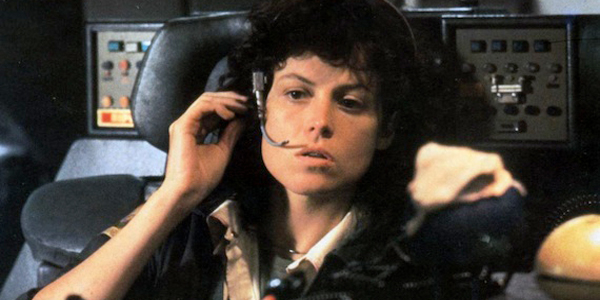
2. Sigourney Weaver €“ Ripley In The Alien Series

In the seven-member cast for 1979€™s Alien, Sigourney Weaver was the newbie. All of the other cast members €“ Tom Skerritt, Veronica Cartwright, Harry Dean Stanton, John Hurt, Ian Holm and Yaphet Kotto €“ had all starred in other films, but Weaver only had a brief appearance in Annie Hall on her résumé. Yet her fate to be the final survivor of the Nostromo started her career and gave us €œthe only woman who could open an action picture,€ according to Roger Ebert. Weaver€™s feat of being vulnerable in the quiet moments, tough and determined in the action sequences made her an instant star. Ripley was just a worker bee in the great Company, who secretly diverted her ship to an obscure planet in order to check out a new life form. Finding out that the Company considered her and her crewmates expendable, she rebelled and set out to not only defeat a fearsome creature, but the plans of the Company as well. In Aliens, she reluctantly accompanies a group of space marines back to the scene of her nightmares (and snagged a Best Actress nomination); in Alien3, she finds out that the nightmare has followed her; in Alien Resurrection her clone warns of the dangers of the yukky creatures, to deaf ears. Weaver has used her success to great effect, creating memorable characters in several films, becoming one of the few actors nominated for two acting awards in the same year (1998, Best Actress for Gorillas In The Mist, Best Supporting Actress for Working Girl). She doesn€™t mind taking comedic roles: she was a central character in the Ghostbusters franchise; and she nailed the issues surrounding women characters in science fiction shows with her turn in 1999€™s Galaxy Quest.

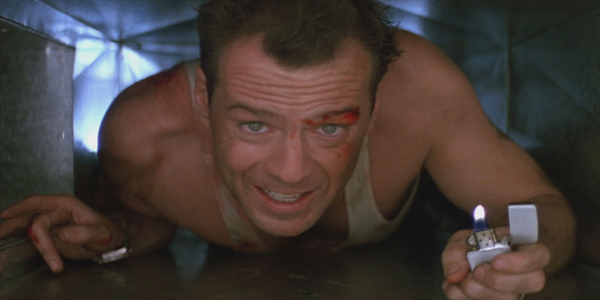
1. Bruce Willis €“ John McClane In The Die Hard Films

In the mid-1980s, Bruce Willis was primarily known as the wise-cracking private investigator David Addison on the TV series Moonlighting. But it was his turn as the rogue cop taking on a group of terrorists at the top of an L.A. skyscraper in Die Hard that changed him into one of the most bankable stars of his generation. Die Hard was based on the novel €œNothing Lasts Forever€ by Roderick Thorp, Fox was contractually obligated to offer the role to Frank Sinatra, but he refused. Arnold Scharzenegger was also considered for the role, along with a number of other action stars, until Willis was chosen. Die Hard went on to become a smash hit, and its name has become synonymous with a role featuring a solo character facing great odds. Since then, the series has spawned four sequels over 25 years, with talk of a sixth and final film in the works. Despite the critical drubbing that the fifth film, A Good Day To Die Hard, took from the press, it€™s probably not a good idea to bet against McClane€™s return.

Contributor
Contributor

Mr. Thomas is primarily a graphic artist for the San Antonio Express-News, but also finds time to write the DVD Extra blog for the paper’s website.