12 Things That Interstellar Got Right

Those aspects that Nolan's space epic got "alright, alright, alright."

After a long and exciting built-up to the release of Christopher Nolan's first flick since the controversial Batman finale The Dark Knight Rises, Interstellar - starring Matthew McConaughey, Anne Hathaway, Michael Caine and Jessica Chastain - blasted off, launched itself into the depths of space, disappeared through a wormhole and has... found itself met with middling reviews? Surely not? At least, there has been a noticeable lack of "super positive" reviews; a lot less than Nolan fans presumably expected, what with even the movie's most adamant fans - critics inducing - citing plot holes and a confusing ending amongst the many reasons why Interstellar failed to provide movie-goers with the totally immersive and modern day 2001: A Space Odyssey they'd desperately hoped for. Which means that a lot of the coverage on Interstellar over the course of the past two weeks has focused on the negative aspects - the things that the movie failed to get right. Whilst there are criticisms to be made (yes, it's true that Interstellar is not perfect), there's also a lot about Christopher Nolan's most inherently ambitious movie that deserves our gratitude, admiration and praise. Here are 12 things that Interstellar got right; those aspects we felt worked and helped to make the movie worthwhile, starting with...

12. Casting Matthew McConaughey

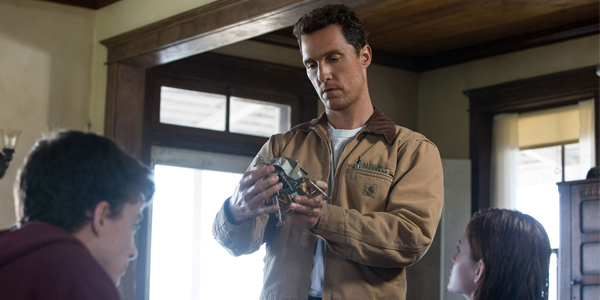
Despite the fact that some naysayers have cited Matthew McConaughey as an inherently bad choice for the central role of test pilot turned planet-finder Cooper, mainly due to the fact that his mumble-clad style of talking is ill-suited to a character tasked with unleashing so much exposition over the course of three hours, his casting actually revealed itself to be a minor revelation; he lends a real sense of gravity to the flick. McConaughey, of course, used to be the kind of actor who would irritate you for every moment he was up on screen. Then came the now-legendary McConaissance, whereupon he decided to take his career seriously, lost weight, and suddenly became the hottest actor in Hollywood. His performance in Interstellar, then, is intelligent, emotional, and - above all - believable (even if he is channelling himself in '97's Contact).

11. Hans Zimmer's Soundtrack

Hans Zimmer has been getting a lot of flack recently for the loud, bombastic nature of his film scores. And if we're totally honest with ourselves, he probably deserves some of the criticism. Presumably inspired by his blaring, horn-driven work on Inception, the loudness of Zimmer's scores have only increased in the years since. But despite the fact that his work on Interstellar is also loud, it also happens to be quite beautiful, too. Which is to say: Zimmer outdoes himself on Interstellar, crafting a solemn, beautiful and somewhat religious-sounding score that beautifully enhances Christopher Nolan's unforgettable images, as if his own work on Inception had been infused with the organ-based compositions that made Dario Argento's films famous. It might not be his best soundtrack ever, but it's certainly a step up from the stuff he's been putting out lately.

10. TARS

Whenever anybody makes a sci-fi movie these days (especially a sci-fi movie that clearly takes its inspiration from the likes of 2001: A Space Odyssey), there's an incentive to include some kind of artificial intelligence system. The problem, of course, is that we've had "bad" A.I. characters, and we've also had "seemingly bad but turn out to be good" A.I. characters. Aside from just "good," then, where else is there to go in order to keep it fresh? Fortunately, Christopher Nolan and his co-writer, brother Jonathan Nolan, successfully managed a new take on what could have been a tired trope in their own A.I. creation: by offering us TARS, an A.I built with a certain degree of self- awareness (mostly implemented by his "humour" setting), Interstellar offers up one of the most memorable robot characters in recent years; sure, he's mostly just good, but he also feels unique in the grand scheme of things.

9. Mackenzie Foy As "Murph"

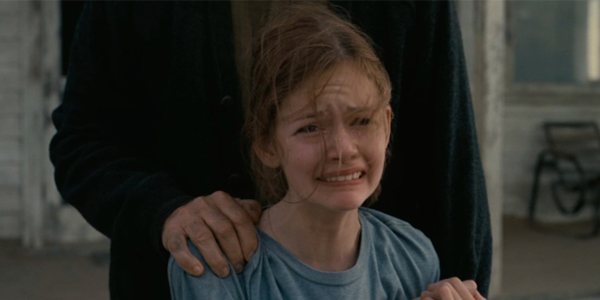
One of the best decisions that Christopher Nolan made with regards to his cast centres on young actress Mackenzie Foy, who adopts the role of Matthew McConaughey's precocious daughter, Murphy, in her younger years (later, she's played by a very good but somewhat wasted Jessica Chastain, who isn't really given a lot to do). It's a shame, however, that Foy wasn't in the picture for longer; simply put, she's swell. Indeed, it's the scenes featuring Murph that really hit the emotional beats that Nolan was clearly shooting for over the course of Interstellar, presumably as a way of combating the criticisms that have long plagued his career: that his movies lack heart. Foy has great chemistry with McConaughey's Cooper, however, and their scenes together are beautiful, humorous and genuinely heartbreaking; Foy assures she's a talent to watch.

8. The Wormhole Sequence

The moment that so many people were presumably looking forward to before getting their mitts around Interstellar was the one that actually saw our characters going into the wormhole that takes them across the span of the universe to destinations unknown. After all, said moment pretty much serves as the main hinge of the movie - it's the defining aspect that, on the surface, imbues Interstellar with its vast sense of intrigue. It's a good thing, then, that Nolan and his team managed to knock this particular sequence out of the park, rendering the Endurance's journey through time and space as a colourful, twisted and - according to a bunch of smart people - scientifically accurate vision of what such an event might look like. And that was the key to the success of this part, really: despite the speculations, it still felt like the most "realistic" vision imaginable.

7. The Production Design & Cinematography

Fact is, Interstellar truly is - on an aesthetic level, at least - Christopher Nolan's most visually impressive movie yet (better than Inception, yes!). Everything that has been rendered on the screen has been done so with a hell of a lot of love and attention to detail. What's more, Nolan knows that a film that centres on a space mission has to make us believe it's possible, ensuring that the costumes and ships are convincing. What's more, the cinematography and camera work inherent to Interstellar are absolutely fantastic. Nolan has always been a director with a keen visual eye and a skill with crafting "images" that stick in your memory long after you've experienced his films: Interstellar, with its bold, daring shots and perfect camera placements, ensures itself as a cinematic behemoth. Slate its story, but don't deny it as a visual triumph.

6. The Planets

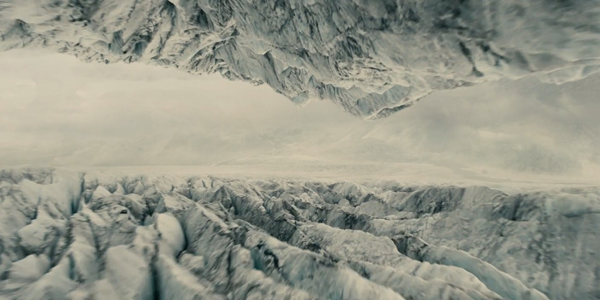
Let's face it: the other planets featured in the movie, named after the scientists who ventured to and later inhabited them ("Mann's Planet"), are cool. Although, for reasons of trying to keep things as "realistic" as possible, they're not insanely over the top in their presentation, the planets featured in Interstellar feel mostly like they could actually exist, refusing to be all out weird, zany or Star Wars-like in their execution. So we get to glimpse another world where the waves are as high as mountains, whilst another - almost Inception-like in its visuals - is so cold that the clouds have turned to ice (scientifically impossible, apparently, but it's an embellishment that we'll allow). All in all, Nolan clearly set out to render strange worlds that seems plausible when compared to our own Earth; it's fair to say that he achieved that... and then some.

5. "What The Hell? Matt Damon Is In This Movie?"
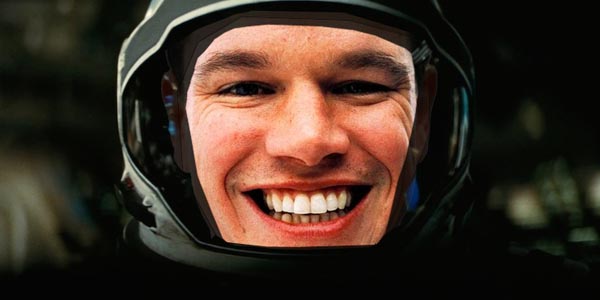
It was a rather surprisingly and actually well-kept secret that none other than Matt Damon, one of Hollywood's biggest stars, featured in Interstellar - and unless you'd scoped out a bunch of spoilerific reviews in the days before Interstellar was released in theatres, you were probably shocked the moment that Cooper and his companions arrived on a distant planet to discover that Matt Damon was in hypersleep. So it's Damon that plays Dr. Mann, the closest thing that Interstellar has to a "villain." Many have been critical of Damon's performance in the flick, which seems unfair. Renowned for playing heroic characters, it was a nice idea to mess with our preconceived notions of said actor (even if his betrayal ultimately became something of an obvious twist); Damon is genuinely creepy here - a twisted genius, afraid and totally mad.

4. The Docking Scene

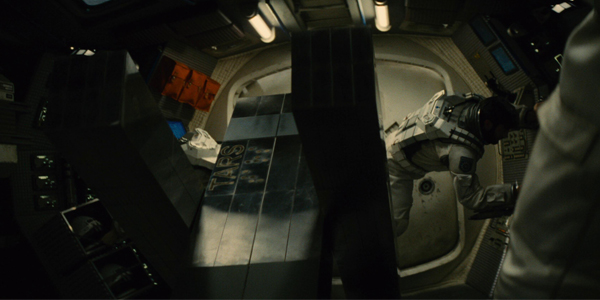
There have been complaints from movie-goers regarding the lack of "being blown away" that Interstellar ultimately offered up; a noticeable lack of set-pieces are apparent throughout, though - given the premise - it's also clear that Nolan did his best to implement as many action sequences as possible. Despite that critique, though, there's no arguing with the brilliance of the "docking" scene towards the end of the picture. This incredibly tense and beautifully shot sequence, then, occurs when Dr. Mann - as played by Matt Damon - accidently blows up part of the space station that Cooper and Amelia Brant need to get on board to return home. The explosion sends the station relentlessly spinning, upon which Cooper - defying the odds - leads a hair-brained attempt to re-dock. It's the best scene in the movie - and one that you'll have trouble forgetting.

3. Having The Guts to Tell A Different Kind Of "End Of World" Tale
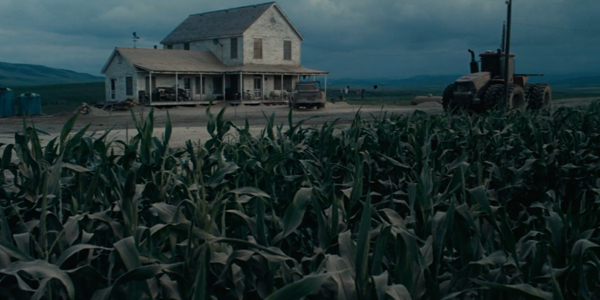
Most films that focus on the end of the world do so in a similar vein: in the realms of cinema, it's often thought that, no matter how much we destroy the world, or how little of our planet remains, there is hope, and even the smallest band of survivors can ensure that society will thrive again. And yet Interstellar looks at the apocalypse with a completely different set of eyes: it's convinced that Earth will eventually be done for. Many have argued against this cynical view of humanity, unconvinced that the human race would ever settle for leaving this planet when - instead - they'd work to ensure its survival. Still, it's rare that a movie - a Hollywood movie, anyway - will take a position along the lines of: "Earth is done for. We all have to get off this planet now, or else we're doomed." Pessimistic or not, it's at least interesting to witness this approach.

2. Its Mission To Be "Scientific"

Christopher Nolan set himself up to be highly criticised when he rambled on about Interstellar's scientific credentials from pretty much day one. And although the movie does attempt to be as "realistic" as possible, the problems start making themselves apparent when you realise that so much of what Interstellar consists of is of the fantastical nature. In other words, there's tons of stuff built around mere theories and speculation. And yet, despite that, Nolan wanted everybody to know that Interstellar hinged on lots of actual science, a point emphasised through his decision to make physicist Kip Thorne an executive producer. Of course, given Thorne's involvement, the film has come under added scrutiny from scientists who are keen to point out its flaws. But shouldn't we at least praise Nolan for even attempting to make a scientifically-minded flick?

1. It Has A Heart

Christopher Nolan's films have long been branded as "cold" and "clinical," a critique he shares with his biggest inspiration, Stanley Kubrick. So whereas movies like The Prestige, Inception and Memento all seem to exists as a means of exploring narrative structure and dumbing down emotional cues, Interstellar is a far more straight-forward affair... and as a result, it therefore stands as the most "heartfelt" of Nolan's pictures. After all, this is the first movie in the director's canon that genuinely gives you the means - and the excuse, in fact - to well up and cry. And given that the movie's timely message is, quite literally, "love is the most powerful force in the universe," it seems that Nolan has come around to his detractors. For some, it might appear to be schmaltzy as hell, but for more optimistic viewers, we witness Nolan's growth as a filmmaker. Like this article? What did you make of Interstellar? Agree or disagree with our points? Let us know your thoughts in the comments section below.

Contributor

Sam Hill is an ardent cinephile and has been writing about film professionally since 2008. He harbours a particular fondness for western and sci-fi movies.