12 Things That Were Really To Blame For Hollywood's Biggest F*ck Ups

What do Alone In The Dark and The Producers have in common?
Hollywood isn't perfect. Far from it, in fact, as the studio system consistently makes huge mistakes and idiotic decisions that have more or less sealed their fate. The constant churn of shameless remakes, reboots and adaptations might have sapped all the creativity from the business and left it a shambling husk, a zombie famished for franchises, but it's not like they haven't made bad decisions in the past. The history of Hollywood is littered with huge screw ups that exist as warnings for future travellers, like those little messages people leave behind for fellow players in the video game Dark Souls. Marketing your movie like this will ensure it fails; don't cast this one guy, he's terrible and nobody likes him any more; maybe a film about Mel Gibson and a beaver hand puppet isn't a great idea after all. That sort of thing. "Those who cannot remember the past are condemned to repeat it" and all that. Part of the reason the film execs are driven to pay attention to these past mistakes is because their paying audiences are often aware of them as well. Huge box office flops and thorough critical drubbings tend to live on in the memory of both the people responsible for them and the people who had to sit through them, after all, with many of the worst offenders passing into modern legend. People do love when Hollywood makes mistakes on an epic scale, especially if there's a juicy story to go along with it. Yes, tell us all about the studio nit-picking which caused Brazil to remain unreleased for ages! We wanna know about how awful Marlon Brando was to work with on The Island Of Dr Moreau, and how that was one of the many things that made it a terrible movie! Those stories end up being packaged along with the failures, an accepted narrative of how things go wrong during the filmmaking process. Rarely, though, is the explanation as simple as in-fighting or a crappy script. Sometimes the reasons a film fails is much more esoteric, weird or bizarre than even the gossip suggests. Hollywood has a whole lot of failures to choose from, and a lot of them happened for very different reasons than you expect. Here are twelve things that were really to blame for Hollywood's biggest f*ck ups.

12. Knight And Day Didn't Feature The Stars' Faces

"Bottom Line: Logic and plausibility take a holiday in this nonstop actioner that counts on stars Tom Cruise and Cameron Diaz to sell the nonsense." That was the general consensus (well, the consensus of Kirk Honeycutt from The Hollywood Reporter, specifically) when it came to 2010's Knight And Day, the first of Tom Cruise's multiple comeback attempts after all that Opra-sofa-leaping, Xenu-loving, epidural-denying business. It was an attempt that failed. Because nobody liked it. Well, it did okay at the box office, but not compared to Cruise's previous blockbusters. The relative flop and critical drubbing was mainly put down to the film being a bit naff €“ and it is really, really naff €“ and the continued distrust of that hysterical guy from the Scientology episode of South Park, which definitely scans. Going by the Sherlock Holmes method, that's the most logical explanation. What may have actually been the reason audiences avoided the film in their droves, though, is that the marketing geniuses in charge of advertising the film didn't bother to put either of its huge Hollywood stars €“ Cruise and Cameron Diaz €“ on the posters. Seriously. Their names appear, but no faces. Just white silhouettes. Somebody probably should've been fired for that.

11. Oliver Stone Made Alexander "Too Gay"
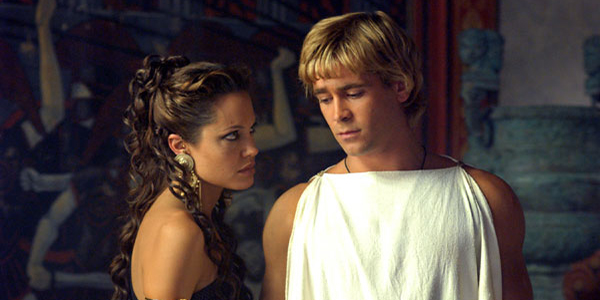
Alexander is not the sort of film Oliver Stone makes. Oliver Stone makes films for the tinfoil hat brigade, or else he's performing character assassinations on unpopular US presidents. Alexander is a historical swords-and-sandals epic about the real-life Alexander the Great of ancient Greece. Alexander is not the sort of character Colin Farrell plays. Angelina Jolie is not old enough to play Colin Farrell's mum. Val Kilmer should probably not be appearing in films full stop nowadays, unless Shane Black's directing. And yet all of these things happened in a beautiful confluence of terrible ideas which failed with the cinema-going public, failed with critics, and earned six nominations at the Golden Raspberry Awards. Historians pointed out countless factual inaccuracies in the biopic, the reviews noted all the strange casting choices, and audiences yawned at the unnecessarily epic 175 minute run time. Stone himself, true to form, dreamt up a different reason for Alexander's complete and utter failure: it was too gay. Stone blamed "raging fundamentalism in morality" for the film's US box-office failure, what with the hints at Alexander's historical homosexuality €“ something group of 25 Greek lawyers did threaten to sue the director and Warner Bros over €“ and that the reason people didn't see the movie was cos they were similarly homophobic. Yep, that'll be it.

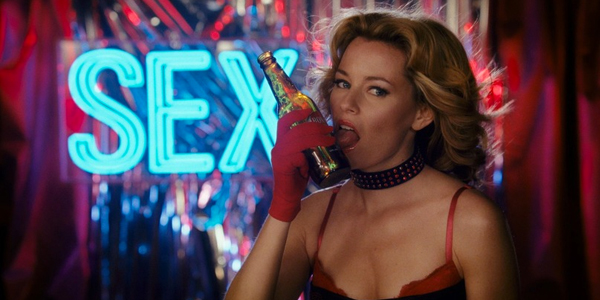
10. Zack And Miri Make A Porno Bombed Because Nobody Knew Its Name

After years developing a shared fictional universe for him and his mates to make knob jokes in, Kevin Smith abandoned his so-called €œView Askewniverse€ €“ which peaked with Jay And Silent Bob Strike Back, an in-joke-filled self-referential-fest totally inaccessible to anybody who hadn't followed the director's work from Clerks to Chasing Amy €“ in favour of what was supposed to be a much more mainstream-friendly flick. It was to star Seth Rogen, who was at the time flying high with the one-two punch of Knocked Up and Superbad. It wasn't going to be bogged down in all the recurring characters and running jokes of Smith's old films. It was going to be an Apatow-style gross-out comedy that audiences had been eating up. Sure-fire recipe for success, right? Nope. The film wasn't a total failure, but it was the worst box-office opening ever for the previously bankable Rogen, and certainly didn't manage the level of success as the Apatow stable of comedies. Which is a shame, because this is the first of these total f*ck ups that didn't deserve to be €“ it's a pretty funny, and surprisingly warm, comedy. About two broke friends deciding to get into the adult movie business. Therein lies the rub, allegedly: nothing to do with the cast, or people being sick of Rogen's face, or burn out from Kevin Smith films. It's because of the amount of cinemas, newspapers, radio and TV stations which refused to carry advertising for a film called €œZack And Miri Make A Porno€. Especially when coupled with a poster featuring the titular characters getting intimate. So instead, the movie was marketed as €œZack And Miri€ and featured two stick figures holding hands. Who wouldn't wanna see that, eh?

9. Uwe Boll's Video Game Adaptations Were Tax Scams

We will give Uwe Boll one thing €“ he addresses his critics, of which there are many. He addresses them by inviting them to box him for charity, rather than actually trying to improve his filmmaking techniques, but he addresses them nonetheless. The German director became infamous in geekdom and beyond for cornering the market in terrible, usually direct-to-video adaptations of video games. Not just terrible in the grand tradition of Super Mario Bros and the like, but truly execrable. And usually, somehow, based on the biggest titles on the market €“ somehow he's gotten his hands on the rights to Far Cry and Alone In The Dark €“ and actors who should really know better. So what's the deal? Why are the films so terrible? They go further even than the usual trouble in translation that results in duds like Silent Hill. Boll is just a crummy director (who, nonetheless, still manages to cast the likes of Ben Kingsley), and one whose work is universally reviled. That's not the whole story, however; because there's plenty of similarly untalented directors who keep getting work, albeit usually not on projects you've actually heard of. Turns out it's a lot more complicated than that €“ or not so much, if you're familiar with the plot of The Producers. Boll's scam is the exact same as the hack Broadway producers who discover a tax loophole which allows them to make more on a failed musical than a successful one, as Boll's German citizenship entitles him to significant kick backs if he makes a terrible film. Which he does. A lot. And, seemingly, intentionally.

8. Cutthroat Island's Locations Were 5000 Miles Apart

There's a concept in tinsel town which they call Hollywood Jail. And if you haven't heard of it, well, that's because they don't want you too. It's not an actual prison, by the way €“ it's a theoretical slammer directors and actors find themselves in if they make a particularly big turkey. As punishment for their crappy movie they get stuck in the €œJail€ for a sentence befitting how big a box office bomb they were responsible for, not being allowed any big-name jobs until they work their way back up and convince people they've learned their lesson. One of the longest-term occupants of Hollywood Jail was Renny Harlin €“ previously the helmer of Die Hard 2 and Deep Blue Sea €“ and it was all thanks to Cutthroat Island. Yes, Cutthroat Island, the film which held the prestigious Guinness world record for "Biggest Box-Office Flop of All Time". Movie insiders and audiences alike have spent the decades since its release picking over the wreckage and trying to figure out exactly what went wrong with the film €“ was the script terrible? Did Harlin just forget how to direct? Did the constant changes in the cast affect the production? The accepted explanation is something like a combination of all those factors. In reality, though, we think that everyone was just tired. That's because, in his infinite wisdom, Harlin decided to film Cutthroat Island on location in Malta and Thailand €“ two places which are 5000 miles apart. So not only did they waste money on travelling between the two, but the constant shuttling between such disparate locations probably didn't make for great morale on set.

7. A Dodgy Puppet Lead To ET's Cell Phone/Gun Switch
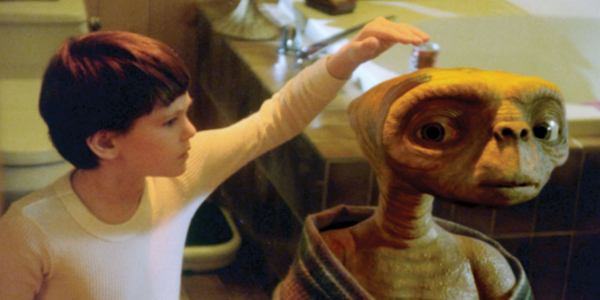
Nobody likes special editions. Anybody who claims otherwise is either insane, or else they're on the studio payroll. And yet with advances in special effects technology €“ as well as ever-lowering costs for such effects €“ it's become the go-to method of kicking a dead horse, allowing directors to go over their old movies, jazz them up a little, and then re-release them to a nostalgic audience, so they can make some easy money without going through all the hard work of actually producing something new. Not doubt buoyed by the tinkering of his mate George Lucas, Steven Spielberg decided the 20th anniversary of his sci-fi children's classic ET was the right time to fix some of the effects, mainly pertaining to the titular extraterrestrial. Great though the film is, watching the original puppet used for the alien in the 1982 release does look a bit ropey today. Which is what lead to Spielberg working on a special edition in the first place €“ he just wanted to make up for the low budget he was working on at the time. Except that lead to one of the biggest f*ck ups in Hollywood history, as €“ for some unfathomable reason €“ he decided to mess with the iconic, climactic scene in the film. Elliot and his pals manage to spring ET from his federal prison, bundle him into their bicycle basket and fly off, with the US government in hot pursuit. Said pursuit involves wielding guns and, yes, kinda pointing them at kids €“ something which Spielberg replaced with walkie talkies. A bunch of feds aiming with walkie talkies. If he hadn't already started doing the CGI thing with the alien, that never would've happened, mark our words.

6. Heaven's Gate Went For Too Much Realism

Michael Cimino's own Hollywod Jail-worthy crime was one of Hollywood's more noble failures €“ but a failure regardless. And one which marked a sea change in the film industry from the utopian auteur era that began with Easy Rider and a return of control to the studios. Heaven's Gate is one of the biggest box office bombs of all time, and in some circles has been considered to be one of the worst films ever made, opening to poor reviews and a box office return of less than $3 million, from a budget of $44 million. The film pretty much single-handedly caused the collapse of its studio, United Artists, and ensured that Cimino €“ who had previously won plaudits and a decent financial return with Vietnam drama The Deer Hunter €“ would barely work in that town again. Looking back, critics have become a little kinder about the film (whilst still complaining about the butt-numbing 219 minute run time). They've also done some significant evaluation of the film's trouble production, trying to figure out exactly what went wrong. It was mainly down to the overbearing director's perfectionism, causing the production to overrun by several months and inflating the budget to a ridiculous amount, whilst also building up the pre-release hype the film could never live up to. What really sunk Heaven's Gate, though, was Cimino's obsessive attention to detail €“ rather than using sets or locations to recreate the American frontier, he demanded an entire city being built from scratch, the entire cast being outfitted in period dress, and various other totally unnecessary things which inflated the film's cost and distracted him from what was actually important. Like making a good movie.

5. Colourisation Was All About The Benjamins

Ted Turner may not be history's greatest monster, but he certainly gave it a good old college try. He came up with CNN, the first 24 hour news channel, which we believe has received its most thorough critical analysis via Anchorman 2: The Legend Continues. He also founded WTBS, which pioneered the superstation concept in cable television. The thing he's perhaps best known for, however, is TCM €“ or, Turner Classic Movies, the channel which carries his name. The same channel which, in the mid-eighties, began the incredibly controversial practice of colourising old films. Which is exactly what it sounds like, really: taking the black-and-white films of yesteryear and using a specific computer-based process to bring them kicking and screaming into the modern age, in glorious technicolour! Or just regular colour. Which, obviously, lots of film fans weren't best pleased with (and still aren't), both from an artistic perspective and also because they new Turner's reasons for doing it were entirely cynical. To be fair, Turner had snapped up the rights to a lot of these old studio pictures €“ including The Maltese Falcon and It's A Wonderful Life €“ and, as he said, "The last time I checked, I owned the films that we're in the process of colourising," said Ted Turner. "I can do whatever I want with them, and if they're going to be shown on television, they're going to be in colour." The accepted reason for him making this decision is because, duh, people don't wanna watch stuff that looks old. Black-and-white isn't appealing to today's audiences, right? Besides, y'know, Nebraska and stuff. Turns out that was maybe half right. The audience Turner actually wanted to satisfy were advertisers, who would tend to pay a lot less money for the privilege of appearing in breaks between black-and-white films than colour. So whilst the price of colourising a film was around $300,000, they'd make like $500,000 for showing them. Plus changing the films in that way helped him assert his copyright over these old films, so who cares what Woody Allen or Billy Wilder say?

4. John Carter Had Already Been Done

One of the biggest €“ but maybe least surprising €“ box-office flops in recent memory was Disney's multi-million dollar gamble John Carter. Which sounds like the name of a boring legal drama or something, but was in fact a huge-budget sci-fi epic based on stories by Tarzan creator Edgar Rice Burroughs, originally titled John Carter Of Mars €“ and that change in title might have been part of the reason it failed so much. There was also the issue of it being Andrew Stanton's first live-action film, having previously directed Pixar hits WALL-E and Finding Nemo; that naivety may have lead to the ridiculously bloated budget John Carter eventually reached which, reportedly, would've necessitated it making "$600 million to break even...a height reached by only 63 films in the history of moviemaking". Too much money spent on making the film and not enough spent on marketing it €“ and seriously, cutting the title down to John Carter seemed like a particularly devastating misstep €“ were enough to totally sink the movie. The real reason for a f*ck up on this level, however, is one that Stanton was sort of aware of, albeit it unconsciously. Part of his assertion was that John Carter was well-known and beloved character, meaning they didn't have to spend much on marketing €“ everyone knew who this guy was! Well, Stanton was half-right. The public at large is relatively ignorant to John Carter Of Mars and the pulp novels which spawned him, but they are aware of the many, many things that the original series inspired. Elements of Burroughs' books reappeared in the works of sci-fi authors Ray Bradbury, Arthur C Clarke and Robert A Heinlein, and plot points were stolen wholesale for every big space-based movie from Star Wars to Avatar. So, really, audiences had already seen John Carter, years before it even came out. It wasn't giving them anything new.

3. Star Wars CGI Is Because Of Clumsy Stormtroopers
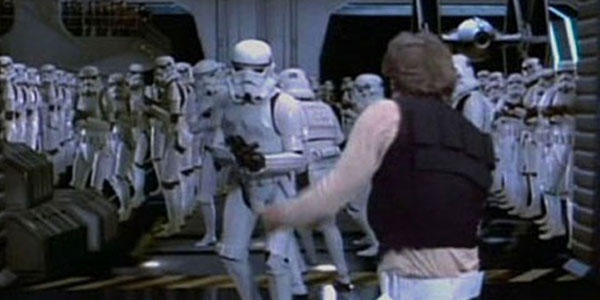
George Lucas has done a lot of insane things in his time, but the one people tend to latch onto €“ besides Jar Jar Binks €“ are the Star Wars special editions. Not only did they inspire the aforementioned terrible CGI re-do of ET for its 20th anniversary, but the new versions of Star Wars set a dangerous precedent for the over-use of computer graphics and terrible continuity-diddling that Lucas would go on to do with the Star Wars prequels. There's seemingly no end to the list of grievances hardcore fans have for the changes Lucas made in the special editions, from the cluttering of perfectly fine scenes with unnecessary CGI aliens to bolster the practical effects to, well, Han shot first. Han shot first. Let us repeat that again: Han shot first. And presumably all this happened in the first place because shrewd businessman Lucas was following the Turner model, wanting to be able to release a €œnew€ version of films he made twenty years prior and make money off them, which was much easier than actually making new stuff. Partly that, anyway, and partly just him being a weird perfectionist who can't leave well alone a bunch of films that were totally fine as they were. It's one of the reasons that Lucas has gone from nerd royalty to geek public enemy number one, as most fans tend to attribute the special editions to a combination of the director's vanity and greed €“ but the actual explanation is far more prosaic. https://www.youtube.com/watch?v=dBQaLuqwtl8 And the person you should be blaming was the clumsy extra who played the Stormtrooper who, rather infamously, clonked his head on a doorway whilst walking through, a favourite of every one of those crummy movie mistakes programmes they show on BBC Three when they're run out of Family Guy episodes. It became a running joke in pop culture, an embarrassing blooper that somehow ended up in the finished film. So, rather understandably, when Lucas got the chance to edit out that little boo-boo, he did so. But then he realised he could change other things, too, and that's when everything started to get really f*cked up...

2. The Palestine Liberation Front Hijacked Ishtar

Heaven's Gate is synonymous with the huge Hollywood f*ck up, but at least time has been relatively kind to Michael Cimino's flawed historical Western, with modern critics re-evaluating it and discovering a near-classic when removed from the gossip and hearsay of the time. Ishtar is another one of those films that acts as a stand-in for €œmovie disaster€, albeit one that nobody has ever gone back to and tried to hold up as a lost classic. Nobody likes Ishtar. Nobody liked it at the time, and nobody likes it now. It's hard to pinpoint exactly where this big-budget comedy first went wrong €“ was it casting Dustin Hoffman and Warren Beatty against type, with the former as the straight man and the latter as the comic relief? Was is the premise, with the pair playing hapless lounge singers who somehow stumble into a four-party Cold War standoff? Is it just that the script was dreadfully unfunny? Was it director Elaine May's Cimino-esque demands? Once again, conventional wisdom states it was D €“ all of the above. The film is, in the words of Roger Ebert, €œtruly dreadful€. May frequently clashed on-set with Beatty, who was also the film's producer, over creative differences. Then a change in studio management during post-production messed things up more. The real culprit for why Ishtar turned out as such a dreadful mess is actually a little less obvious €“ it's the Palestine Liberation Front. May had insisted Ishtar actually be filmed on location in Morocco which, considering the high political tensions in North Africa at the time, was a terrible idea. The week shooting began Israeli warplanes had bombed the Palestinian Liberation Organisation headquarters and, seven days later, the Palestine Liberation Front responded by hijacking a cruise ship, executing an elderly Jewish-American man. There were rumours that Hoffman might be in the PLF's sights, too, which €“ along with the Moroccan military ongoing fights against guerrillas at the time meaning locations had to be checked for land mines before shooting €“ probably didn't make for the best set. Certainly not the most relaxed. Everyone involved was probably more concerned with not dying than making a decent film. Understandably.

1. It's A Wonderful Life Was Forgotten Because The License Cost Too Much
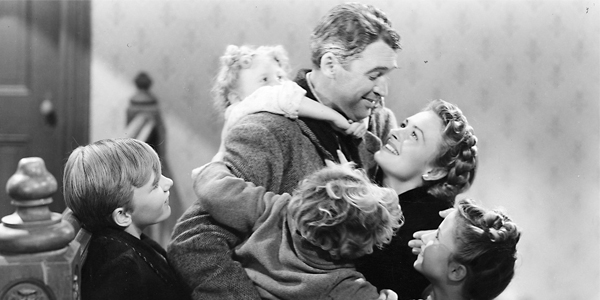
Everybody loves It's A Wonderful Life, don't they? How could you not, honestly, when it's such a heartwarming €“ although, given the grim tone most of the film has, deceptively so €“ film and a hardy Christmas perennial that no image of the festive season is complete without. There's presents, turkey, stockings, and James Stewart threatening to kill himself by drunkenly jumping off of a bridge. The film has become so ingrained in popular culture that a Christmas without it doesn't bear thinking about. Frank Capra's movie is smart, sentimental, charming yet (sort of) realistic €“ It's A Wonderful Life is not only a perfect Christmas flick, but a perfect film period. Which is why it's one of Hollywood's all-time greatest f*ck ups that it nearly disappeared forever, not long after its release. It's A Wonderful Life is considered one of the most critically acclaimed films ever made. It was nominated for five Academy Awards including Best Picture and has been recognised by the American Film Institute as one of the 100 best American films ever made. Things were a lot different in 1946, however, where it barely managed to break even and was a textbook example of a box office flop, with lukewarm reviews not helping much. So how did such a thoroughly underwhelming film end up achieving its rightful place in the hearts and minds of audiences across the globe? Well, the botched release of It's A Wonderful Life was a pretty big f*ck up, but it was another f*ck up that wound up saving it. Somebody screwed up at some point in the seventies and forgot to renew the copyright on the film, which lead to Ted Turner getting his greasy colourising palms on it, but also meant that the movie entered public domain €“ so anybody could show it, without paying royalties. Which is how it ended up in the regular rotation of local TV stations across America, which eventually lead to it being rediscovered and considered one of the best movies ever made. At least this f*ck is one with a happy ending. Kinda like the film itself, now that we mention it...

Contributor
Contributor

Tom Baker is the Comics Editor at WhatCulture! He's heard all the Doctor Who jokes, but not many about Randall and Hopkirk. He also blogs at http://communibearsilostate.wordpress.com/