12 Video Game Movie Lessons The Last Of Us Adaptation Must Learn To Not Suck

12 major pitfalls that video game movies fall into and The Last Of Us must avoid.

Of all the things Hollywood can't seem to get right, is there anything with more troubled a history than the video game adaptation? Over the last twenty years, enterprising movie studios have tried to get it right in much the same way as they have with comic book adaptations, but to date, not a single one has been embraced by the general movie community as well as by fans of the source material themselves. We've had a few "close, but no cigar" moments, though the majority of the efforts to date have been nothing short of awful. What is it about adapting video games that's so difficult? A few general problems are apparent from the outset: video games borrow many of their story elements from the world of cinema, and so when filmmakers simply attempt to re-adapt that storyline to the big screen, it may come across as hackneyed and cliched. Then there's the fact that screenwriters have to awkwardly fill the gaps in story with their own ideas to pad the thing out to feature length, whereas, of course, the game would have players actually playing for most of that time. Then there's the overwhelming feeling that movie studios don't have a lot of respect for the medium as a whole, nor the audiences who shell out to watch these movies. Granted, most video games adapted to movies so far were never high-art in the first place, but there is room in the world for those games with true artistic merit: the likes of Shadow of the Colossus and, as was announced just last week, The Last of Us, which is to be produced by Sam Raimi himself. We're going to look at 12 major pitfalls that video game movies fall into, and if we've missed any big slip-ups, please feel free to add your own suggestions in the comments!

12. No Pointless 3D - Silent Hill: Revelation

Expectations were already pretty low for this $20 million sequel to arguably the best video game movie to date, Silent Hill (which had a budget of $50 million), but the addition of a garish 3D presentation did little to help matters. You see, Silent Hill may have grotesque monsters and a terrifying, persistent, blade-totting enemy called Pyramid Head, but Silent Hill has always been about psychological terror and minimalist scares over major bombast, though the makers of this movie failed to realise that fact. Instead, they decided it would be a good idea to have as much flying out of the screen at the viewer as possible, which combined with the low budget made it look both silly and amateur. There's a certain irony in that video games themselves are an art form more inherently suited to 3D due to their interactive nature, whereas three-dimensional movies tend to be incredibly hit and miss. While studios will be unlikely to make a 3D Last of Us movie, they misjudge video games so often that it's not totally outside the realm of possibilities.

11. Make It R-Rated - Mortal Kombat

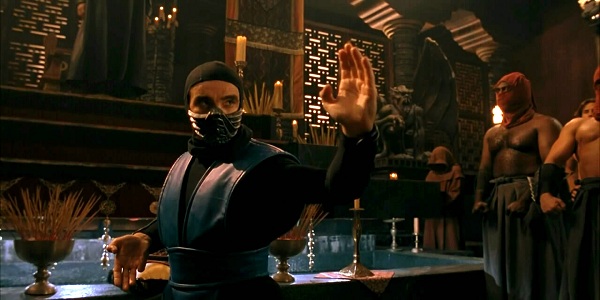
This should be a given. The Last of Us is a mature, dark story about survival in a harsh, post-apocalyptic American landscape, and it's sure not pretty. However, movie executives, being well aware that most violent video games are played by a lot of teenagers, try to sneak as many video game movies as possible through with a PG-13 rating, the idea being that this will generate them more revenue, regardless of how badly it ends up butchering the source material. Just look at Paul W.S. Anderson's Mortal Kombat: it captures plenty of the imagery of the video games, but is totally hamstrung by its meek PG-13 rating, which means the movie cannot include surely the most iconic and important part of the video games: the gory fatalities. Simply, if The Last of Us is PG-13, be very afraid.

10. An A-List Cast Isn't Everything - Super Mario Bros.
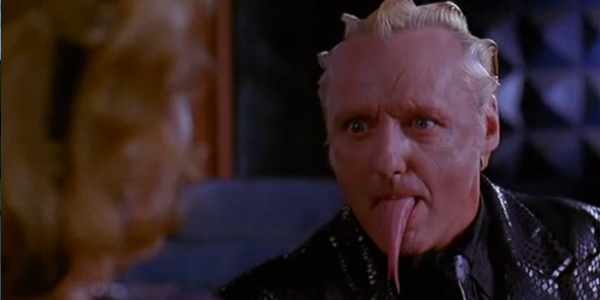
Movie executives instantly assume that throwing a few A-list names onto a project will give it greater commercial viability, but that just isn't the case, as these movies have shown time and time again. The infamously awful Super Mario Bros. movie starred the established likes of Bob Hoskins and Dennis Hopper, as well as younger, on-the-rise talents like John Leguizamo and Samantha Mathis, yet was a colossal box office bomb and critical failure. Then take Prince of Persia: The Sands of Time, which had a cast including Jake Gyllenhaal, Gemma Arterton, Ben Kingsley and Alfred Molina: what's not to like? Though the movie performed considerably better than Super Mario Bros, it was still a commercial disappointment, making it clear that stars do not a movie make, especially if they don't at all resemble their video game counterpart, as was the case with Gyllenhaal's Prince "Dastan".

9. But Casting Is Something - Alone In The Dark

That said, it never hurts to get name actors, appropriate actors and more to the point, good actors on your side, a rule director Uwe Boll (who we'll be hearing a lot about in this list) totally disregarded with Alone in the Dark, regarded by many as the worst video game movie ever made. Christian Slater is a fine actor when he wants to be, though he was fundamentally miscast as protagonist Edward Carnby: he just wasn't what I imagined from the video games. Then there was the ridiculous decision to cast Tara Reid as his female cohort from the games, Aline Cedrac, a young, whip-smart academic. Seeing Tara Reid kitted out in a lab coat and glasses is laughable from the outset, due to both Reid's terrible performance and the fact that, well, seeing Tara Reid playing a genius requires a mind-melting suspension of disbelief. Examples of good casting in video game movies? The Rock as the protagonist of Doom, and Radha Mitchell made for an excellent lead in Silent Hill, even if her character was essentially reinvented for the movie and looked nothing like the game's equivalent, the very male Harry Mason.

8. Don't Forget The Action - Max Payne

If there was one thing a Max Payne movie was surely going to get right, it was the action, right? For all of the reservations I had about the casting (particularly Mila Kunis as Mona Sax), the visuals looked outstanding, and it seemed like director John Moore would deliver the action in spades. Incredibly, Max Payne somehow skimped on the action, instead indulging in too many dull, poorly acted dialogues and featuring roughly 10 minutes of shooting and dodging in total. This, for a video game primarily concerned with murdering gangsters in slow motion? At least The Last of Us isn't a kill-a-minute game, and as such overloading it with action would be wholly inappropriate, but while the movie goes about building atmosphere and characters, it also needs to remember the more basic elements of the trek.

7. Accommodate Audiences Who Haven't Played The Game - Silent Hill

Silent Hill has done the best job of any video game movie to bring the game's story to the big screen, but even that suffered a few hiccups. While the first half of the movie was a near-perfect representation of the game, things took a turn for the worse near the end, as the resolution became confusing even for fans of the games. As for anyone watching who had never touched them, it's difficult to imagine how they coped at all: it really relied on viewers knowing the story of the first game inside out and then just drawing their own sort-of conclusions. A good adaptation of anything will function on its own merits, entertaining both fans and those who've never even heard of the source material. Thankfully The Last of Us isn't rooted in dense mythology or convoluted supernatural nonsense, so it shouldn't be difficult to make it an accessible post-apocalyptic odyssey.

6. Don't Let Uwe Boll Near It - Any Uwe Boll Movie Ever

Uwe-boll-finger Uwe Boll has spent the last decade making everyone else's terrible video game movies look like Oscar caliber masterpieces compared to his own: House of the Dead, Alone in the Dark, Bloodrayne, Dungeon Siege, Postal and Far Cry. These are the video game franchises he somehow managed to get his dirty mits on and run into the ground with his horrendous direction, even if the primary problem really is that Boll has never had a decent script to work from (but his direction sucks, too). Obviously Screen Gems would never hire a filmmaker as infamously inept as Boll to work on their high-budget Last of Us adaptation, but given how long studios let Boll get away with so much, you can't seem to leave anything to chance with these people. The director famously referred to as "the toilet Boll" thankfully has mostly stopped making video game movies now, unless you count his In the Name of the King movies, which are about as loose an adaptation of the Dungeon Siege video game as you can possibly get.

5. A Little Humour Goes A Long Way - Street Fighter: The Legend Of Chun-Li

Street Fighter: The Legend of Chun-Li is a real curiosity. Despite being a terrible film, it is, by most apparent filmmaking standards, a better movie than the tragic 1994 Jean-Claude Van Damme-starring effort, but its major fatal flaw is that it's just too serious. Every scene is played with a bizarre solemnity, making the campy 1994 version endlessly more watchable due to its sheer comic value: this movie, with its complete lack of intelligence and wit, is just a boring slog to get through. The Last of Us shouldn't be a laugh-a-minute outing, but it also needs to have some levity and gallows humour in light of the supreme challenges Joel and Ellie face. Most of this should occur during the banter between the two characters over the course of their travels, while not overpowering the general seriousness of the story.

4. Don't Change Plot Points Unnecessarily - Doom

A major bugbear for most video game adaptations is that they change plot points for the sake of it, as though egotistical filmmakers feel the need to imprint their own creativity on a franchise and make it "their own". By and large, Doom is a fairly middle-of-the-road video game movie: it's neither terrible nor particularly good, but one major annoyance was the superficial change made to the story. Whereas in the video games, the monsters come about by way of a portal to Hell, in the movie this was changed to a virus, as though somehow audiences would buy a virus but not be able to get on-board with Hell, despite Doom being one of the most popular video game franchises in history? Give me a break. The Last of Us doesn't indulge in any insanely unrealistic plot points, so as long as the Cordyceps Brain Infection is kept in tact, there's not really much of a reason for the movie to deviate from the main plot points of the game.

3. Hire A Director Who Actually Plays Video Games - Prince Of Persia: The Sands Of Time

Mike Newell This seems to be a common problem with video game movies: the studios hire someone who clearly isn't a fan of the source material, and more to the point, may not even be a player of video games themselves. The most outrageous instance of this came from director Mike Newell, who admitted that while preparing to direct Prince of Persia: The Sands of Time, he (somewhat unsurprisingly) had not played the video games, and instead had his assistant play through the series to give him feedback, which is pretty far from ideal. To be fair to Newell, he did a pretty decent job with the material he had, but do we really want directors approaching 70 years of age, who may not "get" video games, to be actively approaching this sort of material? Of course, we really just want the best director for the job regardless of age, but it's much easier to trust a young-to-middle-aged director who is a card-carrying fan of the source material to deliver a faithful adaptation, assuming they can actually direct in the first place.

2. Give It The Budget It Deserves - Any Uwe Boll Movie

If there's one thing Uwe Boll's video game movies have proven above all else, it's that you can't make these movies on the cheap, or more to the point, you can't make these movies properly on the cheap. Even ignoring the terrible scripts and shoddy direction of his movies, they fall flat on a production design standpoint: the sets look like something a high school student mocked up over a weekend, the make-up effects are little better, and of course, with only $12-15 million, you're not going to be luring in the most lucrative names in Hollywood now, are you? If movie studios are actually serious about tackling video games (which most of the time it seems they aren't), they need to put their money where their mouths are and commit to a serious budget. The only high-budget video game movies to date to really take off with audiences are the Resident Evil films, which now receive budgets approaching $70 million and reliably make that budget back many times over. The Last of Us budget needs to be at least $50 million, though at the same time, movies like Tomb Raider, which incredibly cost $115 million to make, prove how dodgy Hollywood accounting can bloat a product and leave it no better at the end.

1. Actually Adapt The Video Game - Resident Evil

It's the most basic aspect of a video game movie and yet the one that so many get wrong: if you're going to adapt a video game movie, actually adapt the video game! Look at the Resident Evil movies: the first one is almost totally unrelated to the first game, and realising how much this annoyed fanboys, Paul W.S. Anderson did try to introduce elements from the games in later movies with a certain randomness, which just made them even messier and less comprehensible. Ironically, the first Resident Evil movie is the only good one despite having little to do with the games, but had a director who actually respects his target audience taken the franchise on, this wouldn't have been the case. Another example, albeit one that's far more acceptable, is Final Fantasy: The Spirits Within, which basically bears the Final Fantasy brand name but has nothing to do with anything we've seen in any of the games. Don't cynically lure gamers in with the promise of bringing their favourite series to the screen while never intending to deliver: either commit to the original vision or don't bother at all. Are there any pointers we missed? Let us know in the comments!

Contributor
Contributor

Stay at home dad who spends as much time teaching his kids the merits of Martin Scorsese as possible (against the missus' wishes). General video game, TV and film nut. Occasional sports fan. Full time loon.