15 Most Irritating Subplots In The Dark Knight Trilogy

From time-wasting plot MacGuffins to lame romances and every annoying subplot in-between...

There's no point denying the influence and impact of Christopher Nolan's acclaimed box office behemoth that is The Dark Knight Trilogy. It cemented the director's stature as one of Hollywood's most talented filmmakers, and reinvented Batman for a whole new generation, while at the same time distancing fans from their painful memories of Joel Schumacher's Batman And Robin. As far as blockbusters go, there are few that meld style and substance so well, but as they say, nobody's perfect. As entertaining and thoughtful as Batman Begins, The Dark Knight and The Dark Knight Rises are, however, they're not without their flaws, as evidenced by these 15 irksome subplots which simply drag each film down several pegs and detract from the fun. Batman Begins certainly feels like the most narratively water-tight of the three films in many regards, and hence doesn't show up much on this list, whereas the decidedly more ambitious and large-scale sequels are rife with bloated interludes intended solely to distend the run-time and evoke a more sprawling canvas. From side-stories that make little narrative sense to lame love stories, overlong divergences that just waste screen time and everything in between, here are the 15 most irritating subplots in The Dark Knight Trilogy.


15. Bruce Goes Broke (The Dark Knight Rises)

The Subplot: Bane breaks into the Gotham Stock Exchange near the start of the movie and uses Bruce's fingerprints (acquired by Selina Kyle) to perform a transaction which bankrupts Bruce, causing him to be relieved of his position at Wayne Enterprises, resulting in custody of the fusion reactor project shifting to Miranda Tate, who of course is really working for Bane as Talia al Ghul. Why It's Irritating: Aside from being a hilariously convoluted way to get the fusion reactor in Bane's hands, the whole bankruptcy thing just doesn't make all that much sense. If terrorists attacked any stock exchange in the world, trades would be frozen to safeguard against exactly this kind of activity. Bruce would not have lost a single dime, and even if the trade had somehow been processed, it would have been reversed in mere hours when the market was re-opened. It's annoying because it treats the audience like morons. Sure, you could argue that debating stock exchange regulations misses the point of the scene, but it plays out like a teenager wrote it.

14. Kidnapping Lau From Hong Kong (The Dark Knight)

The Subplot: After shady accountant Lau escapes to Hong Kong in order to secure the Mafia's money pot and prevent himself from being captured by Gotham PD, Batman travels to the country and kidnaps him, bringing him back to the U.S. and dumping him on Gordon's doorstep. Why It's Irritating: Because while it's impressive from a visual perspective, it's a bloated side-story that simply pads the movie's run-time out by another 10-15 minutes. There's not really much of a narrative reason for it, other than to add an exotic location into the mayhem and serve up a little more action. It takes viewers away from the far more interesting Joker plot, and is largely pointless other than to justify part of the huge budget.

13. Bruce & Miranda Hook Up (The Dark Knight Rises)

The Subplot: After Bruce loses his fortune, Miranda Tate shows up at Wayne Manor and the two end up having sex. This, of course, is just part of her lure, to get close to Bruce before revealing her true colours later on. Why It's Irritating: Because it's completely unnecessary considering that the movie already has the Bruce-Selina love story to juggle. Miranda can still double-cross Bruce without screwing him first and it would have the same level of impact, plus the brief scene of the two lying by a roaring fire with silk bedding is incredibly corny and feels like it belongs in a totally different film. It reeks of a lame attempt to prevent audiences from guessing that Miranda might be a baddie, and it doesn't work at all. It just adds more minutes of screen time onto an already extremely long film.

12. Batman's No-Kill Rule

The Subplot: Throughout The Dark Knight Trilogy, numerous references are made to Batman's no-kill policy, that he will not kill any criminals in the pursuit of justice. He will leave them to be dealt with by the law, and this is remarked by several villains throughout the series, such as Ra's al Ghul and The Joker. Why It's Irritating: Because Batman kills many people throughout these movies, and Nolan treats it like it's no big deal. In Batman Begins, numerous members of the League of Shadows are presumably killed in the burning monastery (admittedly before he became Batman), he brings about the means for Ra's al Ghul to die at the end of the movie. He also kills Two-Face at the end of The Dark Knight, and he causes the accident that kills Talia al Ghul at the end of The Dark Knight Rises. It isn't Bruce's flagrant abandonment of his no-kill rule that's annoying, but simply that Nolan doesn't engage with it in any of the scripts. This seems to suggest that in Nolan's eyes Batman doesn't really kill anyone because it's always morally justified, which seems like a cheat, given how black-and-white Batman's policy was in most of the comics.

11. Commissioner Gordon's "Death" (The Dark Knight)
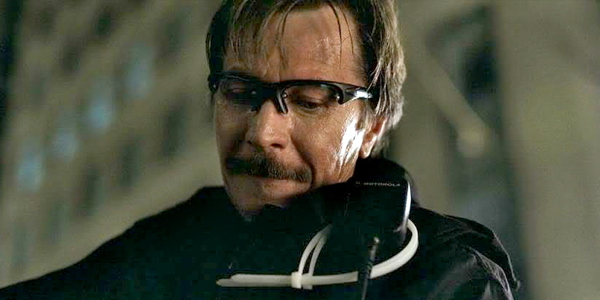
The Subplot: At Commissioner Loeb's funeral, a gun salute is taking place, when one of the soldiers (The Joker in disguise, without his usual make-up) takes aim at Mayor Garcia. Gordon rushes to protect him, however, and gets hit by the stray bullet, apparently being killed. Of course, during the street showdown between The Joker and Batman later on, Gordon captures The Joker and reveals that he faked his death all along, much to the anger of his wife, Barbara. Why It's Irritating: Because if you'd seen the trailer more than a few times, you probably knew that Gordon wasn't really dead. From the very first trailer, it was clear that Gordon was still alive when The Joker is put in jail, so the movie's marketing essentially ruined what could have been a decent twist, but in actual fact just seemed kinda insulting to audiences. As soon as Gordon "died", most attentive viewers had to just sit back, roll their eyes and wait for the unsurprising reveal that, yep, Gordon's alive.

10. The Bruce-Rachel-Harvey Love Triangle (The Dark Knight)
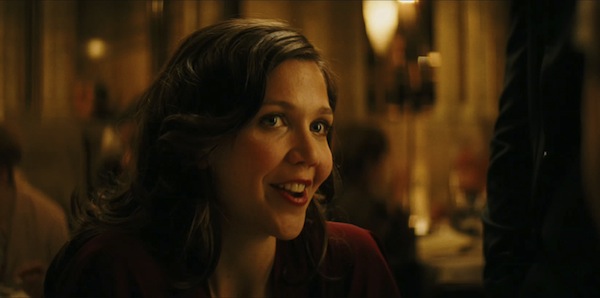
The Subplot: At the end of Batman Begins, Rachel tells Bruce that she can't be with him until Gotham doesn't need Batman anymore, and while she's dating Harvey Dent in The Dark Knight, she's conflicted over whether to marry him as she clearly still has feelings for Bruce. However, after Bruce allows Dent to "admit" to being Batman, Rachel finally makes her decision to marry Dent, and after she dies in The Joker's bomb trap, Alfred refrains from letting Bruce know about this (at least until the events of The Dark Knight Rises). Why It's Irritating: Even ignoring the mean-spirited jokes about why Bruce and Dent would ever fight over someone as "plain" looking as Rachel, the whole love triangle subplot plays out like a limp soap opera storyline and exists solely to give Dent a reason to become Two-Face and Bruce a reason to be mopey. Rachel herself is barely defined as a character at all beyond being a damsel-in-distress for her two potential suitors to save, and frankly, her death would have had the same emotional impact even if Bruce and Rachel were completely distant in a romantic sense.

9. John Blake Knows Batman's Identity (The Dark Knight Rises)
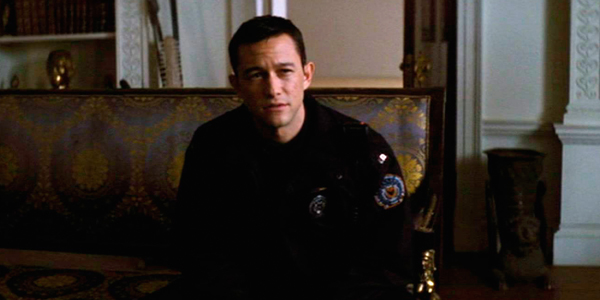
The Subplot: Early on in The Dark Knight Rises, rookie cop John Blake visits Wayne Manor to talk to Bruce, and soon enough intimates that he knows his superhero identity. How? Because when Bruce visited Blake's children's home once, he had an unmistakable feigned smile that immediately turned him onto the fact that he was hiding his true self, and more specifically, that he really was Batman, as his fellow residents of the home had joked about. Why It's Irritating: Because it's an incredibly clunky way for Blake to find out that Bruce is Batman, and there surely had to be a better way to do it. It's such an awkward dialogue that most viewers struggle to completely understand it the first time they hear it, because it just sound so ridiculous and such a lame way for Bats' cover to be blown. Thankfully this subplot is at least over in just a few minutes, unlike most of these entries...

8. Detective Work (The Dark Knight)

The Subplot: At a crime scene early on in the movie, Batman removes an entire chunk of a wall in order to retrieve a bullet and hopefully find a usable fingerprint. He runs the block through a computer to scan all the shattered fragments of the bullet, and then performs ballistics tests in order to replicate the exact conditions of the bullet shattering in order to ascertain the spread pattern of the fingerprint on the bullet. Phew. Why It's Irritating: While it can barely be characterised as a subplot, it's a several-minute divergence that, aside from adding more needless minutes to the screen time for a relatively minor plot detail, doesn't make a lick of scientific sense. The heat of the bullet being fired would burn the fingerprint (which is largely comprised of oil from the skin) off, not to mention that the shards of bullet would be severely warped from the impact rather than merely being shattered fragments. Sure, suspension of disbelief is one thing, but this isn't just absurd, it's also pretty pointless beyond actually giving Bats a little detective work to do for once.

7. Gordon Not Figuring Out Batman's Identity

The Subplot: One of the key subplots throughout The Dark Knight Trilogy is that despite working with Batman, Jim Gordon never figures out his real identity. Of course, he eventually discovers the truth at the end of The Dark Knight Rises, when Bruce spells it out for him with a neon signpost. Why It's Irritating: Audiences are supposed to believe that Gordon is this great detective, yet he can't even figure out the blindingly obvious truth that practically everyone else in the entire movie already has. As such, while the exchange where Gordon finally finds out Batman's identity is meant to be this pivotal, emotional moment, its obviousness renders the scene unintentionally hilarious as Gordon says, "Bruce Wayne!?", as though he's really saying, "Water is wet!?"

6. DIY Back Repair (The Dark Knight Rises)
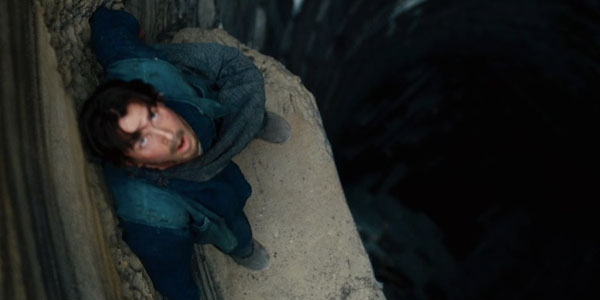
The Subplot: After Bruce has his back severely injured by Bane, he ends up in a secluded, underground prison, where one of the prison's doctors performs a little DIY surgery by punching the protruding vertebrae back into place and then hanging Bruce from a rope in order to straighten his spine out... or something. After spending three months in the pit being rehabilitated, Bruce manages to make the treacherous climb out and is seemingly completely healed. Why It's Irritating: It's just totally ridiculous to suggest that a major back injury could be properly healed in such a short time without any of the wonders of modern medicine. Plus, there's a good chance that the rope trick would just aggravate the injury, and even if it didn't, there's no chance it would make Bruce as good as new in just a few months. He'd go back out and just get pulverised by Bane again. This one's tough to ignore given how it forms a huge part of the movie's mid-section, and is really quite laughable.

5. The Clean Slate MacGuffin (The Dark Knight Rises)

The Subplot: Selina Kyle initially agrees to steal Bruce Wayne's fingerprints in exchange for a copy of the Clean Slate program, which can be used to erase a person's identity from every database on the planet. Though John Daggett reneges on his promise to Kyle, Bruce gives her the program on a flash drive after returning to Gotham, allowing her to wipe herself off the map in exchange for help securing Gotham. Why It's Irritating: In case you're not aware, the term "MacGuffin" was popularised by Alfred Hitchcock in order to explain an item of some kind that initially appears important in a movie's plot, but ultimately has little bearing in the overall outcome and is typically spoken about in only vague terms. That pretty much defines the Clean Slate tool to the letter: it is largely irrelevant to the central plot beyond a few cursory moments, and given how bloated the movie already is, is completely unnecessary.

4. The Ferry Trap (The Dark Knight)

The Subplot: Late in the movie, The Joker rigs two ferries with explosives, one containing civilians and the other prisoners and prison staff. Each boat has the detonator for the other ferry, giving each side a chance to blow the other sky high to save themselves, because if they don't, both will explode at midnight. In the end, neither ferry ends up blowing the other up, and Bats vanquishes The Joker's plot to blow them both himself. Why It's Irritating: Because Nolan clearly feels like he's making a profound statement about the good of humanity, but really, it's pretty damn hokey. In reality, everyone would have been scrambling for the detonators and probably set them off without a second thought, and so seeing the big, burly prisoner throw the detonator out the window felt like a heavy-handed way for Nolan to try and highlight the apparent "inner good" of people, which is just laughably earnest. Or is this assessment just overly pessimistic and cynical?

3. Bruce Goes Howard Hughes (The Dark Knight Rises)
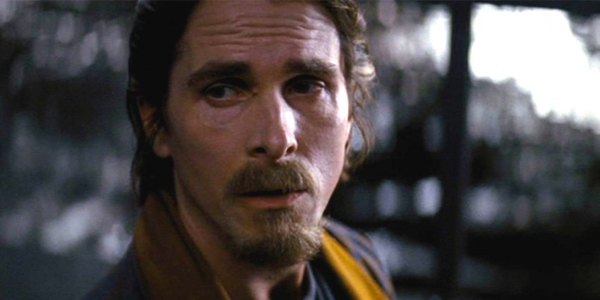
The Subplot: The Dark Knight Rises begins 8 years after the previous film, with Bruce Wayne now a Howard Hughes-esque recluse, still consumed with grief over Rachel's death and rarely leaving Wayne Manor. He also has numerous health issues following the end of his Batman tenure (such as having to walk with a cane), and spends most of his days walking around in his dressing gown with unkempt hair, while Alfred waits on him. To the outside world, he's an eccentric shutaway who the rich love to gossip about at parties. Why It's Irritating: While not an inherently awful idea per se, that Bruce is still so broken up about Rachel's death so long after the fact is a bit much, and having to devote the entire first act to bringing Bruce back out of retirement largely accounts for why the film runs so damn long. Plus, the development of all these injuries seems a tad over-the-top given that he seemed in relatively OK shape after taking the tumble at the end of The Dark Knight.

2. Gotham PD Gets Trapped Underground For 3 Months (The Dark Knight Rises)

The Subplot: Part of Bane's plan involves trapping the overwhelming majority of the Gotham City Police Department underground via a series of controlled explosions. The cops are trapped there for three months before being freed, with Bane and his mercenaries keeping them fed and watered apparently in order to keep them hopeful of rescue before he blows the city to smithereens. The few remaining cops on the outside routinely drop messages through the sewers to keep up a loose line of communication. Why It's Irritating: Because it's so hilariously absurd that such a large number of a city's police force could ever be trapped at one time. Even ignoring that, Bane's painstaking efforts to keep them alive are additionally ridiculous, when it would have been decidedly less effort to just let them starve and dehydrate to death. That these guards, presumably having survived on minimal food and water and having seen no sunlight for three months, are then in any condition to fight Bane's mercs is the last straw. It's just too damn silly. It would've made more sense for all the cops trapped underground to die and a small, slowly-gathering group of resistance fighters who avoided getting trapped rising up to fight the mercs at the end of the movie.

1. Foley Gets His Courage Back (The Dark Knight Rises)

The Subplot: Peter Foley is Gotham's Deputy Police Commissioner who leads the resistance against Bane when Gordon is out of commission and most of the police officers are trapped underground. However, he eventually loses his nerve and decides to stay home, but after seeing the Bat signal ignited in fire, he decides to dress up in his military uniform and join the resistance fight against the mercenaries. Though Foley helps tremendously with the fight, he ends up killed. Why It's Irritating: Because Foley is such an annoying character from the start of the movie, and his turn to the good side is just so predictable. It's also kinda cheesy to see him running out in his "dress blues", and of course, because he was an a** earlier in the film, he has to die. Nobody cares about this guy in the first place, so having him be redeemed just doesn't really matter to anyone, and again, just distends the run-time even further. Which subplots in The Dark Knight Trilogy annoyed you the most? Shout it out in the comments!

Contributor
Contributor

Stay at home dad who spends as much time teaching his kids the merits of Martin Scorsese as possible (against the missus' wishes). General video game, TV and film nut. Occasional sports fan. Full time loon.