15 Underrated Movie Remakes That Deserve Another Look
We're often too quick to judge, especially when it comes to remakes...

There's a consensus among film fans that certain films just shouldn't be remade, and a lot of the time this is correct. Many beloved classics have been remade and, surprise surprise, they're not nearly as good as the original, they bomb and they're dragged across the critical hot coals. But that doesn't necessarily mean they should be banished for good.
Some remakes do well from a bit of a time out, for everyone to get used to their existence and start seeing them as an entity in their own right, divorced from the films they're based on. Some are good, harmless fun; have something more relevant to say now; are artistically significant in their own right; actually improve on the originals in certain areas; and were unfairly and lazily dismissed in the first place.
Not all of them are exactly masterpieces, and none can be said to be outright better than the original, but they all pack a good reason to return to them and take another look. Thus, casting as wide a net as possible across genres and periods, here are 15 underrated movie remakes that are due a rewatch.
15. The Omen (2006)

Given Richard Donner’s beloved original Omen (1976) sparked a whole franchise and made Damien “the Devil’s Son” Thorn a household name, remaking it was always going to be a big task. Even with a stacked cast comprising Julia Stiles, Liev Schreiber, Michael Gambon, Mia Farrow, David Thewlis and Pete Postlethwaite, horror audiences were broadly opposed to John Moore’s version long before anyone has seen a cel of footage.
The film fared well at the box office, but did not go down well with critics, and given it’s a direct remake of Donner’s film all the unfavourable reviews wanted to talk about at the time was how it didn’t stack up.
With enough distance from its release (almost twenty years!), it is easier now to return to Moore’s Omen and see what makes it great. The plot is familiar, sure, but this version has a grim sense of danger to it and a cold palette to match, and the acting and staging similarly skews towards realism, eschewing the gothic formality of the original. The kills are brutal, the tension constant and Seamus Davey-Fitzpatrick was perfectly cast as Damien, drawing on some mysterious well of haunted child energy (especially for an eight-year-old) and completely dodging the slightly cutesy, pinch-his-cheeks vibe Harvey Spencer Stephens brought to the part.
14. The Day the Earth Stood Still (2008)
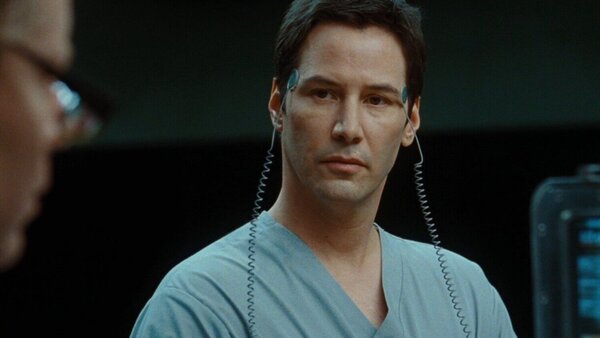
The Day the Earth Stood Still: Robert Wise’s original is a sci-fi classic, the Scott Derrickson remake is, uhh, not. For the 2008 remake Keanu Reeves stepped into the role of Klaatu, an interplanetary alien envoy sent to try and save the Earth from human-inflicted ecocide, and it didn’t go too well.
Critics recognised the film’s reverence for its source material, but that didn’t stop them from savaging it. Pretty much everything that could be criticised was, but all sources seemed to agree on one thing: the story was slow, meandering and just not up to scratch.
Be that as it may (and it may), Derrickson’s Day the Earth Stood Still still has some delights to offer genre fans. First and foremost is Reeves’ casting. It’s widely acknowledged that Keanu is made of at least 50% wood, and that is what makes him so perfect as Klaatu: he is a stoic, blunt and unemotional alien acclimatising to Earth in real time, and his blank acting style sells it. The scale of the thing is also impressive, and still looks good, the effects delivering on its promises. Plus, the ecological bent of the story feels prescient as ever - with a staying power that far outmatches the original’s Cold War theme.
13. City of Angels (1998)

Remaking any of European auteur Wim Wenders’ films is a risk, but remaking his acclaimed 1987 masterpiece Wings of Desire seems like cinematic suicide. That didn’t stop Brad Silberling taking the arthouse feature and turning it into a studio picture, Americanising it in every way possible as City of Angels, transporting the setting from Berlin to LA and slotting Nicolas Cage and Meg Ryan into the lead parts as fallen angel Seth, and Maggie Rice, the mortal woman he falls in love with.
And it did precisely the job it was supposed to: City brought in the English-speaking American audiences for whom subtitles are unacceptable, and made a tidy return at the box office - a nine-figure profit more than the original film. But critics, and anyone familiar with Wenders’ work, dismissed it as low-effort romantic fare.
The story isn't anything we haven't seen before, but nevertheless City of Angels offers us a few reasons to revisit it. And foremost amongst these is the opportunity to see Nic Cage playing a real and ironically down-to-Earth character. In the years since this film was made the actor has had a rollercoaster career, one which rarely has space for this kind of straight dramatic turn anymore. But here he manages to be genuinely lovable, romantic, affecting and authentic, bringing an earned gravitas to the angel role and allowing us a glimpse into the foundations of what could have been a very different career.
12. The Jackal (1997)
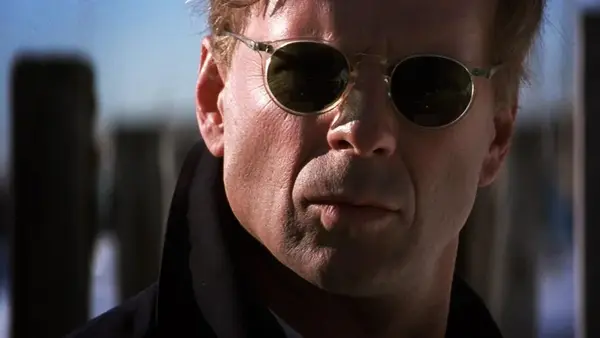
Michael Caton-Jones’ The Jackal adapts the 1973 film The Day of the Jackal, itself based on the 1971 novel by Frederick Forsyth, and stars Bruce Willis, Richard Gere and Sidney Poitier in an action-thriller conspiracy plot that failed to ensnare the critics.
Willis star as the titular hitman, a ruthless ex-KGB asset who has been hired to assassinate the US First Lady for $70 million. Richard Gere is Declan Joseph Mulqueen, an ex-IRA sniper whom the feds believe can foil the plot. Carnage ensues. Now, people didn’t really like it when compared to the 1973 film, and it does have its flaws - Gere’s accent, for example, is shocking; and if you boil it down, the plot is effectively the same as every Tom Clancy or Robert Ludlum adaptation.
But, contrary to most assassin movies, which either pitch from the side of the killer or have them crop up every now and again as a fly in the ointment to keep the plot moving, The Jackal wedges us somewhere in-between, and as a result is genuinely exhilarating. When it becomes apparent there is a) nothing the Jackal won’t do, and b) maybe nothing that can be done to stop him, is when the film is at its best. It’s as much ‘90s zeitgeist as Leon or Fight Club, and every scene involving the Jackal’s long-range heavy machine gun deserves its place in the action canon.
11. Godzilla (1998)

Roland Emmerich is not a name associated with high art, but we’ll be damned if he hasn’t made some of the most popcorn-ready movies of the past few decades. But while everyone agrees on the entertainment value of the likes of Independence Day, the director’s take on Godzilla is another matter.
Technically more of a remake of 1953’s The Beast from 20,000 Fathoms than 1954’s Godzilla (although Godzilla ‘54 was heavily inspired by the Beast) Godzilla ’98 is the first incarnation of Godzilla to feature in an American-made film, and takes the big saurian beastie into New York for a spot of chaotic fun. But folks didn’t like the monster design, they didn’t like the lack of the kind of thematic messaging the original had (re. nuclear warfare), and the critics destroyed it.
But it remains deeply nostalgic for anyone who was young at the time, with an iconic look that sets it apart from most other Godzilla movies. Show any ‘90s kid a few frames of Godzilla ‘98’s floodlit NYC in the rain, and they’ll know exactly when and where they are - and what’s about to come stomping round the corner.
The monster has since been retconned by Toho so it’s technically not Godzilla, but some other large dinosaur type thing. But that’s beside the point. What matters here is that the film gives an authentic Godzilla experience for those willing to try.
10. Total Recall (2012)

Len Wiseman’s Total Recall remake hit cinemas and then bargain bins like lightning, leaving many of us wondering if it ever actually happened. But happen it did, bringing the original’s story into a 21st century where chemical warfare has devastated the planet, a gravity elevator runs through the Earth’s core, companies can implant fake memories for cash, and Colin Farrell’s factory worker Douglas Quaid finds himself at the centre of a grand conspiracy, uncertain if he really is who he thinks he is, or if he’s living a life of captivity, subversion and control.
Visual aesthetic aside, Paul Verhoeven’s 1990 original isn’t quite as great as you remember, and if you like your sci-fi cold and shiny, rather than body horror red, the remake is the one for you. The same ideas and story are present, although the remake’s major faux pas is removing the uncertainty of the original.
But it is a winner on several other fronts, especially (it should go without saying) as Colin Farrell is a far better actor than Arnold Schwarzenegger, and Bryan Cranston does an excellent turn opposite him as malignant baddie Chancellor Vilos Cohaagen. All in all, it is difficult to deny that the remake has plenty going for it and is a solid sci-fi action thriller in its own right.
9. House of Wax (2005)

Dismissed by many as another noughties retread that drafted in big names like Chad Michael Murray and (perplexingly) Paris Hilton, Jaume Collet-Serra’s House of Wax has more staying power than these bare facts suggest.
The film only just broke even (by Hollywood accounting standards) and critics gave it less than a fair hearing, but as a fun, no stakes slasher it has everything you could want.
House of Wax follows a group of college pals to a town with an old wax museum, watched over by a pair of insane twin brothers who have some dark secrets behind their waxwork collection. The premise is familiar, and the reveal - that they have permanently waxed a bunch of real people into their fake town - is similarly unsurprising, but the joy of the film is watching it all unfold.
It is fun, high concept and makes the most of its stars’ varying abilities by putting the focus on the creep factor and the many grim waxings and kills. The women are shrill, the guys macho, the villains chew the scenery, and every moment is guilt-free fun to watch, all the way from the “oh no, whoops, we are stranded in the middle of nowhere” through to seeing a still-alive, wax-encased Jared Padelecki get his face peeled off by his pal.
8. Robocop (2014)
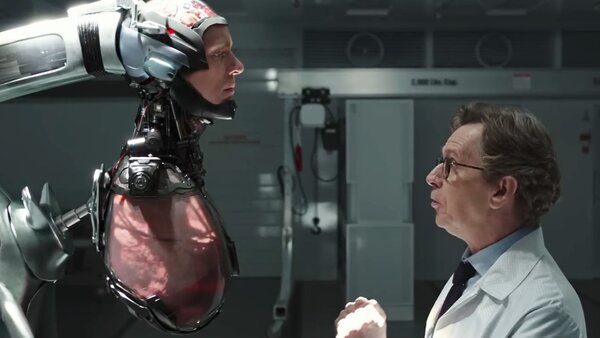
Hot off the back of a run of Swedish films, Joel Kinnaman crashed into action as the titular RoboCop in 2014, giving José Padilha’s take on the character and universe a true modern movie star sheen. But Paul Verhoeven’s original had been so iconic, and Peter Weller so iconic in the role, that nobody was really interested, whether it was good or not.
Remaking the 1987 first film, RoboCop moves the action to 2028, where Detective Alex Murphy (Kinnaman) is critically injured and becomes a cyborg police officer who is nigh unstoppable but struggles existentially, not knowing where the man ends and the machine begins. It made enough money on release, but the reception to the film overall was lukewarm, killing ideas of a new franchise and sending this one down the back of the sofa.
Well, it’s about time to dig it out, because 2014’s RoboCop looks good; makes the best use of the CG advancements since the original to upgrade the action, weaponry, battles and chase sequences; and features Gary Oldman, Michael Keaton, Jackie Earle Haley and Samuel L Jackson. Nobody is aiming for an Oscar on this one, but that’s to its credit, and while it may lack the satirical bent of its source, the occasionally OTT performances keep things fun enough to make it worth revisiting.
7. Bedazzled (2000)

Bedazzled: Early-noughties fluff and star vehicle for Brendan Fraser and Elizabeth Hurley, right? Well, there’s actually a bit more to it - but you’ve got to go back and take a look for yourselves.
Remaking the 1967 Peter Cook and Dudley Moore version - a film that won’t have meant a whole lot to hip, young millennium audiences - Harold Ramis’ Bedazzled embraces the late-nineties/early-noughties Hollywood trend of fantasy and magical realist rom-com setups (Bruce Almighty; 13 Going On 30; What Women Want) that ask us to suspend our most incredulous disbeliefs in order to elevate conventional romantic plots to a whole other plane.
The film puts Fraser in the shoes of Elliot Richards, a company man who makes a deal with the devil (Hurley) to help him pursue the woman he loves. The device to get there is wishes, and needless to say few of them go to plan.
Now, naturally, this Americanised picture could never live up to Cook/Moore’s cracking British satire, but it arguably never tried to. Ramis used the star power behind his film to get everybody on board, and then directed it into absurdity, with a series of stand-out scenes and set-pieces that throw Fraser and Hurley around the globe and beyond, milking the premise for all its worth. It's an overlooked romp from a master of comedy, and is timeless enough to reward repeat viewing.
6. Meet Joe Black (1998)

ITV viewers will remember Meet Joe Black from every other Sunday afternoon throughout the noughties - a position which unfortunately turned it into background noise for even the most dedicated audiences. Its quick and firm transition to TV was in no small part due to its combination of recognisable stars (Brad Pitt and Anthony Hopkins), lukewarm critical reception and lack of significant box office returns, but also its ability to fill a big programming slot, running at just over three hours.
And of course the length was one of the reasons it wasn’t more widely seen or accepted by audiences who are usually suckers for this sort of thing: Death (Pitt) finds himself temporarily Earthbound, when he trades businessman Bill Parrish (Hopkins) a few days of extra life for some roaming time finding out what it’s like to be human, all while Bill’s daughter Susan (Claire Forlani) falls head over heels for him.
Based on Death Takes a Holiday (1934), Meet Joe Black actually manages to improve on the original in several key ways - not just with a bigger budget and more lavish scenes, but by making Death a lighter and more relatable subject. It’s romantic, it’s heart-warming, and if you can park the afternoon telly feeling, it’s well worth another watch.
5. Ghost in the Shell (2017)
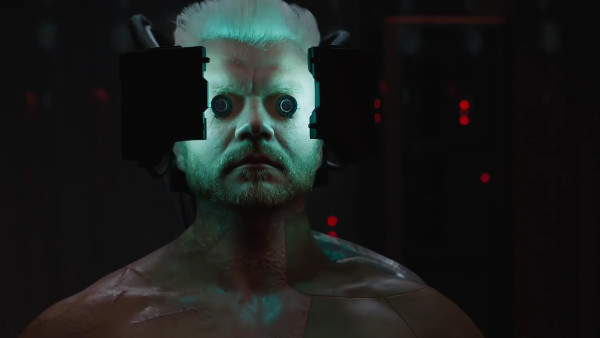
Rupert Sanders brought Ghost in the Shell into the real world (kind of) in 2017, with Scarlett Johansson as Major Mira Killian, a brain in an artificial body whose position as a hyper-efficient counter-terrorism operative brings her face-to-face with her true past - a past she can’t remember, shrouded in conspiracy.
Now, as Ghost in the Shell is one of the most celebrated animes of all time, it was always going to be a tough sell. The film was good enough not to bomb and made its money back, but due to the comparisons it couldn’t help but draw, it received a middling-to-bad appraisal from critics, and was neither a break-out success nor went down in history.
But that doesn’t mean we shouldn’t take another look. Fact is, Sanders’ film is pure spectacle, but not just pure spectacle, as it does an admirable job of making the surreal source material look and seem credible in live action format. It’s uber cool, the effects blend pretty much seamlessly and the characters by and large feel true to the source. Yes, Killian should have been played by an Asian actor and the plot is very familiar, but if those are the biggest gripes we’ve got (and they are) then we’re doing well.
This is definitely one to catch at the cinema, if it ever finds a way back to the big screen…
4. The Stepford Wives (2004)
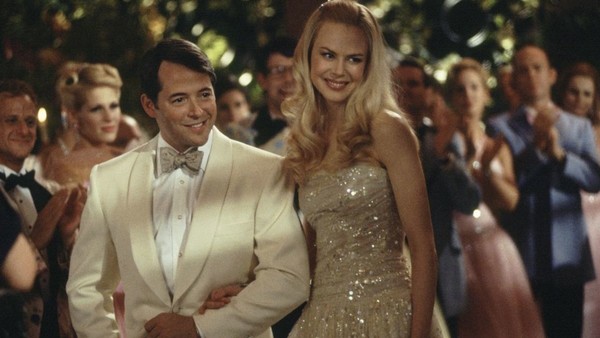
Ira Levin’s The Stepford Wives has never had a perfect adaptation, with filmmakers either being too faithful to the source or deviating too far. Bryan Forbes’ 1975 version is in the former camp, although most consider it to be the definitive adaptation. Frank Oz waited until 2004 to remake it, by the time “Stepford Wives” had entered common parlance and everyone had their own vision of what it should be.
The 2004 Stepford Wives sees Joanna Eberhart and her husband Walter Kresby (Nicole Kidman and Matthew Broderick) move to Stepford after Joanna’s career falls to pieces, where life is a neo-trad dream and the women are controlled by nanochips in their brains. Unfortunately audiences weren’t fussed for it, it didn’t break even, and critics dragged it through the mud. And yet.
Oz took the original and the novel and struck a totally different tone, making something genuinely funny and highlighting the plot’s absurdity. It is something of a slapstick romp, and lacks the sinister overtones of the original, but this is precisely why it works.
The characters feel more lived-in, especially Joanna, and the film has an even stronger gender focus, portraying the men as weak and jealous of their high-powered wives. The film’s only major flaw is that it doesn’t know when to stop. Nevertheless, it’s ever-more relevant today, when an increased amount of Western men seek a return to an idealised 1950s where "domestic bliss" was the order of the day.
3. Psycho (1998)

Gus Van Sant drew the ire of everyone when he made a shot-for-shot remake of Alfred Hitchock’s horror classic Psycho, starring Vince Vaughn no less. The arthouse experiment put Vaughn in place as the monstrous Norman Bates, and crafted around him a film that challenges the source with new bursts of colour and consciously different direction.
But audiences weren’t ready for it in 1998, and even if it had enjoyed a wide release it would have been ignored and dismissed all the same. And, sure, there’s an argument to be made for why one would want to remake a film most people consider perfect, but if Gus Van Sant ever asked why he might never have filmed a frame of anything.
Using the original material, each actor in a killer cast featuring William H Macy, Viggo Mortensen and Julianne Moore manages to put their own spin on the parts, although Vaughn’s is the most interesting. Indubitably encouraged to do so by Van Sant, he gives Bates a campness that gives another dimension to his cross-dressing, while also driving into his performance a neuroticism that suggests an unsound mind. This effectively splits the fact of his oedipal complex and psychopathy into separate areas - one is sexuality, the other mental illness, running against the original’s problematic conflation of the two.
In all, Psycho ’98 is for those who love and hate the original alike.
2. Solaris (2002)

Andrei Tarkovsky’s psychological sci-fi opus Solaris is often listed alongside Kubrick’s 2001 as being one of the most significant and impactful contributions to the science fiction cinematic canon of all time. Steven Soderbergh’s 2002-made, George Clooney-starring remake is not. The former film won the Grand Prix Spécial du Jury at the 1972 Cannes Film Festival, as well as being nominated for the Palme d'Or; the latter didn’t make back its budget.
But, some 23 years after Soderbergh did the unadvisable, there are a few good reasons to return to his corner of space.
Clooney stars as Dr Chris Kelvin, a clinical psychologist who is sent to a space station orbiting the mysterious planet Solaris. Once there, he finds a skeleton crew, several bodies in the morgue, and the spectre of impossible people haunting the ship - including his own dead wife (Natascha McElhone’s Rheya). While this version is not as existential or cerebral as its predecessor, there is more than enough to ponder while watching beautiful shots of beautiful people in a beautiful part of the universe.
Soderbergh repackages the avant-garde classic as a romance, avoiding the American habit of just remaking the film in English by shifting the focus to Chris’ memories of Rheya and unpacking their tragic story, while still leaving plenty of narrative room to breathe. Soderbergh’s version is also mercifully short, adopting the basic plot but condensing Tarkovsky’s meandering three-hour epic down to a tight hour forty.
1. The Thomas Crown Affair (1999)
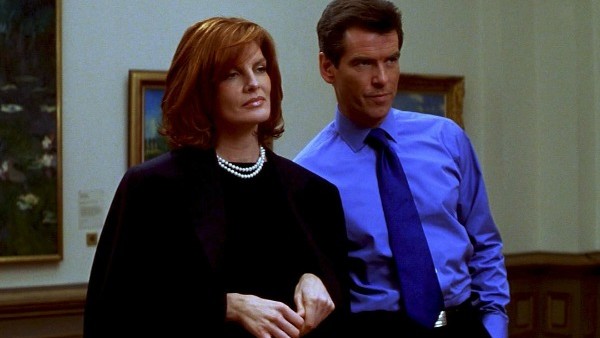
John McTiernan’s remake of The Thomas Crown Affair brought Pierce Brosnan in as the titular billionaire thief, for two hours of romance and heist drama opposite Rene Russo’s insurance investigator Catherine Banning. And pretty much everyone who remembers it agrees that it’s slick, stylish and well made, managing to treat the source material with reverence whilst giving it a modern spin. But who remembers it?
Arriving in the late nineties, when Brosnan was known worldwide as James Bond, the film garnered a decent amount of attention and was generally looked upon favourably. It helped that the Steve McQueen-starring 1968 original was only really iconic for its soundtrack, popularising Michel Legrand's "The Windmills of Your Mind".
However, Brosnan’s performance isn’t worlds away from what he did with Bond, and this had a double effect: on the one hand, it meant we got to see 007 do all the naughty and extra-legal things he was never able to do as a true-blue government agent; but it also shunted the film into the James Bond segment of popular memory, and was promptly forgotten.
Underseen and underappreciated, The Thomas Crown Affair balances each of its genre elements perfectly, with genuinely thrilling heists, spicy romance between its leads and an unusual plot that keeps you guessing. It’s high time we reintroduced it into the canon.