16 Fantastic Films About Witchcraft (Before Harry Potter)
Witches make for fantastic cinema fodder...
 Witches are fantastic cinema fodder - they can portray all of the evil, the nastiness and the spite of being a supernatural villain. This aspect of witchery is seen in films such as The Witches and The Wizard of Oz. Then we have the other side of the coin - supposed 'witches' as victims during all of the witch finding perpetrated by various characters like Matthew Hopkins in Witchfinder General. Witch finding was a terribly cruel and vicious operation in which thousands of people were killed for no good reason other than to satisfy bloodlust and religious zeal. There are a wide form of films about witches out there. This starts with Benjamin Christensen's silent movie Häxan, through to the art house with Dreyer's Day of Wrath. There are a lot of horror films like Mark of the Devil and Mask of Satan that deal with witchcraft up to teen movies like The Craft. Real life witches (or Wicca as they are known) will balk in horror at many of the depictions shown of witchcraft in this list but there is a rich and fascinating heritage of witch-based movies which deserve discussion.
16. The Witches Of Eastwick (1987)

15. Day Of Wrath (1943)
 Snail paced, heavy going drama about witchcraft in Denmark in 1622. Anne is married to the much older Absalon Pedersson who is a pastor involved in the witch trials. Absalon's handsome young son Martin returns home and is smitten with Anne. The feeling is mutual and they frolic together happily. Absalon's mother Meret is a harsh old biddy who hates Anne and tries to dominate Absalon. An old woman known as Herlof's Marte is accused of witchcraft. Anne shelters her but she is found in the house. She lets Anne know that her own mother was spared from claims of witchcraft by Absalon who wanted to marry Anne. Herlof's Marte is tortured and confesses to witchcraft. Begging for her life, she threatens to tell everyone about Anne's mother but Absalon has her burned. He later hears Anne laugh for the first time and feels bad for marrying her. Absalon is visiting a parishioner who is dying as Herlof's Marte told him he would. When Absalon goes back home, Anne explodes, tells him she doesn't love him - she loves Martin - and she wishes Absalon would die. Absalon keels over clutching his heart. At the funeral Meret calls her a witch and Martin sides with his grandmother. Anne confesses to murdering her husband and bewitching his son which effectively signs her own death warrant. Directed by the great Carl Theodor Dreyer, Day of Wrath is a brilliant film but by golly it is austere. There is no comic relief or moments of levity in the movie. With the witchcraft torture scenes, it is weird to see all the men dressed alike with ruffs on their necks and clad in black. These are supposedly religious and educated men who are torturing and burning people due to spurious claims of witchcraft. Now I know it is the 1600s but such collective madness is absurd. It was just a widespread outbreak of sadism by powerful religious people hungry for blood and power, and a misguided zeal that they were doing the Lord's work. Dreyer does a good job in portraying the religious fervour that condemned so many women to death, but he also shows a softer side of the clergy in Absalon's love for his errant wife and his realisation he should never have married her. This is juxtaposed with his witch trials and torture. Everything is very solemn and bleak in the movie so it isn't a film you would watch with your mates on a night in - unless they are all art house fanatics, then they will love it and praise you on your impeccable taste
14. The Pit And The Pendulum (1961)
13. The Craft

12. The Wizard Of Oz (1939)
11. Häxen (1922)
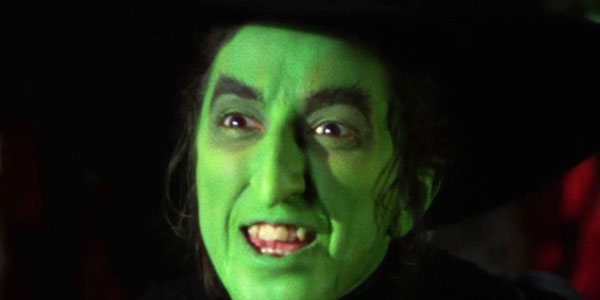
 A Swedish/Danish co production which is based on the Malleus Malifecarum - a 16th century German instruction book on how to deal with witches. Director Benjamin Christensen does a pretty impressive job of bringing those old, barbaric, superstitious days to life. The film is like a documentary, although it is staged. Christensen brings the torture and persecution of witches through the ages alive on the screen by recreating some of the worst persecutions and superstitions. He ends the film on the idea that a lot of 'witches' were mentally ill and asylums are now their holding ground. Christensen knew his stuff. He spent two years studying witchcraft before he made the film and then he obtained Swedish funding for his project so that he could have complete artistic control over the movie. Given the prestigious Criterion treatment, the film, which is nearly 100 years old, has now reached a new generation of fans who appreciate the vividness of the vignettes and the attempt to portray both witchcraft and how it was persecuted. The film must have shocked the pants off viewers whenever it was released in 1922 and it has lost none of its scare factor over the years. The scenes with the devil and the witches are effectively creepy and the film is an important historical relic.
10. Mark Of The Devil (1979)
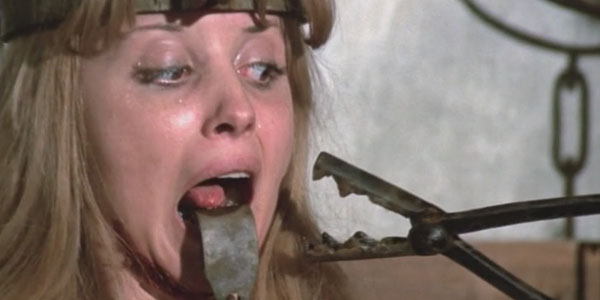 Witch based shenanigans which were designed to capitalise on Witchfinder General's success and end up being even nastier than its inspiration. Udo Kier is an apprentice witch finder under the auspices of the sadistic Herbert Lom. Kier believes in the church and he thinks what he is doing is the right thing. This is until Lom kills a man for calling him impotent. Kier recognises that the witch trials are nothing but an attempt by the church to rob people of their money and possessions. He falls in love with a woman accused of witchery. The townsfolk have had enough and go lynching for the witch finders. Will Kier escape? A brutal, hard to watch film, Mark of the Devil has some really sadistic and violent scenes that make Witchfinder General look like a Disney production. A poor blonde woman gets her tongue ripped out in similar fashion to Connie Mason in H G Lewis' Blood Feast. The film is well acted and effective in bringing the witch finding era to life. It is as sadistic as heck but the film's realistic gore sequences are merely recreating the truth of what happened to thousands of innocent people all those centuries ago. Plus it is a good story which exposes the corruption of the church - it is a very anti-clerical film. The movie was filmed on a location in Vienna where witch torturing really did go on. This makes the film even more believable. A nice 'sickie' for those who are curious.
9. The Witches (1990)

8. The Devils (1971)
 Ken Russell's infamous anti-clerical indictment of the age of witch hunting, The Devils tells the tale of a libertine Priest called Father Grandier who has a penchant for getting jiggy with the women in his pastoral care. He falls in love with a woman and he 'marries' her in a mock wedding ritual. Unfortunately, Grandier has an admirer in the shape of Sister Jeanne, a hunch backed nun who is obsessed with him. When she finds out about the marriage, she goes crazy and accuses Grandier of witchcraft. A number of witch hunting priests come to Loudon and stoke up mass psychosis in the nuns and subject Sister Jeanne to painful exorcism rituals. Things are becoming a show for spectators to laugh at. The King comes to visit Loudon and is not impressed by the naked nuns running round. He thinks it is all a load of old cobblers. Therefore the embarrassed authorities who want to save face go after Grandier. They torture him horribly - breaking his legs in agonising scenes and then they drag him through the street and tie him up at a stake. Even though he is burning to death, Grandier maintains his innocence. Father Mignon realises that the burning of Grandier was a huge mistake and he goes insane. Sister Jeanne is given one of Grandier's charred bones as a sex toy, The Devils makes an impact on everyone who watches it. It simply looks beautiful, with sets by Derek Jarman and some terrific cinematography. Oliver Reed is always an interesting actor to watch - no matter what quality of material he is in. As Father Grandier, he is absolutely brilliant - portraying details of a complicated man with much finesse. Reed commands the screen every time he is on it. And acting honours must also go to Vanessa Redgrave for her turn as Sister Jeanne, the bitter hunchbacked nun, suffering extreme sexual repression which erupts into an unhealthy obsession with Father Grandier. Some bits of the film are quite silly - such as the extent to which the nuns all go wild, disrobe, and get down to business with each other. They just look stupid. However, the film deals with important topics such as the Plague, the persecution of the Huguenots and Cardinal Richelieu's desire to merge state with religion. Part of this includes knocking down city/town walls which Grandier disapproves of. He really is a man ahead of his time but for this he is punished and burned as a witch. A terrible tragedy for a flawed but great man.
7. The Crucible (1996)
6. Blair Witch Project (1999)

5. Suspiria (1977)
 American student Suzy Bannion arrives at a private dance academy in Germany. Gradually she realises that nothing in the academy is what it seems. Young girls who are connected to the academy begin dying. Although Suzy has respect for her teachers - Madam Blanc and Miss Tanner - she senses that they are not who they claim to be so she does, like all good Argento heroines, a bit of snooping and finds out that the dance academy is just a front for a witches' coven Suzy has to track down Helena Markos, the by now hardly alive founder of the coven. However, the witches will make life for Suzy very difficult as she tries her utmost to defeat the coven. Generally considered to be one of Argento's greatest films, he plays the movie as a straight horror story, therefore the Giallo element that made him so famous was eliminated from the film. It is a thrilling ride, beginning with the brutal murder of a dance student and the unfortunate impaling by falling glass of her friend. Argento, even more than usual, uses colour in Suspiria to heighten the surreal and horrific events that are going on. The dance instructors make for fantastic witches. The plot is quite limited but you will be too busy staring at the gorgeous visuals in the film to care. I particularly like the scene in which Suzy's friend falls into a room filled with barbed wire. What a cruel way to make someone die. And then she comes back from the dead and goes after Suzy with a knife - definitely the scariest moment in the film. A masterpiece from Argento.
4. Witchfinder General (1968)
 During the English Civil War, witch finder Matthew Hopkins stalks the verdant villages of East Anglia, looking for 'witches' to torture and burn. He has an odious assistant called John Hearne who helps him implement his reign of terror. Richard, a soldier comes home to propose to Sara, his sweetheart. He asks the permission of village priest John Lowes, who is Sara's uncle, to marry Sara. The priest is delighted but he is also concerned about all the witch finding going on - he knows the town is in Hopkin's sights. When Hopkins and Hearne reach the village of Brandeston, they set about rounding up suspects and torturing them - including Lowes the priest. Sara is forced into the terrible position of offering Hopkins sexual favours in return for her uncle's safety. Hopkins is called away and Hearne immediately rapes Sara. When Hopkins returns he is displeased at Hearne's actions, and he does not want Sara's favours anymore and he orders the resumption of torture against her uncle. Before leaving town, Hopkins kills Lowes and two women. When Richard finds all of this out, he vows to stop Hopkins. He tracks down Stearne and beats him up. Stearne returns to Hopkins and tells him Richard is out for blood. In the pursuit to kill Hopkins and rescue Sara, Richard walks into a trap by Hopkins who declares both Richard and Sara witches and begins torturing them. Richard is able to break free of his bounds and he attacks Hopkins. Some army men come in and put Hopkins out of his misery by shooting him. An hysterical Richard shouts "You took him from me!" at the soldiers and Sara just screams hysterically. Directed with finesse by the young Michael Reeves (who died shortly after filming), Witchfinder General is truly one of the best horror films to come out of Britain ever. Never has Vincent Price been so sinister and chillingly effective in a horror film. He portrays Matthew Hopkins as the epitome of pure evil - a man taking advantage of the breakdown of social order to pursue his own perverted and sadistic agendas. The labelling of people as 'witches' in the film is pure hokum. Hopkins must know this himself, so basically he is a degenerate serial killer. The cinematography in the film is lush, with the English countryside looking absolutely beautiful. The story is a powerful and disturbing one and by the end any trace of sanity among the protagonists is gone altogether. The film is also a document of a particularly repugnant era of British history.
3. The Mask Of Satan (1960)
 In Moldavia in 1630, a witch called Asa and her lover Javuto are put to death for sorcery by Asa's brother. Asa curses his descendants before she is burnt at the stake and they hammer a mask onto her face. A couple of centuries later, Thomas and Andre - two doctors are travelling through Moldavia when their carriage breaks down. Wandering around the area, they come across Asa's tomb. They manage to reanimate Asa through spilling blood upon her when one of them cuts his hand on the coffin glass. Asa telepathically raises Javuto from the dead and they set about causing mayhem - vampirising people. Asa wants to drain a beautiful young girl called Katia of her blood but she is foiled by a mob of irate villagers who torch her to death. An auspicious start for director Mario Bava's career, The Mask of Satan is wonderfully atmospheric and gothic. Gothic horror films were very popular around this time in Italy with some brilliant films released including Mill of the Stone Women. The Mask of Satan is one of the ultimate gothic horror films ever made. Matters are helped by the presence of gothic horror queen - Barbara Steele, who is fantastic in a dual role as Asa/Katia. With Asa, she is the embodiment of evil, and with Katia she is the embodiment of innocence. The film was very strong in its themes for a 1960s audience and the British censors banned the film for a number of years. It is a chilling movie which is intelligent and absorbing. Bava would expound on the themes and motifs of the film in his later movies.
2. The Wicker Man (1973)
 Sergeant Howie gets a letter from a remote Scottish island about the disappearance of a young girl called Rowan. Howie is a good upstanding Christian and celibate. When he gets to the island and finds out they are a bunch of practising pagans, he is dismayed at this. The island natives under Lord Summerville, give Howie the run around with their wicked pagan ways. Intent on finding Rowan, Howie is frustrated at every turn. He believes that she was part of a pagan sacrifice ritual. But with growing horror, he begins to understand why he was sent to the island and what his purpose is. A wonderful film that is creepy, scary, engrossing and sad, The Wicker Man has been wowing both critics and the viewers ever since it was released back in the 1970s. It is unlike anything else you will ever see due to the film's use of paganism/witchcraft. There are some really great sequences in the movie, such as a nude Britt Ekland doing a sexy dance to try and seduce Howie. The sight of Christopher Lee in a silly wig leading the dancers across the island is another highlight. The island on which The Wicker Man is situated, looks absolutely gorgeous. Poor Edward Woodward has a bad time of it in the film but he remains a staunch Christian to the bitter end. The film's finale is especially hard to watch due to Howie's death and all of the island pagans effectively celebrating his demise. A fascinating and unusual film which has been called 'the Citizen Kane' of horror movies.
1. Rosemary's Baby (1968)
 Rosemary and Guy (a struggling actor) move into an old flat in an apartment block. Minnie and Roman Castevet are a friendly, harmless seeming old couple. Rosemary meets a girl called Terry who has been taken in by the Castevets. Terry jumps out of the Castevets' window. Rosemary and Guy have dinner with the old couple and Guy becomes particularly close to them. Soon Guy gets a role in a play after the actor he replaced went inexplicably blind. He tells Rosemary they should have a baby. On the night when they are trying to conceive, Minnie gives them chocolate mousse. Rosemary 'hallucinates' that she was raped by the devil while Guy, the Casevets and other apartment block people stand around watching her naked. She wakes up with scratches on her back and Guy says he had sex with her while she was unconscious because he didn't want to miss out a golden conception moment. Rosemary becomes pregnant but for the first three months, she is horribly sick. A friend gives her a book about witchcraft and Rosemary becomes convinced that she is dealing with an apartment block full of witches, including her husband who has made a deal with Satan to further his career. When Rosemary gives birth, she is told the baby died. However she can hear a baby mewling in another room. She goes to investigate and looks at her baby who has the devil's eyes. She is told Guy is not the father and baby Adrian is the devil's spawn. Sadly, she adjusts the baby's blanket. "This is no dream! This is really happening!". Poor Mia Farrow has a terrible time at the hands of some Satanists/witches who use her to go forth and multiply with the devil's child. We know from the beginning that there is something fishy about the apartment block. The Casevets are just a tad bit too friendly, and why did that girl Terry jump out of their window? Mia Farrow is perfect in her role as the naive young housewife who is bewildered by what all is going on around her. We see the Devil rape sequence through her eyes which is simultaneously hazy and vague yet horribly real. The paranoia in the film is ramped up to hard to bear proportions as we wonder about everyone's motives and actions. Surely Guy cannot have made a pact with the devil to further his career - especially as it is to the detriment of his wife. How can the nice little couple next door be Satanists? The paranoia is what gives Rosemary's Baby its edge. Plus it is a very well acted film - especially Mia Farrow - who carries our doubts and suspicions around with her in a truly professional and believable way.