18 Scripts Wannabe Screenwriters Should Read Right Now

Read 'em and weep (that you didn't write them yourself).

Chances are that you know somebody who constantly bangs on about that "awesome screenplay" they're working on - that elusive project they pour all their spare time into, with hopes that one day they'll go from office drone to award-winning writer. Oh, that's you? Truth is, the odds that such a thing will ever happen is minuscule, because everybody and their mother has sat down and attempted to pen a script at some point. You'd probably have better luck winning the lotto. So whereas the goal is incredibly competitive and super difficult to attain, the best and most efficient way to learn how to write a solid, marketable screenplay is to - believe it or not - study the screenplays for movies that have been actually been made into fully-fledged feature films. Watching movies is essential too, of course, but it's in the blueprints where we can see a writer working the magic of their craft. You'd be surprised how many aspiring screenwriters don't bother. Here we've assembled a handy list of 18 great screenplays that wannabe screenwriters should read right this very second (links included). We've also briefly outlined what, exactly, it's possible to learn about the craft from devouring the associated pages. Remember: all films started out as mere words on a page... the following scripts managed to grip the script readers, producers or famous directors who glanced upon them and declared that they just had to make 'em... Please note, there's a notable biased on more "modern-ish" screenplays throughout this article, as they are likely to be more reflective of the screenplay conventions of today's market - so don't fret when you realise that some bonafide classics might be missing.

18. Lost In Translation (2003)

The Script: "A faded movie star and a neglected young woman form an unlikely bond after crossing paths in Tokyo." - IMDb What You'll Learn: Many are quick to brand Lost In Translation "boring," drawing attention to the fact that not a lot happens as a reason to dislike the movie... and as if focusing on two wonderful, very human characters isn't enough to warrant 90 minutes of their time. Sofia Coppola's approach to her Tokyo-based romance is "less is more," and her screenplay provides a valuable lesson in how to write dialogue that says one thing on the surface and something else entirely in the subtext. We learn so much about Bob and Charlotte without them ever having to spell it out for us, after all: Coppola's subtle, funny, controlled (and Oscar-winning) spec is a must read. You can read Sofia Coppola's script for Lost In Translation here.

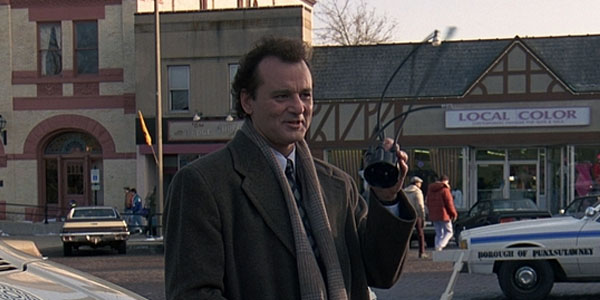
17. Groundhog Day (1993)

The Script: "A weatherman finds himself living the same day over and over again." - IMDb What You'll Learn: Danny Rubin's arguably perfect screenplay for this comedy gem is a film producer's dream: the concept alone - a man reliving the same day over and over again - is so strong and intriguing that it makes itself near impossible to turn down. As a clever deconstruction of rom com conventions that cleverly embraces the genre tropes at the same time, it's brilliant in its innovative structure, snappy dialogue cues and memorable characters. Read the script for Groundhog Day here.

16. Apocalypse Now (1979)

The Script: "During the Vietnam War, Captain Willard is sent on a dangerous mission into Cambodia to assassinate a renegade colonel who has set himself up as a god among a local tribe." - IMDb What You'll Learn: One of the greatest movies of the '70s clings to one of the all-time great screenplays, a sprawling epic that manages to be as tense and dream-like as the movie it led to. One of the best things to take from John Milius and Francis Ford Coppola's blueprint is the fascinating description. Take the opening line, which plays to the movie's primal themes: "It is very early in the dawn - blue light filters through the jungle and across a foul swamp. A mist clings to the trees. This could be the jungle of a million years ago." Clean, gripping prose which invites you to keep reading whilst - at the same time - has an unmistakable voice of its own. You can read John Milius and Francis Ford Coppola's script for Apocalypse Now here.

15. The Thing (1982)

The Script: "Scientists in the Antarctic are confronted by a shape-shifting alien that assumes the appearance of the people that it kills." - IMDb What You'll Learn: A deftly underrated screenplay if ever there was one, Bill Lancaster's updated retelling of Howard Hawks' B-movie classic The Thing From Another World provides a brilliantly tense and admirably subtle read. Here's a screenplay about an alien on the loose that isn't bogged down in dull exposition, but simply embraces its characters and their remarkable situation, moving relentlessly forwards towards a thrilling climax with all the readability of a dime-store novel. A classic sci-fi script, and a masterclass in the handling of multiple characters. You can read Bill Lancaster's script for The Thing here.

14. Pulp Fiction (1994)

The Script: "The lives of two mob hit men, a boxer, a gangster's wife, and a pair of diner bandits intertwine in four tales of violence and redemption." - IMDb What You'll Learn: Screenwriting gurus tend to steer their students away from Pulp Fiction, given that it defies many established methods of what makes a "good screenplay." Forget all that, though - the fact that Pulp Fiction is one of the most popular films of all time is enough to prove its worth. Tarantino's script reads like the best Elmore Leonard novels - once it grips you with its rapid, rhythmic dialogue cues and dovetailing plots, it never lets go. You can read Quentin Tarantino & Roger Avary's script for Pulp Fiction here.

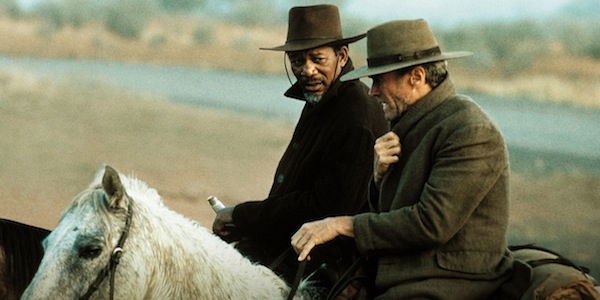
13. Unforgiven (1992)

The Script: "Retired Old West gunslinger William Munny reluctantly takes on one last job, with the help of his old partner and a young man." - IMDb What You'll Learn: David Webb People's fascinating, multi-layered and resonant screenplay for Unforgiven (originally titled "The Cut Whore Killings") did the rounds in Hollywood for almost thirty years before it finally became one of the most acclaimed westerns ever in the hands of Clint Eastwood. Peoples masterfully deconstructs the western genre, and infuses his script with added layers of intrigue because he refuses to make his characters black or white. The dialogue both memorable and idiosyncratic, is only trumped by its writers talent for structure. You can read David Webb People's script for Unforgiven here.

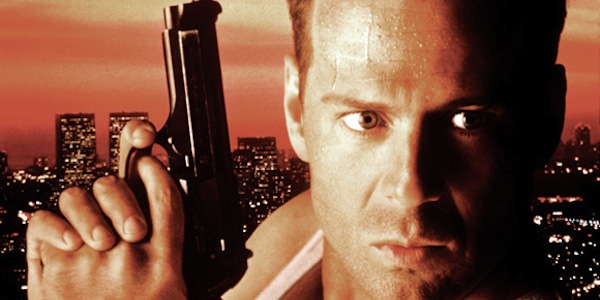
12. Die Hard (1988)

The Script: "John McClane, officer of the NYPD, tries to save wife Holly Gennaro and several others, taken hostage by German terrorist Hans Gruber during a Christmas party at the Nakatomi Plaza in Los Angeles." - IMDb What You'll Learn: Without a doubt, one of the most accomplished and downright thrilling action scripts ever written, Die Hard is absolutely essential for anybody who wants to learn how to pace and write an explosive blockbuster that still manages to cling to an actually developed central protagonist. This script is a triumph in the way it establishes a tense and brilliantly funny relationship between its hero and villain, handles in subplots, and still leaves room for a non-cliche romance plot, interesting secondary characters, and genuinely organic set-pieces. You can read Steven E. de Souza and Jeb Stuart's script for Die Hard here.

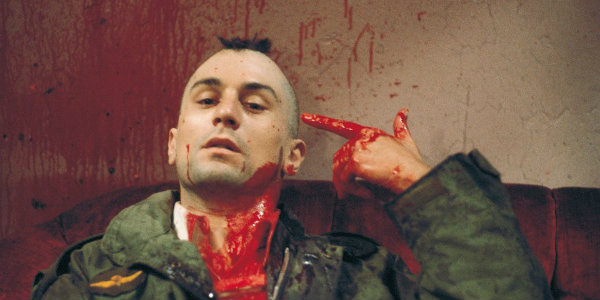
11. Taxi Driver (1976)

The Script: "A mentally unstable Vietnam war veteran works as a night-time taxi driver in New York City where the perceived decadence and sleaze feeds his urge for violent action, attempting to save a preadolescent prostitute in the process." - IMDb What You'll Learn: Martin Scorsese gets most of the credit for the cinematic milestone that is Taxi Driver, but none of it would have been possible without screenwriter Paul Schrader, who arguably crafted the most definitive "screenplay as a character study" when he penned this story about a Vietnam veteran out to cleanse the streets. Travis' internal monologue, the unmistakable backbone here, provides a textbook example of how to write and incorporate narration that feels relevant and adds layers. The ambiguous nature of Travis' morality - is he a good guy or a bad guy? - also marks Schrader's script as totally irresistible, dream-like and dense. A perfect speculative screenplay. You can read Paul Schrader's script for Taxi Driver here.

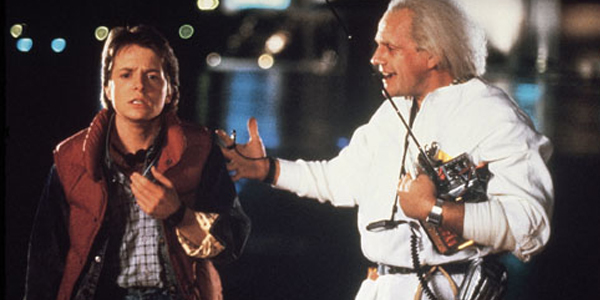
10. Back To The Future (1985)

The Script: "A teenager is accidentally sent 30 years into the past in a time-traveling DeLorean invented by his friend, Dr. Emmett Brown, and must make sure his high-school-age parents unite in order to save his own existence." What You'll Learn: As one of the most beloved movies of all time, the original screenplay for Back to the Future stands as an essential blueprint for aspiring script writers everywhere. The most notable thing about this screenplay is in the way that writers Robert Zemeckis and Bob Gale successfully manage to combine elements of sci-fi, comedy, fantasy, drama, action and romantic comedy, proving that it's entirely possible to go between multiple genres if you've got a handle on the plot and characters. And it's arguably never been done better than it was here - read it! You can read Robert Zemeckis and Bob Gale's script for Back to the Future here.

9. In Bruges (2008)

The Script: "Guilt-stricken after a job gone wrong, hitman Ray and his partner await orders from their ruthless boss in Bruges, Belgium, the last place in the world Ray wants to be." - IMDb What You'llLearn: Playwright Martin McDonagh crafts what is one of the most impressive modern screenplays with In Bruges, a script proves that you don't need a huge budget to craft a tense and thrilling movie. What's great about this script is the characters - in less than 100 pages, McDonagh introduces us to two hitmen who over the course of the story manage to stay cliche-free. We also learn about them in a way that feels natural - by following them as they explore a new, unfamiliar location, and come to terms with their mistakes. It also happens to be hilarious. Read Martin McDonagh's script for In Bruges here.

8. The Social Network (2010)

The Script: "Harvard student Mark Zuckerberg creates the social networking site that would become known as Facebook, but is later sued by two brothers who claimed he stole their idea, and the cofounder who was later squeezed out of the business." - IMDb What You'll Learn: From the very first scene, acclaimed screenwriter Aaron Sorkin lets his characters do the talking - and though one could easily argue that nobody is quite as witty as the people who fill his script in real life, you can't deny that it's endlessly entertaining to listen them going at it. So here's a screenplay that mostly uses dialogue to tell its story, which is often cited as something of a no-no in the "show, don't tell" schools of thinking. Whatever you thoughts, there's no denying that The Social Network is a gripping, enthralling read - take lessons from Sorkin in how to make seemingly boring stuff like websites and coding jump off the page. You can read Aaron Sorkin's script for The Social Network here.

7. Lethal Weapon (1987)

The Script: "A veteran cop, Murtaugh, is partnered with a young suicidal cop, Riggs. Both having one thing in common; hating working in pairs. Now they must learn to work with one another to stop a gang of drug smugglers." - IMDb What You'll Learn: Aside from being a brilliant structured script with tons of memorable dialogue cues and characters who feel fleshed out and human (a bonus in any action movie, you'll likely agree), Shane Black's Lethal Weapon screenplay is notable for its unique tone of voice, which is both playful and self-aware. Not to say that all screenplays should follow suit - just that Black ensures that his work feels original and true to him. Black he sold the screenplay to Hollywood when he was in his early twenties on account of its sheer readability. Take note, ya'll. You can read Shane Black's script for Lethal Weapon here.

6. Network (1976)

The Script: "A television network cynically exploits a deranged former anchor's ravings and revelations about the news media for its own profit." - IMDb What You'll Learn: Three-time Oscar-winning screenwriter Paddy Chayefsky crafted one of the best films of the '70s in Network - a powerful, satirical drama that predicted the age of reality television with gusto. Network is often cited as one of the great screenplays, mostly due to the fact that it moves effortlessly from one scene to the next, and because of its infamous "Mad as hell" speech that occurs at its mid-point. Chayefsky teaches how to write a script that is both thrilling, humorous and sad, whilst also having something to say. "I wanted everyone, every man, woman or child to realize that they had a choice," he said. "I wanted them to know that they have the right to get angry." You can read Paddy Chayefsky's script for Network here.

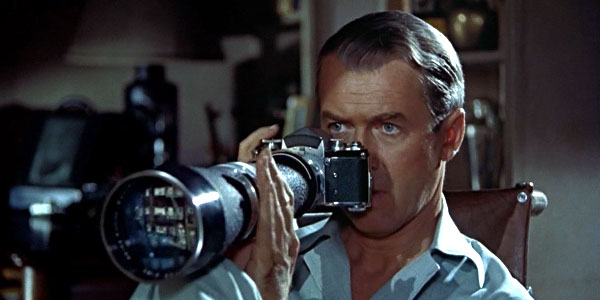
5. Rear Window (1954)

The Script: "A wheelchair bound photographer spies on his neighbours from his apartment window and becomes convinced one of them has committed murder." - IMDb What You'll Learn: Rear Window's screenplay offers up a bonafide masterclass in writing a story confined to a singular location. Screenwriter John Michael Hayes successfully builds up the relationships between his characters in the apartment where Jeffries spies on his neighbours, whilst simultaneously inching the film's central mystery closer and closer to the inevitable climax. Hayes' ensures that we learn about our characters through the circumstances occurring in the movie, which helps to tie the script together beautifully. What could have lagged is gripping. You can read John Michael Hayes' script for Rear Window here.

4. Seven (1995)

The Script: "Two detectives, a rookie and a veteran, hunt a serial killer who uses the seven deadly sins as his modus operandi." - IMDb What You'll Learn: A screenplay should be, fundamentally, a joy to read on paper - so much so that the person handling it feels morally obliged to make it into a movie, out of fear that somebody else will snap up the opportunity. It's a screenwriter's mission to grip a reader from the first page to the very last, then, and Andrew Kevin Walker's speculative script for his thriller Seven is written with such brilliantly addictive prose that it guarantees immersion. Reading it is akin to reading a Thomas Harris thriller, but it's also Walker's inventive plotting, willingness to take narrative risks, and a central relationship that feels familiar yet unique that marks Seven as a truly classic script. You can read Andrew Kevin Walker's script for Seven here.

3. Casablanca (1942)

The Script: "Set in unoccupied Africa during the early days of World War II: An American expatriate meets a former lover, with unforeseen complications." - IMDb What You'll Learn: A list like this wouldn't be complete with mention of Casablanca, a screenplay firing on so many cylinders that it's near impossible to know where to start. At its most basically brilliant level, then, Casablanca works because it puts several characters, each with their own definitive, conflicting viewpoints, in a place and watches them go at it as they try to reason, bribe, convince and trick one another. The lessons you can learn from the conversations that take place here are endless, as all of the characters have so much to lose. Flawed characters are always better. You can read Julius J. Epstein, Philip G. Epstein, Howard Koch, and Casey Robinson's script for Casablanca here.

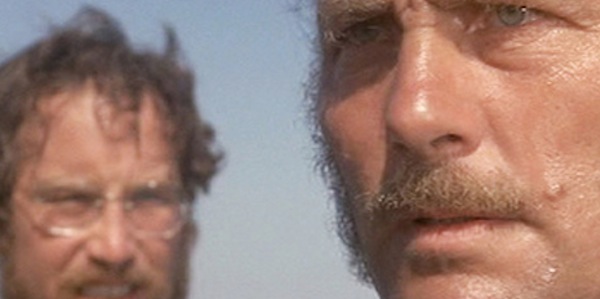
2. Jaws (1975)

The Script: "When a gigantic great white shark begins to menace the small island community of Amity, a police chief, a marine scientist and grizzled fisherman set out to stop it." - IMDb What You'll Learn: Who'd have thought a movie about a giant shark could encompass so many great lessons? Given that it was worked on by so many people, many of whom remain uncredited, it's a wonder the script came out so well. But here's a blockbuster blueprint that perfectly defines the three act structure that so many gurus will tell you is essential to writing a quality film. Structure aside, though, Jaws is still a marvel in near enough every way: its characters, dialogue and exposition offer up a relentless masterclass, with a story perfectly established in 5 pages. You can read Peter Benchley and Carl Gottlieb's script for Jaws here.

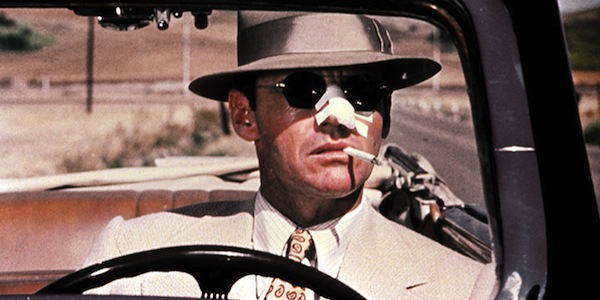
1. Chinatown (1974)

The Script: "A private detective hired to expose an adulterer finds himself caught up in a web of deceit, corruption and murder." - IMDb What You'll Learn: In a weird sort of way, Robert Towne's dense, rich and masterfully written screenplay for Chinatown has become more famous than the movie itself. Often cited by experts as one of the most accomplished screenplays in Hollywood history, Chinatown really does live up to its reputation as a source of creative inspiration. There's no denying the fact that every one of its 17 pages feels immaculately polished and produced, but the beauty here is in Towne's handling of the movie's many sub plots, enigmatic characters, and overarching symbolism. Because Chinatown moves relentlessly forward, never lagging for a moment, and yet we still don't get our heads around the central mystery until the very end - such momentum, coupled with a sense of genuine intrigue, is rarely glimpsed nowadays. What's more, Towne plays with film noir tropes and refuses to follow through in the ways we expect. An immaculate triumph, and one that is just as enjoyable to read in script format as it is to watch as a fully-fledged motion picture. You can read Robert Towne's script for Chinatown here.Like this article? Agree or disagree with the choices we've assembled here? Which other scripts would you add to the list that we might've missed that could also help wannabe screenwriters to master their craft? There are obviously hundreds of potential screenplays to choose from that could've made the final list, given the span of cinematic endeavour, so let us know in the comments section below.

Contributor
Contributor

Articles published under the WhatCulture name denote collective efforts of a number of our writers, both past and present.