20 Characters Most Changed From The Comics In The MCU
11. Rhomann Dey
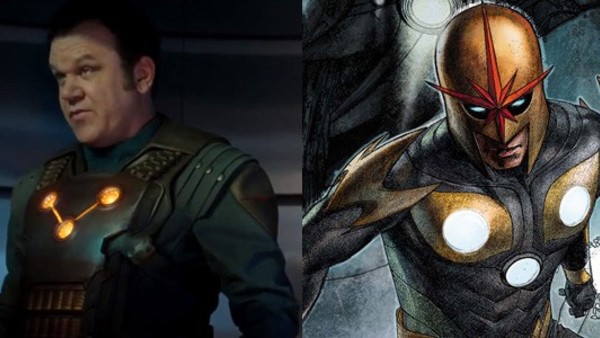
Like Glenn Close, John C. Reilly portrayed a Nova Corps member who was very different to the version seen in the comic books. In his case, it was Rhomann Day. In the comic books, he was the leader of the Nova Corps and an active member of their fighting forces. He was an athletic Xandarian with a relatively young appearance and had all the powers of a Nova Corps leader - the ability to augment and enhance his own physical statistics, energy blasts and absorption, flight and so on. In the Marvel Cinematic Universe, he was an older looking Xandarian (and a less physically fit looking guy) who was a Corpsman. This was a relatively high-ranking position and meant that he was giving instructions rather than participating in battles and he never displayed any powers as a result. He was promoted to the role of Denarian, giving him more responsibility, by the end of the Guardians Of The Galaxy. It should be noted that Peter Serafinowicz's character, Denarian Saal, was so different from Nova Omegan/Garthan Saal that it's hard to even say that he was based on the same character - otherwise he would have been on this list too. He was more like a character created for the movie.
10. Odin
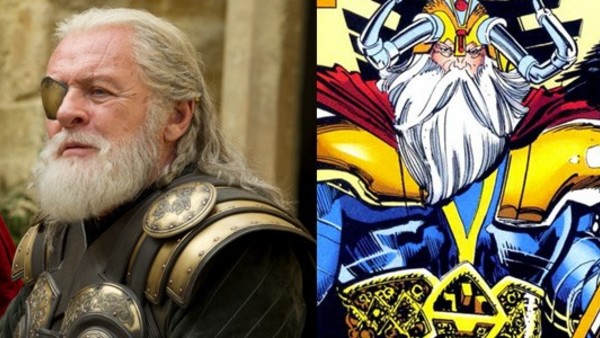
Sir Anthony Hopkins portrayal of Odin suits the Marvel Cinematic Universe down to the ground - it really works on screen. However, it's very different to the comic book Allfather. The comic book version is ridiculously powerful and, had the live action version been portrayed in the same way, it would probably just turn out silly. Odin has the ability to destroy galaxies as a side effect of the battles he has with equally powerful foes like the serpent god Set. He is insanely super strong and durable, possesses planet-busting energy blasts, can manipulate various forms of magical energy, can cast illusions, use telepathy, erect forcefields, manipulate and rearrange matter, can teleport and levitate. And that's really just touching the surface. He's also a very huge, almost rotund man. The Marvel Cinematic Universe version, whilst implied as being powerful, hasn't displayed anywhere near that level of power. He can grant power to and strip it away from Thor at will and he can seemingly transport himself and others across realms but, other than that, he seems like a normal Asgardian. He is also very slightly built in comparison to his comic book counterpart.
9. Kurse
Kurse was the secondary villain in Thor: The Dark World and, while still very formidable, was very different to the version of the character seen in the comic books. The comic book version is, by default, the most powerful of the Dark Elves. Possessing almost unrivalled physical strength and durability, his strength was further enhanced on various occasions by way of a mystical armour that he would wear in battle. Kurse also had the ability to mystically track and locate enemies over large differences and had a vulnerability to iron. The live action version was a fairly bog standard Dark Elf to begin with, but was enhanced to become one of "the Kursed Ones" when he crushed a Kursed Stone in his hands. It caused him to grow in size and strength quite dramatically, but also meant that he would die just a few hours later. He possessed no tracking abilities and no apparent weakness to iron.
8. Aldrich Killian
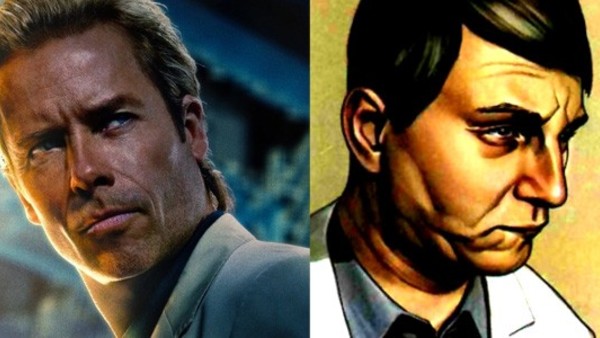
There are definitely similarities between Guy Pearce's version of Aldrich Killian and the one from the comic books on which he was based, but the two men are very different people. Comic book Killian created the Extremis virus and sold it to some terrorists for his own gain. However, he felt incredibly guilty about what he had done - given that his creation would go on to be used for evil - and he killed himself with a gun (the fact that he also had a generally negative view of himself also contributed to his suicide). Pearce's version was also a scientist who developed the Extremis virus, but he used it for his own gain and showed no signs of guilt whatsoever - indeed becoming a villain by using it on himself to give himself super-strength, healing powers and energy blasts, having initially used it on himself to heal his own disability.
7. Ronan
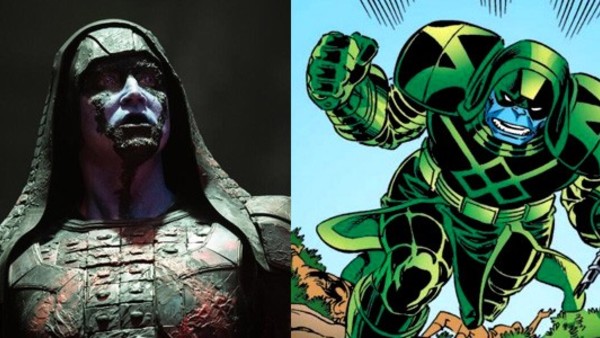
Ronan's appearance isn't to dissimilar in the Marvel Cinematic Universe to his comic book counterpart (the comic book version's armour is more metallic and cybernetic, but he is otherwise easily recognisable as the same character), but his personality and powers were very different indeed. Comic book Ronan was classically a villain, though did display some anti-heroic qualities, but he has gone on to become more of a hero. His physical prowess and superhuman statistics are similar to the live action version, but his powers were far more varied. Via his powerful Universal Weapon, he could project energy blasts, manipulate molecules, fly, project forcefields, teleport across huge distances and a create time-motion displacement fields. The movie version was mostly all about being strong and durable, while most of his other powers (energy blasts etc) came from his use of the Orb. He was also completely evil.
6. Arnim Zola
Arnim Zola has actually appeared in two different forms in the Marvel Cinematic Universe - both of which are different to his comic book counterpart. Both versions of the character have similar origins - they were scientists who worked alongside the Red Skull in order to develop weapons and devices to help the villain fight his battles - but the comic book version went on to construct a specially-modified robotic body (which lacked a head) for himself. His own face located was projected via a hologram on to his chest. The body contained a number of devices, including weapons and a controller that enabled him to command his own monstrous creations. The movie version went on to appear as an electric consciousness inside an old S.H.I.E.L.D. computer. He didn't have a body of his own, but he could move between devices, which leaves potential for him to reappear in the future.
5. Eric Savin
Eric Savin was a mere henchman to Aldrich Killian in Iron Man 3, but he is a character in his own right in the comic books and the two couldn't really be much more different. The comic book version is a mostly heroic character who was converted into a cyborg who went by the name Coldblood-7 by Dr. Gina Dyson and other Project: Ultra-Tech surgeons. He was designed by the scientist known as Mako. The process gave him superhuman strength, reflexes, speed, stamina and durability, as well as enhanced sensory systems including night vision. The Marvel Cinematic Universe version was an Extremis soldier whose body was granted superhuman strength, healing powers and energy-based abilities by the virus.
4. The Collector
Benicio Del Toro played a version of the Collector in Guardians Of The Galaxy (and, of course, the Thor: The Dark World mid-credits scene) that was a far cry from the comic book version. The comic book version is a massively powerful vicious being who is part of the group of beings known as the Elders of the Universe. As a result, not only does he collect things, he is also pretty handy when it comes to defending himself. He controls a force known as the Power Primordial, which gives him the ability to create virtually unlimited effects, such as shape-shifting, energy blasts and manipulation, precognitive abilities, telepathy and effective immortality. He also sometimes wears a powerful armoured suit. Del Toro's version was a camp space Liberace who is yet to display any power worthy of note. However, while the personalities of the pair are different, audiences may yet see some powers akin to the comic book version in the movies (though it does seem unlikely at this point in time).
3. Whiplash
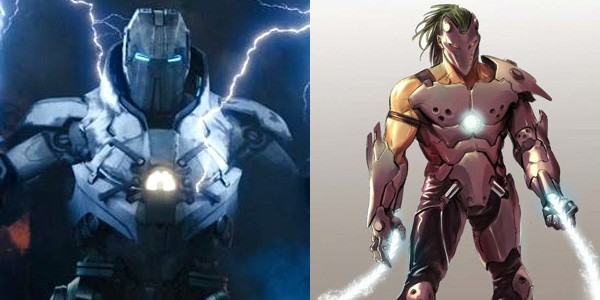
The actual concepts and powers of Whiplash weren't that much different to the comic books in the Marvel Cinematic Universe, but the fact is he was a completely different character. Mickey Rourke played Ivan Vanko in Iron Man 2, but Whiplash has only ever been a mantle used by Mark Scarlotti, Leeann Foreman, an unnamed character and Anton Vanko in the comic books. Both versions of the character wear a suit of power armour that has a pair of energised whips attached to the hands, but the Marvel Cinematic Universe version of the armour (at least the final version of it) covered more of Vanko's body than it did the comic book version's. Moreover, there is also the fact that the Marvel Cinematic Universe version of the character was actually an amalgamation of the comic book version of Whiplash and Crimson Dynamo - another Iron Man villain.
2. Malekith
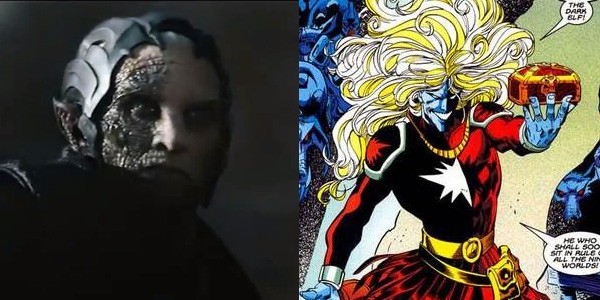
Malekith was a huge disappointment in the Marvel Cinematic Universe and a major waste of a great actor in Christopher Eccleston. He was portrayed very differently to the version seen in the comic books. The comic book version not only looks very different (although you would have to say that the aesthetic change was probably for the best in the live action movie version), but he is also far more powerful than the one audiences saw on screen. He possesses all the superhuman attributes that Eccleston's version displayed, but he can also use magic for a variety of purposes like teleportation, energy blasts, physical malleability, flight (by way of transforming himself into mist), illusion casting and the ability to change the shape and appearance of other beings or objects. He also has a vulnerability to iron that was never explored on screen. Eccleston's version really only showed an ability to fire powerful energy blasts - and that was due to the fact that he possessed the Aether Infinity Stone at the time. He was very poor comparatively.