20 Fantasy Films You Must See Before You Die

Somewhere over the rainbow...

The most inherently interesting aspect of the fantasy genre comes in its ability to take us to other worlds; far off places we've only glimpsed in our dreams, where the rules of our own land are dropped in favour of the magical and the mystical. So when most people think of fantasy, they tend to think of wizards, orcs, goblins, ghosts, long-haired heroes wielding swords, and unlikely protagonists setting out to stop the end of the world as we know it. The fantasy genre also happens to be one of the toughest genres to nail on the big screen - though it has long flourished in book form, fantasy tends to be either brilliant or downright terrible in film form, given its complex nature and the associated world-building; if you don't set up the world just right, chances are your movie won't work. Thankfully, there are many talented filmmakers who have succeeded in transporting us to far off realms... Fantasy movies, of course, doesn't necessarily have to find themselves set in a parallel universe; some of the best and greatest films of the genre take place right here on planet Earth, as the lines separating reality and fantasy are blurred and the best of both dimensions are utilised to a filmmaker's advantage. Join us, then, as we countdown those essential picks from somewhere over the rainbow: the 20 Fantasy Film You Must See Before You Die (please note that we haven't considered any comic book or animated flicks whilst compiling this list).

20. Bridge To Terabithia (2007)

Based on the young adult novel of the same name, Bridge to Terabithia is a fantasy movie of surprising weight and power, despite the fact that the trailers looked to depict it as something along the lines of The Last Mimsy, which is absolutely a movie you never need to view in your whole life (seriously: stay away from The Last Mimsy). Bridge to Terabithia, on the other hand, is absolutely worth your time - a haunting and emotional fantasy adventure that isn't afraid to explore lots of important themes - like friendship, family, death and loss - at once. The story is deceivingly simple: Jess Aarons (Josh Hutcherson) is a loner who has difficultly making friends, something that is soon remedied when he meets the awesomely cool and creative Leslie Burke (AnnaSophia Robb). Using their collective imaginations, they conjure up a strange fantasy world in the woods behind Jess' house, where they can live out their creative tendencies and escape their troubles. To say anymore is to ruin the brave and mature plot, but don't be fooled by the cutesy trailers on this one: Bridge to Terabithia is magic stuff.

19. Willow (1988)

Willow was one of the strange projects that George Lucas decided he wanted to embark upon in the wake of Star Wars, and features Warwick Davis - yes, the Warwick Davis - as one of a race of little people who ends up trying to stop a malevolent evil queen from abducting a special baby. The movie wasn't particularly well received at the time, given the fact that it was cited as something of a Tolkien rip-off, but the film has since been regarded as something of a cult classic - two and a half decades later, Willow is a genuinely fun and intriguing fantasy yarn. Davis isn't much of an actor, of course, so the movie gives him Val Kilmer (as a bumbling prisoner who reluctantly joins in on Willow's quest) to banter with; the results are - as expected - pretty hilarious, and there are some genuinely impressive set-pieces and visual effects to marvel over across the span of the film (the world of Willow is also rendered with fine detail). If Willow ultimately comes across as a feeling a little derivative of other, more famous works, there's still something about it - the sheer balminess, perhaps - that makes it worthwhile.

18. The Witches (1990)

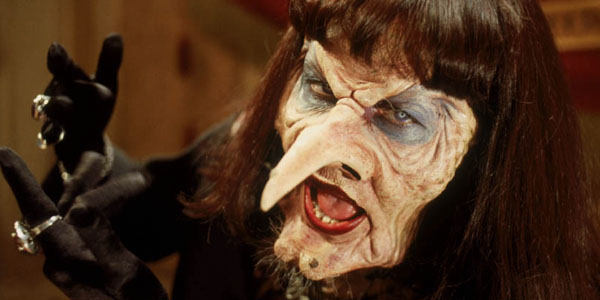
Was there anybody else but Nicolas Roeg who could have brought the appropriately dark and twisted tone to a filmic adaptation of Roald Dahl's The Witches? Indeed, the director famous for horror flick Don't Look Now proved himself to be the best man for job, injecting the already frightening kids' story into something genuinely nightmarish - so much so, in fact, that at times The Witches actually feels more like a horror movie than something aimed at children. And at the centre is a wonderfully disturbing performance by Angelica Huston. The fact that Roeg ended up behind the camera for this one ensured that there were a few detractors, of course, one of whom was Dahl himself, who took issue with the director's vision of the ending. Ending aside, though, The Witches stands as a strange but undeniably witty foray into the fantasy genre. Mention of Roeg's visual palette here and the makeup effects are a must, but to restate the real joy of this movie... well, it's Huston all the way. The actress plays antagonist Eva Ernst with an obvious amount of relish; indeed, it's one of her best ever roles.

17. Harry Potter And The Philosopher's Stone (2001)

"What?" you cry. "The Philosopher's Stone is the worst of the Harry Potter movies!" Take a seat; you might be right. But hear us out before you go totally crazy. Given the short nature of this list, we didn't want to clog it up with too many films from the same franchises - and given that there are eight Harry Potter flicks, many of which could have easily made the cut, it just seems more logical to include the first chapter. Indeed, if you like this one, you're bound to like the rest. And the truth is Chris Columbus' original film is actually a rather underrated affair. We all know the story by now, of course (based on the novel by J.K. Rowling): Harry Potter, the Boy Who Lived, receives a letter inviting him to Hogwarts School of Witchcraft and Wizardry, and sets out on a magical journey that grows increasingly darker as the years go by. Columbus' movie is often lambasted as being too cutesy and generic, but there's no denying that this is still brilliantly rendered and incredibly faithful fantasy cinema - so much care and effort has been taken to get the details from Rowling's novel just right, and it shows in every frame.

16. Star Wars: Episode VI - Return Of The Jedi (1983)
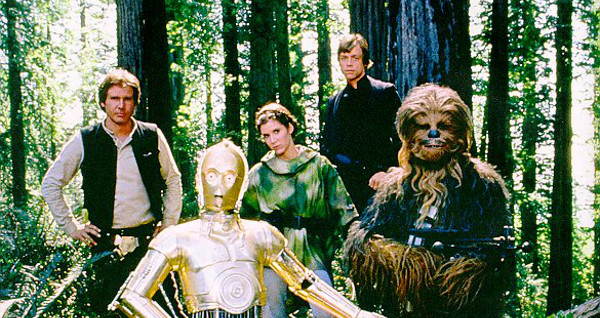
The strangest thing about Star Wars: Episode VI - Return of the Jedi is that, growing up, it seemed to be everybody's favourite entry in the saga. Only revisiting it years later (in adulthood, no less) allows former die hard fans to see the movie for what it is: the most flawed and haphazardly constructed of the original Star Wars flicks. And whilst it is indeed the weakest installment, it's a still a great and entertaining exercise in fantasy filmmaking. So the story picks up years after the events depicted in Empire, as Luke Skywalker sets out to rescue Han Solo. Return of the Jedi could have probably used a weightier story; indeed, it's fairly flimsy when compared to the likes of Empire, and the Ewoks - which come into play during the movie's second half and stick around 'til the end credits are rolling - are an unmistakable travesty, sheer proof that George Lucas is a very clever man indeed (when it comes to selling toys, at least). Those quibbles aside, though, Jedi clings to some stunning moments; the escape from Jabba's palace, for example, is without question one of the entire saga's most brilliant scenes.

15. Edward Scissorhands (1990)

The thought of Tim Burton and Johnny Depp doing anything together these days is enough to make you shout: "Oh, God, no, make it stop!" But let us not forget that there was a time when people were genuinely happy to see what they were getting up to. And that time was around 1990, when brilliantly creative movies like Edward Scissorhands were being made. We all know the story by name: abandoned by his creator before he's gifted with a pair of hands, a strange, childlike man-creature with scissors for hands is adopted into a suburban family. The satirical tone - which pokes fun at American suburbia, among other things - renders Edward Scissorhands as a wholly unique product, back at a time when everything Tim Burton did seemed fresh. Indeed, the visual effects, make up and sets on show here are wonderfully detailed and rich - much better than the stuff that Burton chooses to render now with CGI. At the centre of this very sad movie is Johnny Depp, of course, who genuinely convinces us in his role as the most innocent of all living things. Dark and haunting, this is very much a '90s gem.

14. Where The Wild Things Are (2009)

Those expecting a family friendly adaptation of the very, very famous children's book are in for a shock; Spike Jonze' filmic version of Maurice Sendak's seminal work is downright terrifying in places. And it's hard to imagine that any kid will find refuge in the strange, anxiety-clad tone of the movie, whether they're familiar with the source material or not. That said, Jonze has taken Where The Wild Things Are and made it his own, and in the process has successfully crafted one of the most unique, curious and compelling fantasy movies of the last decade. The vibe here is one of complete and utter ennui, as Max - the young hero of the story - imagines himself away to a far off land filled with large, monstrous creatures of various temperaments, who declare him their king on arrival. As Max struggles to rule over the land of the Wild Things, events take a dark turn, and Jonze uses the source material as a mere kicking off point to explore themes that weren't inherent to the original tale, including alienation, depression and loneliness. A sad and beautiful movie, ultimately; the visuals and effects are stunning.

13. The Lord Of The Rings: The Two Towers (2002)

Often cited as the "difficult middle chapter" of Peter Jackson's Lord of the Rings trilogy, The Two Towers is still a brilliantly accomplished piece of work, and one of the best fantasy films of all-time. Indeed, there are many who will stand by this installment as the best of the bunch, if somewhat partly due to its frankly amazing final battle sequence at Helm's Deep. Still, the Two Towers is the most dramatically rich movie of the three, as the pace established by Fellowship of the Ring slows somewhat, and characters are given time to talk and discuss plans. The highlight of the movie, of course, is that of Andy Serkis' Gollum; what may seem like old hat all these years later was anything but at the time, as Serkis - along with the geniuses over at the WETA workshop in New Zealand, who created the visual effects - successfully rendered what was arguably the best and most believable CG "creature" in cinema history. But there are great performances here from all the cast, including Bernard Hill, Brad Dourif, Karl Urban and Miranda Otto, who bring a new dimension to Middle-Earth as inhabitants of Rohan.

12. Orpheus (1950)

There is a something of a pretentiousness about Jean Cocteau's film Orpheus, but it's also so beautiful, so magical and so rewarding that you can forgive it. Cocteau spent three films dissecting the myth of Orpheus, but this marks his best attempt. Set in 1950s Paris (though it is undoubtably a highly fantastical version of the great city), the story focuses on a poet named Orpheus, whose life takes a dramatic turn when his best friend is killed in a traffic accident. The unique narrative conceit then allows characters to step back and forth between realms. And it is this neat narrative trick that gives the movie its undeniable "fantasy" edge, of course, rendering the film as something of a strange, visual poem (makes sense given that the Orpheus of the movie is, indeed, a poet). Cocteau's film has many detractors, however, a lot of whom have written off Orpheus as tiresome and tedious; but in making a true attempt to engage with this movie, it's doubtful that anybody could write it off as anything but magic, one that can be viewed again and again (and appreciated to greater effect each and every time you do).

11. Time Bandits (1981)

No list of fantasy films is complete without an entry from the one and only Terry Gilliam; there were a lot of movies that could have ended up here, of course, but we've opted for 1981's Time Bandits, which pretty much embraces and embodies everything that is necessary in order to showcase what is great about Gilliam. In this case, it's the peerless world-building, as a young boy bands together with a group of dwarves in this mind-bending time travel adventure - one that has him acquainted with the likes of Napoleon and Robin Hood. What Gilliam does with a mere $5 million dollar budget is outstanding; the craftsmanship on show here shed lights on a bonafide auteur, whose perfection is emphasised by the detailed nature of absolutely everything that ends up in the frame. Aside from being downright astounding to look it, Time Bandits is also characteristically loopy and - in places - very, very dark (check out that ending; who'd have thought?). If kids might not "get it" in the same way that adults will, well... who cares? It's one of those films you learn to love when you're a bit older.

10. Labyrinth (1986)

Labyrinth shouldn't have been anywhere near as brilliantly entertaining as it actually is, given that it's a musical featuring Jim Henson puppets, and features a plot about a young girl trying to rescue her baby brother from the clutches of David Bowie. And yet there is something so irresistible about Labyrinth that it's almost impossible to not get caught up in its trappings. Everything here borders on the ridiculous, as Jennifer Connelly ventures into a gigantic maze, dodges booby traps, and flirts with Bowie's Goblin King Jareth, all set to one mighty soundtrack. Yes, Bowie wrote the featured songs, and yes, they'll stay stuck in your head for days. As a fantasy flick, though, Labyrinth is never anything but a blast - the pace never slows down, the sets and costumes are astounding, and the puppet work never better. Not to forget the fact that the movie features a relentless slew of brilliantly memorable characters, such as Hoggle and Sir Didymus (legendary). If it's a little campy, well... that just adds to the charm of the movie - one which never grow tiresome, and ultimately stands as the best puppet movie ever.

9. Ugestu (1954)

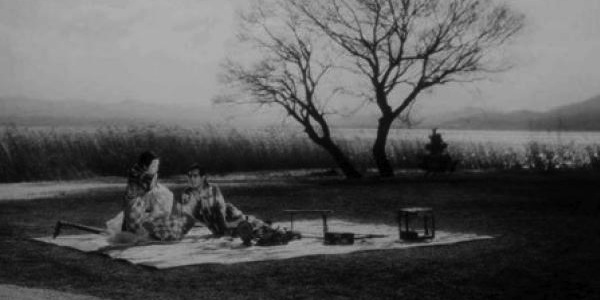
An undeniable masterpiece of Japanese cinema, Ugestu (in its original language: Ugestu monogatari) is a film like no other; a supernatural ghost story told in the style of a fable, Ugestu centres on two men, a potter and a farmer, and the eerie circumstances that occur when they refuse to consider and appreciate their wives. Set in feudal Japan, the narrative might not sound like much, but rest assured, this is a wholly original and surprisingly dark work of cinematic invention. And Ugestu's true power comes in its ability to genuinely chill you to the bone. Don't take our word for it: "One of the greatest of all films," said Roger Ebert in his own review of the film, having added it to his Great Movies collection. Perhaps the most noticeable aspect of Ugestu is the camerawork, which is mesmerising and mediative in equal measure. As a result, the tale flows with a sense of the otherworldly - so much so, in fact, that it's one of the prime reasons Ugestu might be categorised as a "fantasy" in the first place. And as with so many (if not all) of the greatest films of all time, in one viewing, it leaves you with a lot to ponder.

8. The Seventh Seal (1957)

Even if you've never seen it, chances are that you're still somewhat familiar with Ingmar Bergman's masterfully executed fantasy-drama, The Seventh Seal, which features that iconic game of chess with none other than death himself. On the wonderful cinematography alone, The Seventh Seal deserves a place on the list; indeed, Bergman shoots every frame of his picture with sharp, purposeful angles that make use of shadows and light to enhance the story. Sure, it's one of the more "heavy" pictures included here, but that makes it more worthwhile. Don't let the fact that it's in Swedish detour you from checking it out, either; there is something about the fact that the Seventh Seal is in another language that only enhances the "fantastical" nature of the movie. Max von Sydow stars as the main character, a highly disillusioned knight who moves through a plague-invested Sweden, whilst being pursued by the embodiment of death himself (which, yes, eventually leads to that infamous chess game). As a fantasy movie, or as an introduction to the works of Bergman, this is essential viewing for all film fanatics.

7. Pan's Labyrinth (2006)

Guillermo del Toro's Spanish Civil War-set fantasy/horror hybrid truly is one of a kind; indeed, it's probably true to say that no other director on Earth could have crafted - or gotten away with - creating something so dark and twisted that is also beautiful and romantic in equal measure. And despite its plottings as a war film, Pan's Labyrinth is unabashed fantasy of the highest-order: strange creatures, some terrifying, some adorable, some bewildering, rendered with CG and puppetry, inhabit the movie from top to bottom. And no David Bowie in sight! Whereas many of del Toro's films have emerged as products in already established franchises, Pan's Labyrinth is an original work with nothing to constrain it other than the director's mind; as a result, we get a film that feels lovingly crafted and intimate, the true definition of a personal vision. Though we joked about David Bowie not showing up here, the plot does vaguely resemble that of Jim Henson's Labyrinth: a young girl, Ofelia, must navigate tasks set to her by a mysterious fawn creature; a brilliant fairytale for adults, it's also a masterpiece.

6. The Princess Bride (1987)

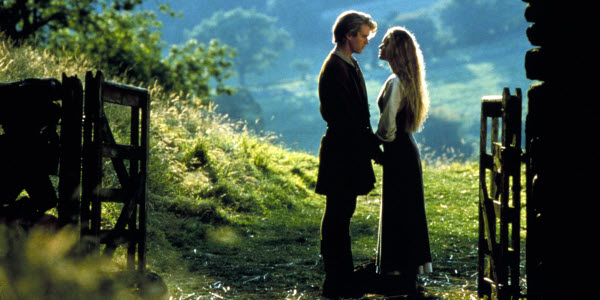
Is it impossible for somebody to not enjoy The Princess Bride, a movie whose charm is so infectious that it practically marked itself as an established fantasy classic the moment it first shipped into theatres? When writing the original novel on which the movie is based, William Goldman - best known for his work on films like Butch Cassidy and the Sundance Kid and All The President's Men - set out to pen something for a younger audience. Following through on some suggestions from his daughters, this is what he came up with. And what a fantasy! The Princess Bride, in essence, feels like something of a deconstruction of the fantasy genre; the elements and the plot itself are almost cliched, but they're employed with a self-awareness that renders them fresh and exciting. So we get swashbuckling heroes, beautiful princesses (duh!) and a whole host of strange and wonderful creatures, all of whom are expertly handled with director Rob Reiner at the reins. Reiner, of course, proved himself capable working in a variety of genres throughout the '80s and '90s; this is one of his best ever efforts.

5. The Lord Of The Rings: The Return Of The King (2003)
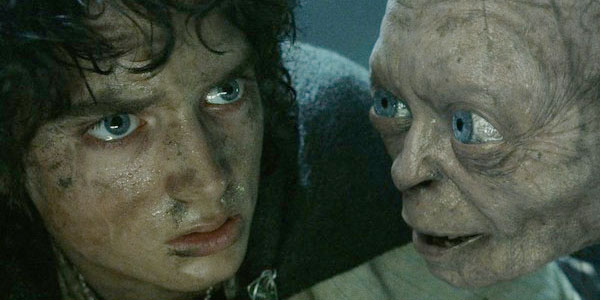
The final part of Peter Jackson's "how the hell did he managed to pull it off?" trilogy is nowhere near as brilliantly paced as the first chapter, nor as successful in its attempts at slow-burning storytelling as the second: what it lacks in those departments, however, it makes up for in pure, unbridled visual splendor and unparalleled action sequences unlike anybody had ever seen before. As we join Frodo and Sam on the last - and therefore toughest - stage of their epic journey, Aragorn and company must meanwhile fend off several huge armies of darkness. And it's the large scale battles, rendered through a seamless combination of CGI effects, practical effects and makeup effects, that everybody remembers about this movie. That said, despite the expensive action sequences (one of which runs at a hefty 40 minutes), the Return of the King builds to a truly sensational finale that feels totally and utterly earned after we've spent 8 hours in the company of the Fellowship. If we feel exhausted as Frodo and Sam scale Mount Doom, it's in the best possible way - a credit to the immersion of these pictures.

4. Star Wars: Episode V - The Empire Strikes Back (1980)

There were many doubts that George Lucas would fail to deliver a sequel worthy of the original Star Wars movie, which is presumably the reason why he employed Irvin Kershner as director and took a "backseat" role. If it all went wrong, he could blame his surrogate. Lucas needn't of worried; Star Wars: Episode V - The Empire Strikes Back perhaps stands as the definitive Star Wars movie (where big fans are concerned, at least), a film that brought an added weight that the fluffy nature of the 1977 installment avoided, marking it as the "darker chapter." The story picks up several years later, with hero Luke Skywalker and his band of colorful companions - including the likes of Han Solo, Princess Leia, and loveable droids R2-D2 and C-3PO - going up against the Empire, as Darth Vader closes in with a very famous, mind-blowing twist in his mitts. The movie is built entirely out of great sequences: the battle on Hoth, Luke's training with Yoda, the asteroid field, and several brilliant dialogue cues (Han Solo's reply to Leia's declaration of her love is a simple: "I know"). The Star Wars phenomenon defined.

3. Star Wars (1977)

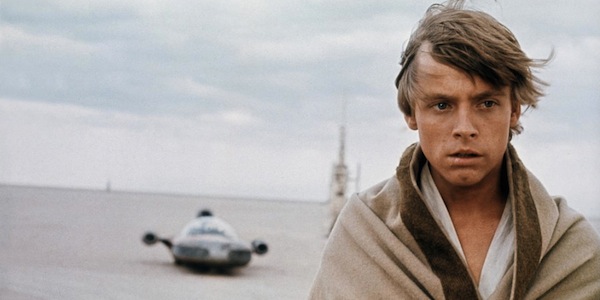
What can we said about Star Wars that hasn't been said already? Many will be shocked that we've chosen to rank the original movie above the immensely favoured second chapter, but all said and done, the original Star Wars flick is a cleaner, simpler, more accessible movie that can be enjoyed by pretty much everyone, and one that offers up an unrivalled sense of adventure - almost childlike in its approach to telling the hero's story. And in this case, our hero is one Luke Skywalker, who finds himself caught up a galactic battle against the evil Empire. Everything about Star Wars is wonderfully executed; the world that George Lucas fashions by way of combining his influences (everything from B-movies to Flash Gordon) explodes onto the screen, resulting in one of the most giddy adventure movies ever made. The design of Lucas' world, dusty and used, evokes the feelings of a western, and in essence that's where a lot of the appeal comes from. But then there's the John Williams soundtrack, the space battles, Harrison's Ford's unequalled Han Solo, and that truly astounding mythology...

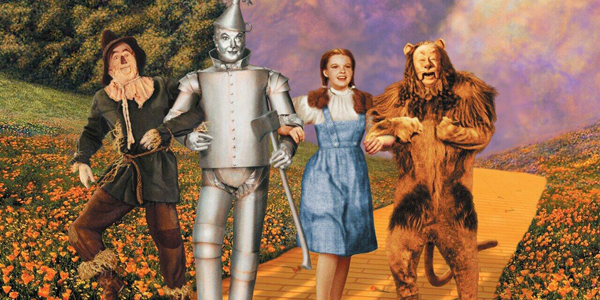
2. The Wizard Of Oz (1939)

All together now: "Somewhere over the rainbow." It's hard to explain the influence and impact of a movie like The Wizard of Oz, which feels like the cinematic equivalent of required reading for humans of all ages. Indeed, The Wizard of Oz - based on the book by L. Frank Baum - is one of few movies on this list that children of all ages should settle into as soon as possible; with its vast, colourful, endlessly creative sequences, lovingly rendered characters, catchy musical numbers and a memorable, clear cut villain, it almost feels like the perfect "first film." Victor Fleming took the reins on Oz, somewhat amazingly in the very same year that he would also direct classic Gone With The Wind. Judy Garland mesmerises as a vision of purity in the leading role Dorothy, of course, though the casting here - with many of the actors playing multiple parts - is impeccable all around. And is there any moment in the history of the filmmaking medium that sums up the magic of cinema quite like the one that sees Dorothy stepping through her sepia-coloured Kanas doorway into the Technicoloured land of Oz? Nope!

1. The Lord Of The Rings: The Fellowship Of The Ring (2001)

Undoubtably the greatest achievement in fantasy filmmaking to have graced our cinema screens, the first - and without question the best - chapter in Peter Jackson's immensely popular adaptation of J.R.R. Tolkien's seminal fantasy novels, The Fellowship of the Ring, is our pick for the most essential fantasy flick. There were those who said Jackson was mad to undertake such an extensive project, of course, and indeed he filmed all three Lord of the Rings films back to back; all great in their own ways, Fellowship is the best paced and most creative of all. The story picks up 60 years after the events depicted in The Hobbit, as Frodo Baggins inherits the "One Ring" from his uncle Bilbo, and sets out on a perilous journey across Middle-Earth to destroy it within the fires of Mount Doom. He's joined by a cast of perfectly cast companions, including the likes of Gandalf (Ian McKellen in a role he was born to play), Aragorn (Viggo Mortensen, and likewise), and Samwise Gamgee (a shockingly good Sean Astin as the real hero of the saga). The SFX are groundbreaking; the story is enthralling, gritty and humorous. The true success of the movie as a fantasy tale, however, stems from Jackson's decision to up the action quota, using Tolkien's novels as a jumping off point whilst crafting a unique cinematic world of his own in the hack and slash action movie vein. Indeed, for three hours, we find ourselves invested in Frodo's quest, as he is thrown from brilliantly-rendered locations, inspiring set-pieces, and interacts with a whole host of wonderful characters. It's a dizzying, awe-inspiring achievement that defined our times and made fantasy cool again. A masterpiece. Like this article? Which movies have we missed? Let us know in the comments section below.

Contributor

Sam Hill is an ardent cinephile and has been writing about film professionally since 2008. He harbours a particular fondness for western and sci-fi movies.