20 Greatest Final Shots In Movies Ever
11. There Will Be Blood (2008)

Paul Thomas Anderson's towering epic about the battle between greed and faith culminates with the only significant moment of blood-letting in the entire movie, as aged, alcoholic oil-man Daniel Plainview (a never-better Daniel Day-Lewis) is confronted at his mansion by avaricious preacher Eli Sunday (Paul Dano).
Plainview summarily mocks Eli before physically accosting him, eventually beating him to death with a bowling pin. The ruckus disturbs Daniel's butler, who comes downstairs to find Daniel sat next to Eli's corpse, before he utters, "I'm finished", a line with numerous darkly comic interpretations.
After Plainview spent the entire movie ruthlessly obtaining wealth in order to make something of himself, it's a brilliantly absurd final image pointing towards his ultimate fate.
10. Butch Cassidy & The Sundance Kid (1969)

Butch (Paul Newman) and Sundance's (Robert Redford) epic journey comes to its inevitable end when the gravely wounded outlaws are pinned down by Bolivian forces with little-to-no chance of escape.
With no other choice, the pair run out into the open, firing at the soldiers as the image freezes, leaving them forever locked in time, even if their fates are made abundantly clear by the haunting surge of gunfire that rings out.
It's a far more effective and enduring image than showing the pair actually be mowed down or even just cutting to black. It is surely the most immortal freeze-frame in cinema history, and rightly so.
9. Inception (2010)

Christopher Nolan served up probably the most brilliantly frustrating final shot of the last decade in his mind-melting sci-fi blockbuster.
After Cobb (Leonardo DiCaprio) is finally reunited with his children at the end of the film, Nolan pans over to a table where the spinning top totem - which Cobb uses to test whether he's dreaming or not - continues to spin.
Before Nolan delivers his smash cut to black, however, the top does begin to waver somewhat, an infuriatingly ambiguous final image that has left audiences arguing about whether the scene was real or not ever since.
Nolan has naturally refused to confirm the answer either way, but has expressed the idea that, regardless of where Cobb actually is, he's decided to embrace whatever "reality" he's faced with, and that's what's truly important.
If you saw this one in the cinema, you probably remember the chorus of groans that let out once the credits rolled, but on begrudging reflection, it really was the perfect ending.
8. The Third Man (1949)
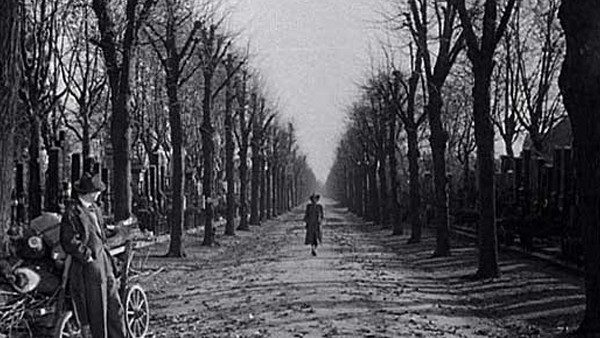
Carol Reed's indelible film noir masterwork is fondly remembered for its moody, meticulously designed, Oscar-winning cinematography, exemplified no better than in the transfixing final image.
As protagonist Holly Martins (Joseph Cotten) waits outside the cemetery for Anna Schmidt (Alida Valli), the ex of Orson Welles' twice-dead icon Harry Lime, she takes a slow walk towards the camera, before completely ignoring Holly and pressing on without him.
As a perfect visual summation of the characters and their feelings - Anna cannot forgive Holly for killing Harry, regardless of whether it was really wrong at all - and as a pure piece of art, it is a stunning image.
It was also homaged rather wonderfully in Martin Scorsese's The Departed, with Vera Farmiga performing an incredibly similar cemetery walk past Matt Damon in the film's denouement.
7. The Shining (1980)

Perhaps no final image has struck up quite so much persistent and rabid debate as the enigmatic, mind-blowing last shot in Stanley Kubrick's masterful horror film.
After psychopath Jack Torrance (Jack Nicholson) freezes to death while in axe-wielding pursuit of his family, Kubrick delivers one final provocation, by pulling in on a photo hanging in the Overlook Hotel, taken in 1921 but appearing to feature Torrance at the centre.
Fan theories have been floating around for literally decades, perhaps that Jack has been "absorbed" into the Overlook, or as Grady (Philip Stone) tells him, he has "always been the caretaker."
Whatever your own opinion, the film's power to keep people talking almost 40 years later is a monumental testament to Kubrick's cerebral, boundary-pushing genius.
6. The Searchers (1956)

The definitive western collaboration between John Ford and John Wayne features one of the most-homaged closing images in cinema history, and with damn good reason.
Our dubious hero Ethan Edwards (Wayne) spends many years tracking down his niece, Debbie (Natalie Wood), who has been kidnapped by a Comanche tribe, and at the end of the film finally succeeds in returning her home.
With everything tightly sewn up, however, Edwards is once again a restless relic of the mythic Old West, and the gorgeous, unforgettable final shot glimpses him departing from Debbie's homestead and back out into the uncertain wilderness in which Ethan feels truly at home.
It's a haunting paean to the dying myth of the West as Ford and Wayne knew it, and its pitch-perfect composition has been reproduced in countless movies of many genres over the years, perhaps most memorably in Tarantino's Inglourious Basterds, when Shosanna (Mélanie Laurent) flees from Nazi Hans Landa (Christoph Waltz) in the opening act.
5. Planet Of The Apes (1968)

A half-century after the movie released, Planet of the Apes' tantalising final shot remains one of the smartest and most shocking twists in cinema history.
After astronaut George Taylor (Charlton Heston) and primitive human Nova (Linda Harrison) escape from the apes, they reach the Forbidden Zone and discover the remains of the Statue of Liberty, revealing that this seemingly alien planet was actually Earth all along, having been brutalised by a nuclear war.
The brilliant, shocking intelligence of the twist combines with the beautiful matte painting that made it all possible to ensure the image isn't quickly forgotten. The newer Apes movies may well have surpassed the original in many areas, but they've never quite managed to top the jaw-dropping power of this bombastic reveal.
4. The 400 Blows (1959)
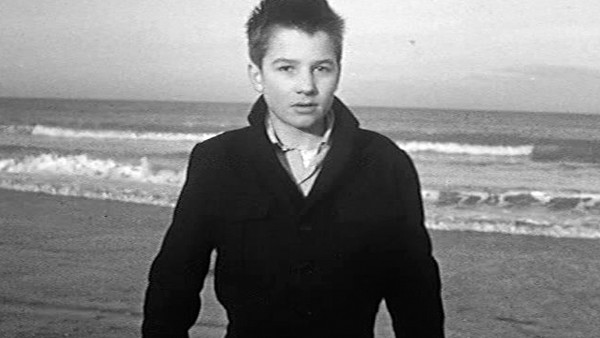
François Truffaut's iconic coming-of-age drama follows the travails of French juvenile delinquent Antoine Doinel (Jean-Pierre Léaud), and the film ends with Antoine escaping from the youth detention centre in which he resides, running towards the beach.
As Antoine finds fleeting comfort in nature's serene beauty, he turns towards the camera with an ambiguous final look, which Truffaut freezes on, reinforcing the French New Wave's tendency to play with cinematic convention and have characters break the fourth wall.
What the image and Antoine's final expression are saying has been widely debated for over 50 years, but it certainly feels like Truffaut - on whom Antoine is partly based - directly asking the audience what should be done with youths such as Antoine.
Rarely has the human face ever been used so potently to reflect the viewer's own thoughts, feelings, prejudices and politics right back at them.
3. The Dark Knight (2008)

Christopher Nolan forever changed the superhero genre with The Dark Knight, a ludicrously stylish, thoughtful and unremittingly intense blockbuster which raised the bar for what comic book films could and should aspire to.
Its final sequence sees Batman (Christian Bale) riding off into the night, taking the blame for Harvey Dent's (Aaron Eckhart) rampage across Gotham with the cops in tow.
As Jim Gordon (Gary Oldman) explains the situation to his son through an epic monologue ("Because he's the hero Gotham deserves, but not the one it needs right now"), our final image of the Caped Crusader shows him speeding through a tunnel into the night.
It might feel a little less intense when you remember that Bruce just returned home and pretended like nothing happened, but in the moment, it was superhero cinema at its most iconic and stunningly operatic.
2. The Godfather (1972)

Honestly, this spot could've easily been taken up by the final shot of either the first two Godfather movies, but Francis Ford Coppola's searing original just about clinches it for so superbly cementing the rise of Don Michael Corleone (Al Pacino).
The haunting final glimpse shows Michael's wife Kay (Diane Keaton) looking on while Michael is greeted by his capos as Don Corleone, confirming to her that Michael has fully committed to taking his father Vito's (Marlon Brando) place as the ruthless head of the family.
The scene is of course front-loaded by the montage of death, at Michael's behest, which occurs moments earlier, ensuring the lingering look at Kay's face as the door closes on her is one of the most emotionally fraught endings in all of cinema.
Dramatically, thematically and symbolically, it is perfection.