20 Greatest Opening Lines In Movie History

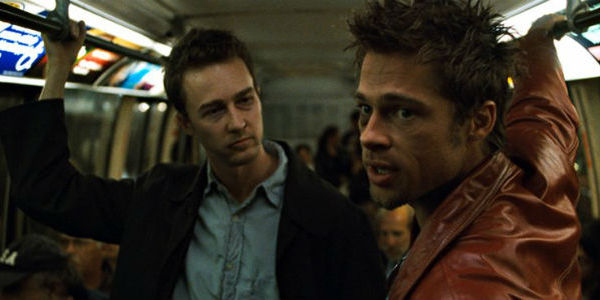
"People are always asking me if I know Tyler Durden."
They always tell you not to judge based on first impressions, but we disagree -- sometimes it's necessary. A good movie should be able to tell you exactly what it is with the very first line of dialogue. The opening scene of any movie is an opportunity to lure audiences in, to make a statement, and to define itself. After all, film isn't what it used to be, when people had to actually go to theaters or watch something once it was out on video; for better or worse, it has evolved into an incredibly disposable commodity. Viewers give a movie ten minutes, maximum, to engage them and if not, switching to another film on Netflix is only too easily done. That first impression is worth more than ever in a world with limitless entertainment options. If your audience isn't hooked right away, you've already lost the battle. There's no incentive for the typical moviegoer to sit through a movie that doesn't engross them immediately. The movies on this list, on the other hand, have elevated the opening line into an art form. Some are clever, poignant, witty, or heartbreaking, but they all draw audiences in and give us a clue of exactly what we're in for.

20. Fight Club

"People are always asking me if I know Tyler Durden." David Fincher is a tricksy little fellow. In Fight Club, he decides to give away the entire twist of the movie in the very first line -- but you only realize that after you've watched the whole thing. When Ed Norton comments on how people always ask him if he knows Tyler Durden, its a sly wink at their shared identity, and it's infuriating when you realize exactly how many clues you were given throughout the film that were disguised as seemingly innocuous comments. The twist is expertly crafted by a master filmmaker right from the first line of the movie.

19. Annie Hall

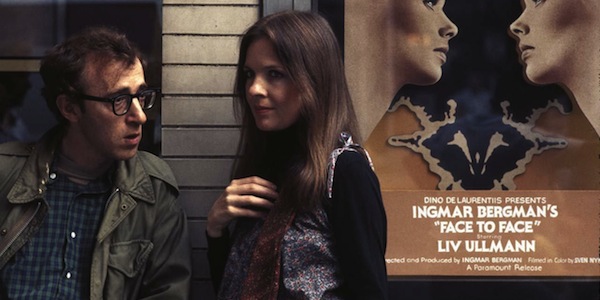
"There's an old joke - um... two elderly women are at a Catskill mountain resort, and one of 'em says, "Boy, the food at this place is really terrible." The other one says, "Yeah, I know; and such small portions." Well, that's essentially how I feel about life - full of loneliness, and misery, and suffering, and unhappiness, and it's all over much too quickly. The... the other important joke, for me, is one that's usually attributed to Groucho Marx; but, I think it appears originally in Freud's "Wit and Its Relation to the Unconscious," and it goes like this - I'm paraphrasing - um, "I would never want to belong to any club that would have someone like me for a member." That's the key joke of my adult life, in terms of my relationships with women." After hearing Woody Allen's opening monologue, there's nothing else you really need about his character that you haven't already discerned. His references to Groucho Marx and Freud indicate a tendency towards nostalgia and intellectualism. His jokes are less funny than they are darkly sardonic, which sort of sums up his sense of humor, but they also give us insight into his view on life. Allen's character is deeply insecure and self-deprecating from the very start. Normally we say "show us, don't tell us" when it comes to characterization, but Woody Allen has mastered the art of doing both, as evidenced in Annie Hall.

18. High Fidelity

"What came first, the music or the misery? People worry about kids playing with guns, or watching violent videos, that some sort of culture of violence will take them over. Nobody worries about kids listening to thousands, literally thousands of songs about heartbreak, rejection, pain, misery and loss. Did I listen to pop music because I was miserable? Or was I miserable because I listened to pop music?" Introspective, intelligent, and more than a little bit self-pitying. Love it or hate it, that's the perfect way to describe Rob Gordon, High Fidelity's main character. Throughout the film, he is consumed by his obsession with three things: music, the women in his life who have abandoned him, and his own misery. This line isn't just eloquent and pseudo-poignant, it's also a perfect window into the world that this character inhabits.

17. Fear And Loathing In Las Vegas

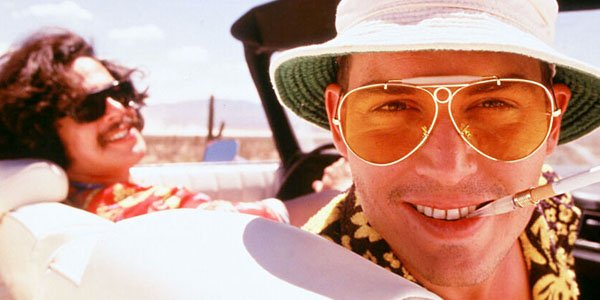
"We were somewhere around Barstow, on the edge of the desert, when the drugs began to take hold." This line leads to a long, rambling speech that ends up being hilariously nonsensical, but the key part is that opening line. Once the drugs kick in at the beginning of the film, it's just one wild and crazy binge until the end credits roll. In fact, if we had to sum up Fear and Loathing in Las Vegas in one line, it would probably have to be, "when the drugs began to take hold." It's a perfect microcosm of the entire film.

16. To Kill A Mockingbird

"Maycomb was a tired, old town, even in 1932 when I first knew it. Somehow it was hotter then. Men's stiff collars wilted by 9:00 in the morning. Ladies bathed before noon, after their 3:00 naps,and by nightfall were like soft tea cakes with frostings of sweat and sweet talcum. The day was 24 hours long, but it seemed longer. There was no hurry, for there was nowhere to go and nothing to buy; no money to buy it with. Although Maycomb County had recently been told that it had nothing to fear but fear itself. That summer I was six years old." The beloved film To Kill a Mockingbird is a lot of things. It examines racial tensions in the South during the Great Depression, as well as exploring the nature of childhood and all of its complexities that we seem to forget about once we become adults. But its also a snapshot, a moment in time of a sleepy small town captured for eternity, and that's what the film's first line really speaks to. In just a couple of sentences, we know everything we need to know about Maycomb. With the description that is surprisingly poet in its simplicity, the film doesn't need to waste any time establishing our setting -- we're already there in our minds.

15. The Seventh Seal

"Who are you?" "I am Death." Five little words. That's all it takes. This brief exchange is chilling in its simplicity -- a cold voice saying "I am death," seems to possess the finality of death itself. This marks the beginning of the battle between a medieval knight and the physical embodiment of death in the midst of the Black Plague. It establishes the inherent confrontation and the adversarial nature of the relationship between the two characters, which is further explored in their game of chess with the highest stakes imaginable.

14. Forrest Gump

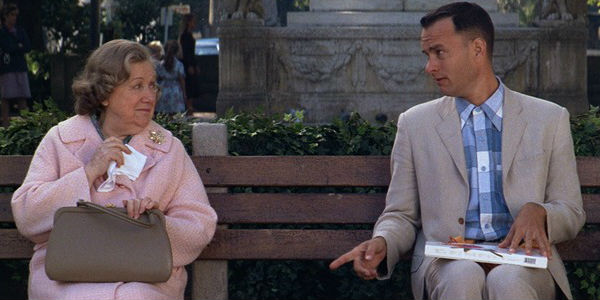
"Hello. My name's Forrest. Forrest Gump. You want a chocolate? I could eat about a million and a half of these. My momma always said life was like a box of chocolates. You never know what you're gonna get." Think back to a time before everyone was running around annoyingly quoting, "Life is like a box of chocolates." It was actually kind of poignant back when the movie first came out, the kind of homespun homily that everyone's parents had. Our first introduction to the title character, it encapsulates Forrest's kind-hearted, simple worldview, one where life isn't scary and his mother still had all the answers. It immediately puts us in the position where we're inclined to like the sweet little guy, and ready to hear his remarkable saga spanning over three decades of American history.

13. The Breakfast Club

"Saturday, March 24, 1984. Shermer High School, Shermer, Illinois, 60062. Dear Mr. Vernon, we accept the fact that we had to sacrifice a whole Saturday in detention for whatever it was we did wrong. What we did *was* wrong. But we think you're crazy to make us write an essay telling you who we think we are. What do you care? You see us as you want to see us - in the simplest terms, in the most convenient definitions. You see us as a brain, an athlete, a basket case, a princess and a criminal. Correct? That's the way we saw each other at 7:00 this morning. We were brainwashed." The Breakfast Club was one of those moves that an entire generation of teenagers was able to relate to. Part of this is because it features a group of students who were all unique but clearly defined as specific high school archetypes. The whole point of the movie is that even shallow, melodramatic high schoolers are more than just their clique stereotypes, a sentiment that is well set up by Anthony Michael Hall's introductory monologue.

12. Full Metal Jacket

€œI am Gunnery Sergeant Hartman, your senior drill instructor. From now on, you will speak only when spoken to, and the first and last words out of your filthy sewers will be 'Sir!' Do you maggots understand this?€ As soon as we begin Full Metal Jacket, it becomes clear that this is not going to be one of those heart-warming, noble combat films where the brave soldiers work together for honor and the preservation of the American way. In other words, this is a totally different beast from the uplifting propaganda films we saw throughout World War II and even most of the Vietnam War years. We're shocked by the drill sergeant's brutal speech to his soldiers, and we can tell that this is going to be ugly. A dark, gritty, warts-and-all depiction of modern American warfare, Full Metal Jacket establishes its character in the very first line.

Contributor
Contributor

Audrey Fox is an ex-film student, which means that she prefers to spend her days in the dark, watching movies and pondering the director's use of diegetic sound. She currently works as an entertainment writer, joyfully rambling about all things film and television related. Add her on Twitter at @audonamission and check out her film blog at 1001moviesandbeyond.com.