20 Idiotic Decisions Made By Characters In The X-Men Franchise
11. Magneto Creates A Bridge Between Alcatraz & The Mainland - X-Men: The Last Stand

One of the coolest scenes in the otherwise lackluster sequel X-Men: The Last Stand sees Magneto using all of his metal manipulating powers to construct a makeshift bridge between the mainland and Alcatraz Island in San Francisco - that's to say, he uses the actual Golden Gate Bridge to do this, because he's Magneto and it makes for a really cool image that the marketing folk can use on the poster.
Badass as this is, though, it actually makes no sense at all.
Magneto's plan, after all, involves him infiltrating Alcatraz - something he could have done in a far more subtle and inconspicuous manner had he and a few other mutants gone to the island quietly instead (away from the authorities and the attention of the X-Men). Instead, Magneto actually gives everyone in the world an easy pathway to access Alcatraz via the bridge, and - in turn - a sure-fire way to stop his plan. Moronic, really.
10. Magneto Watches The Final Battle Instead Of Taking Part - X-Men: The Last Stand
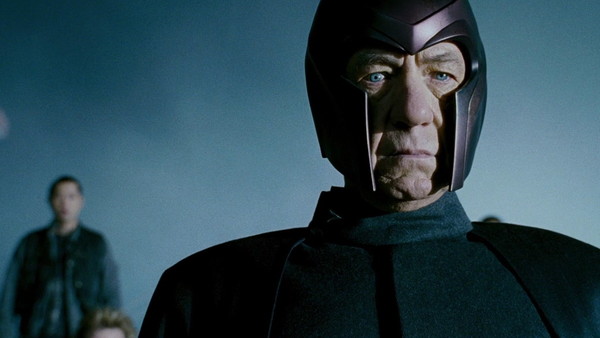
The more time you spend looking for dumb decisions scattered throughout the X-Men franchise, the more you realise that Magneto makes some really awful choices - choices that actually prevent him from achieving any of his goals, despite the fact that they're so downright easy to avoid.
Take this one, for example, which showcases another highly questionable moment courtesy of this otherwise badass mutant: during the final battle in X-Men: The Last Stand, Magneto spends a large portion of the battle looking down from a vantage point at the ensuing fight between the good guys and the bad guys.
Just staring. Shooting the breeze. Surveying the carnage.
Why, save for the fact that the filmmakers wanted a "cool" shot of the villain looking out across the battle, would Magneto settle for just watching? He's arguably the most powerful mutant ever - one with the ability to manipulate metal. Help out, Magneto; you could have easily taken the good guys on your own if you'd have considered getting involved for a few minutes, surely?
9. Magneto Hangs Out In Central Park Without A Disguise - X-Men: The Last Stand

After the events depicted in X-Men: The Last Stand, Magneto would probably end up as the most wanted man in America, given that he destroyed one of the most famous landmarks in the country, attacked Alcatraz, and was responsible for the deaths of a whole lot of people. And yet, by the end of the movie, Magneto is just chilling out in his normal clothing, playing chess in a park without a disguise? You gotta be kidding, right?
Surely somebody would notice him hanging in such a popular place? And surely, now lacking his "powers," Magneto would want to be careful, what with the fact that he would be unable to fight back if anybody attempted to confront, attack or arrest him?
It just seems like an incredibly dumb thing to do; the X-Men equivalent of a super famous celebrity walking down a street in New York and expecting nothing to come of it.
8. Wolverine Opts To Fight In All US Wars, Despite Being Canadian - X-Men Origins: Wolverine

Wolverine is Canadian. It's as simple as that.
At some point, it's almost as if the screenwriters forgot all about the character's heritage, given that X-Men Origins: Wolverine poises Logan as a US soldier in numerous US wars. Sure, he could have easily pretended to have been an American and fought regardless, but for what purpose? Why would Wolverine, as a Canadian, choose to make life more difficult for himself by getting tangled up in the wars of an entirely different nation?
Hecouldn't have been enlisted, after all, and given his nature as a drifter, joining the US army on multiple occasions seems a little farfetched. It just seems like lazy screenwriting, which - in turn - betrays both Wolverine and his origins for no good reason. Not a worthwhile - or logical - decision on Wolverine's part, that's for sure.
7. Wolverine Decides To Fight Deadpool Up High Just 'Cause - X-Men Origins: Wolverine
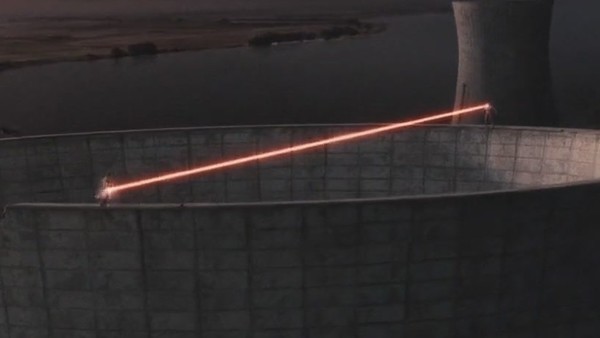
Okay, so cinema is all about creating memorable images, so a fight on top of a cooling tower obviously packs more of an aesthetic punch than just doing it on the ground.
Then again, good writing is about giving characters a good reason to fight on top of said cooling tower, and in the case of X-Men Origins: Wolverine, that just ain't happening.
During the final battle against Deadpool, Wolverine decides - for no reason - to take the battle up high, to a place where he increases his risk of death by ten-fold and gains no real advantage over his opponent. The fight - which culminates on the top of a cooling tower - reeks of studio executive interference, who presumably saw a fight had been written to take place on the ground and said: "Why don't we get them fighting up high?"
Surely Wolverine wouldn't be so dumb?
6. Yashisa Foils His Own Plan & Lets Wolverine Slip Through His Fingers - The Wolverine
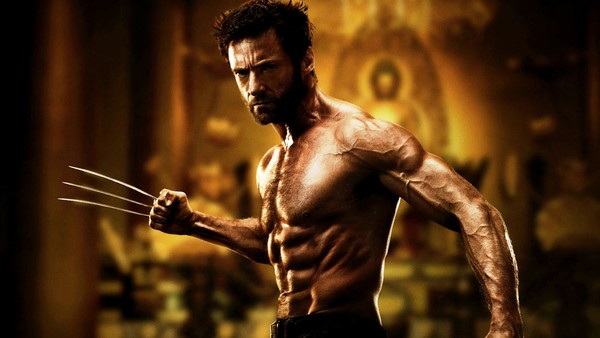
Here's a really massive and highly questionable decision courtesy of a supposedly intelligent villain - odd, given that it's the one decision that drives the entire story inherent to The Wolverine, which has everybody's favourite X-Man battling samurais and ninjas and such in the Land of the Rising Sun.
The villain in question is an old Japanese man named Yashida; his ultimate plan is to take Wolverine's healing power from him so that he might live forever. Okay - it's little sketchy, but it's still fine. The problems arise from the ways in which he goes out achieving this, however, which is in pretty much the worst way imaginable.
Firstly, Yashida asks Wolverine to give him his powers. Wolverine says no. At this point, and with all his is superior technologies, Yashida should have captured Wolverine (we know he's capable of this) and gone about doing what he needed to do. Instead, he decides to just "weaken" Wolverine whilst the hero roams Japan (talk about an unnecessarily slow process) only to set about capturing and bringing him back at a later point.
But Wolverine was already in Yashida's house. He stayed the night. Why did Yashida bother to let him go?
5. Kitty Sends Wolverine To 1973 Instead Of Just Going Back & Killing Trask At Birth - X-Men: Days Of Future Past

The main idea inherent to X-Men: Days of Future Past is that Wolverine must travel back in time to 1973 where he must prevent a series of events from occurring which ultimately lead - in the present day - to the extinction of the X-Men, courtesy of some nasty robot killing machines designed by a man named Bolivar Trask. Out of nowhere, Kitty Pride has the power to transport Wolverine's conciousness to his 1973 self (don't ask).
What makes zero sense, though? Why send Wolverine back to 1973, at what is clearly the most difficult point in history for him to achieve his mission? Magneto and Professor X aren't friends; there's threat of war at every turn; Trask has established himself and has begun work on the Sentinel program... it's an incredibly turbulent period. Wouldn't it have made more sense to send Wolverine back to 1972? Or 1970" Or 1967? Or 1953?
He could have just rocked up at Trask's house when the guy was still just kid and solved the problem in seconds. What was gained from attempting such a risky mission at the riskiest time in history?
4. Mystique's Vietnam Rescue Plan Lacks Any Sense Of Logic - X-Men: Days Of Future Past
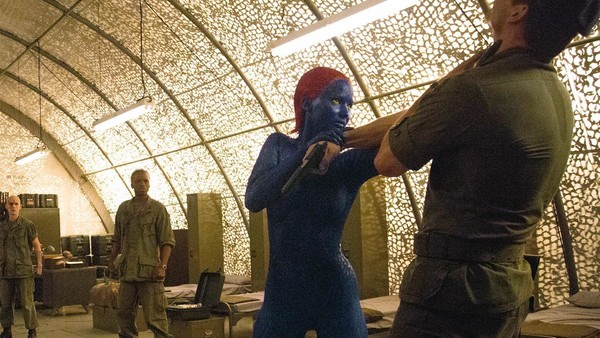
X-Men: Days Of Future Past features a tense scene in which Mystique travels to Vietnam during the war in order to rescue a bunch of mutants who are at the mercy of one William Stryker. To do so, she impersonates an South Vietnamese Army Colonel, though - once said mutants are rescued - she transforms back into her Jennifer Lawrence-looking self, albeit with a uniform.
At this point, it's odd, as nobody seems to notice her female appearance in amongst of those men.
But the really odd part of her plan stems from the fact that she doesn't actually do anything to Stryker over the course of carrying it out - surely it would have made sense to at least knock out or (let's face it) kill the one man who can intervene or order an attack on the very plane that Mystique and the mutants use to escape? No?
It just all seems a little convoluted for the sake of "looking cool" - from a logical point of view, the whole deal is rather questionable and sort of stupid.
3. Professor X Comes Along To Rescue Magneto (Unnecessarily) -X-Men: Days Of Future Past
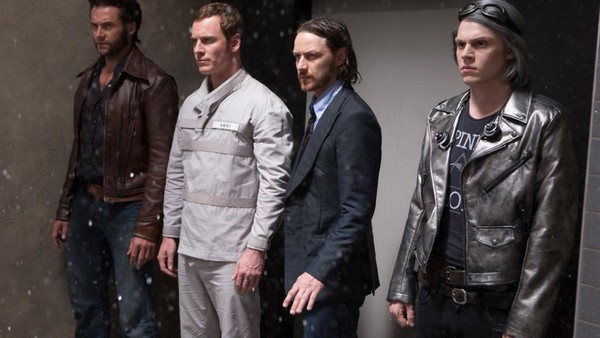
A generally simple mistake - and one that would never have occurred in real life for reasons of logic.
That's to say, during the Magneto break-up sequence that occurs towards the beginning X-Men: Days of Future Past, Wolverine enlists Hank McCoy and a young Quicksilver in order to help break the supervillain out of from a maximum security installation. At this point in the story, though, Professor X is weak and powerless. So what does Wolverine do?
Hebrings him along for the super dangerous break-out mission, of course!
In reality, Wolverine would never have been stupid enough to bring Professor X; during this period, Professor X is a bonafide liability, and he brings nothing to the mission. Clearly the screenwriters needed to make sure the character was part of the scene, but failed to consider the fact that he was probably better left outside waiting to drive the getaway vehicle or something.
2. Wolverine Sends Quicksilver Home - X-Men: Days Of Future Past

Everybody's favourite scene in X-Men: Days of Future Past seemed to be the one where Wolverine and Professor X recruit Quicksilver to help them break Magneto out of the Pentagon, which results in a super hilarious and badass sequence whereupon the character slows down time, manipulates a few guards, and generally saves the day to the sounds of Jim Croce.
The scene is great, but it also confirms the likes of Quicksilver as one heck of a mutant - he's overpowered to the point that he could easily solve pretty much any problem on Earth at the drop of a second (or less).
Quicksilver could have been used, then, to remedy the entire situation that drives the plot of X-Men: Days of Future Past. And yet, after he's fulfilled the single purpose of breaking out Magneto, Wolverine sends Quicksilver away for reasons akin to "your mother needs you" - an unsubtle attempt on the screenwriter's part try and get movie-goers to forget that Quicksilver is too powerful and needs to be swept under the carpet.
In reality, Wolverine should (and would) have pimped the hell out of Quicksilver and his abilities. Why in the world would he ever dream of sending such an inherently handy mutant home at such an important time?