20 Mind-Blowing Facts About Inside Out

11. ...And It's Not Called "Inside Out" In Foreign Theatres
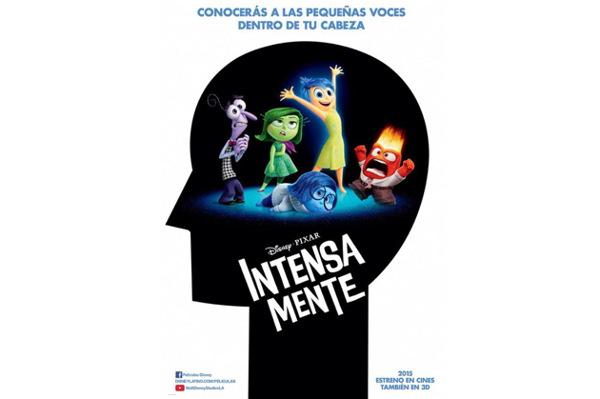
The multiple meanings of the title "Inside Out" don't work in many languages besides English, so foreign territories have had to retitle the film from scratch, and the results sound kind of odd to English ears. In Brazil and Portugal it's Divertida Mente ("Mind Fun") in France it's Vice-Versa, and in Spanish-speaking countries it's Intensa Mente ("Intense Mind" or "Furiously"). Sweden and Norway opted for direct, literal translations. The movie was also known in the Pixar offices as "Cake," which was only a working title that didn't seem to have anything to do with any plot, while publicly it was dubbed "The Untitled Pixar Movie That Takes You Inside the Mind".

10. Three Out Of Five Emotions Are Veterans Of The Office
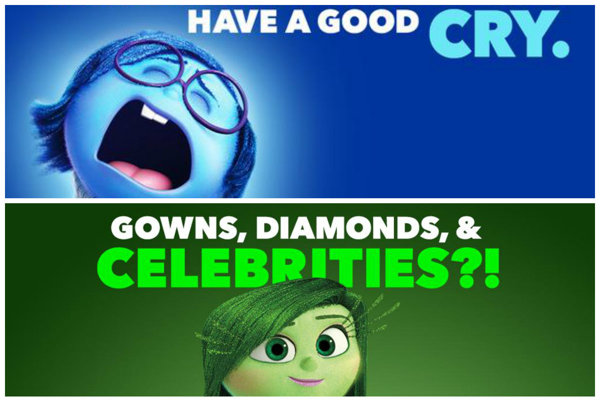
In a way, Inside Out is an office comedy: a bunch of people are thrown together with no training at all and nothing in common but the desire to do a job. So it's appropriate that some of its actors have impressive office-comedy credentials. Phyllis Smith (Sadness) and Mindy Kaling (Disgust) were both cast regulars on The Office (Phyllis Vance and Kelly Kapoor), while Bill Hader (Fear) appeared as himself in an episode. Rashida Jones (Cool Girl's Emotions) also had a recurring role in the sitcom as Karen Flippelli. Although Hader got Amy Poehler into the project through their work together on Saturday Night Live, she is best known for two other office comedies - 30 Rock and Parks And Recreation.

9. Gloom Was Almost The Villain

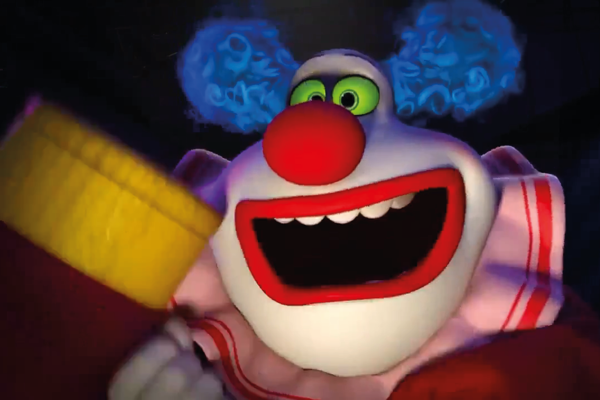
Sure, Jangles the Clown is scary, but he's ultimately more a means to an end. Villains in Pixar are sometimes central (like Syndrome in The Incredibles and Randall Boggs in Monsters Inc.) and sometimes more secondary (like Sid in Toy Story and Chef Skinner in Ratatouille) but Inside Out is the first Pixar movie with no real big bad at all. In yet an earlier draft, Gloom was a malevolent force that threatened to consume all other emotions, or at least render them powerless over Riley. Although this idea is faintly echoed on the bus as the emotions can no longer make Riley feel anything, Docter veered away from it when he realised it could be presenting clinical depression as, ultimately, just something to walk off.

8. Fear Was Originally The Hero

Originally, Joy wasn't meant to be the leader of the group. That role went first to Logic, keeping the other emotions on a leash, and then to a miniature Riley, transported to her own emotional landscape like Dorothy into Oz. Joy was also called "Optimism" in early drafts until Docter learned Optimism wasn't generally considered an emotion. Even after Joy took the lead, another version of the story had Fear as Joy's partner instead of Sadness. That seemed like the funniest choice and inspired some crunchy dialogue, but it read as more believable that Joy and Sadness, as true opposites, would have the most difficult time understanding and communicating with each other.

7. It Was Almost About Repression Or Anxiety

Another plot idea the team finally discarded was almost a reversal of Joy's mission in the final film. Instead of trying to preserve good memories, Joy would seek to destroy a bad one, to throw it, in Docter's words, "into the pit of Mordor." One can imagine this movie would get far darker if Riley were exposed to a bad memory she wanted to repress, and this plot idea would cast Joy as something of a villain. Another version had Riley freaking out over getting to be the bird a Thanksgiving Day pageant, sending the message that even small things can be significant in our minds. As Docter put it, "That was so weird and just didn't work."

6. A Disney Ride Makes A Subtle Appearance

As if a dead rat looking suspiciously like the Ratatouille star Remy wasn't enough to make Riley's nightmare awful, the music playing during the nightmare is from the Disneyland/Disney World ride The Haunted Mansion. Conceived in 1952 and open in Disneyland since 1969, The Haunted Mansion is a near-perfect match for Riley's circumstances: a Vincent Price-like voice (Paul Frees) narrates with dark humor how the ride-goers, or victims, are now trapped in the spooky mansion. It was enough of a part of popular culture to inspire its own movie in 2003 and a brief series of comic books from 2005-2007. This isn't the only theme-park connection in the film, either...

5. It's Pete Docter's Second "Inside-The-Mind" Film... And At Least Disney's Third

https://www.youtube.com/watch?v=5qGsuEYMirg Pete Docter's other film with this theme was part of the fondly remembered (if poorly recorded) Disney World attraction Cranium Command, open from 1989 to 2007. The movie had a very different analogy for the mind, more military than office comedy, and it was divided between reason and emotion rather than Inside Out's spectrum, but it featured some similar themes of growing up. But that wasn't Disney's first flirtation with the mind. In 1943, they made Reason And Emotion, a wartime propaganda film about the brain's response to Adolf Hitler. The upshot of it was that Hitler had no reason, but his speeches were very effective on those who let their emotions rule them. It was nominated for an Academy Award. https://www.youtube.com/watch?v=nvp3zAPraF4

4. Bing Bong Almost Led A Village Of Imaginary Friends

Early drafts featured many more imaginary friends than just Bing Bong, like Mrs. Scribbles, a stick-figure drawn in crayon on the wall, and Corner Sun, a quarter-sun like one a child might draw (in crayon, again) at the corner of a piece of paper. To hear the production team tell it, they were having a fine old time designing imaginary character after imaginary character, but realised they were getting too far away from the focus of the story, so Bing Bong came to stand in for all the other imaginary friends. There was some concern even he would distract from the basic pitch, as he didn't represent any emotion in particular, so he was left out of promotional material for the movie.

3. The Skin Textures Almost Sank The Movie

During production, the bubbly, glowy skin texture on Joy, making her look like she was barely-organized energy particles, was taking too long to produce, and the animators were prepared to drop it. However, Pixar Chief Creative Officer John Lasseter saw it, loved it, and wanted variations on it for all the characters. As production designer Ralph Eggleston put it, "You could hear the core technical staff just hitting the ground, the budget falling through the roof. But it was all good. They found a way to make it work." While Joy is generally the "glowiest" of the five, they now all show this sort of "energy texture," a detail easy to miss on first viewing.

2. Anger Was Made For Lewis Black When Pete Docter first pitched the film to Lasseter, he specifically said, "Imagine the fun we're gonna have when it comes to casting. We could get people like Lewis Black as Anger!" Which they did. The filmmakers modelled key parts of Anger's personality on Black: his tendency to react to current events and the way he, as Joy diplomatically puts it, "cares a lot about things being fair." It's the unfairness of real-life current events that informs Black's stand-up comedy. Several times, Anger can be seen reading The Mind Reader, a paper reflecting Riley's current reality.


In this post: 
Inside Out
 
Posted On: 
Contributor
Contributor

T Campbell has written quite a few online comics series and selected work for Marvel, Archie and Tokyopop. His longest-running works are Fans, Penny and Aggie-- and his current project with co-writer Phil Kahn, Guilded Age.