20 Mind-Blowing Facts About Inside Out

You'll never guess who the original lead was.

Just as Inside Out goes deep into the brain of an 11-year-old girl, we're about to go deep into the background of Pixar's latest and, some say, greatest adventure. Inside Out is the result of five years of careful labor under sometimes difficult circumstances. Various story ideas were tried and discarded or reworked and, due to troubles with its neighbour film, The Good Dinosaur, there hasn't been a Pixar film since 2013's Monsters University (and not a non-sequel since 2012's Brave). It was worth the wait; the movie shows all of the incredible, painstaking craftsmanship Pixar is known for. Despite the simple-seeming idea of figures that represent emotions, the five come across as fully realised people. Each of them is capable of the feelings represented by the others and more. Sadness isn't always sad just because she's "sadness," she's also sad because no one seems to believe she has anything useful to offer the group. And not only Joy, but the other three, especially Fear, feel deep satisfaction at a job well done. This sort of complexity is the result of careful planning, production, and plenty of rewriting. It's fascinating to look deeper into Pixar's process and discover how the movie was made, what didn't make the cut, and what secret treats the filmmakers hid in the margins Here are 20 amazing facts you can use to impress your friends and heighten your appreciation of this modern classic.

20. The A113 Easter Egg Makes A Subtle Appearance
There are certain Easter eggs found in every Pixar movie that everyone knows to look out for. One of them is the mysterious code "A113," which refers to A1-13, the graphic design and character animation classroom in the California Institute of the Arts. The importance of that class cannot be overstated: it trained many of the foremost workers and thinkers in animation today, but most relevant to Pixar are the company's chief creative officer, John Lasseter, and director Brad Bird. A113 also shows up in many non-Pixar movies, even ones that aren't technically animated, like The Avengers and Meet The Robinsons, as well as multiple episodes of The Simpsons and American Dad and numerous video games. In Inside Out, it pops up in graffiti at the bus stop, just as Riley is getting ready to run away from home.

19. The Designs Had Their Roots In The 1930s And 1940s

While Pixar always looks to the future of animation, it respects the history of the form too, and Inside Out draws deeply from those early. The idea for characters who reflect emotions comes from Snow White And The Seven Dwarfs (Joy and Anger, especially, have their ancestors in Happy and Grumpy). And, because expressing emotion is key to the whole story, the more wildly expressive animated shorts of animators like Chuck Jones and Tex Avery had more influence on the finished product. The faces and bodies of the emotions are much more exaggerated than those of other Pixar characters, with the possible exception of Mike Wazowski from the Monster movies, just like the classic Warner Bros. shorts.

18. It Reflects Modern Neurology

Director Pete Docter and co-writers Meg LeFauve and Josh Cooley consulted closely with neuroscientists in the process of writing Inside Out. It's accurate that some memories are fundamental, all are changeable, and memories are a source of our sense of self. The idea that memories are converted from short-term to long-term during sleep also matches our current understanding. Most important to the film's climax is the idea that all emotions serve a positive purpose, even seemingly "negative" ones like disgust, anger, and, most of all, sadness. That said, the movie is no documentary. Some of its concepts, like the "central command" for the brain, are old-fashioned simplifications deemed necessary for a smooth story.

17. There's A Hidden Tribute To Steve Jobs

In the Dream Productions studio, the "reality distortion filter" transforms gumdrop-like dream-creatures into facsimiles of people from Riley's life, so she can dream about her teacher at school. This is a nod to Steve Jobs, Pixar's first chairman and investor, whose charisma was said to create a "reality distortion field" that could bedazzle his audience. Jobs' exact role in Pixar's history is sometimes difficult to quantify, but it's safe to say the company would not exist without his vision, forward thinking and generous investment. This isn't Pixar's only nod to Jobs. Toy Story credited him as an executive producer and the credits of other films gave him "special thanks," with the biggest dedication coming from Brave, released after Jobs' death.

16. The Writers Considered 27 Emotions

Neuroscientists all seem to feel our feelings boil down to a certain set of emotions, but they don't always agreed on exactly how many we have, or even what they are. Some of the consultants claimed humans feel 27 different emotions, and Pixar planned to work up to that many eventually. Four that could have had large roles were Pride, Trust, Logic and Surprise. Some maps of basic emotions include the five from the movie, plus Surprise. He (or she) was the last to go and made it to the scripting stage, but the filmmakers found his/her reactions too similar to Fear's.

15. Riley's Mind Used To Have Even More Regions

Inside Out created a rich geography of the mind for Riley: Imagination Land, the Islands of Personality, Long-Term Memory, Headquarters, the Train of Thought, the Memory Dump, Dream Productions and the Subconscious Basement. With such creativity at work, it's no surprise the animators also created even more; Idea Fields (from which farmers truck ideas to Headquarters) and a Stream of Consciousness. Sadly there just wasn't room for either in the story, and the emotions were shown to have much easier access to ideas for Riley than phoning up a trucking company: they just went to a closet. Riley's mind will no doubt continue to expand once she hits puberty (or as the emotions call it, "puh-berty"), so it's entirely possible we'll see the Stream in a sequel.

14. Bill Hader Got His Role By Crashing The Studio
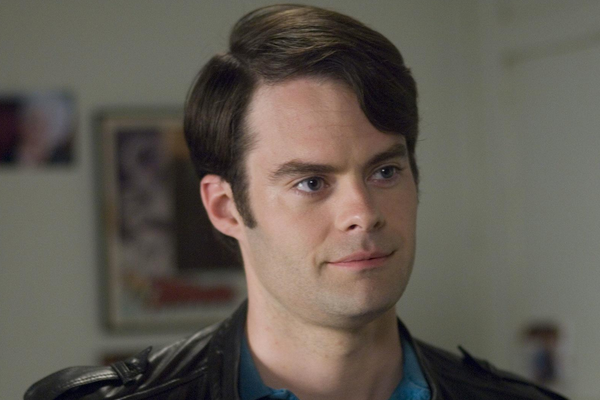
"I kind of stalked them," Hader, who plays Fear, later admitted. He showed up claiming to be a huge fan, and requested a tour, using it to meet Docter and producer Jonas Rivera. They cast him, then immediately asked if he could use his working history with Amy Poehler (who eventually played Joy) on Saturday Night Live to get her into the project. "We don't want her to think we're weird," they said, with touching humility. The Pixar filmmakers then decided turnabout was fair play and "kind of stalked" the offices of SNL, asking its producer Lorne Michaels for permission to observe and research. The scene in Dream Production owes a lot to what they saw about the process of assembling skits quickly for TV.

13. It Was Made By Half The Animators
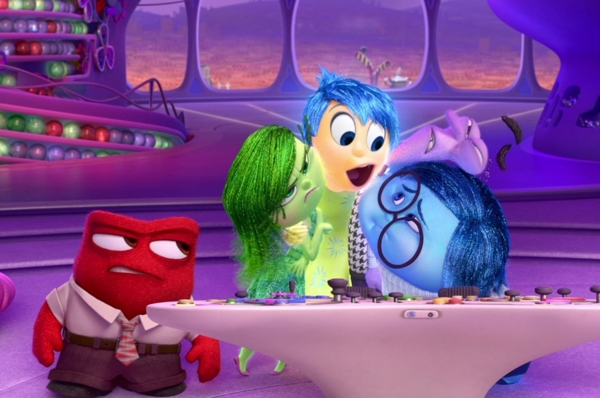
Not only did the cast of characters shrink from what was originally planned, so too did the production team putting the movie together. Inside Out was originally expected to employ 80 or 90 animators, as most previous Pixar films did, but instead only had half of that. During the production, the overall Pixar staff saw some restructuring and even a few layoffs due to the most troubled part of The Good Dinosaur's production. However, Inside Out's crew claims to have benefited from a relatively tight circle, making its brainstorming sessions run more smoothly.

12. It's Not The Only Movie Called "Inside Out"

Only two years before Pixar's film hit cinemas, a documentary about a French artist came to select U.S. theaters, and only two years before that, a crime drama by Artie Mandelberg was released. The link? All had the title Inside Out. Interestingly, that crime drama was produced by WWE Studios, and featured Paul "Triple H" Levesque, Michael Rapaport and Parker Posey. Other Inside Outs include four softcore sex videos by Playboy, a heist movie where former American and German soldiers go after hidden Nazi loot (1975), a story of an agoraphobic forced to face the outdoors (1986) and a psychological thriller involving a mysterious doctor ruining an idyllic town (2005). That's not counting the music videos by Eve 6 and Britney Spears. Make sure you order the right one when this movie goes to video.

In this post: 
Inside Out
 
Posted On: 
Contributor
Contributor

T Campbell has written quite a few online comics series and selected work for Marvel, Archie and Tokyopop. His longest-running works are Fans, Penny and Aggie-- and his current project with co-writer Phil Kahn, Guilded Age.