20 Movie Sequels Everyone Knew Were A Huge Mistake (But Still Got Made)
Everyone saw these duds coming, even the people making them.
Sequels are the very thing that Hollywood needs, that it craves, in order to keep all that big, expensive studio machinery turning - the need to milk an IP dry of every last cent rather than rolling the dice on risky original ideas.
And while there are many, many great sequels produced with creativity and good intent, there are also many more sequels made solely to squeeze the remaining money out of a brand while it's still relevant, even if there's no real good idea at the core.
That's absolutely true of most of these 20 movie sequels, which weren't just viewed as a huge mistake by critics and fans, but perhaps even those involved with the production.
Since these mostly dreadful sequels came and went, many cast and crew members have held nothing back in detailing how they knew the production was absolutely cooked long even while they were making it.
These films all made it to the finish line against the odds, though most failed to replicate the success of previous films in the series, perhaps even killing the franchise in the process...
20. Speed 2: Cruise Control

Speed is one of the most beloved action films of the 1990s, and so a sequel made a certain amount of sense, except Speed 2: Cruise Control ended up being basically everything it should've never been.
For one, Keanu Reeves wasn't in it, leaving poor Sandra Bullock to slum it with his less-than-stellar replacement, Jason Patric.
But Speed 2's biggest problem is its entire premise - a runaway cruise ship isn't nearly as exciting or intense as a bomb-rigged bus, and the title "Cruise Control" straight-up suggests a more benign, less-enthralling outing than what came before.
Bullock later admitted that she had huge reservations about the film during production, and after seeing Speed 2 she knew it would be the huge flop it indeed turned out to be.
Once Reeves pulled out the writing was very much on the wall - this sequel clearly should've been 86'd without his involvement, but like a runaway cruise ship on a casual collision course with a pier, everyone just stayed the course regardless.
19. Home Alone 3

A sure-fire way to deliver a terrible sequel is by stripping away every single thing people loved about the previous ones, and that's exactly what Home Alone 3 did.
When the threequel was in early development, the intent was for Macaulay Culkin to return as Kevin McCallister once more, but when he took an acting hiatus in 1994, the filmmakers decided to pivot rather than scrap the project, centering it instead around a new protagonist, Alex Pruitt.
Culkin is so iconic in the first two films that this alone was a godawful idea - no shade to Alex D. Linz, who did a passable job with a thankless role.
But it got even worse given that Joe Pesci and Daniel Stern's Wet Bandits also weren't in it, being subbed out for a wildly inferior new batch of villainous thieves.
And so, you're left with an absolutely woeful sequel that, almost impressively, is still the third-best Home Alone film considering the utterly dire sequels we've had since.
18. Book of Shadows: Blair Witch 2

Considering the wholly unexpected global phenomenon that The Blair Witch Project became, it surprised positively nobody when a sequel swiftly entered development, ultimately releasing just 15 months after the original hit cinemas.
What did surprise many, however, was the decision to ditch the original found footage format in favour of a more conventionally styled narrative feature which effectively function as a meta-fictional sequel, taking place in a world where The Blair Witch Project film exists.
This wasn't an approach that many fans were especially interested in, and it's a rare example of where giving audiences a safe, more-of-the-same sequel was probably the right way to go.
It didn't help that Book of Shadows: Blair Witch 2 just wasn't very good, either, flopping with critics and underperforming at the box office, with director Joe Berlinger later remarking that he endeavoured to make a sequel that effectively made fun of the phenomenon surrounding the first.
With that creative approach from the outset, this one was always doomed.
17. Independence Day: Resurgence

Independence Day: Resurgence had "bad idea" written all over it the moment it was announced that original star Will Smith wouldn't be appearing it, due to a scheduling conflict with Suicide Squad.
Though there was clearly money in a legacy sequel to the original 1996 sci-fi classic, it was absolutely contingent on having Smith lead the returning ensemble cast.
And so, lo and behold, the reception to Independence Day: Resurgence was effectively a chorus of folks complaining about Smith's absence, and especially the short-sighted decision to kill off his character, Captain Steven Hiller, rather than leave the door open for his return in a potential sequel.
In a 2023 interview, series co-star Vivica A. Fox straight-up said the film was "not good" because Smith wasn't in it, and even director Roland Emmerich later expressed his disappointment it.
Hell, Emmerich even admitted that he should've stopped making the film after Smith dropped out, leaving the filmmakers to "cobble together" another script without Hiller.
16. Tron: Ares
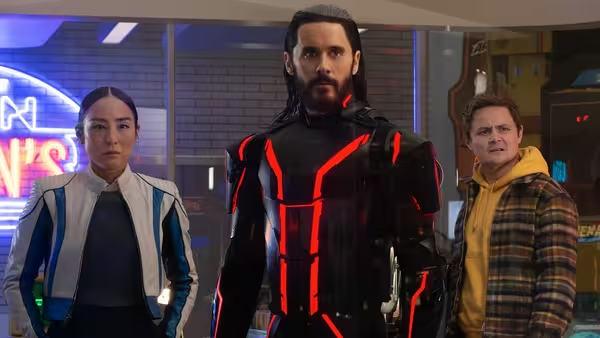
There was considerable hunger for a third Tron film following the release of Tron: Legacy, which while disappointing at the box office nevertheless endured as a cult fave sci-fi film throughout the 2010s and beyond.
Last year's Tron: Ares should've been a cause for celebration, then, except with each new announcement it became clear that the creatives were absolutely on the wrong track.
For one, Legacy director Joseph Kosinski didn't return to helm, being replaced by the more uneven Joachim Rønning (Pirates of the Caribbean: Dead Men Tell No Tales), Jeff Bridges was the only cast member to return from Legacy, and Daft Punk didn't compose the score, being replaced by the (admittedly awesome) Nine Inch Nails.
But the real albatross around the film's neck was the casting of Jared Leto as the title character, considering both his divisive status as a performer and especially the historic abuse claims levelled against him over the years.
In the end Tron: Ares was enough of a critical and commercial bust that it's most likely brought the blockbuster franchise to an end, but with smarter behind-the-scenes decisions it didn't have to be this way.
15. Evan Almighty

This won't be the first time we say it on this list: if you make a hit movie starring Jim Carrey, don't even think about producing a sequel without him.
But that's what we got with Bruce Almighty follow-up Evan Almighty, which focused instead on Steve Carell's memorable newscaster character Evan Baxter - who, while plenty funny, just isn't Jim Carrey.
Couple this with reports that Evan Almighty was the most expensive comedy ever produced at the time, with an eye-wateringly massive budget of $175 million, and it was clear to just about everyone that the cast and crew were walking into an abject disaster.
Ultimately the sequel was a critical misfire and failed to recoup even its shooting budget at the box office, after which it quickly slid into obscurity and Carell moved onto bigger and better things.
This thing should've been canned the moment Carrey said no, or at least produced at a far more modest scale without his involvement.
14. The Godfather Part III

Now in total fairness to The Godfather Part III, it's decisively the best film on this list, because while the long-awaited threequel was a pale shade of its all-timer predecessors, it's still a relatively decent - if very flawed - film on its own terms.
But it's also a film that only got made because Francis Ford Coppola was broke following the failure of his 1982 musical fantasy One from the Heart - something Coppola himself freely admitted on the DVD commentary.
This wasn't a film made because of any real creative impetus, but simply because a man had bills to pay - always a ripe condition for making great art.
Throw in the deeply disappointing absence of Robert Duvall in the role of Tom Hagen and Coppola's last-minute decision to cast his own non-actor daughter, Sofia, in the role of Mary Corleone, and it wasn't tough to anticipate what was coming.
Again, The Godfather Part III is a perfectly fine crime drama on its own, but arriving in the wake of two peerless epics? It can't help but be totally deflating to watch.
13. Highlander II: The Quickening

Production of Highlander II: The Quickening was nothing short of a literal nightmare.
Star Christopher Lambert hated the script and found the production so chaotic that he threatened to quit mid-film, while co-star Michael Ironside later claimed that the entire cast hated the script and did it for the money.
Virginia Madsen flat-out said she took the role to work with Sean Connery and get a free trip to Argentina. Meanwhile Connery refused to come to set until his massive $3 million payday for 6 days' work was placed in escrow.
Then there's the hyperinflation issue in Argentina, which caused the budget to roughly double before it was all said and done.
Director Russell Mulcahy openly hated the final version of the film, enough that he even walked out of the world premiere, which really says it all.
And yet despite how thoroughly it flopped, The Quickening somehow didn't kill the franchise off.
12. Pacific Rim Uprising

Pacific Rim wasn't high art, but it was a damn fun time courtesy of Guillermo del Toro's typically exquisite filmmaking and the game efforts of a rock solid cast.
So of course there were many raised eyebrows when it was announced that 2018's sequel Pacific Rim Uprising wouldn't be directed by del Toro - apparently because the studio failed to reserve shooting soundstages in Toronto, where the director needed to be based while prepping his next film, The Shape of Water.
On top of this, original lead Charlie Hunnam was puzzlingly absent from the sequel, while co-star Rinko Kikuchi returned for only a mere cameo.
This all screamed a sequel that would turn out a pale shade of its predecessor, and the marketing in the lead up to the film's release did little to dissuade from that notion.
The truly sad outcome is that Pacific Rim Uprising was just totally forgotten within a few short weeks of release - not bad enough to be fun or interesting, just an aggressively beige, franchise-killing blockbuster.
11. Grease 2
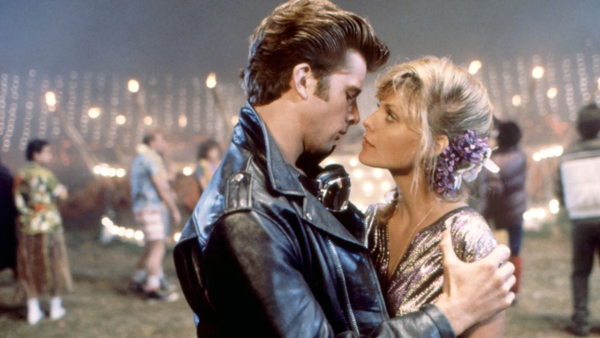
Of course a Grease sequel was always going to get made, but because co-producer Allan Carr had a deal with Paramount that would pay him $5 million to get Grease 2 shooting within three years of the original, it's clear that nailing down the best script, cast, and crew was far from the furthest concern.
That's just the first red flag, though - neither original composers Jim Jacobs and Warren Casey nor stars John Travolta and Olivia Newton-John were in any way involved, and writer Ken Finkleman was tasked with penning the script while also making Airplane II at the same time.
Director Patricia Birch later admitted that the script wasn't complete before shooting began, and we can assume that delaying wasn't possible in order to meet the aforementioned three-year deadline.
Though Michelle Pfeiffer received some positive notices for her performance, Grease 2 was a massive critical and box office flop, immediately killing plans for two further sequels.
10. Jaws: The Revenge

What can you even say about Jaws: The Revenge? It's a film about a shark with a personal vendetta against the Brody family, and which was produced in less than nine months from start to finish.
Nothing about this suggested that Universal gave much of a damn about it beyond the financial incentive to make another Jaws, and so it's unlikely any of the cast or crew were expecting a quality sequel.
Basically it's thunderously clear that everyone was in it for the big, fat paycheck - and, frankly, why the hell not?
Yet this film's grandest legacy is perhaps birthing Michael Caine's immortal, oft-cited "I did it for the paycheck" admission - "I have never seen it, but by all accounts it is terrible. However, I have seen the house that it built, and it is terrific!"
In something of a tender mercy, though, the film's critical and commercial failure effectively killed the Jaws franchise off.
9. Basic Instinct 2

Basic Instinct was one of the most iconic films of the 1990, and such a barnstorming success that a sequel certainly made financial sense if nothing else.
But Basic Instinct 2 didn't end up releasing until 2006, and while Sharon Stone did return to star, neither original director Paul Verhoeven nor screenwriter Joe Eszterhas had any involvement.
It also didn't help that the film only really went into production to satisfy Stone, who filed a $100 million lawsuit against the producers after they failed to get the sequel shooting in a timely fashion.
Basically, Sharon wanted a big, fat payday as promised to her, and who can blame her? Get that bag, Shar.
But it also says a lot about what everyone thought of Basic Instinct 2 going into it, and so not a single person was shocked when the film was a gigantic critical and commercial failure, in turn causing a planned threequel to be scrapped.
8. Blues Brothers 2000

Blues Brothers 2000 is a quintessential sequel that just took too damn long to get made, though in fairness, considering original star John Belushi passed away less than two years after the original, the time window to produce a legit sequel was extremely small.
Though filmmaker John Landis had been preparing a follow-up before Belushi's death, his passing caused him to scrap those plans, until Dan Aykroyd later encouraged Landis to develop it anyway due to the popularity of the original music.
According to Landis, Universal "didn't really want to make" the film and insisted upon a list of creative constraints, such as a PG-13 rating, resulting in a script that was "homogenised and uninteresting."
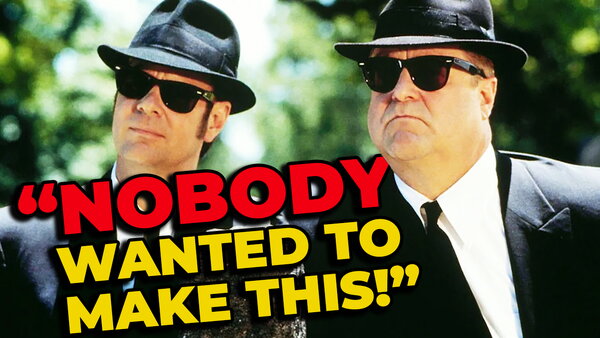
Aykroyd's co-star John Goodman later admitted that he knew the film was in trouble from the get-go, saying "Nobody wanted to make it," and that Aykroyd acquiesced to every studio demand just to get the movie made.
Though there's some scattered fondness for the film, it's nothing if not a gigantic step down the original, reflected by how quietly it came and went upon release.
7. Exorcist II: Heretic

Considering that The Exorcist enjoyed unprecedented levels of success for a horror film at the time, why wouldn't Warner Bros. make a sequel?
Exorcist II: Heretic was released in 1977, four years after the original, with Linda Blair and Max von Sydow reprising their roles from the first film. So far, so good, right?
Well, neither original writer William Peter Blatty nor director William Friedkin had any involvement, while one of the film's producers, Richard Lederer, admitted that the intent was to basically produce a low-budget rehash of the original masterpiece.
Elsewhere, Linda Blair refused to wear any demonic makeup, requiring a stand-in for these scenes, while Max von Sydow had to be coaxed into returning, and Ellen Burstyn flat-out refused to reprise her role of Chris MacNeil.
Even during production, director John Boorman wasn't happy with the script and requested rewrites, enough that the film's ending wasn't decided upon before shooting started.
On top of all this, Boorman contracted a respiratory fungal infection during shooting, reshoots were required due to damaged footage, and original editor John Merritt quit mid-production.
In retrospect Boorman called himself foolish for deviating so far from the formula of the original film, being well aware that he wasn't giving audiences what they wanted - and he's totally right.
6. Son of the Mask

The Mask is undeniably one of the most iconic films of the 1990s, and so the hunger for a sequel was absolutely there - albeit one produced within a sensible timeframe and with the involvement of the man who made it iconic, Jim Carrey.
But Son of the Mask took more than a decade to come to fruition, releasing in 2005 without Carrey, who declined due to his negative experience working on another sequel to one of his hit comedies, Ace Ventura: When Nature Calls.
And so, Son of the Mask was reimagined as a standalone sequel starring Jamie Kennedy (!) as a man whose son is born with the powers of the Mask.
This movie was quite literally a red flag treadmill from the beginning - nothing about this suggested a worthy follow-up, without even mentioning its obscene $100 million budget.
Kennedy has himself since spoken about the film's chaotic production, noting that the studio panicked once they saw a rough cut and insisted upon hasty reshoots to make the film more broadly comedic.
Surprising not a single living soul, Son of the Mask was a colossal box office flop and one of the most critically panned films of the 2000s.
5. Hellraiser: Revelations

Though the Hellraiser series has spent most of its tenure in the toilet, it plumbed impressive new depths of terrible with 2011's Hellraiser: Revelations.
This sequel was produced for just $300,000 in mere weeks in order for Dimension Films to retain the rights to the Hellraiser IP, and production was so rushed that legendary Pinhead actor Doug Bradley opted not to participate.
Bradley's lack of involvement was the reddest of red flags, and once Hellraiser creator Clive Barker disowned the film, it was indisputable that the film was an awful idea.
Surprising nobody, Hellraiser: Revelations was universally panned by critics and fans alike, and while it served its purpose of letting Dimension keep hold of the rights, it was absolutely a mistake in any even remotely artistic way.
It ultimately damaged the Hellraiser brand enough that the next sequel - which also wasn't much good - took another seven years to materialise.
4. Pirates of the Caribbean: Dead Men Tell No Tales

Disney took a lengthy six years to develop and release the fifth Pirates of the Caribbean movie, Dead Men Tell No Tales, by which point it seemed like wider mainstream interest in the IP had dried up.
But more than that, production was beset by innumerable issues which suggested that nobody really believed in it beyond the obvious financial incentive to get it made.
The film's release was delayed by two years to iron out script and budget problems, with the prolonged development causing the budget to balloon to more than $300 million.
Elsewhere reports emerged pre-release of Johnny Depp's unprofessional behaviour on set, suggesting he wasn't taking it much seriously, all while Disney had serious doubts about his ability to still draw an audience after The Lone Ranger flopped in 2013.
And while Dead Men Tell No Tales grossed almost $800 million globally, that still made it the least-financially successful film in the series since the original, such that there's been little urgency to get a sixth film before cameras in the near-decade since.
3. Lost Boys: The Tribe

The Lost Boys is one of the most beloved and enduring horror films of the entire 1980s, and so there was clear fan interest in a sequel.
But it ended up taking 21 years for Lost Boys: The Tribe to arrive, with the sequel being produced for barely half of what its predecessor cost two decades prior, with a director best known for helming low-rent sequels to From Dusk Till Dawn and Sniper.
As for the script, it was actually written as an original story about surfing werewolves before Warner Bros. convinced writer Hans Rodionoff to re-work it into a Lost Boys sequel. Always a good sign.
And then there's original Lost Boys director Joel Schumacher, who openly disparaged the production prior to release, attesting that the sequel shouldn't exist at all.
In terms of cast, star Corey Feldman was reluctant to return in even a supporting capacity, while Corey Haim ultimately has a seconds-long cameo at the very end.
Fans were hugely down on The Tribe long before it came out, so few were surprised when it turned out to be a craven cash-grab - albeit one that did well enough on home video for an also-panned third film, Lost Boys: The Thirst, to be made.
2. Terminator Genisys

Not all movies are built to be long-running franchises, and as incredible as the first two Terminator movies are, nothing we've seen since really suggests it has the juice for a decades-long Cinematic Universe.
So it was easy to thumb one's nose at the fifth film in the series, Terminator Genisys, which immediately upset many fans by turning John Connor (Jason Clarke) into a villain, re-jigging Sarah Connor's (Emilia Clarke) characterisation, and... casting Jai Courtney as Kyle Reese.
Though commercially successful, Genisys was largely panned by critics and fans alike, and once the film's theatrical run was over, we got a clearer picture of how utterly insane its production was.
Emilia Clarke said that director Alan Taylor was "eaten and chewed up" on the film, while Taylor himself later admitted he "lost the will to make movies" after shooting it.
The situation was reportedly dire enough that the nearby crew shooting 2015's also-troubled Fantastic Four film even got shirts reading, "At least we're not on Terminator."
And if this all isn't enough, though franchise creator James Cameron initially praised the film, in 2017 he admitted that he only did so as a favour to Arnold Schwarzenegger. Incredible.
1. S. Darko

Considering the cult success of Donnie Darko on home video, there was a theoretically huge audience for a sequel.
That is, if it at least brought back original wunderkind filmmaker Richard Kelly, which 2009's S. Darko ill-advisedly didn't.
Basically, Fox produced this straight-to-video follow-up quick and cheap without Kelly's involvement because they had the rights to the IP, not Kelly.
This prompted Kelly to publicly distance himself from the film months before release, assuring fans that he had nothing to do with it and it was an entirely separate, independent production creatively speaking.
If you can't even produce a sequel without invoking the ire of the original creator who has a very reasonable grievance, then that's a pretty good sign the movie shouldn't be made.
But S. Darko hit DVD players the world over in 2009, where it was near-universally panned by critics and fans alike for - shocker - being a limp, forgettable sequel nobody was really asking for.