20 Reasons Why Everybody Loves The Lion King

Can you feel the love tonight?
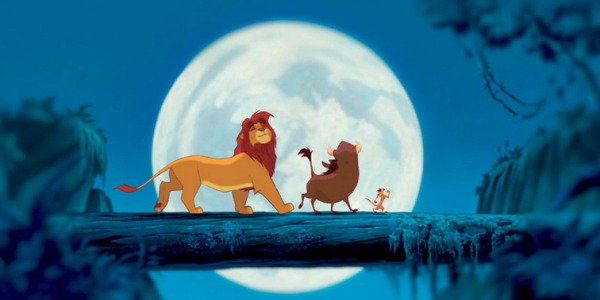
The Lion King is one of Disney€™s most beloved films. Released in the middle of the famed €œDisney Renaissance€ that began in the late 1980s with The Little Mermaid and came to a conclusion with Tarzan in 1999, The Lion King remains the highest grossing traditionally animated film of all time. Critically acclaimed and phenomenally popular, it has twice been re-released to theaters, first in 2002 and then again in 3-D in 2011. It inspired a live-action musical that has been running continuously since 1997, becoming the fourth longest-running show in Broadway history. There has been a sequel, a prequel, an upcoming special edition soundtrack, a television spinoff that ran for three seasons, and a new program to air in 2015. It€™s kind of a big deal. And why not? The Lion King is one of those rare productions that has something for everyone without catering to any single particular audience. It€™s a children€™s movie that manages not to be totally childish. It€™s funny without resorting to cringeworthy toilet humor. Even the kooky sidekicks are not so over-the-top as to make adults squirm. Somehow, this 90-minute animated feature about anthropomorphic animals singing and cavorting across the African savanna turned out to be thoroughly€well, awesome. So, in honor of the original theatrical release on June 15, 1994, here are 20 reasons why everybody loves The Lion King. Warning: LOTS of spoilers.

20. The Score

Boasting one of the greatest soundtracks of the Disney Renaissance, The Lion King is unique in that its instrumental tracks are as easy to listen to over and over again as the musical numbers. Hans Zimmer composed a series of tracks that combine traditional orchestral arrangements with instruments native to Africa. He also interwove his compositions with chanting from a variety of African dialects to add an overall sense of grandeur. The music amplifies the emotional resonance of many of the most pivotal scenes, and one need only listen to the first minute of "...To Die For" to flash back and relive the stampede that would cost Mufasa his life and reduce viewers everywhere to tears. But more on that later. For now, we have...

19. The Songs

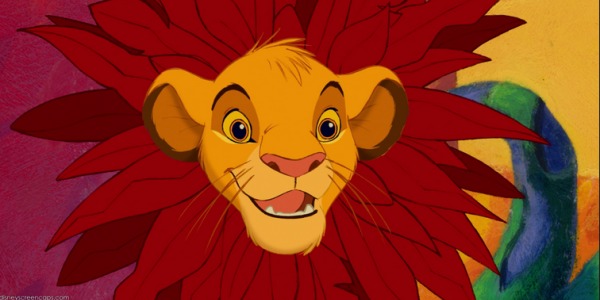
Despite the outstanding quality of the score of The Lion King, the songs performed by the characters throughout are so catchy and fun that it€™s not even annoying when the choruses get stuck in our heads for the foreseeable future. Particularly unforgettable are €œI Just Can€™t Wait To Be King€ and €œCan You Feel The Love Tonight?€ (which won composer Elton John and lyricist Tim Rice the Academy Award for Best Original Song in 1994), and there€™s an inappropriately fun bounce to Scar€™s dastardly €œBe Prepared,€ but anybody who has seen the movie more than once and claims to have never tried to sing along with the Zulu vocals of the opening €œCircle Of Life€ is either fibbing or seriously missing out. https://www.youtube.com/watch?v=8zLx_JtcQVI

18. The Animation

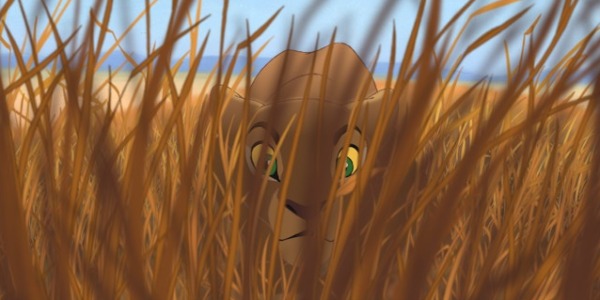
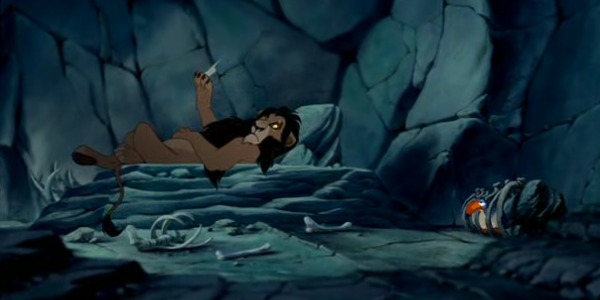
As wonderful as are the songs of The Lion King, the musical numbers would be nothing without the rich animation. The background is constantly moving, with early morning mists hovering over the savanna and bugs crawling on logs and grasses blowing in the breeze. The use of colors creates visual themes, ranging from the distracting bright shades of Simba€™s exile to the expansive golds and deep greens of Mufasa€™s kingdom to the grey desolation of Scar€™s rule. Of course, color and background action are not the only remarkable visual aspects. The animators€™ extensive research of African flora and fauna pays off in big ways. Disney€™s lions may speak and sing and reflect upon the meaning of life, but they also stalk and strike and roar like the real thing. Also, The Lion King€™s understated usage of then-developing CGI within the bounds of standard animation is far less obtrusive than in others of the early 1990s, and the film is enhanced rather than overwhelmed by the combination of the two forms.

17. The Authenticity

There's an underlying gravity to even the most lighthearted moments of The Lion King that prevents it from 100% fitting into the mold of the typical children's movie; nevertheless, at the end of the day, this is the coming-of-age story of an anthropomorphic lion cub set to song. It's not Disney's most realistic venture. Still, the producers and animators manage to infuse an incredible degree of authenticity into the animals and landscape of the African savanna. Many spent time in Kenya, studying the behaviors and feeding patterns of animals in the wild. As a result, the presentation of the finished product feels so carefully constructed that the typical Disney suspension of disbelief is pretty darn easy to accomplish.

16. Educational

Much like the deliberate degree of authenticity to the design of the characters and backdrop, many aspects of the film regarding portrayal of life in the African wilderness are surprisingly accurate. The myth of the elephant graveyard has existed for hundreds of years, as has the mutual enmity between lions and hyenas. Shenzi as leader of the trio of hyenas corresponds to the species€™ matriarchal society. Adult male lions do challenge others for dominance; while usually including fewer pithy barbs in the wild, it also would result in the slaughter of any male cubs in the pride of the fallen lion, just as Scar intends with Simba. Lionesses are the hunters. Indeed, watching The Lion King is a downright educational experience. That€™s what we tried to tell our parents, anyway.

15. The Classic Storyline

No movie can be considered a success based upon music and animation alone, and The Lion King has a Shakespearean story worth singing about. Admittedly, there are fewer singing lions in most interpretations of Hamlet, but the basic frame remains intact. Both follow the tale of a young prince whose father dies under suspicious circumstances and whose throne is then usurped by his treacherous uncle. It€™s a mature plot for a G-rated animated musical, even using typically taboo terms such as €œkill€ and €œmurder€ with surprising frequency. Fortunately for the masses of kids who have seen The Lion King over the past two decades, however, the doom and gloom of Hamlet is nicely offset by moments of humor, friendship, and romance. Timonencrantz and GuildenPumbaa are unfalteringly supportive, Sarabi remains loyal to Mufasa years after his death, Simba is proactive, and Nala at no point pulls an Ophelia and loses her mind in grief. Plus, the entire cast of good guys doesn€™t die at the end. That€™s always nice.

14. The Originality

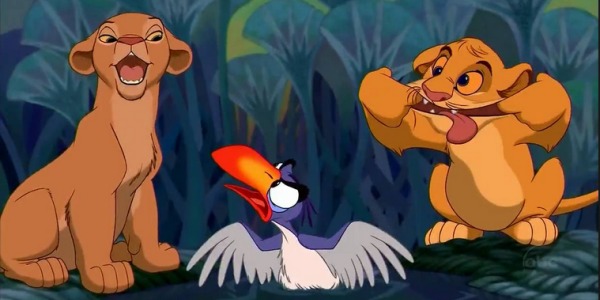
While the main plot of The Lion King derives from Hamlet, there is plenty of original material. The dialogue is distinctly un-Shakespearean, and the entire film manages to strike the difficult balance between fun and folly. Simba and Nala€™s scheme in €œI Just Can€™t Wait To Be King€ to escape Zazu and explore an elephant graveyard on their own is certainly entertaining, but the movie makes clear to viewers that it€™s actually a really bad idea. Similarly, as enviable as was Simba€™s life of relaxation in the jungle, it was never portrayed as particularly admirable. There is a flow from beginning to end, and we witness Simba€™s highs and lows as he develops from cub to king. In 90 minutes. Take that, Hamlet.

13. The Action Sequences

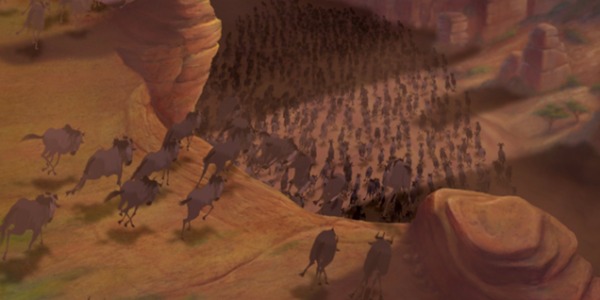
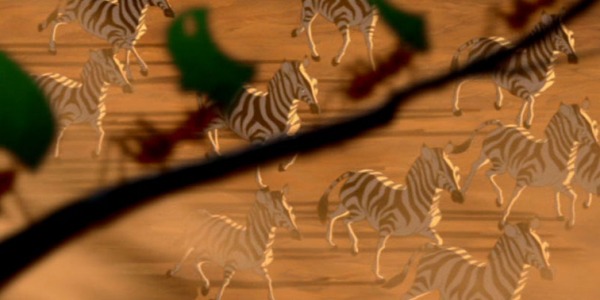
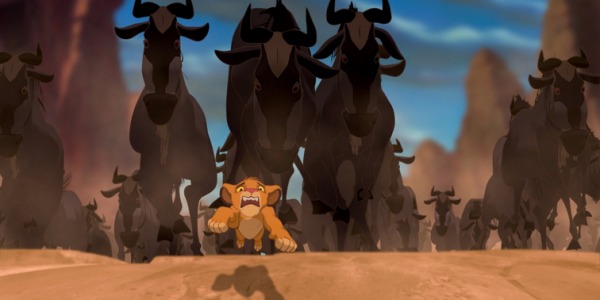
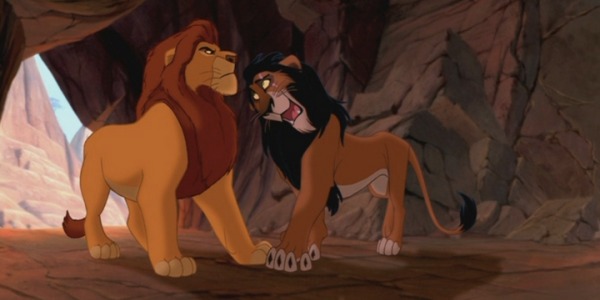
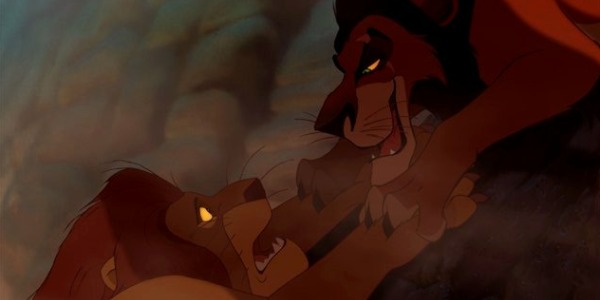
Another area in which The Lion King distinguishes itself is in the action sequences. The combination of animation, score, and animalism throughout the various crises keep us on the edge of our seats from the moment that the trio of hyenas cackles its way from an elephant skull through to the final showdown of Simba and Scar. Whether it is a herd of wildebeests stampeding at a lion cub or the protagonist fighting tooth-and-nail against his long-lost intended, there are no holds barred€”or claws retracted€”in the action sequences, and a genuine sense of danger arises whenever things start to go wrong for the good guys. Mufasa being flung to his death by his own brother really set the tone. Who knew?

12. The Characters

One of the most intriguing qualities of The Lion King lies in the fact that it€™s difficult to actually hate any of the characters. Not to say that audiences spent 90 minutes hoping for Scar to emerge victorious. Rather, every single main character is so richly developed that no scene qualifies as filler. The fluffy €œI Just Can€™t Wait To Be King€ was literally presented as a distraction, but it provides a point of reference for Simba€™s attitude in the second half of the film. €œHakuna Matata€ was light and fun and designed to divert us from the reality that Mufasa totally just died, but it also introduced a theme that would define Simba€™s growth into adulthood. That Scar outlawed the mention of Mufasa€™s name tells us as much about the state of the kingdom under his rule as it does about him. Even Sarabi is dynamic on screen. The Lion King may boast some fantastic action sequences, but the character beats in between can be even better.

11. The Villain

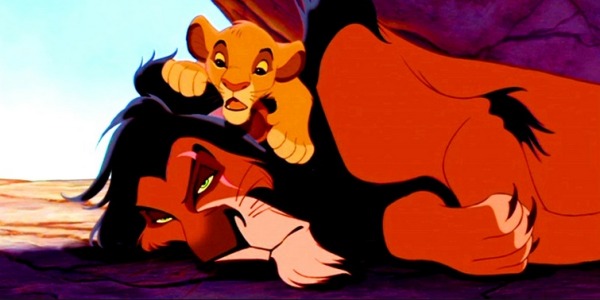
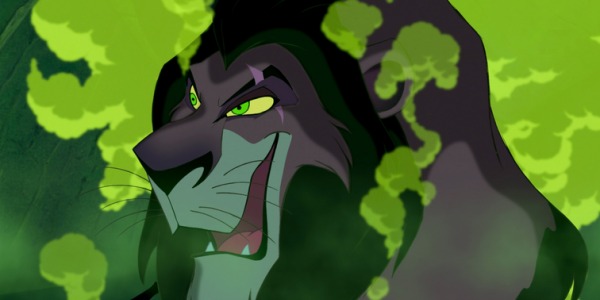
Dynamic or not, liking a Disney villain is generally an unlikely prospect, and Scar ranks among the worst of the worst. He murdered his brother, usurped the throne, and tried to kill his nephew on several separate occasions€all without a hint of remorse. He had all the makings of a truly evil character who deserves as much disgust as we can muster. As it turns out, mustering that disgust is not easy once we discover that Scar is far more nuanced than most villains. He€™s not out for something as mundane as revenge, and his bitterness is not drawn from something so common as unrequited love. Scar wants power, and he happens to have the intelligence, charisma, and moral flexibility to make it happen. And Scar sure is morally flexible. He goes above and beyond the minimum amount of damage necessary for disposing of the current claimants to the throne, literally trying to make Simba€™s last moments alive as tortured as possible before having him murdered. Scar is so awesomely awful that it€™s almost a shame when he is ripped apart and devoured by hyenas. Almost.

10. The Love Story

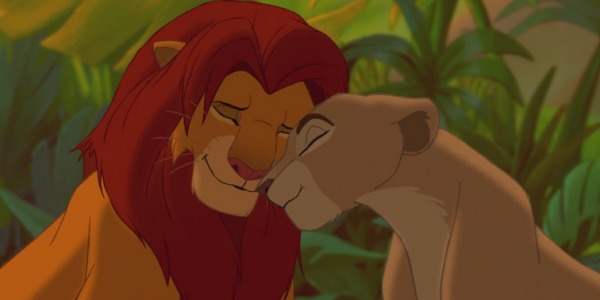
Disney love stories are often tarnished by the speed with which the fair maiden and hunky male lead fall in love. With The Lion King, Simba€™s and Nala€™s childhood friendship makes their happy ending feel much more natural and less€questionable. They already cared. Best of all is that neither Simba€™s nor Nala€™s arcs are driven by the romance. They fall in love very quickly, but their eyes stay on the prize. Simba does not heroically retake his place in the pride for the sake of his love for Nala, and Nala does not start swooning upon her reunion with Simba. Neither spends the epic final battle worrying about the other. From the start to the conclusion, it€™s surprisingly egalitarian for a romance in which one of the parties happens to be a king. Besides, Simba used her flip move to send Scar careening down a cliff. If that€™s not the sign of a healthy relationship, I don€™t know what is. Also, they're super cute and their love song won an Oscar. https://www.youtube.com/watch?v=VRCjylRkG_c

9. The Voice Acting

One aspect of animated films that is often overlooked is the quality of the performances. Madge Sinclair as Sarabi conveyed a quiet dignity in every line reading, and Rowan Atkinson€™s Zazu was as different from Mr. Bean as could be. Jonathan Taylor Thomas had all the preteen girls swooning over Young Simba back in 1994, and Matthew Broderick was able to play the indolent exile and furious claimant sides of Adult Simba without slipping. The standouts, however, were Jeremy Irons and James Earl Jones. Jeremy Irons so inhabited the role of Scar that the animators designed the look of the character around his features. Simultaneously sinister and charming, he makes viewers believe that he is rotten to the core€but also to accept that his treachery is well-enough concealed to come as a surprise to the other lions. And, of course, there€™s Mufasa. James Earl Jones is so impressive in the role that it€™s not even frustrating that Mufasa€™s lectures from the afterlife are what ultimately convince Simba to return to Pride Rock. If that voice boomed down from the heavens and told any of us to shape up, we€™d be sitting up straight and tucking in our shirts before the echoes faded. Oh, and fun fact: the producers originally imagined Sean Connery as the voice for Mufasa. It€™s kinda okay that that didn€™t work out.

8. The Humor

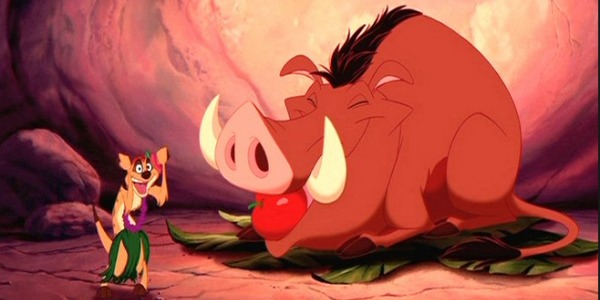
While most Disney movies have an element of humor to them, The Lion King allows the good guys to be funny without making fun of them. Poor flatulent Pumbaa is never the butt of his friends€™ jokes. His relationship with Timon €” an anthropomorphic cross-species bromance for the ages €” is one of the most amusing, and their goofy antics help to distract from the darker elements. If the borderline slapstick of Timon and Pumbaa€™s shenanigans is not your cup of tea, there€™s always Scar. Arguably the funniest character, he spends a hefty percentage of his time in the first half making thinly veiled remarks about everybody else€™s intelligence and lamenting the injustice of foolhardy young Simba stealing his place in the line of succession. Snarking and scheming: all in a day€™s work for Scar. Besides, Scar€™s immediate revulsion to Zazu€™s rendition of €œIt€™s A Small World€ is always funny. Who would have guessed that an evil fratricidal usurper could find a way to be so relatable?

7. The Horror

In addition to the humor, there is pervading sense of horror. The elephant graveyard is perfectly creepy unto itself, as is watching Scar welcome a pack of cackling hyenas into the Pride Lands as he eulogizes Mufasa and Simba. Seeing Simba overwhelmed by a wave of the hyenas at the climax has had hearts jumping into throats for the past 20 years. And then there€™s the stampede. Suspense builds from the moment that Scar leaves Simba in the gorge, and the subsequent action sequence is not the most enjoyable. Simba is nearly trampled. Mufasa is struck down and gored by panicking wildebeests as he desperately tries to rescue his son. Meanwhile, Scar dispassionately stalks from above, watching his plot unfold as his brother and nephew scramble for their lives. One of them scrambles more successfully than the other.

6. An Emotional Roller Coaster

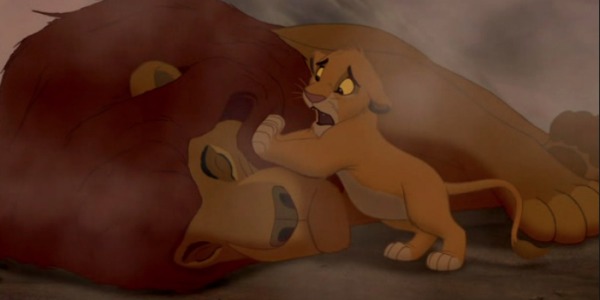
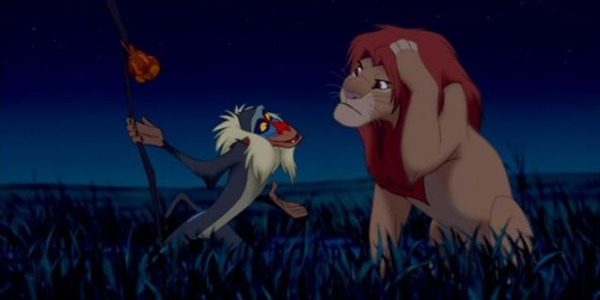
A Disney trademark has always been the absence and/or deaths of parental figures, but never before had we actually seen it happen. The death of Mufasa is one of the saddest and most traumatizing, and viewers young and old alike still break down every time that a weeping Simba curls up under his father€™s motionless body. Seriously. It€™s worse than when Bambi€™s mom was shot. Thankfully, the plot provides some pretty high highs thereafter to counteract the devastation. Timon and Pumbaa supply the comic relief, Simba and Nala fall in love, and Simba resolves to return to the Pride Lands and take his place as king. Then, there is one of the emotionally draining climaxes of any Disney production ever. Simba ascends Pride Rock to the strains of Hans Zimmer at his best. Rain pours down on the decimated kingdom, and the clouds part slightly to allow Mufasa€™s voice to echo down from the sky. Simba opens his jaws and roars his dominance over the land, leaving viewers to laugh or cry or choke as we try to do both at once.

5. A Satisfying Conclusion

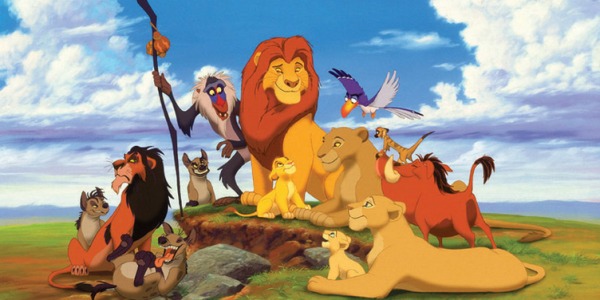
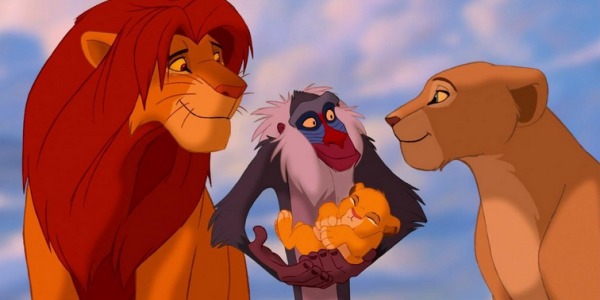
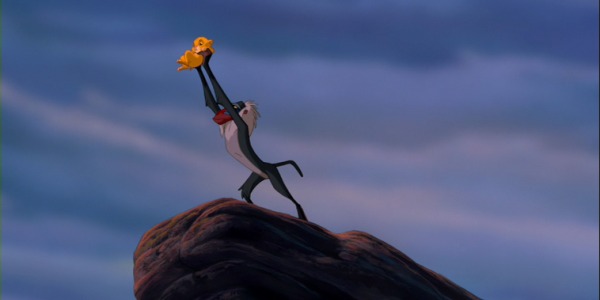
Emotionally conflicting climax aside, the actual ending to The Lion King is about as perfect as can be. Balance has returned to the Pride Lands. Timon and Pumbaa are on the straight and narrow. Zazu has not been devoured. Simba and Nala have married€and produced a cub of their own. As a reprise to €œThe Circle of Life€ appropriately swells, Rafiki picks up the cub and lifts it to the sky. The animals of the kingdom rejoice, and the cub€™s eyes widen as it looks out upon all of the land that the light touches. Roll credits. Disney films are not exactly short on happy endings, and even an installment like The Lion King was not going to end on a low note. What makes this conclusion remarkable, however, is the way in which the final scene leaves viewers with a sense of both promise and closure rather than sequel bait.

4. Fun For Kids

Contrary to Disney€™s low expectations prior to release, The Lion King has been capturing the hearts of children everywhere from the very beginning. It€™s not difficult to see why. €œI Just Can€™t Wait To Be King€ sucks the target audience in early with its bright colors and catchy tune, and there€™s always a vicarious glee in watching Simba and Nala escape their stuffy babysitter. The film is packed with enough action to please the older kids without necessarily inducing nightmares for the younger. Mufasa€™s death is awful, but there€™s a happy ending. Timon and Pumbaa even deliver some lower-brow laughs. Also, for kids still icky on boy/girl interactions that don€™t involve siblings and/or cooties, there€™s no kissing in the animal kingdom, and even the youngsters most squeamish about love stories might not be able to complain about the sudden appearance of a cub at the end.

3. Fun For Adults

Kids may be the target audience, but The Lion King has become a favorite for plenty of adults as well. Many who first saw the movie as children in 1994 have a lingering attachment, but the film is of such enduring quality that there€™s no need for total embarrassment at still being able to sing along. Nowadays, it€™s easier to appreciate characters like the long-suffering Zazu, and Scar gets funnier with time. The Lion King is not enjoyable only to those conditioned into loving it in the 90s. There€™s not much that€™s overtly childish, and some of the emotional notes are more striking to adult viewers. The deeper psychology that torments Simba becomes a tragedy on par with Mufasa€™s death. Scar€™s manipulations feel even crueler. There€™s also a certain dark humor to Simba€™s jubilant performance of €œI Just Can€™t Wait To Be King," but it€™s no less catchy to older viewers than the younger.

2. A Great Message

The Lion King is astonishingly dark at times, to the extent that a happy ending seems impossible and the G rating feels questionable. By the midpoint of the film, the only lesson being learned is that loving others is inadvisable because they€™ll only die, disappear, or betray you. Mufasa has a nice monologue about the importance of balance and wisdom, but he also gruesomely dies shortly thereafter. All in all, we can€™t really blame young Simba for giving into the flawed premise of €œHakuna Matata.€ The song didn€™t have a great message for the audience, but at least it was catchy. Fortunately, however, Mufasa€™s spirit steps in to set Simba back on a responsible path. €œLook inside yourself,€ says Mufasa. €œYou are more than what you have become.€ Inspired by his father€™s words, Simba takes a detour on his guilt trip to return to Pride Rock. He abandons the €œno worries€ premise, defeats his uncle, and restores balance to the kingdom. Even Timon and Pumbaa€”whom Mufasa clearly does not approve of€”shape up and play their part. The overall message of the movie is overwhelmingly positive for kids. Bad things will always happen, but to run away from responsibility is never the right decision. Or, for the literal-minded children out there, the message aligns with the idea that misbehavior will lead to somebody they love being flung off a cliff. Hey, whatever works.

1. Rewatchability

For a kids€™ movie originally released in 1994, in the days of traditional animation that preceded the digital extravaganzas ala Tangled (2010) and Frozen (2013), The Lion King has remained one of the most beloved films in Disney history. Whether it serves as a go-to on sick days or a favorite guilty pleasure or just a great movie with an awesome soundtrack that deserves a rewatch from time to time, the increasing appeal of this Disney juggernaut shows no sign of stopping. The mature elements prevent it from falling into fluff, and the happy ending is definitely helpful in subsequent viewings. And it€™s only 90 minutes! You may not ever learn how to pronounce the Zulu vocals of €œThe Circle of Life€ and you may not ever totally get rid of a general wariness toward wildebeests, but there€™s no harm in giving it a try from time to time. Honestly, who doesn€™t love The Lion King?

Contributor
Contributor

Fiction buff and writer. If it's on Netflix, it's probably in my queue. I've bought DVDs for the special features and usually claim that the book is better than the movie or show (and can provide examples). I've never met a TV show that I won't marathon. Follow on Twitter @lah9891 .