20 Suspiciously Similar Movie Scenes You Never Noticed
 They say imitation is the sincerest form of flattery, in which case, Shia Labeouf must be the sincerest actor in the history of Hollywood. Given how important existing work is on the future directions that Hollywood takes (either offering a model, or a path to avoid,) it would be foolish to suggest that even the most unique scenes and innovations in film don't owe something - no matter how small - to what came before them. Even those that seek to reinvent, reboot or deconstruct have to make reference to the source, regardless of how they feel about it. But what of the film's that consciously borrow, or openly steal from other films? Some will call Quentin Tarantino a master for the way he reappropriates signs, scenes and sentiments from the genres that pre-figured his love of film, while others will disparagingly call him a magpie, incapable of an honest, unique thought. However you feel about the almost Hateful Eight director, he at least makes no bones about the fact that he looks back at film as much as he looks forward, and he's always the first to acknowledge the influences in his work, and how they affect his own style. He's also far from the only director to borrow from other films, and some aren't as forthcoming with their admission, leading to some films very obviously ripping off scenes, either in an attempt to channel the same success, or perhaps to pay some unexpressed homage. Probably mostly the former. Is this outright theft or merely a peculiar coincidence? No matter how you decide, the evidence makes for compelling reading...
10. Dark City/The Truman Show
 From the beginning of 1998 through the summer of 1999, four films with seemingly photocopied premises were released: Dark City, The Truman Show, The Matrix and the lesser known Existenz, all of which are allegorical fables derived from Plato's Cave. The Greek philosopher had devised a thought experiment with the concept of prisoners being held captive that were presented with a false reality, and in the same vein, each of these films present protagonists unwittingly trapped in an alternate reality they must escape. Of these sci-fi philosophical mind benders Dark City and The Truman Show share the most similarities. In both films the main character is held in a tightly observed and controlled prison: in Dark City, John is a prisoner in a walled off city controlled by the Strangers who are operating an experiment to understand humanity. And in The Truman Show of course, Truman's prison is his studio controlled life. That isn't where the similarities end. At the end of both films our protagonists board ships to unravel the truth behind their realities. John and Truman travel to the edge of their gilded cages where they are met with facades of a painted sky. They must find the courage to expose the truth and free themselves of the false lives they have been leading.


9. Princess Mononoke/ Snow White And The Huntsman
 On the surface, the films here aren't all that similar: other than the fact that both are fantasies. Princess Mononoke is a Japanese rural animated fable, concerning the balance of nature. The hero is cursed to die, and must journey to the heart of a forest to seek the blessing of the Forest Spirit, which manifests itself as an elk with huge antlers. His arrival is heralded by the appearance of thousands of white spirits known as Kodama. If that sounds familiar, it's because it is hugely similar to the retelling of Snow White And The Huntsman. In that film, the titular character travels to a magical forest with the dwarves to receive a blessing from the Stag, the manifestation of the God of Nature. The motivation is different, but the entire scene in its shot composition and art design is a complete theft from Princess Mononoke. One has to wonder if those involved with the film were under the impression that they were stealing from a comparatively obscure film and that no one would notice.




8. Paprika/ Inception
 It was well known that Christopher Nolan was inspired by Paprika when he decided to create Inception. Both films deal with how dreams in our subconscious affect reality and vice versa, and the general similarities between the two have been discussed at length elsewhere. To distill those similarities somewhat, in Inception when anyone enters into another person's mind they bring all of their emotional baggage, which can in turn manifest in the dreams of the dreamer, and of course, Cobb himself is hiding mental scars that can endanger the team. At one stage, Ariadne enters his brain in order to find his secrets, which is represented as a ride in elevator with each floor representing a different memory that Cobb is trying to repress from manifesting.



7. Boogie Nights/ GoodFellas
 It's no secret that Paul Thomas Anderson is a fan of Martin Scorsese's long filmography, and like many artists, Anderson started out by creating a love song to his idol. The very foundation of Boogie Nights is built upon the same template as Goodfellas: both films follow the same take on the dark side of the American Dream, and more specifically, Anderson also emulates Scorsese's cinematic language in Boogie Nights, particularly in the opening. In Goodfellas, just as he is rising through the ranks of the family, Henry takes future wife Karen to the Copacabana, and through one long tracking shot, we see his status confirmed in how other characters interact with him. The scene serves as a snapshot of the decadence of Henry's world, against a typically strong musical backdrop of "And Then He Kissed Me" as a rather blatant (but not unwelcome) metaphor for Karen's seduction into the world.


6. Resident Evil/ Cube
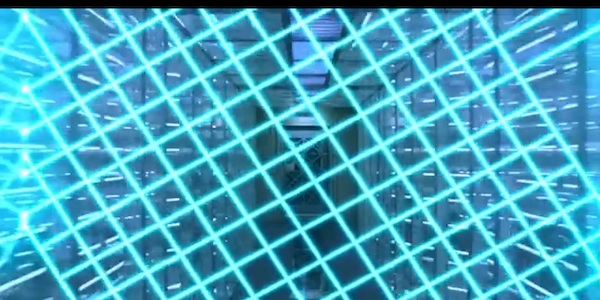
 Cult horrors Cube and Resident Evil are two entirely different horror films stylistically: the former is more of an art film that explores human behavior while Resident Evil far less artful, and far more grand and explosive. The difference isn't all that surprising, given that the latter is directed by Paul WS Anderson who is essentially a low rent Michael Bay and is adaptated from the video game series. Early in Anderson's film, Alice leads an elite military team into a laboratory to shut down its computer. Naturally, some soldiers scout ahead and become trapped in a hallway that is monitored by the AI in the facility, and a few moments later lasers begin moving through the room slicing them apart. The final soldier is sliced into small cubes by a series of lasers forming a grid, which cut him up like butter.


5. Pacific Rim/The Avengers


4. The Shining/ The Phantom Carriage
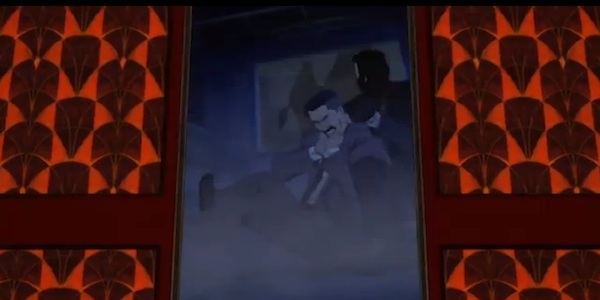
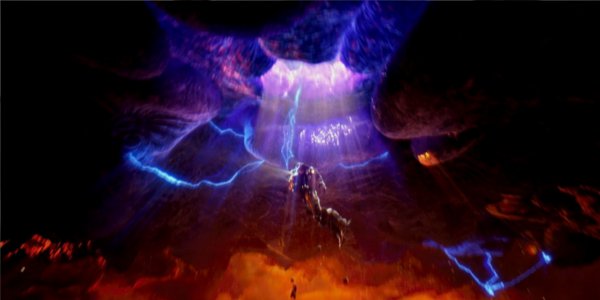
 The Shining is rightly considered a horror masterpiece and Stanley Kubrick a genius, but the idea that such an iconic image as above could have come from another source is surprising. The creepy build up of the film hits its climax as Jack's instability turns into full blown insanity and he pursues his family through the Overlook Hotel, terrorizing them with an axe. The sequence has become one of the greatest and most memorable of Kubrick's entire canon, for good reason, but it's not quite original. Stanley Kubrick like many directors had an encyclopedic knowledge of film and likely had knowledge of the silent classic The Phantom Carriage, which lent its most iconic sequence to the director's most famous horror. The Phantom Carriage concerns David Holm, who belongs to the same mental school as Jack Torrence. He dies in the film and is given the Dickensian Christmas Caroll, treatment going back to review the events in his life. His story hits the same crescendo as David's, and he attacks his family with an axe through a locked door just as Jack does in The Shining. Yes, there are more camera angles, and it is slightly more sophisticated, but the scenes are too similar for there not to be a link.
3. Pulp Fiction/Psycho
 Quentin Tarantino is a magpie for movies, taking themes, and even entire sequences out of the films that influenced him most in his formative education, and reusing them as his own, either in homage or simply because he wants to recapture the same spirit as the original. He has a decidedly close relationship with his influences, to the extent that throughout his career he has been accused of borrowing far too much from the work of others. For Tarantino, it's more that his choices comes from a love of film history and not a desire to rip-off the works of others, and one of his more obvious nods to another director comes from Pulp Fiction, which features a sequences that is practically a shot for shot lift out of Alfred Hitchcock's Psycho. In Psycho Marion is on the lam after stealing 40,000 dollars from her employer, when she literally runs into the boss she has just fleeced.
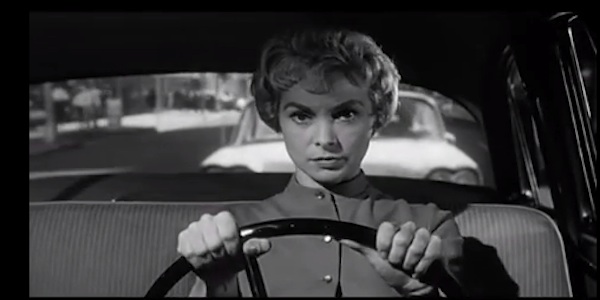
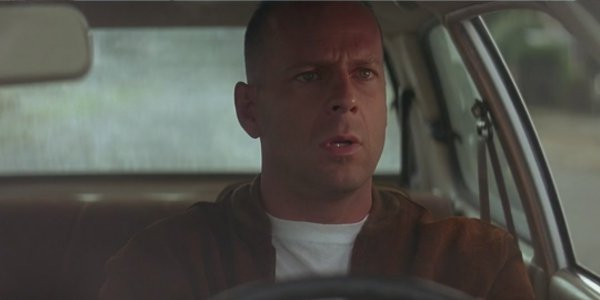
 The Pulp Fiction version puts Bruce Willis' Butch behind the wheel, with his caper having been his refusal to throw a fight for Marsellus Wallace. The scene recreates the same spirit of the moment, with Butch seeing Marsellus in front of him, but naturally, since this is Tarantino, we get a different outcome, which fits the video store auteur far more...

2.The Phantom Menace/Ben Hur
George Lucas is akin to the family friendly Saturday matinee version of Quentin Tarantino: all of his films are derivatives of other movies in some way or another. Though it is picked apart more regularly than any film, Star Wars Episode One in its entirety can be seen as a sci-fi version of Ben-Hur. Lucas simply took aspects of the slavery story from William Wyler's and adapted it for Anakin Skywalker. The scene where this is most readily apparent is the pod racing sequence, which is completely lifted from the chariot race sequence in Ben-Hur. The same elements are there, of the slave attempting to escape his master, seeking vengeance against an old enemy with dirty tactics, and of victory in the face of adversity. Only for Lucas, there's more fuel, obviously. 


1. Brazil/Battleship Potemkin
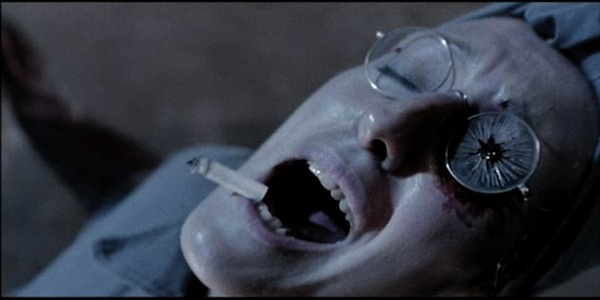
 Given the importance that critics and film scholars tend to heap on it, it's not surprising that Battleship Potemkin has been referenced in other films. The most famous - or perhaps infamous is a better term - example came in The Untouchables and the train station sequence with the runaway pram, but it is not the only notable example that references the same source scene. Terry Gilliam's Brazil also pays homage openly: in its final act the hero Sam is rescued by the resistance after being tortured and interrogated. The escape party flee against the backdrop of a gun fight, while running down a large set of stairs with the military in pursuit. Caught in the middle of battle, a cleaning lady is shot and her vacuum cleaner goes rogue, careering down the steps.