20 Things You Didn't Know About The Blues Brothers
They'll never get caught. They're on a mission from God.

It's been forty years since Jake and Elwood Blues first graced the big screen. The Blue Brothers was released in June 1980, a strange combination of genres that couldn't really be pigeonholed.
It had a ton of chases - was it an action movie? Half the movie consisted of songs - a musical? Dan Aykroyd and John Belushi were two of the biggest comedians in Hollywood at the time - a comedy? Would people who would go to watch hundreds of cars be destroyed enjoy the R&B and blues numbers scattered throughout? Would blues fans care about two comedians using their beloved genre as the motivation for a movie?
As it turns out, none of those questions were ever really answered. People took the movie as it was, settling in for two hours of what would grow to be a comedy classic, enjoying the mayhem on the screen interspersed with performances from legendary musical acts.
A movie as chaotic as The Blues Brothers couldn't possibly have come to pass without many behind the scenes stories, mistakes, and fascinating trivia. From a budget for drugs to Catholic approval, here are twenty of the best.
20. The Blues Brothers Started As A Saturday Night Live Skit
Dan Aykroyd and John Belushi were both huge starts in the early days of SNL. Since the show was so new, pretty much everything the show did was groundbreaking.
The genesis of the Blues Brothers started out with Belushi and Akroyd singing the blues classic 'I'm a King Bee' in costumes they used for The Killer Bees sketches; a simple combining of two disparate concepts.
They started brainstorming ideas based around their beloved blues music, which led to the two creating the characters of Jake and Elwood Blues. They persuaded director Lorne Michaels to let them perform in character as the musical guests in 1978
Their performance was so well-received that they were asked to create an album of blues standards, which was also extremely successful, considering the state of music in 1979. The success of the album, in turn, persuaded Universal Studios that a full-length Blues Bros. movie would work.
19. Their Backing Band Members Were Famous Long Before The Movie
You couldn't have The Blues Brothers without the Blues Brothers band. Or, as Elwood calls them at one point, 'The Good Ole' Blues Brothers Boys Band From Chicago.'
Every member of Jake and Elwood's backing band were talented musicians with long histories in the music world before Hollywood came calling.
Drummer Willie Hall had been part of Isaac Hayes' back-up band. 'Blue' Lou Marini and Tom 'Bones' Malone had been in Blood, Sweat & Tears. Steve 'The Colonel' Cropper and Donald 'Duck' Dunn were in Booker T and the M.G.'s.
Matt 'Guitar' Murphy had been a session player with legendary blues singers since the '60s and Alan Rubin was a gifted trumpeter who had attended the prestigious Juilliard School of Music.
(Paul Shaffer, best-known as the leader of David Letterman's house bands, was in the original band when they performed on SNL. Unfortunately, his contract with NBC prevented him from being in the movie.)
Aside from being fantastic musicians, it just so happened that they were likable, funny, and a perfect fit for the Blues Brothers world. The movie was simply recognition of their tremendous talent.
18. The First Draft Of The Script Dan Aykroyd Wrote Was More Like A Textbook

The Blues Brothers was the first screenplay Dan Aykroyd ever wrote. In fact, before starting work on the movie, he had never even read one.
The first draft took him six months to complete and was 324 pages, which was three times as long as a standard Hollywood screenplay at the time. As a joke, when he presented it to director John Landis, he encased between the coves of the Los Angeles Yellow Pages.
Aykroyd wrote it like free verse, more story than film-making tool. In it, he laid out very elaborate backstories for the Blues Bros. - their birth, upbringing, how they fell in love with music, how they ended up at the orphanage, and so on. In fact, there was so much material that much of it was taken and used to create a companion book to the movie.
Ultimately, most of what Aykroyd created was unusable and had to be re-written by Landis. As a result, because there was no final script, the film began shooting with no budget, which in turn led to the movie's cost quickly spiraling far past what Universal planned.
17. Aykroyd Littered The Script With References To His Own Life

When Dan Aykroyd wrote the script, he decided to intertwine facts about his own life in with the fictional world of the Blues Brothers.
The licence plate of the Bluesmobile is BDR 529, referencing the Black Diamond Riders, a Canadian motorcycle club that Aykroyd is a long-time member of. Along the same lines, Elwood's driver's licence seen on the police information screen contains Aykroyd's actual date of birth, July 1, 1952.
Much like Elwood, Aykroyd grew up in a strong Roman Catholic tradition and loved blues music since he was a teenager. He grew up in Ottawa, Canada, a town not known for blues music by any means, but Aykroyd haunted the few blues bars that catered to the several universities there constantly.
Aykroyd is a military and law enforcement enthusiast. He insisted that the giant speaker on the Bluesmobile had to be a Canadian-made Cold War air-raid siren exactly like the one at his elementary school. He filled the movie with accurate law enforcement terms that he knew from growing up in a police family. Aykroyd's grandfather was a Mountie, and he himself is a reserve deputy in both Louisiana and Mississippi.
Write what you know, as the old saying goes.
16. Aykroyd Demanded Roles And Musical Numbers For Blues And R&B Legends
Aykroyd and Belushi were both huge blues fans and considered the music to be a huge foundation of themselves as entertainers.
With this in mind, Aykroyd wrote in roles for several of their favourite blues singers, including John Lee Hooker (singer outside the restaurant,) Cab Calloway (Curtis), James Brown (Reverend James,) Aretha Frankline (Matt Murphy's wife and owner of the restaurant), and Ray Charles (owner of Ray's Music Exchange.)
While director John Landis understood what Aykroyd was trying to do, Universal hated the idea. They felt that these singers were has-beens and held no appeal for younger audiences. Instead, they wanted more recent hit singers who could provide disco-type songs for the film and would add appeal to younger, urban audiences.
Aykroyd refused to budge, insisting that these singers and songs appear or he and Belushi would walk. Universal finally agreed, and as it happens, Aykroyd nailed the idea perfectly. The scenes with these blues legends were among the most memorable and most-loved in the movie.
15. The Shooting Set Was More Like A Never-ending Party
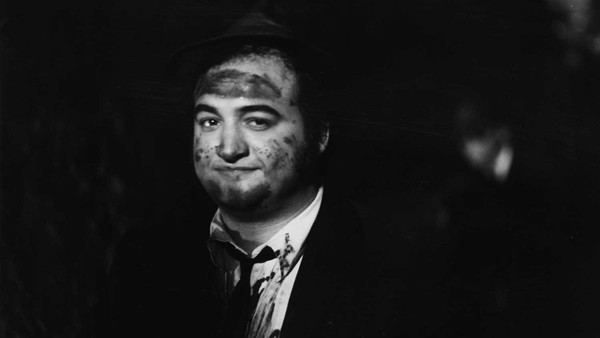
When the movie began filming, John Belushi, at this point a mega-star because of SNL and Animal House, was a heavy drug and alcohol user. While shooting on location in Chicago, he took advantage of the opportunity to visit many of the city's clubs and bars and he was frequently late to the set because of late nights partying around the city.
In later years, Dan Aykroyd claimed that part of the film's budget was for cocaine so Belushi could get his drugs while remaining on the set. Also, a private bar for the cast and crew called the Blues Club was built near the main set; Carrie Fisher (no stranger to coke herself) revealed that the 'bartenders' also served as drug dealers, acquiring whatever was needed.
At one point, Belushi's behaviour was so out of control that John Landis hired a bodyguard whose only job was to keep Belushi clear of drugs. The situation came to a head one night when Landis found the star in his trailer in a 'mountain of cocaine' and persuaded a tearful Belushi to stop using.
Which he did, at least until the shoot moved back to Hollywood...
14. The Movie Contains Several Very Sneaky Cameos
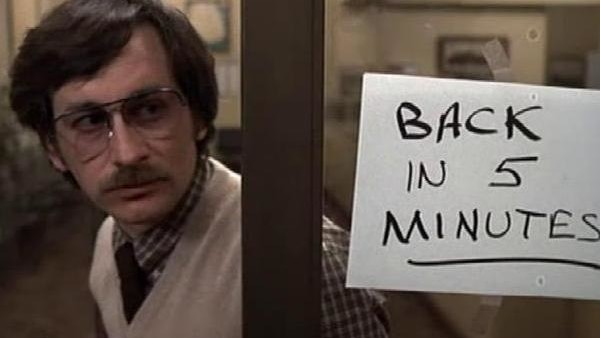
Given the power of its director and stars, getting famous (at the time) celebrities to help out with cameos was an easy task.
The girl at the gas station whom Elwood propositions was Twiggy, then was one of the top models in the world. John Candy, well-known to Aykroyd from their improv days, played Jake's parole officer who famously orders 'three orange whips.'
Director Steven Spielberg, who was close friends with John Landis, played the Cook County Assessor who opens the door with sandwich in hand, and Landis himself plays a State Trooper in the mall chase.
A few non-blues singers who were friends with Aykroyd or Belushi appeared. Joe Walsh, best known, as part of the Eagles, is the guy who first jumps on a table in the prison finale. Stephen Bishop, a pop singer, plays the State Trooper who complains about his watch being broken during the mall chase (and, incidentally, also played the 'Sensitive Guy' in Animal House whose guitar Belushi smashed into confetti.)
Frank Oz, the voice of many a Muppet, is the Corrections Officer who returns Jake's property to him at the beginning. If you close your eyes, you'll swear it's Bert talking.
13. Racism In The Movie Industry Severely Hurt The Film's Opening Numbers
On the day after editing of the film was completed, Landis was called to the office of the head of Universal Pictures, Lew Wasserman. Sitting in the room with Wasserman was a gent named Ted Mann, head of Mann Theatre Chain, the largest string of movie houses in the Western United States.
Mann flat-out told Landis he would not book the film in any of his theatres that were in white neighbourhoods (which was almost all of them.) Mann stated that he didn't want black patrons attending his establishments, yet also didn't feel white viewers would want to see a film with singers like Aretha Franklin and Cab Calloway. He would screen the movie at a theatre in Compton, a predominately black neighbourhood in LA, but not in Westwood, only a few miles a way, which was a middle-class white community.
As a result of Mann's position (which had Wasserman's support,) the film received less than half the number of booked theatres for its initial release than similar-budgeted movies.
Still, on its first weekend, the film did respectable box office, playing in just under 600 theatres, and opening in second place behind a little film called The Empire Strikes Back.
12. The Mall Was A Real, Closed-Down Mall, Not A Set
The first major action of the film comes after Elwood flees the police, admitting that he is driving with a suspended licence and many violations. The boys end up circling the Dixie Square Mall in Harvey, Illinois (not far from Chicago) before heading inside.
When filming started, the mall had been closed for over a year, with no prospects of reopening. Rumours started to fly in the small community that all the action meant the mall was being refurbished, when, in actuality, it was being destroyed inside.
The stores were dressed and stocked with items, giving the impression of a fully-functioning mall. Stunt performers were brought in to be shoppers and the parking lot was loaded with cars, making it looked as if the mall was packed when Elwood decided to prove a point to Jake about his skill at evading the police.
When all was said and done, the owners of Dixie Square tried to sue Universal for failing to restore the mall to its original condition, a clause in the contract they couldn't prove.
As a result, the mall continued to sit unused and decaying until 2012, when it was demolished.
11. The Bluesmobile Was Treated Like A Star
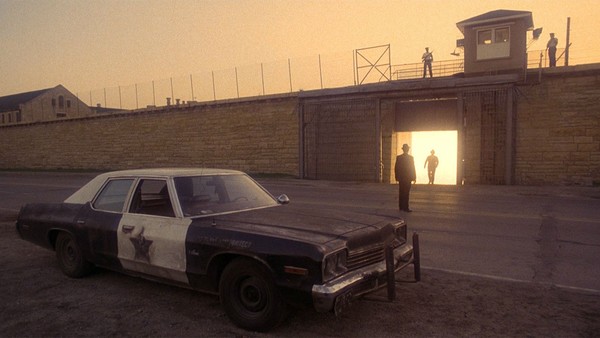
The Bluesmobile is basically the third brother. It is introduced in the very opening of the movie, and is a constant companion to the boys until its untimely end outside of the Cook County building.
The vehicle crew knew they would need multiple cars for the pounding it would take throughout the film. The production bought thirteen ex-California Highway Patrol cruisers, all Dodge Monacos, and outfitted them for different purposes. Some were lightened for more speed, some had the suspension souped up for jumps and stunts, and some were kept pristine for close-ups and publicity shots.
One of the cars was very special. It's only role was to, at the climax, fall apart into a hundred pieces. There was a mechanic assigned to the crew whose only job was to spend several weeks figuring out how to make the car collapse all at once.
The Bluesmobiles had their own mechanics and a 24-hour garage dedicated to keeping them running and looking shiny (or beat up, depending on need.)
In the time since the movie came out, the Bluesmobile has joined the pantheon of other iconic Hollywood vehicles, and deservedly so.
10. All The High-Speed And Stunt Driving Was Real
The chases and crashes in the film are as much a part of the movie as the musical numbers. You can't create that much sheer destruction on a screen without a ton of good drivers; the production employed a stunt driving team of 40.
There were no models, no camera tricks; just very brave, very skilled people wheeling cars at high speed to accomplish everything from Elwood's skid-into-the-spot parking job at Chez Paul to the all-night chase down the highway and into Chicago.
The studio purchased 60 soon to be retired California Highway Patrol cars for chase scenes, and repainted them with the proper markings of the Chicago Police department and Illinois State police. None of them made it through filming without some damage and many were completely destroyed.
For one memorable scene that you would swear was sped up footage, Landis had to get special permission to do a high-speed pass at 118 mph / 190 kph under the elevated train lines. The speed shown during the chase on the speedometer was accurate. He was given two cracks at it by the city.
The first run featured just the car; the second run included stuntmen pedestrians for realism.
Take that CGI.
9. The Movie Held The Record For Most Cars Destroyed In A Major Hollywood Film For 18 Years
If there is anything that The Blues Brothers is truly known for, it is the incredibly staggering number of vehicles that are destroyed during the course of the movie. 103 to be exact, consisting of multiple versions of the Bluesmobile, dozens of former police vehicles, and several other various background cars.
Despite being primarily a comedy, the film went through far more vehicles than classics like Bullitt and Gone in Sixty Seconds, due to the massive chase scenes through the mall, down the highway after the final concert, and through the streets of Chicago.
The film held this record until its own sequel, Blues Brothers 2000, beat it by one more car destroyed, for a total of 104, 18 years later.
Both of these movies have since been eclipsed by huge budget franchises like The Fast & The Furious, Transformers, GI Joe, and The Matrix, but considering those movies all had the benefit of modern technology and special effects, the accomplishment The Blues Brothers achieved back in 1980 is remarkable.
8. The Pinto Dropped During The Climactic Car Chase Had To Be Certified By The FAA As A 'Non-aircraft'
During the final chase, the Illinois Nazis whose rally Jake and Elwood destroyed earlier in the movie join the pursuit in a Pinto and a station wagon, adding to the Brothers' urgency to make it to the Cook County building.
The boys lead them to the edge of an incomplete highway, stopping the Bluesmobile just over the edge. Elwood throws the car into reverse and, somehow, magically flips the car backwards while the Nazi Pinto continues, to drop to the road below.
Like with the other driving stunts in the film, this was a practical effect. A Ford Pinto was dropped approximately 1200 feet from a helicopter. Actually, two were dropped - one for testing purposes, and one for the shoot.
Because the Federal Aviation Administration was concerned that the car's shape would cause it to tumble through the air, the studio had to get a Special Certification that the car would not in any way fly or move, but drop straight down.
Basically, the US government turned the Pinto into a specially licenced 'aircraft' for the drop, which provided liability and safety protection for both the FAA and the production.
7. The Highway The Pinto Fell From Was Nowhere Near Chicago
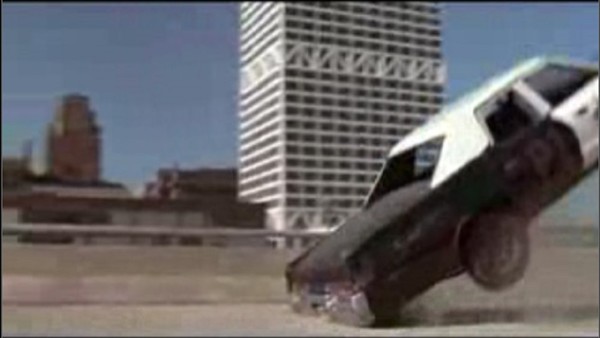
At the climax of the final car chase, the Bluesmobile juuuuust about goes over the edge of an unfinished highway. The end of the scene contains some great visual gags; unfortunately, the crew had to travel to the City of Milwaukee to get them, as Chicago had nothing in place which would suffice.
The scene was shot on an unfinished part of Interstate I-794 using an off-ramp that was still under construction. The ramp was never actually finished, and was torn down in the years following the film. The highway project it was part of wasn't totally completed until 1998.
The film makers weren't exactly subtle about the jarring transition in the scene from an obviously low-level off-ramp to a Pinto falling hundreds of feet to its doom. In the photo above, the large brown building in the far left of the frame is the tallest building in Milwaukee, the US Bank Center. Eagle-eyed viewers who know their American geography noticed right away that the shots came from different locations.
In the end, though, does it matter? We got to watch a Pinto full of Illinois Nazis plummet 1000 feet.
6. The Showdown At The Daley Centre Was Basically An Invasion Of The Plaza
At a cost $3.5 million, the final fifteen minutes of the movie set at Chicago's Daley Plaza was the most expensive set-piece of the entire film.
Surprisingly, the city's mayor was extremely cooperative, and Aykroyd and Belushi agreed to each donate $50,000 to charities of the city's choice as a thank you.
The finale involved shutting down much of downtown Chicago for three Sundays in a row, making use of 500 extras, including 200 Illinois National Guardsmen, 100 city and state police officers, 15 police horses, and three each of Sherman tanks, police helicopters, and fire engines.
The crew had permission from the city to drive the Bluesmobile onto certain areas of the plaza, but this part of the plan fell a bit short. On one occasion, the stunt drivers hit a few spots they shouldn't have, causing about $10,000 worth of damage that had to be repaired immediately, before the plaza opened again for business on Tuesday morning (it was a long weekend in the US).
Still, the extra expense was worth it when you watch the scene, which is choreographed like a ballet of destruction.
5. The Producers Snuck In References To Another Classic Comedy By John Landis
John Landis already had a comedy hit under his belt when he directed The Blues Brothers; in 1978 he made Animal House, also starting John Belushi on his path to superstardom. Given the success of the film, Landis and his screenwriters threw in several references to Landis' first comedy.
During the mall chase, DePasto's Oldsmobile dealership can be seen, a reference to DePasto Oldsmobile and Mayor DePasto from Animal House.
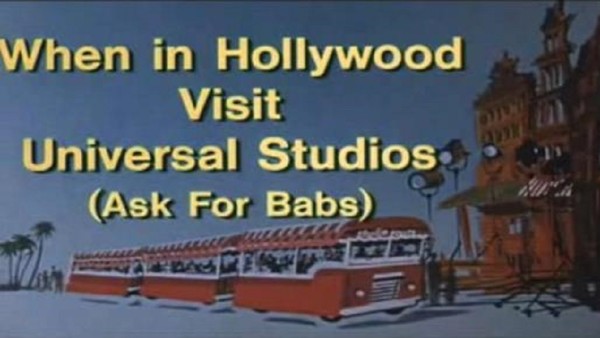
After the Universal Studios logo at the end of The Blues Brothers' credits, there is a suggestion to visit Universal Studios and 'Ask for Babs.' This joke first appeared in Animal House's credits, alluding to Babs Jensen, one of the sorority members in the movie who became a tour guide at Universal.
For many years, if guests mentioned this they would receive free or reduced admission fee or a small souvenir until the park stopped the practice in the late 1980s.
Landis brought the same joke back in the end credits of sequel Blues Brothers 2000, using updated Universal Studios logos and wording.
4. John Landis Filled The Movie With His Trademarks
In addition to the aforementioned 'Ask for Babs' joke, Landis has a few other trademarks that appear in almost all his movies. The Blues Brothers was no exception
Landis is a diverse director, also turning his hand to horror - 1973's Schlock, in which he used the talents of Hollywood makeup artist Rick Baker. Concurrent with Blues Brothers, Landis was also working on An American Werewolf in London, which Baker was also involved with. In the restroom scene just before final show at the Palace Hotel, graffiti on the wall mentions 'Rick Baker'. Baker would also go on to do makeup for Landis in the video for Thriller and several future films.
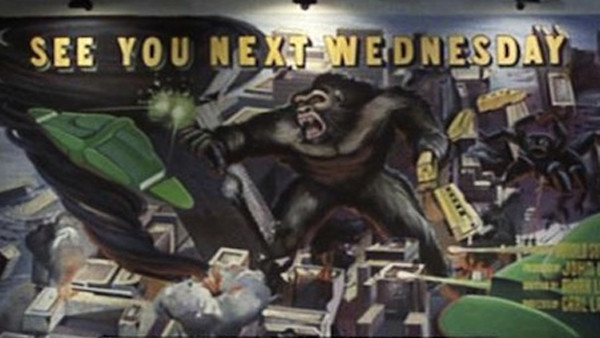
Landis usually includes in his movies at least one reference to 'See You Next Wednesday', a fictional horror film inspired by a line of dialogue from 2001 : A Space Odyssey. It's on a billboard next to the State Troopers when they encounter the boys the second time, as well as on a movie marquee during the chase with the Nazis.
Lastly, the music playing in the elevator while Jake and Elwood head for the Assessor's office is Girl From Ipanema, which Landis works into all his films.
3. The Movie Has The Blessing Of The Catholic Church
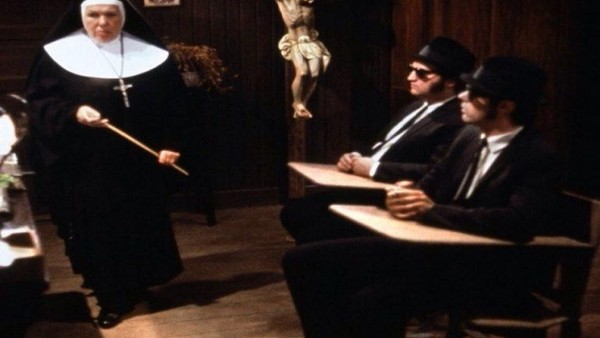
At its heart, The Blues Brothers is about faith, hope, and redemption. The boys firmly believe that they are on a mission from God. It is perhaps because of this that amazing things like the Bluesmobile somehow flipping high into the air without a ramp can happen.
Amazingly, the production was blessed by Pope John Paul II. He happened to be in Chicago while the movie was filming, and, hearing of the storyline, dropped by the set to visit. Almost all the cast and crew kissed the Pope's ring and received a blessing.
In a review to commemerate the 30th anniversary of the film, a writer for L'osservatore Romano, the official daily newspaper of Vatican City, stated that the film is filled with positive symbolism and moral references related to Catholicism. This despite the swearing, depiction of alcohol use, gratuitous use of flamethrowers and rocket launchers, and Elwood insulting the feared 'Penguin', Sister Mary Stigmata .
The paper went even further with its praise, saying that The Blues Brothers 'is a memorable film, and, judging by the facts, a Catholic one.'
Once can't ask for much higher praise than that of the Vatican.
2. A Skateboard Almost Derailed The Entire Musical Climax Of The Movie
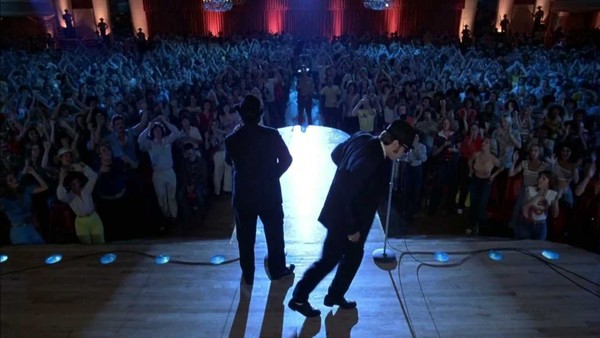
The concert finale was filmed at the Hollywood Palladium. Extras had been lured there by the promise of seeing the Blue Brothers and Cab Calloway in concert after radio stations and media played the event up. As a result, thousands of hopeful extras showed up.
During the day, Belushi was mingling with the crowd and asked one young lad in attendance to borrow his skateboard. The starstruck kid gave up his board, which Belushi immediately used to try (and fail) a trick, fell, and seriously injured his knee
This was extremely problematic, as in a few hours Belushi was expected to dance, flip, and do cartwheels on stage.
Universal president Lew Wasserman used his clout and bankbook to convince one of the top orthopedic surgeons in LA to come to the Palladium, examine Belushi's knee, and shoot him full of cortisone, which would kill the pain long enough to let Belushi do his thing. The surgeon then proceeded on with his weekend plans, which he had delayed for Wasserman.
When you watch the two songs they performed on screen, you would never know that Belushi just about took himself out of the show.
1. The Sequel Eighteen Years Later Was A Critical And Financial Disaster

When Landis and Aykroyd made the sequel, several of the key players from the first film were deceased. Those remaining gave it a good effort; at best, Blues Brothers 2000 was Blues Brothers 2.0, aiming for the same mayhem and magic but not getting there.
The new Blues Brothers Band includes several of the original members plus new additions John Goodman and Joe Morton, and, for some reason, a ten-year old kid. Through a series of plot twists, the new band finds themselves pitted against a blues supergroup called the Louisiana Gator Boys.
The supergroup is admittedly an incredible lineup of legends including Eric Clapton, Bo Diddley, Isaac Hayes, BB King, Steve Winwood, and Dr. John, attesting to the draw of the Blues Brothers brand. The film also has cameos from dozens of other singers and actors of the day.
Despite a lot of effort, starpower, and good intentions, the success of the original couldn't be duplicated and the sequel made just over $14 million. Most reviews highlighted the musical talent but slammed the story as lame and derivative.
Really, the only way that Blues Brothers 2000 topped the original was the destroyed car count.
By 1.