25 Greatest American Directors Of All Time
6. Martin Scorsese
 Many of his peers consider Martin Scorsese to be the greatest contemporary American filmmaker, and while he doesn't end up being the highest ranking director of his era on this list, a case could certainly be made that American movies have never gotten more sophisticated or artistically significant than Scorsese's best work. Breaking through at about the same time as his close friends and contemporaries George Lucas, Steven Spielberg, and Francis Ford Coppola, Scorsese's films were marked by a stylized realism and a stark brutality that he soon became famous for. Mean Streets established him as a major director but Taxi Driver three years later marked his arrival as a potential all-time great. With Raging Bull in 1981, Scorsese had directed two of the most acclaimed American films of all-time and for the next thirty years he has continued to pile great film after great film onto his legacy. While his films never made as much money as Spielberg or Lucas, he is generally held in higher esteem by critics and analysts. In addition to his actual filmmaking career, Scorsese has led the charge in film preservation, helping restore many classics that might otherwise have been lost or damaged beyond repair. He has also been a prominent director and producer of documentary films, has been omnipresent in the digital vs. film debate, and his presence across the spectrum of filmmaking has made him a sort of public representative for film directors. Scorsese's films are noted for their often dark subject matter, technical proficiency, and raw energy. He has been acclaimed not only by his American peers but by filmmakers as diverse as Ingmar Bergman, Jean-Luc Godard, and Satyajit Ray. Still actively making films, Scorsese has a chance to deepen his legacy through his filmmaking and for his efforts on preserving cinema's past.
5. Stanley Kubrick
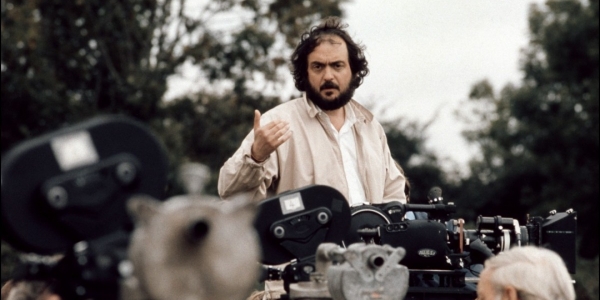 In the entire history of cinema, no one has ever switched between genres with the same aplomb as Stanley Kubrick. In his career he made classic films that covered film noir, heist films, sci-fi, ancient epics, war, anti-war, horror, sexual thrillers, and comedies. He might also be the most intellectual and most driven director in the annals of American film. The Killing in 1956 brought him to the attention of the moviegoing world and their hopes were realized with his next film, Paths of Glory, which was the first in a long line of classics. Spartacus in 1960 was his most mainstream film and might be his most watched film besides 2001: A Space Odyssey. In the 1960's Kubrick began pushing the limits of cinematic form and the patience of audiences, first with his controversial adaption of Vladimir Nabokov's Lolita and then with his apocalyptic comedy Dr. Strangelove. Most important was 2001: A Space Odyssey which might be the most important American film since Citizen Kane and remains incredibly divisive in the film community even today. A Clockwork Orange in 1971 might have been his most controversial work and after its release he began taking on projects less and less frequently, as he only directed four more movies before his death in 1999. A noted perfectionist, Kubrick maintained absolute control over his set, often shooting as many as fifty takes for some scenes and paying minute attention to even the smallest detail. Legend has it that despite never being given access to a B-52 bomber while making Dr. Strangelove as the interior layout was classified, Kubrick and his crew assembled a set so accurate that Air Force officers visiting the set called it completely correct. He owned his own equipment and after Spartacus in 1960, he was able to work with a great deal of creative freedom. He is mostly remembered for his technical abilities as many of his films either broke ground in special effects such as 2001, or are considered among the most cinematographically gorgeous movies ever made such as Barry Lyndon. Kubrick remains one of the most revered of all movie directors. Essentially every major director working today has been influence in some subtle way by Kubrick with filmmakers as diverse as Tarantino and Gaspar Noe expressing their admiration for his work. His work stands not just as movies, at his best Kubrick's films approach the realms of literature and philosophy, making him not just one of the most important filmmakers but most important artists of the twentieth century.
4. D.W Griffith
 In the history of art, there is probably only one person who has singlehandedly had more influence on the entire structure and syntax of an entire medium than D.W Griffith. Although he made only three films of much note and all of them are more important as historical curiosities than as art or entertainment, all three helped establish the majority of the filmmaking techniques that are taken for granted today. His 1915 film Birth of a Nation is easily in the top five most significant films ever made, not only for its controversial depiction of the Civil War south and race relations, but also for practically inventing the screen epic, introducing techniques such as long shots, camera pans, night shots, having an original score made especially for the film, and a host of other techniques that became commonplace within a few years of its release. In order to make up for the controversial depiction of race in Birth of a Nation, Griffith directed Intolerance the following year, which depicted the negative consequences of intolerance throughout history, and it is generally seen as the best film he ever made at least in terms of lasting acclaim. Griffith fell out of favor with Hollywood just a few years later, despite doing more for the medium of film than anyone in history. Chaplin called him "the teacher of us all" and Orson Welles once said that "no town, no industry, no profession, no art form owes so much to a single man" as D.W Griffith. Although his films are not considered as important in terms of lasting artistic appeal as many other directors on this list, his impact on the film industry and film production dwarfs any other directors in film history.
3. John Ford

2. Orson Welles
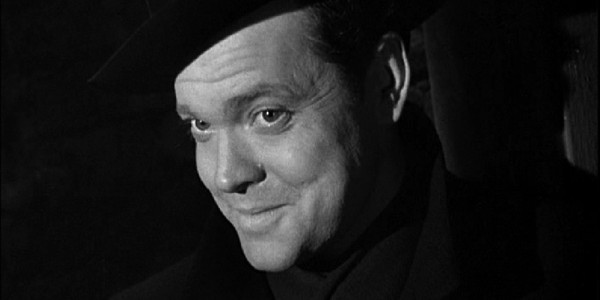 Of all American directors, Orson Welles might be the most mythical, the one most associated with cinematic excellence, and a symbol for artistic integrity whose fight for control of his productions brought him down from a filmmaking wunderkind to a broken shell of a man. In a review of his last directorial effort, noted critic Roger Ebert summed his up career brilliantly by saying he "can make better movies than most directors with one hand tied behind his back. His problem, of course, is that for 35 years the hand has remained tied. His career is a study in lost possibilities." A jack of all trades, Welles not only directed movies but produced them, wrote them, starred in them, and he was also was active in the theater and was responsible for the most infamous radio broadcast in history. His success at a young age led to an unprecedented move by Hollywood, who gave the 26 year old director complete artistic control of a motion picture, which went on to become Citizen Kane, by far the most important American film after Birth of a Nation. Since Citizen Kane was a loose attack on William Randolph Hearst, one of the wealthiest men in the world who tried his best to stop the movie from ever being released, the film flopped and his second film, The Magnificent Ambersons, was tampered with by the studio who tacked on a different ending from what Welles intended. Although Welles arguably got the last laugh with the ongoing acclaim of Citizen Kane, Hearst succeeded in effectively ruining Welles's career. He never had complete control over his productions and although he made many more classic films, legal issues and distribution problems have resulted in them being criminally underseen and many have still not been released on DVD. Just with Citizen Kane, Welles introduced a host of innovative techniques that would be endlessly emulated such as non-linear storylines, original uses of lighting, deep focus, and innovative sound techniques. Although he was in many ways a tragic figure who became more and more marginalized by Hollywood later in his career, Welles remains the ideal director in the eyes of many, someone who was enormously creative, innovative, resourceful, versatile, uncompromising, and artistic. Circumstances beyond his control unfairly unharmed his career but he contributed more to cinema than all but a few filmmakers in history.
1. Steven Spielberg
 Unfortunately a lot of you probably stopped taking this list seriously right about now but don't worry, by examining the criteria for greatness that was outlined in the introduction you might realize that Steven Spielberg is probably the most under-appreciated director in all of American cinema in terms of historical importance. To be fair to the other filmmakers though, an equally persuasive case could be made for John Ford, Stanley Kubrick, Orson Welles, and maybe even Scorsese of Griffith in this spot. As it stands though, Spielberg is the most iconic filmmaker of this generation and the greatest director in Hollywood history from an objective standpoint, even if you don't particularly care for his films. The first criteria is how their style and films have impacted future films and all you need to do to decide who the most influential director on modern movies is look at the kind of movies Hollywood is turning out no. Of all the other great directors including Welles, Kubrick, Scorsese, and Ford the director modern filmmakers copy most is of course, Steven Spielberg. With Jaws, Close Encounters of the Third Kind, E.T, and Raiders of the Lost Ark, Spielberg created the modern Hollywood blockbuster, which unfortunately has led to many less talented directors trying to emulate Spielberg and failing badly as well as studio heads trying to replicate his box office success by using the same basic formula of his films but not replicating his skill, heart, or vision. Secondly is the regard in which he is held by his contemporaries and by critics, which has been for the most part unanimously positive. Although a small but vocal minority consider his films overly sentimental or accuse his serious films of cashing in on real life tragedy, filmmakers such as Hitchcock, Bergman, Scorsese, Kubrick, Herzog, and many, many others have expressed their admiration for him while most critics consider him a completely natural filmmaker responsible for many modern classics. Hitchcock in particular declared him the first filmmaker to think outside of the visual constraints of the theater, making him one of the first purely cinematic directors to work in Hollywood. The next criterion is how well their films have held up and the overall respect their individual films are held in and Spielberg has one of the most impressive filmographies of any director. His "classic" films include Jaws, Close Encounters of the Third Kind, E.T, Raiders of the Lost Ark, Empire of the Sun, Schindler's List, Jurassic Park, Saving Private Ryan, Minority Report, and Catch Me If You Can while his near classics include movies like Indiana Jones and the Last Crusade, The Color Purple, Lincoln, and even his less well received movies such as War of the Worlds still have pretty significant merit. In short, no American movie director has had a better combination of influence on cinematic form, respect of their peers and of critics, and a more loaded filmography. Although you could certainly make a very good case for Ford, Kubrick, or Welles to be in this place, Spielberg is probably what the average person thinks of when they think of an "American" filmmaker and is the easiest choice for the objectively Greatest American filmmaker of all-time.