25 Things You Didn’t Know About Interview With The Vampire
15. Stephen Rea’s Big Scene Was A Tribute To Fred Astaire
To prepare for the small but pivotal role of Santiago, the wickedly louche mainstay of Le Théâtre des Vampires, Irish actor Stephen Rea studied French comedy and pantomime.
In the scene where Santiago meets Louis in a tunnel on the streets, the glorious ham camps up a storm by twirling his way up the tunnel wall and onto the ceiling. The scene was inspired by the same legendary set-up performed by Fred Astaire in Wedding Bells (1951) - and both gags required the manufacture of a revolving set.
14. The Movie Made Antonio Banderas’ Hollywood Career

The elder vampire Armand is a little different in the novel - turned in his teens, he’s a red-headed Russian. But when you can cast Antonio Banderas, you cast Antonio Banderas.
He’d made his name back in Spain as the muse for celebrated auteur Pedro Almodóvar, but in 1994 Hollywood was only just waking up to Banderas’ appeal. He’d had actually auditioned for the role of Dracula in Francis Ford Coppola’s gloriously overheated 1992 adaptation of Bram Stoker’s novel, losing the part to Gary Oldman.
It might have been something to do with the language barrier, because back then Banderas couldn’t speak a word of English. Cast in The Mambo Kings that same year over the studio’s objections, he kept it from the film’s producers at first, learning his lines phonetically.
According to his longtime agent, Emanuel ‘Manny’ Nunez, while Banderas’ small supporting role in the Oscar-winning Philadelphia got his foot in the door in America, it was Interview With The Vampire that boosted his profile and his asking price, which led to Robert Rodriguez casting him in Desperado.
Rodriguez took him with him to The Mask Of Zorro - and although Martin Campbell ended up actually making the movie, Banderas remained attached. The film became Banderas’ first major hit as a Hollywood headliner, cementing his career and making him a genuine star.
And it never would have happened if he hadn’t stood shoulder to shoulder - and smoulder to smoulder - with Brad Pitt in Interview With The Vampire.
13. Oprah Hated The Film So Much It Changed Her Whole Show

The queen of the talk show, Oprah Winfrey was not a fan of Interview With The Vampire. Together with the two-dozen-odd crew she’d brought with her, she actually walked out of an LA pre-release screening during the first reel - some say in the first ten minutes.
Affronted by the film’s decadent, sinister tone and by the amount of gore onscreen, Oprah described herself years later as having had “an abysmal reaction to it! It felt dark and oppressive to me.”
She’d flown out to California specifically to interview Cruise about the movie, but hadn’t seen it beforehand, and with two hours to go until the interview was forced to call Pat Kingsley, Cruise’s ultra-formidable publicist, and admit that she couldn’t watch the film.
To Cruises’ credit, he urged Oprah to go ahead with the show, telling her just to tell the truth about how she felt. "I believe there are forces of light and darkness in the world, and I don't want to be a contributor to the forces of darkness," she admitted to him in the resulting interview. Cruise, ever the professional, consoled her by saying "the movie is not for everyone.”
Since then, Oprah has implemented what she calls the Tom Cruise lesson: she would never again put herself in a position to be promoting something she didn’t believe in. From that moment until the show went off the air, no movie, book or show was presented on The Oprah Winfrey Show unless she’d reviewed and signed off on it.
12. The Film Was Nearly Developed As A Musical Instead

At one point, Rice was working on the adaptation with the late Julia Phillips, producer of The Sting, Taxi Driver and Close Encounters Of The Third Kind. Phillips was the first woman to win an Oscar, so even a decade after her heyday and in the aftermath of a career-crippling cocaine addiction, her opinion carried significant weight.
Had that situation continued, things could have gone in an entirely different direction - because Phillips was insistent that the best way to do justice to Rice’s work would be to adapt the novel as a Broadway musical.
Fortunately for the film, Phillips was about to commit the greatest act of career suicide that Hollywood had ever seen. She’d lost all her money on a box office bomb three years earlier, and to stave off bankruptcy she’d written a tell-all memoir, the excoriating You’ll Never Eat Lunch In This Town Again.
‘Tell-all’ is euphemistic: the book was an almighty slagathon, a vicious, gossipy attack on everyone Phillips had ever met or worked with. One of the people she’d shredded was her current boss, producer David Geffen (she wrote that the work he’d had done made him look like a middle-aged baby). She was fired, and never worked in movies again.
The film alludes to a famous musical, though. When Louis dismisses Le Théâtre des Vampires as "vampires pretending to be humans pretending to be vampires”, it’s a reference to a very similar line in Victor/Victoria, in which Julie Andrews pretends to be a female impersonator.
11. Neil Jordan Didn’t Think Stan Winston Could Do Special Make-Up Effects, The Numpty
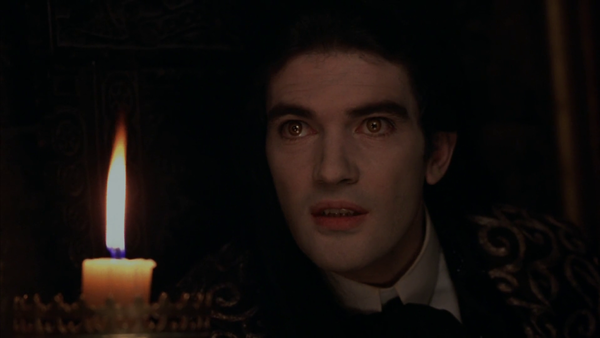
The late Stan Winston’s studio performed the remarkable make-up effects and prosthetics on the film. His colleagues had nagged him to offer their services as they loved Rice’s novel so much.
However, despite the three Oscars on his shelf, Winston had to persuade Neil Jordan that he was the man for the job - because he’d done too good a job on the dinosaur animatronics on Jurassic Park earlier that year.
I hadn’t read the book yet, but I was a big fan of Neil Jordan as a director. So I put a call in to him, asking that he take a meeting with me regarding the film. And he was shocked to hear from me - shocked! - because, to his mind, I was ‘the dinosaur guy’. He would never have thought of this studio for the make-up effects for Interview With The Vampire. I literally had to sell this studio and myself to him. I had to convince him that we did make-up, that I’d started doing make-up.
Seeing the film as a chance to move on from dinosaurs and back to serious horror, Winston pressed his case, reminding Jordan that some of his earlier work included The Thing, The Terminator and Aliens, the latter of which had won him his first Oscar.
Of course, while working on Interview With The Vampire, Winston won his fourth Oscar for Jurassic Park - proof that dinosaurs weren’t yet done with him. He’d go on to work on the next two Jurassic Park movies too.
10. Anne Rice Was Convinced Hollywood Was Homophobic
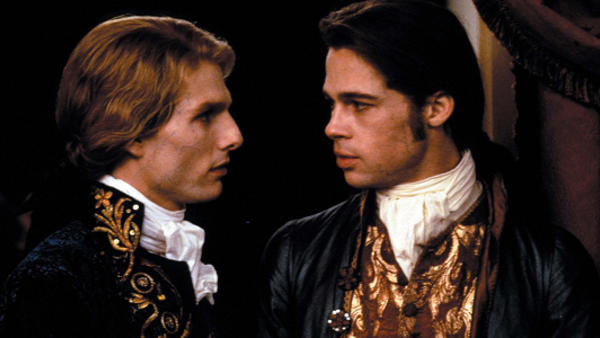
Although her vampires can’t have literal, physical sex, Anne Rice’s novels are rich with sexual subtext, most of which revolves around characters identifying as male.
Over the many years that Interview With The Vampire languished in development hell, Rice became convinced that the reason that an adaptation had never gotten off the ground was that her work had too much of a homoerotic context for 1980s Hollywood - in the original novel, Louis and Lestat are lovers in all but deed, and Claudia is their daughter.
Rice put her suspicion to the test by reworking the draft of her screenplay to have the mortal Louis mourning the death of his wife and child rather than his brother, thereby establishing him as heterosexual and therefore unthreatening.
9. She Was So Convinced That She Genderflipped Louis And Lestat
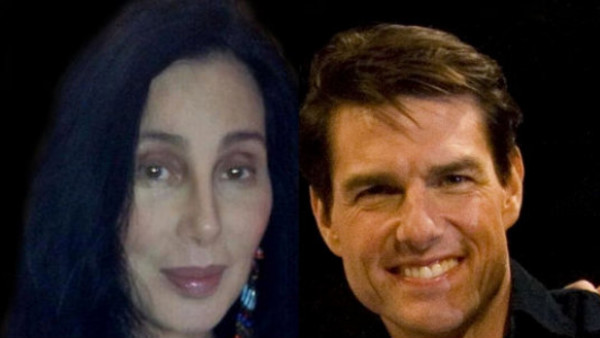
She didn’t leave it at that, however. At one point in the adaptation’s long gestation, Rice and Phillips had considered rewriting the role of Louis to be female. The idea was that genderflipping one of the two central vampire characters would completely remove any homoeroticism in the narrative and so remove any hesitation on the part of producers and moneymen in getting the movie greenlit.
For a while, both Cher and Anjelica Huston were considered as hypothetical casting. However, there was debate over whether it would be better to flip Lestat or Louis - Rice was keener on Louis, but reportedly her editor, Vicki Wilson really wanted Anjelica Huston to play Lestat. She’d given the reworked background some thought, though:
...the whole idea was that Louis would be a transvestite woman. At that time in history, you could own your own plantation and run things if you were a man, you couldn't if you were a woman. It was the French law. So this was a woman who dressed like a man, and otherwise it was exactly the same as Interview With The Vampire.
The idea went nowhere, although Cher’s near involvement led to a song being recorded for the movie’s soundtrack called ‘Lovers Forever’ that was ultimately rejected and wound up on a Cher album nearly twenty years later.
8. Tom Cruise Was Perhaps The Seventeenth Choice To Play Lestat
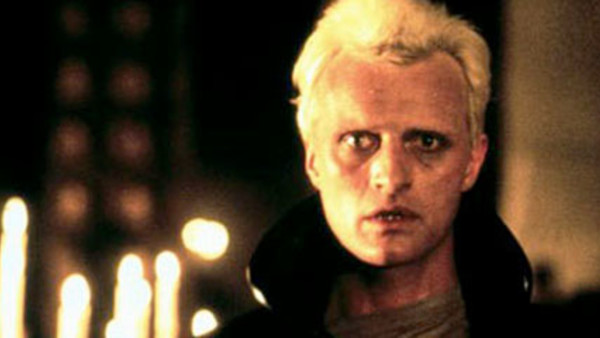
When Rice first wrote the novel, she had Rutger Hauer in the back of her head as the template for Lestat; when she wrote the screenplay a decade and change later, she was daydreaming about sixties sex symbol Alain Delon.
However, as she was to discover during the long, long development process, her ideas on casting weren’t ever going to be a priority. Paramount had originally optioned the rights before the book was even published and had John Travolta in mind - and when John Boorman was tentatively attached to direct the project in 1978, he’d earmarked Jon Voight.
During the eighties, Mel Gibson and Richard Gere’s names were both bandied about for Lestat, but by the time the green light lit and pre-production on the film finally began, things had moved on. Rice met with Tom Hanks after seeing Philadelphia, but he was focused on Forrest Gump. She loved the idea of Jeremy Irons, but he wasn’t keen on the hours he’d need in make-up.
John Malkovich, Peter Weller, Alexander Godunov and (funnily enough) Brad Pitt were all considered at various points. Daniel Day-Lewis was actually given the part, but dropped out weeks before filming. Tom Cruise was finally offered the role after Johnny Depp turned it down. By this point, Rice was pushing Julian Sands or Christopher Walken but Sands was considered too unknown and Walken too… well, Walken.
7. Anne Rice Doesn’t Suffer Fools Gladly

Anne Rice famously doesn't mince words. On a Dallas book tour in 1993, she commented about her time in Hollywood, "They're making these movies that have a huge impact on America, and they're idiots. They're stumblebums.
Rice was furious that Tom Cruise was cast to play Lestat, insisting that the casting was "so bizarre; it's almost impossible to imagine how it's going to work" and frothing that she was "particularly stunned by the casting of Cruise, who is no more my vampire Lestat than Edward G. Robinson is Rhett Butler".
Rice suggested swapping the leads to fix the problem: having already decided that Brad Pitt could play Lestat, she condescended to agree that,”yes, [Cruise] could do Louis, he could do that part, the brooding, dark, guilt-ridden, passive, reflective, reactive thing."
She wouldn’t stop, either: "it's almost impossible to imagine how it's going to work, and it's really almost impossible to imagine how Neil and David and Tom could have come up with it. I have one question: Does Tom Cruise have any idea of what he's getting into?"
Well, now he does, Anne.
Rice recused herself from the production and had no further involvement until she watched a VHS copy of the finished film… and was forced to eat a little crow when she saw just how good Cruise was in the role. In fairness, she was delighted to do so, personally apologising to him and taking out two-page ads in Vanity Fair and the New York Times hailing the movie as a masterpiece.
6. She Fell Out With David Geffen Over It, Too
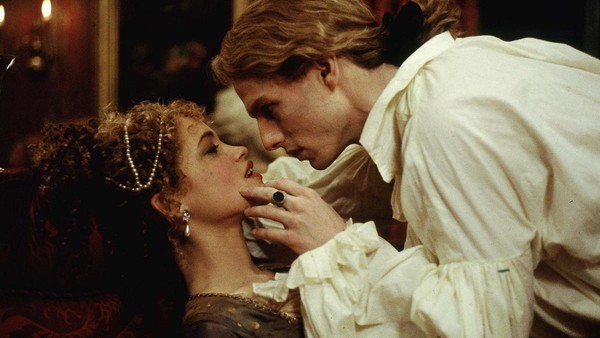
It’s unfortunate that Rice’s dogmatic dismissal of Cruise derailed her involvement, because she missed out on visiting the set and seeing her precious story painstakingly put together by one of cinema’s foremost stylists.
She also seriously fell out with producer David Geffen.. She’d worked with him very closely for a number of years, and it’s fair to say that he took her remarks very personally indeed:
Anne is a difficult woman at best, and what her motives are remains somewhat beyond me. But for her to attack this movie for her own self-importance, when she has been paid two million dollars and stands to make a lot more money selling her books, is just capricious. It lacks kindness. It lacks discretion. And it lacks professionalism.
Fortunately, Geffen was more than happy to walk back his criticism of her when she’d done likewise:
She even phoned [Cruise] up and told him she was wrong. It’s a great thing when someone who had been critical of a movie saw it, loved it and admitted she was wrong . . . a very classy thing to do.