25 Things You Didn’t Know About Interview With The Vampire
5. It’s Absolutely Understandable, Part 1: The Novel Was An Obsession
The thing is, if Rice did take the casting personally, it was for good reason.
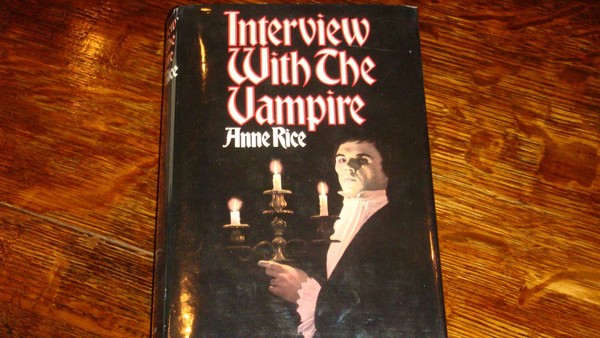
Although the novel was published in 1976, Rice actually began Interview with the Vampire in the 1960s. Obsessed by the idea of the vampire as a legendary creature that had once been mortal, her fascination with the subject led her to write it initially in short story form, albeit under the same title.
When she returned to the story a few years later, she used that short story as a jumping off point for what became a much longer project. Working under the pall of intense depression and loss after the death of her daughter, she describes her mental state at the time as “like a white heat”. The manuscript was completed in only five weeks.
In the absence of that furious urge to write, she then developed a form of obsessive-compulsive disorder that saw her repetitively clean her house, running from door to window to door to check the locks.
4. It’s Absolutely Understandable, Part 2: The Novel Was Also A Record Of Loss

That obsession wasn’t just a creative one, but a deeply personal one. She recalls having what she describes as a prophetic dream about the death of her five-year-old daughter:
I dreamed my daughter, Michelle, was dying—that there was something wrong with her blood. It was horrifying. Several months afterward, she was diagnosed with a rare form of leukemia.
When Michelle passed away in 1972, Rice threw herself into her work, devastated by grief and loss. The story moved on from simply describing the state of living in darkness to becoming a thesis on loss, alienation and guilt.
Casting herself as Louis and immortalising her lost little girl by creating the ingenue vampire girl Claudia, Interview With The Vampire became the story of a woman trying to come to terms with that most horrific of events: a parent having to bury their child.
3. It’s Absolutely Understandable, Part 3: Lestat Is Based On Anne Rice’s Husband
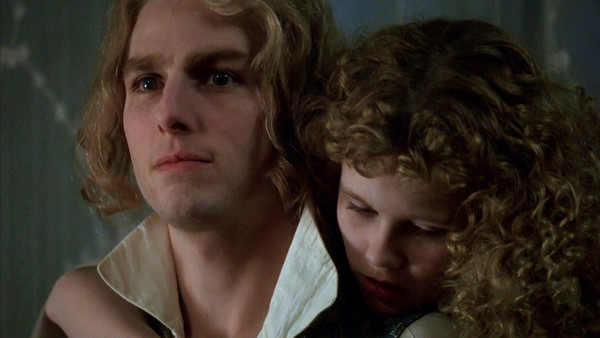
If Rice herself identified with the griefstricken, heartbroken Louis, her point-of-view character and the lens through which we see vampirism and immortality, she identified Lestat with her husband, the late Stan Rice.
No wonder she had so many ideas about casting the character when her book was being turned into a movie. Lestat de Lioncourt was even given Stan Rice's birthday of November 7th.
Perhaps more accurately, Lestat was a combination of the pair of them. Interviewed the year after her husband’s death in 2002, Rice admitted:
Stan was Lestat; he was the inspiration. Perhaps it is best to say Lestat was Stan and me. He was Stan and what Stan taught me. Lestat was inspired by Stan, and then I became Lestat.
2. Neil Jordan Walked Back Most Of Rice’s Changes
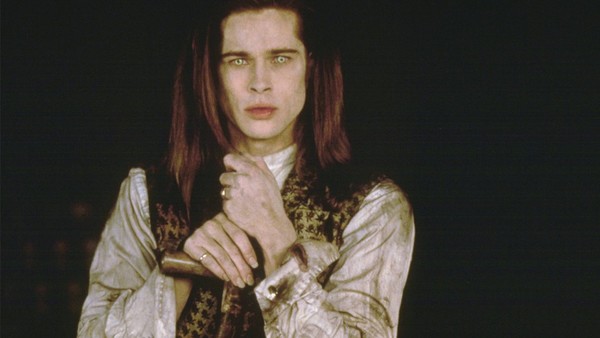
Oddly, practically all of Rice's paranoid alterations to character and narrative ended up being revised when Jordan himself tackled her screenplay.
Jordan had signed on because of the book, not because of the screenplay, and replaced the sections that Rice had reworked or excised, keen to be more faithful to the novel, not less. Geffen, who had worked for years to bring the book to the screen as almost a passion project, was more than happy for the talented director to take a stricter approach to the adaptation.
Jordan had gotten the job primarily because of his revelatory work on The Crying Game, after all - a film in which ideas of sex and sexuality are used as molotov cocktails.
Jordan did so much work on the screenplay that he was a little narked that he wouldn’t get a nod for it - but WGA rules prohibited him from adding his name to the writing credits. He claims to have brought back “the little girl, and the blood, and the sex”, although it’s difficult to imagine Anne Rice submitting a screenplay without any blood and sex involved.
1. Tom Cruise Was Determined To Prove Anne Rice Wrong

Cruise had been floored by Rice's initial criticism - it wasn’t something he’d ever encountered before.
When it first hit, it really hurt my feelings, to be candid about it. Her venom hurt… You don’t usually start a movie with someone not wanting you to do it. That’s unusual.
The negativity only made him want to prove her wrong and he buried himself in the part, grabbing it by the jugular. He reread Interview With The Vampire over and over, reading all of Rice’s other novels too.
He went on a strict diet to get to the appropriate weight so that his cheekbones would pop, dropping twelve pounds and maintaining that exact weight for the entire shoot. He learned to play the piano, memorising pieces so that he could mimic Lestat’s flawless style at the keys at the drop of a hat.
He researched the life of the eighteenth century French aristocrat that Lestat was. He visited Versailles and Paris, spending time in museums, looking into the fashions and art of the time. More than that, he researched Lestat: Interview With The Vampire is told from Louis’ point of view, after all, and he found that he needed to parse the novel carefully “to find the clues to who Lestat is.”
Finally, he acquired the predatory mindset he needed to be Lestat by obsessively watching videos of lions and other predators at work in the wild. The results speak for themselves. Cruise was a revelation: charismatic, layered, Lestat body and soul.