25 Things You Didn’t Know About Pulp Fiction
16. The Jack Rabbit Slim's Set Cost $150,000

By far the most expensive single aspect of shooting Pulp Fiction was creating the set for the instantly iconic 50s-styled diner Jack Rabbit Slim's.
Though it might seem like Tarantino simply found a diner and had his production designers dress the set appropriately, the diner was actually built from scratch in a Culver City warehouse, to the cost of $150,000. For the exterior shot of the diner, Tarantino used a Glendale bowling alley, Grand Central Bowl.
For context, the cost of creating the diner was more than John Travolta's salary for the movie, said to be around $140,000.
After the film's success and the popularity of the sequence, Harvey Weinstein considered creating a Jack Rabbit Slim's restaurant franchise for real, until Tarantino reminded him that he wrote the scene as a jab at chintzy themed diners. Oops.
15. The "Bad Motherf**ker" Wallet Belonged To Tarantino
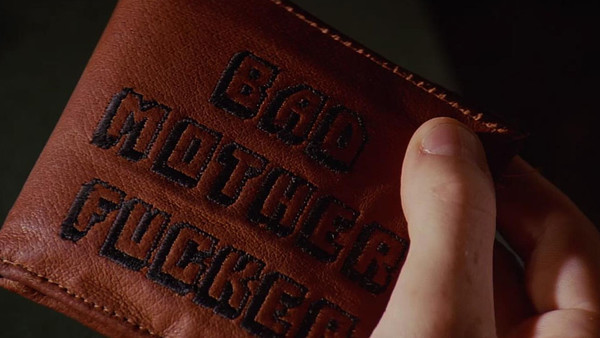
Nobody who has ever seen Pulp Fiction will likely forget the colourful "Bad Motherf**ker" inscription on Jules' wallet, a piece of apparel so freaking cool it's now a popular fashion item among fans.
But the story behind the iconic wallet gets better, because it actually belonged to Quentin Tarantino, who couldn't resist but use it in his movie.
The inscription is said to be a reference to Isaac Hayes' iconic theme tune for the 1971 blaxploitation classic Shaft, where he says, "They say this cat Shaft is a bad mother..."
To make the trivia even juicier, though, Samuel L. Jackson himself of course ended up playing John Shaft in the 2000 remake, and also the recent 2019 sequel.
14. Roger Avary Wrote The First Material For The Movie
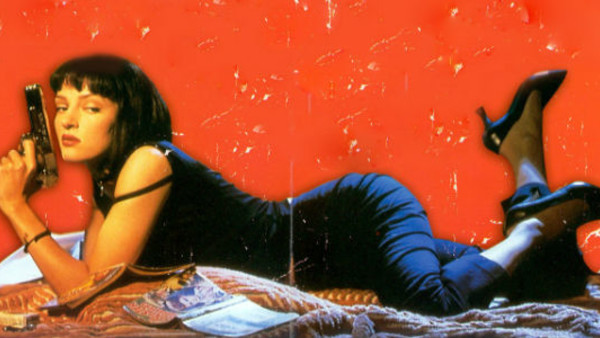
Though Quentin Tarantino is often cited as the sole architect of Pulp Fiction, he actually conceived the movie with the help of screenwriter Roger Avary, whose contributions won him a Best Original Screenplay Oscar alongside Tarantino.
Avary actually wrote the first material for what would eventually become Pulp Fiction way back in 1990, with the "divine intervention" missed gunshots fired at Jules and Vincent and Marvin's (Phil LaMarr) death being originally written by Avary for inclusion in Tarantino's script True Romance.
A lot changed before the script was locked, naturally, and before the film was released, Tarantino convinced Avary to take a "story by" credit rather than co-writer, so that Miramax could market the film as "Written and directed by Quentin Tarantino."
It's been speculated that the contention over Avary's contribution to the film's success led to them falling out, though in an interview years after the fact, Avary said that he was "enjoying the residuals" regardless.
13. Marvin's Shocking Death Was John Travolta's Idea

In an interview with actor Phil LaMarr, who played poor, doomed Marvin, he claimed that the character's sudden gunshot death was actually John Travolta's idea.
In the original script, Marvin was to be shot in the throat after Jules drove over a speed-bump, and as he begins to die slowly, Vincent and Jules ultimately decide to shoot him in the head to spare him the anguish.
However, Travolta felt this would make the characters too unlikeable, and suggested to Tarantino a single head-exploding gunshot, as to make the kill both less cruel and funnier.
Tarantino agreed, and the result is one of the most grimly hilarious moments from any movie ever.
12. The "Ezekiel 25:17" Line Was Originally Intended For From Dusk Till Dawn

It's no secret that Jules' iconic biblical passage Ezekiel 25:17 isn't actually a bible quote at all, but a line lifted and slightly altered from the 1973 Sonny Chiba film Karate Kiba.
However, Tarantino originally wrote the one-liner into an early script for his vampire film From Dusk Till Dawn, which was of course eventually directed by Robert Rodriguez in 1996.
Tarantino intended to have Harvey Keitel's pastor character deliver the monologue while walking backwards down a hallway facing the vampires, presumably while holding up his famous makeshift cross, made of a shotgun and baseball bat.
It's easy to see how the line would've fit From Dusk Till Dawn like a glove, but you absolutely cannot begrudge its inclusion in Pulp Fiction, either.
11. It Was Released The Same Day As The Shawshank Redemption

October 14, 1994 was an historic day for the world of cinema, and one that lucky audiences at the time surely couldn't have quite appreciated the enormity of.
On that day, both Pulp Fiction and The Shawshank Redemption were released to U.S. cinemas, giving viewers quite possibly the greatest single-day embarrassment of riches in the history of moviegoing.
Though Shawshank was a modest box office success at best, both films went on to enjoy massive critical and audience acclaim - of course - while receiving seven Oscar nominations each.
Incredibly, Shawshank won nothing, and between their 14 nominations, the films won just a single Academy Award - Best Original Screenplay for Pulp Fiction.
1994 is often cited as one of the best-ever years for movies, especially when you factor in the likes of Best Picture winner Forrest Gump, Speed, Dumb and Dumber, True Lies and Clerks, to name just a few.
10. Tarantino Considered Casting Gary Oldman & Tim Roth As Jules & Vincent

Near-impossible though it is to imagine anyone but Samuel L. Jackson and John Travolta as Jules and Vincent, Tarantino nearly went in an entirely different direction.
Early in pre-production, Tarantino pondered casting Gary Oldman, who had appeared as iconic drug dealer Drexl in the Tarantino-scripted True Romance the year prior, and Tim Roth, who would eventually play diner thief Pumpkin, as Jules and Vincent respectively.
Tarantino even considered re-writing the characters as two Englishmen, given the actors' natural heritage, but ultimately decided against it. As fascinating as this would've been to watch, there's no arguing with Tarantino's ultimate choice.
9. Dick Miller Played Monster Joe In A Deleted Scene
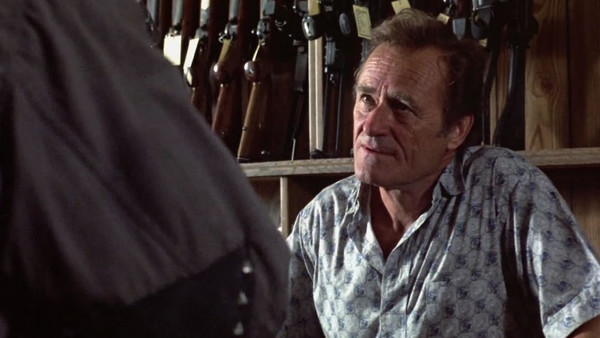
Legendary character actor Dick Miller - who passed away recently at the age of 90 - filmed a small role for the movie, playing Monster Joe, the owner of the junkyard where Winston Wolfe (Harvey Keitel) disposes of the bloodied car.
In the small scene, Joe has some cheeky back-and-forth with Wolfe about body part disposal, before Wolfe heads outside to meet up with Joe's daughter Raquel (Julia Sweeney), who appears briefly in the final cut of the movie.
Sadly the scene was cut due to pacing, though was mercifully included on Pulp Fiction's home video release.
When introducing the scene, Tarantino added that Miller is one of his favourite character actors, and while he loved how the scene turned out, he wanted to get the audience to the diner a little quicker than this scene's inclusion allowed.
8. Jules Originally Had A Massive Afro

Believe it or not, Jules was originally supposed to have a gigantic afro throughout the movie, serving as an homage to the many blaxploitation films Tarantino is a huge fan of.
But in Samuel L. Jackson's own words, a happy accident resulted in Jules ending up with his iconic Jheri-curl instead:
"Quentin is this huge fan of blaxploitation films. So in his mind, Jules had this big Afro. And, unfortunately for him, he sent this young, white PA over to South Central to buy an Afro wig. And she bought a Jheri curl wig thinking it was an Afro wig...Quentin kind of railed at her, went off, and I’m like, ‘No, no, no, it’s perfect,’ because NWA is starting to hit, you know, they were large, and all those guys had Jheri curls."
Jackson tried the wig on, Tarantino loved how it looked, and he consequently dropped the afro idea. And with that, a clueless intern completed Jules' iconic look by pure accident.
7. The Secret Meaning Behind The Name Of Tim Roth's "Pumpkin"

Tim Roth plays the diner thief referred to as Pumpkin by his girlfriend Yolanda/Honey Bunny (Amanda Plummer), but there's a sneaky meaning behind that name hiding in plain sight that even hardcore Tarantino fans may have missed.
Remember, Roth played Mr. Orange in Tarantino's previous film Reservoir Dogs, and pumpkins are orange. Pumpkins and oranges are also both fruits. You can see where we're going with this.
While it's possible this was a coincidence, Tarantino's well-noted attention-to-detail makes it decidedly more likely that this was a cute nod to Roth's prior role. It's a low-key mind-blower, and you'll kick yourself for never noticing.