25 Things You Didn't Know About The Shawshank Redemption
16. Frank Darabont Took A Huge Pay Cut To Direct The Movie Himself

After Frank Darabont completed his script for the movie and it began doing the rounds in Hollywood, director Rob Reiner - who had previously helmed Stand by Me, also based off a King novella - loved the script enough to offer Darabont $2.5 million for the rights to it.
Reiner planned to direct it himself, while favouring Harrison Ford and Tom Cruise for Red and Andy respectively.
Darabont seriously considered the offer, but seeing this as his one big shot to "make it," turned it down, while taking a massive pay cut in order to direct the film himself, earning just $750,000 for writing and directing (plus a percentage of the net profits, of course).
As Darabont so eloquently put it himself, "You can continue to defer your dreams in exchange for money and, you know, die without ever having done the thing you set out to do." Reiner clearly had no hard feelings, though, serving as Darabont's mentor during production regardless.
15. Tim Robbins Spent Time In Solitary Confinement To Prepare For The Role

In order to prepare to play Andy, Tim Robbins spent time in solitary confinement, asking to be locked into solitary for an afternoon in the hope of understanding the isolation and hopelessness.
Robbins of course accepted that he'd only learn a fraction of what a truly solitary inmate would feel, given that his "incarceration" was ultimately voluntary and he could leave at any time.
He also visited the zoo to observe caged animals, spoke with both prisoners and guards, and had his arms and legs shackled for several hours to better appreciate the physical rigours of being imprisoned.
Despite his considerable preparation and the eventual brilliance of his performance, however, Robbins ended up missing out on an Oscar nomination, likely due to both Morgan Freeman effectively stealing his Best Actor slot, and the generally crowded slate of quality lead performances in 1994.
14. People Originally Thought It Was A Rita Hayworth Biopic
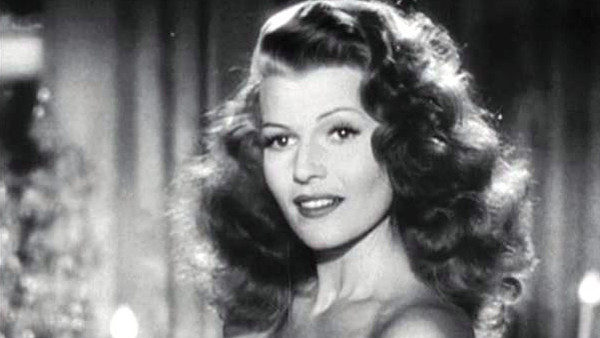
Stephen King's original novella is called Rita Hayworth and the Shawshank Redemption, but the decision was made to shorten the title both because of its overt wordiness and also the belief throughout the industry that Darabont was initially directing a biopic of actress Rita Hayworth.
This was pervasive enough that Darabont received open submissions from actresses and supermodels, as well as a man in drag, about playing Hayworth before he dropped her name from the title.
The director even received a call from an agent who claimed he'd read the script, only to inquire about the obviously non-existent Hayworth role. Between this and the dim commercial prospects of such a verbose title, it was the only choice.
The irony, though, is that the ambiguity of the film's eventual title is often cited as one of the reasons that it bombed at the box office, given that it doesn't clearly indicate a premise or genre.
13. Clancy Brown Didn't Want To Portray A "Realistic" Corrections Officer

Counter to Tim Robbins striving for absolute realism and authenticity in his performance, Clancy Brown went in the total opposite direction for his unforgettable portrayal of brutal prison guard Byron Hadley.
After taking the part, Brown received offers from several real corrections offers to help him prepare for the part and ensure Hadley was as believable a screw as possible.
But Brown ended up refusing all the offers because he felt that Hadley was "evil" and wanted to tap into that rather than risk creating a misconception about the behaviours of real corrections officers.
12. A Castle Rock Producer Threatened To Quit If They Didn't Make The Movie

The Shawshank Redemption was a risky bet for production company Castle Rock Entertainment for several reasons, least not that prison dramas typically weren't successful at the box office.
However, when Darabont's script came across the desk of Castle Rock producer Liz Glotzer, she loved the script enough that she threatened to quit the company if they didn't agree to produce the movie.
Thankfully the gamble paid off - and then some - and in addition to Glotzer receiving an executive producer credit, she served as a co-producer on Darabont's 2007 King adaptation The Mist.
11. The Prison Set Almost Burned Down Mid-Shooting

Though most of the movie was shot at the Ohio State Reformatory in Mansfield, Ohio, Andy and Red's prison cell block was actually a purpose-built set created in a disused factory nearby.
In order to give the impression of sunlight, plastic sheeting was placed over the windows, allowing lamps to shine behind them and convincingly depict the elements.
However, while on a coffee break between takes, Darabont and extra Michael C. Poole noticed that one of the lamps had been placed too close to one of the windows, causing it to set aflame.
Had they not discovered this purely by chance, the set could very well have burned down or at least sustained major fire damage, putting production in jeopardy.
10. Frank Darabont's Hands Appear In Two Scenes

It's not uncommon for directors to give themselves sneaky cameos in their movies, and sensibly, Darabont decided to limit his cameo to a faceless one.
The filmmaker actually appears in two scenes, both featuring shots of his hands. When Andy is shown loading his gun in the opening montage, those hands are Darabont's, and when Andy carves his name into his cell wall, that's once again the director's, er, handiwork.
These shots were actually pick-ups filmed after principal photography had been completed, and served a more practical purpose than simply letting the filmmaker appear in his own movie.
Darabont felt that these moments required a very specific physicality that only he could convey as he wanted, so decided to just do it himself.
9. It Was Initially Released To Just 33 Cinemas

Giving an unassuming, lower-budget movie a limited initial release is nothing new, but considering that The Shawshank Redemption is now regarded as one of the best and most popular Hollywood movies of all time, its modest (if we're being kind) distribution is pretty laughable.
The film was released in September 1994 to a mere 33 cinemas across North America, and it wasn't for another three weeks that it expanded to another 910 cinemas.
Unfortunately, this was the very same day that Quentin Tarantino's Pulp Fiction hit screens, which promptly steamrolled any chance it had of building a head of steam at the box office.
Worse still, Darabont and aforementioned executive producer Liz Glotzer visited a cinema on opening night and found it empty, even selling their own tickets to passers-by with the promise they could get a refund from Castle Rock if they didn't like it. Ouch.
Like the film's disappointing performance at the Oscars, its lackluster distribution and mediocre showing at the box office are proof perfect of how little these figures truly reflect quality cinema.
8. Red's Cell Number Is A Reference To The Shining

Any Stephen King fan worth their salt will be aware of the importance of the number 237, which of course refers to Stanley Kubrick's adaptation of King's The Shining, with room 237 of the iconic Overlook Hotel being haunted (though, in King's novel, it was in fact 217).
237 appears in some form in many adaptations of King stories, and despite being the furthest thing from a conventional horror film - though it's plenty horrific in more tangible terms - The Shawshank Redemption is no exception.
Red's cell number, in fact, is 237. How cute.
7. It Gave Roger Deakins His First Best Cinematography Oscar Nomination
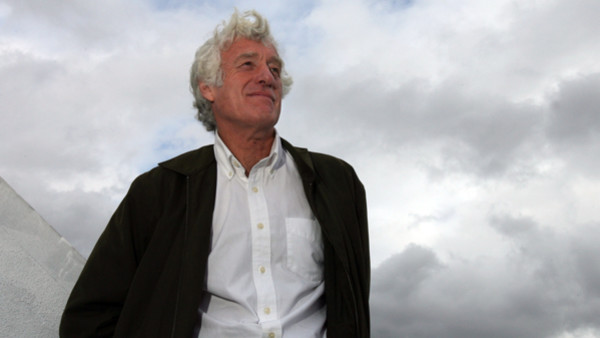
The film represented a major turning point for the career of now-legendary cinematographer Roger Deakins, who while already an incredibly experienced DP, earned his first Oscar nomination for his work on the film.
This set Deakins on a 23-year path towards finally winning a Best Cinematography Oscar, on his 14th nomination no less, for Blade Runner 2049 last year.
Up until his belated win, Deakins was often cited as one of the most deserving repeat Oscar nominees to never take the gong home, even competing against himself in 2008 by having two films in contention (There Will Be Blood and The Assassination of Jesse James by the Coward Robert Ford).
And that narrative began, quite aptly, with this classic movie.