30 Best Hidden Gem Horror Movies Perfect For Halloween
Bored of putting on Michael Myers yet again? We have you covered with some spooky hidden treats.

The foggy season of Halloween is impending, a spooky time that's rife with chances to dress in gnarly cosplay, fill yourself with sugary treats, and decorate your house with various severed limbs.
That said, what better way to celebrate throughout October than to cosy up on a couch, in a dimly lit room, with some snacks and plenty of creepy movie-watching material? But then a greater fear arises - what to watch?
Of course, the classic go-to choices are plenty - Halloween, The Exorcist, Jaws, Alien, etc. - but unlike the Christmas season, where decent viewing is limited, the horror genre holds such a vast array of titles that it gives you the chance to discover something brand new, without having to lean on the same old crutch every single year.
There lies the whole concept behind this list, spanning an array from overlooked foreign films, to unfairly judged sequels, to neglected titles in a famous horror director’s filmography - all meant to point you towards some lesser-known gems that might just end up becoming your go-to favorites in the many years to come.
30. Dead Silence

At present, there is no bigger name in horror than James Wan. Not only is he responsible for kickstarting three of the most successful modern horror franchises - the Saw, Insidious, and Conjuring series - but he also runs one of the genre’s most profitable production companies, Atomic Monster. Yet, for a brief moment, he was seen as a one-hit wonder.
After taking the world by storm with his debut, Saw (2004), Wan and collaborator Leigh Whannell attempted to step away from the graphic “torture-porn” craze of the mid-noughties they helped popularise, making a double bill of films with a very different tone that both flopped. One was the cracking Death Sentence, an ode to grimy Death Wish-style revenge thrillers, and the second, Dead Silence, a slow-burn, old-fashioned chiller that leans into Wan’s love for creepy ghost stories and the visual aesthetics of Argento and Bava.
The plot follows True Blood’s Ryan Kwanten, who receives a ghoulish ventriloquist’s doll in the mail and, in a gripping opening sequence, becomes a widower soon after. What follows is a return to his ominous hometown to figure out what has pulled him into this dark vortex. Thick atmosphere, tense set-pieces, and elaborate visuals ensue, capped by an absolute killer final twist.
29. Cast A Deadly Spell
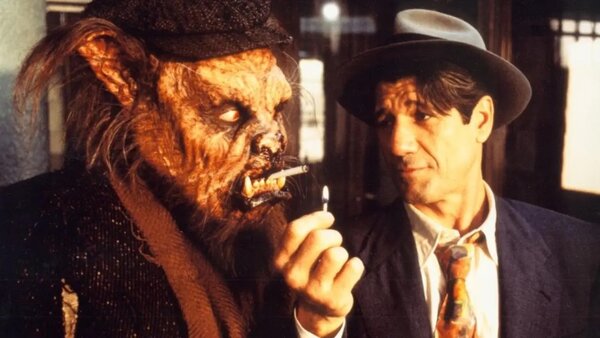
Take a slice of Raymond Chandler, add a helping of H.P. Lovecraft, and sprinkle in a touch of Terry Pratchett, and you’ve got yourself a recipe for an overlooked genre gem - perfect for rediscovery during spooky season.
Set in an alternate version of 1948 Los Angeles, where magic is part of everyday life, our grizzled protagonist, Detective H. Philip Lovecraft (Fred Ward), stands apart with his staunch refusal to use it. When Lovecraft is hired to recover the stolen Necronomicon, he’s pulled into a whirlwind of mobsters, supernatural creatures, and ancient conspiracies, all while trying to prevent the end of the world.
Don’t expect nail-biting scares; the movie leans more into classic film noir with absurdist comedy and horror elements woven into its world. That said, the creature designs are fantastic, and the action is surprisingly intense, especially when some vengeful goblins enter the fray with a penchant for heart rips.
Originally released as an HBO movie in the early ’90s, Cast a Deadly Spell garnered enough interest to spawn a lesser sequel (1994's Witch Hunt) with a new cast and director. It’s a shame, because director Martin Campbell - early in his career - demonstrates a sharp understanding of how to blend humour, action, horror, and retro aesthetics. Ward is excellent as the hard-drinking, chain-smoking detective who takes no nonsense. Add to that a pre-awards-era Julianne Moore as the magnetic femme fatale, alongside genre stalwarts Clancy Brown and David Warner, and you’ve got an eclectic ensemble that elevates this one-of-a-kind hidden gem.
28. Timecrimes

Spanish suspense ride Timecrimes came out in 2007 and took the festival scene by storm, but in the years since, it has drifted into hidden-horror-gem territory. It’s one of those daring, twists-and-turns rollercoasters that will have you guessing till its final moments, right up to its gut-punch ending.
An unassuming, middle-aged man (Karra Elejalde) gets pulled into a spiralling bad situation one sunny afternoon when he spots a woman undressing in the woods. Soon after, he’s chased down by a frightening masked murderer and takes shelter in a secluded laboratory with experimental technology - that’s when things really start to get weird.
The film’s strength is that, if its plot were boiled down, it would appear to be classic 1950s sci-fi, but the special sauce is how it unravels, feeling much more like a nail-biting horror flick, with heavy nods to slashers, giallo, and psychological thrillers. Therein lies Timecrimes' excitement: the movie keeps you on the edge of your seat until its finale. Still to this day, a one-of-a-kind experience.
27. Two Evil Eyes

The late 1980s to early ’90s saw a slew of horror-anthology features released in droves, such as Tales from the Darkside: The Movie, Body Bags, and Necronomicon. One of the more impressive, yet slept-on, was Two Evil Eyes, a two-parter featuring horror masters George A. Romero and Dario Argento teaming up under a joint theme of adapting Edgar Allan Poe stories.
Romero and Argento had already collaborated on the iconic Dawn of the Dead, as director and producer respectively, and wanted to continue the process. The original plan was to have Wes Craven as a third contributor, but after creative conflicts, the film became a two-parter instead.
Romero’s plot revolves around a nefarious trophy wife, played by genre queen Adrienne Barbeau, waiting for her terminally ill, wealthy husband to shuffle off this mortal coil. When he does, things take a trademark turn with the undead. Argento’s tale centres on the classic “The Black Cat,” with an always-charismatic Harvey Keitel playing an artist tormented by the feline his put-upon partner brings home.
The Romero tale is surprisingly average despite featuring zombies, not to mention him having aced the short-anthology format with his classic Creepshow feature. It’s directed like a made-for-TV movie of the era and only really kicks into gear in the final minutes, though it’s a fun finale at least. Argento’s, on the other hand, is an unsung gem: a Polanski-style psychological horror with a tinge of dark humour, exciting style, and a stellar performance from Keitel that's well worth the price of admission.
26. Bad Moon

Werewolf movies have always been surprisingly difficult to get right. It’s ironic, then, that one of the best examples of the werewolf subgenre was lost in the mix of post-modern trends during the mid-'90s.
Michael Paré is a photojournalist who returns to America after being bitten by a werewolf in Nepal. Struggling to hold onto his humanity, he reconnects with his sister Janet (Mariel Hemingway) and her son Brett (Mason Gamble), who are happy to welcome him back into their lives. But the real protagonist here is Thor, the family’s fiercely protective German Shepherd, who senses the truth: Ted is deteriorating, descending into a bloodthirsty creature who may soon prey on those he loves.
The decision to tell a horror story through the eyes of a dog is gaining fresh praise thanks to this year’s Good Boy, but Bad Moon did it first (and maybe better?). Thor delivers a more compelling and emotionally resonant performance than many human actors. Add to that a career-best turn from Paré as a decent man doomed to a monstrous fate, and solid emotional depth from Hemingway and Gamble, and you have a surprisingly heartfelt horror film.
Director Eric Red, best known for writing genre staples like Near Dark and The Hitcher, is often overlooked for his directorial work, yet Bad Moon may be his finest effort - tense, vicious, packed with heart, and let’s not forget a werewolf costume that's a striking piece of old-school practical effects that adds grit and authenticity to the film’s horror.
25. Son of Dracula
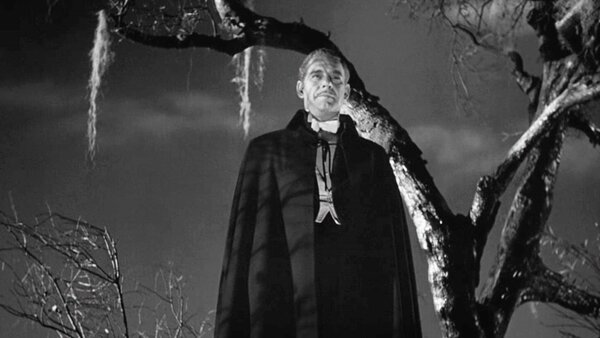
The third, and criminally underrated, entry in Universal’s Dracula cycle trades misty castles for the deliciously swampy Gothic of New Orleans. Lon Chaney Jr. turns up as Count Alucard (yes, Dracula backwards), whose sudden marriage to a plantation heiress, played by Louise Albritton, sends the local aristocracy into a tailspin.
Director Robert Siodmak was early in his Hollywood run (before noir landmarks like The Spiral Staircase and The Killers), and the German squeezes every drop from a modest budget. Lush lighting, gliding camera moves, and thoughtful compositions give Son of Dracula's sets real texture, restoring a visual personality Universal hadn’t quite matched since the James Whale era.
Chaney Jr., already a studio MVP as the Wolf Man and Frankenstein’s Monster, adds another classic creature to his CV. Like Christopher Lee would later prove in the Hammer films, a towering physical presence can carry the Count. Chaney doesn’t have Lee’s stage-bred gravitas for the seductive, whisper-threat moments, but he still lands several commanding beats, and Albritton’s poised, fragile turn complements him nicely.
That said, a couple of creaky effects shots haven’t aged well, but Son of Dracula's atmosphere is thick, the setting unique, and the overall package quietly stellar.
24. The Guardian
Creating one of the most iconic and terrifying horror movies of all time with The Exorcist is no small feat, considering it still shakes audiences up 50+ years later, but attempting any sort of follow-up is an impossible task. Regardless, director William Friedkin gave it a go with The Guardian, and it was quickly laughed out of the room.
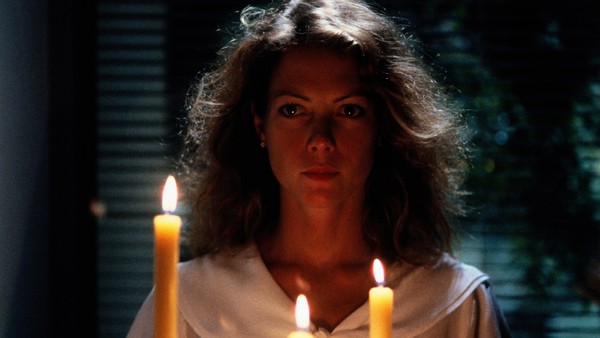
With a premise that plays like The Hand That Rocks the Cradle via supernatural horror, The Guardian centres on a working couple - played by Carey Lowell and Dwier Brown - who become parents to a newborn and need extra help, which comes in the guise of Jenny Seagrove’s picture-perfect English nanny. As the plot unfolds, it’s discovered that the nanny is quite sinister, with links to a demonic tree in the nearby forest, and creepy plans for the baby in connection.
On release, this movie was seen as a major disappointment for Friedkin’s return to the genre, but he wasn’t trying to mirror The Exorcist. Instead, the Guardian plays out as a tense thriller that segues into an extremely over-the-top, gory homage to Evil Dead, with demonic trees and chainsaw-wielding mayhem, not to mention fountains of blood.
The Guardian, on its own merits, is an exceptionally fun, slightly cheesy genre effort. With some great old-school effects, solid performances (Seagrove especially), and a mindset on delivering pure genre thrills, it’s well worth rediscovering.
23. Idle Hands

Horror and comedy are often considered a difficult pairing, and adding stoner humor into the mix seems nearly impossible. However, late ’90s gem Idle Hands manages to pull it off with effective bloody success.
A high school stoner (Devon Sawa) discovers that a murderous force has possessed his right hand and killed his parents. His best friends (Seth Green and Elden Henson) are next on the hit list, but return as undead companions to help him fight the evil and save his high school crush (a young Jessica Alba), as the chaos builds towards a showdown at the school’s Halloween dance.
Director Rodman Flender, a veteran of the Roger Corman school of filmmaking, brings impressive gore, effective jump scares, and all the R-rated terror elements with confidence. Arguably, Idle Hands does lean stronger into stoner comedy, creating a fun, likable atmosphere that’s unmistakably late ’90s - complete with frosted tips, oversized clothes, and a cameo by Offspring.
In terms of casting, this was during the period when Devon Sawa was poised for superstardom. He’s likable and relatable as the lead, but the real scene stealers are Green and Henson as his undead buddies. Their chemistry is undeniable, and they deliver the film’s most memorable lines with finesse (Look at me, I’m Leatherface!).
Idle Hands is a charming product of its time and a rare example of horror and stoner comedy blending together successfully.
22. The People Under the Stairs

Wes Craven’s earlier horror movies, Last House on the Left and The Hills Have Eyes, packed a punch in shock value and scares, but were also fueled by biting political commentary on 1970s society. As Craven’s career grew more successful, so did the bite lessen, until this early ’90s effort that might be his most viciously satirical yet.
In The People Under the Stairs, a trio of underprivileged young men from a Los Angeles ghetto attempts to rob their merciless landlords in a home invasion, but the tide turns when they discover the house is a fortified mansion filled with booby traps, bloodthirsty residents, and ghoulish creatures living in the basement.
Part of the fun of this overlooked film is how a seemingly grounded, grimy tale transforms into almost a fairy-tale fable. 13-year-old protagonist Brandon Quintin Adams makes a solid lead - the naïve tagalong who steps up into the role of full-blown hero - facing off against the wickedly paired Everett McGill and Wendy Robie, both genre veterans who had played off each other for years in the Twin Peaks TV show and ham it up deliciously here.
Craven delivers his trademark tension and set pieces, with the topsy-turvy location playing a major part in the thrills. He also offers one of the era’s most scathing commentaries; as Los Angeles reeled from the Rodney King beating and the unrest that followed, the director channels a cathartic anger that runs through the entire film, whilst also delivering just a good old time for horror fans.
21. Lifeforce

The late horror legend Tobe Hooper had a mixed career, with many citing The Texas Chain Saw Massacre as his only bona fide milestone and crediting his other classic, Poltergeist, more to Steven Spielberg's writer/producer credit. That’s an unfair notion, as Hooper created several unsung gems, and the surprisingly big-budget Lifeforce definitely deserves a second look. It’s his most absolutely bonkers film, and that’s from a man who directed a movie about a possessed laundry machine.
With an erratic, relentless pace, Lifeforce starts in space with a bombastically epic Henry Mancini score. Its first act plays like Alien, as a space crew discovers a derelict vessel with sinister undertones, then it shifts into a buddy-cop thriller with the excellently matched Peter Firth and Steve Railsback chasing down an E.T. on earth, before Lifeforce explodes into a full-blown apocalyptic zombie finale.
Boiled down, the whole thing could sound like a sleazy grindhouse affair - its plot centers on an always-naked space vampire, played by the stunning Mathilda May - but Hooper, working with a major budget, directs with a class and style a step above his scuzzy ’70s efforts and keeps a coherent, well-acted throughline throughout.
Lifeforce is fairly schizophrenic and moves so quickly that it's over before you can catch your breath, but it remains an absolute blast from start to finish if you like your horror movies gloriously baffling.