5 Astonishing Performances By Physically Disabled Actors
Last year on this website I wrote an article listing what I thought were the best physically disabled characters in film. I wrote it right around the time the Paralympics were ending and I simply saw a trending topic and went with it.
Of course, I knew there was sensitivity to the subject matter, but I thought that at that time, more than ever before, there was a distinct lack of taboo around the subject. The article did generate some pretty lengthy comments after a few days and a point was raised that I had been completely oblivious to whilst writing; not one of my selection of great physically disabled movie characters had been played by a physically disabled actor.
As I'd compiled the list completely oblivious to this point I stand by that previous top ten. However this further highlights the question - why aren't more great physically disabled characters played by physically disabled actors?
The previous list can be seen as an indicator of blatant inequality in the movie industry. If a character were African American then an actor of African decent would be hired and definitely not a Caucasian person 'blacked-up'. There'd be an outrage.
However, for many of the characters on my previous list there are valid reasons for the absence of a disabled actor. The majority of characters had suffered a disability as part of the story and therefore there were many scenes in which the characters were not disabled, therefore making the part nigh-on impossible for a disabled actor to portray.
Yet, I did give the number one slot to Daniel Day Lewis for his portrayal of Christy Brown in My Left Foot. DDL did the part justice of course, but when you think about it there is absolutely no reason an actor with cerebral palsy could not have played that part. He even stayed in character between takes.
Another more recent example is the character played by John Hawkes in The Sessions, in which from beginning to end the character is paralyzed. A third high profile example which has generated considerable controversy is the character of Artie Abrams (played by non-disabled actor Kevin McHale) in the TV series Glee.
Of course, there is extensive debate surrounding all of these roles, but the fact remains that the work went to non-disabled actors when there are talented disabled actors looking for roles out there. Food for thought.
I hope this list shows there has never been a lack talent within the ranks of physically disabled actors, and if the roles in this list had been given to any other actor, then viewers around the world would have been robbed of some really incredible performances.
Also I hope you all appreciate I now have Glee in my Internet search history...
5. RJ Mitte - Breaking Bad

The advantage of a long running series, like Breaking Bad, over a single feature length movie is time. A character can not only be given depth but can actually change and develop throughout. Breaking Bad stands as prime example of this, with Walter White's transition being almost hard to describe to anyone who hasn't watched the series in full.
RJ Mitte's character, Walt White Jr, has been a key part of the series the entire way through, sometimes as necessary comic relief but often as a key grounding tool for the main character who has to remain a family man whilst also becoming a ruthless drug dealer. Walt Jr had to be something that it would be awful for the main character to lose or abandon and the audience have to relate to this for the main premise of the show to work.
The actor who plays Walt Jr, RJ Mitte, actually also has cerebral palsy, although it affects him to a lesser extent than Walt Jr. He was actually required to learn to use crutches and emphasise his condition for the character.
Throughout Breaking Bad little fuss is made about the character's disability, with many of his starring moments revolving around him dealing with his father's cancer or being a typical teenage boy by adopting crap nicknames, learning to drive and desiring ridiculously cool cars.
In truth, the character could have cerebral palsy or not; there'd really be very little difference to the story and likability of the character, yet RJ Mitte is irreplaceable in the role and plays the oblivious and amiable son to the lead character perfectly.
4. Paula Sage - Afterlife

The fact that Paula Sage won the BAFTA Scotland award for Best Debut Performance and won over critics with her turn as the feisty Roberta Brogan in Afterlife puts her firmly on this list.
Afterlife was never going to be a huge film but outstanding performances from Kevin Mckidd and Paula Sage made many critics sit up and take notice.
Although shot on a modest budget (£200,000), with many of the actors being paid less than their usual wage to get the film made, the result was worth it and audiences were presented with a film that dealt with hard topics yet remained bright and life affirming. The director (Alison Peebles) and writer (Andrea Gibb) were quick to praise Sage and eager to shoot down the slightly clumsy comparison of the film being a 'Scottish Rain Man' story.
Throughout the picture Sage's Roberta moves from being sullen and moody to fiery and infuriating whilst also providing moments of comic relief with some of the film's best lines.
Reading behind the scenes info, it's clear the film was a project the cast and crew were passionate about, with many involved having been affected in some way by Down's Syndrome. In an interview, Gibb even mentions that an executive for the film suggested making Roberta autistic rather than having Down's Syndrome so a non-disabled actor could be cast in the part. The suggestion was suitably shot down by Gibb and she maintained the story wouldn't be changed.
In some ways it's a shame that the entire cast and crew had to get behind the film in such a way just to get it made and to give a disabled actor a chance at mainstream success; it would have been a tragedy if it'd been an outright flop. Fortunately there was a happy ending with Sage's performance being highly praised and the film reaching an international audience.
After her acting debut as Roberta, Sage went on to land a part on Scottish soap River City, play Netball in the Special Olympics and become an ambassador for Down's Syndrome Scotland.
3. Marlee Matlin - Children of a Lesser God

This performance earned Matlin both the Academy Award and the Golden Globe for Best Actress at the ripe old age of 21, and she actually still holds the record for the youngest performer to win the Academy Award (21 years and 218 days) as well as the only deaf performer to have won the award.
Add to this the fact that the film was her onscreen debut, after being spotted by Henry Winkler in a stage version of The Wizard of Oz, and you've got a pretty outstanding performance.
In film Matlin plays opposite William Hurt (also Oscar nominated for the film) in a passionate although tumultuous love story between a cleaner (Matlin) and a teacher (Hurt) at a school for the deaf. Matlin's character is damaged and insular, yet in the process of Hurt's character trying to bring her out of her shell by convincing her to use her voice, the two fall in love.
The complicated romance that develops between the two central characters is the focal point and technically the film was remarkable, with its use of sign language and strength expression more than spoken words. This created the kind of atmosphere felt in silent movies, in which expression was key, and gave Marlin the opportunity to shine.
Matlin herself has been almost completely deaf (she has around 20% of natural hearing levels in her left ear) from the age of 18 months old and is an excellent lip-reader as a result.
Since winning the award she has remained in acting and has appeared in numerous TV shows and films over the years such as Desperate Housewives, The L Word, My Name is Earl and a particularly memorable appearance in the Family Guy live special. She is also an active campaigner regarding issues affecting deaf people such as closed captioning on TV.
2. Peter Dinklage - Game of Thrones
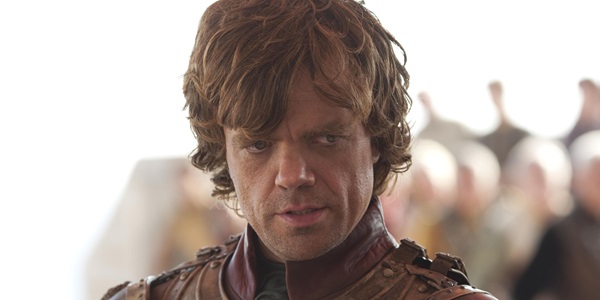
Dinklage has received critical acclaim for his portrayals of characters dealing with the realities of dwarfism in the past (see Living in Oblivion and The Station Agent) but it has been the TV series Game of Thrones and the multi-layered, and ultimately sympathetic, Tyrion Lannister that have given Dinklage a platform to show his talent to a global audience.
Anyone who has ever seen the series can attest to there being a lot meat for the actors playing the central figures to get their teeth into, and this is certainly true with Tyrion; he gets some of the best lines in the series (often as comebacks to some comment about his height) and he has some of the most comical scenes. However, there are also scenes that deal honestly with the character's disability and how he copes with the attitudes he is confronted with.
The character has a complicated relationship with his frankly vile family, and is often required to out-scheme everyone around him. However, there's no stereotyping here and, particularly in the second season, of all the characters, the audience is most on-board with Tyrion as he shows that, for all his ingenious plotting, he's one of the few characters who actually has a sense of morality and consequence.
As with all great performances, it's nigh-on impossible to imagine anyone else in the role, and every moment Dinklage is on screen is a joy to watch. This was recognised in an official capacity in 2011 when he won both the Emmy and Golden Globe for Best Supporting Actor for Tyrion.
We're just lucky there's much more to see of Dinklage in the role with the third season of Game of Thrones beginning in the states on the 31st of this month.
1. Harold Russell - The Best Years of Our Lives
