5 Classic Film Noirs You've Never Seen

Lady In The Lake Movie Film Noir. One of those few genres in which the words themselves manage to convey a sense for the genre itself. It evokes a black and white image of a world weary P.I. in a trench coat, scouring the back alleys of Los Angeles. The characters on both sides of the law are hardboiled and there's no light at the end of the tunnel. Everyone knows the classics of the genre, The Maltese Falcon, Double Indemnity, The Big Sleep, The Third Man, or some of the great Neo-Noirs like Chinatown, Blood Simple, or Mulholland Drive. These are movies which represent the genre, and they're some damn good ones too. But too often the rest of the genre is left at the bottom of the barrel, and there are great Noirs from the 1940s and 50s which slipped through the cracks of time. These are films that stretch the genre to its limits, and take dark and gritty to a whole new level. Movies which helped define the genre in its prime. Some of them could even challenge the established classics for prestige Noir status. In short, these are five films any fan of Film Noir needs to see.

5. Detour (1945)

Directed by: Edgar G. Ulmer Made on a shoestring budget and shot in twenty eight days, this short little "B" film (67 minute running time) may out-Noir most Noirs with its despair ridden atmosphere. It's a darling of the critics, but has been eclipsed in the popular sphere due to a lack of publicity and availability. Al (Tom Neal), is a lousy, self deprecating piano player who decides to hitchhike across the country to meet up with his fiancé in Hollywood. He gets picked up by a young, irresponsible bookie, Charlie Haskell (Edmund MacDonald), who inconveniently dies in an accident later that night. But Al, who's fashioned a self defeatist attitude of thinking that the world is out to get him, thinks he'll be suspected of murder. So he steals Haskell's wallet and clothes, hides the body, and drives off in his car, deciding to pose as Haskell. Of course, this is where the femme fatale enters the picture: she's another hitchhiker, Vera (Ann Savage), who Al picks up the next day. Little does he know that Vera knew Haskell, and sees right through Al's deception. She blackmails him into posing as his wife, and forcing him to continue his deception: renting out a car and apartment in Haskell's name, further incriminating Al. And when they realize that Haskell was due to inherit a large amount of money, they can't stop now. But Vera isn't always in control, there's almost a budding romance between the two of them. It amounts to two naïve people who are in way over their heads - they're both scared of being caught, and Al wants out. Vera gets drunk one night and reaches for the telephone, threatening to turn Al in to the police. She grabs the telephone and locks herself in her room, leaving Al grabbing the telephone cord through the crack under the door and trying to pull it out of her hands. All you see is him pulling and yelling at her, until finally the telephone cord goes slack and there's silence from the next room. Al bursts through the door, only to find Vera laid out on the bed, the telephone cord wrapped around her neck as her eyes stare lifelessly at the ceiling. Death follows Al wherever he goes, and there's no escape for him this time. There is no escaping fate in Detour; the characters are doomed from the very beginning, and this chronicle of their last days crushes any hope there was for redemption.

4. Lady In The Lake (1947)

Directed by: Robert Montgomery It may not be the strongest portrayal of Raymond Chandler's detective Philip Marlowe, but it's certainly the closest we get to him at a personal level. Robert Montgomery takes on the role of Marlowe as well as his directorial debut, and he does it from a first person perspective. That's right, before the age of GoPro or video game cut scenes, he decides to stage the entire movie from the perspective of, well, himself. You see the mystery unfold as if you were the one playing it out, only with Marlowe's cynical wisecracking. It seems like the perfect choice to present the internal perspective of Marlowe from Chandler's novels, and it's a daring move, but looking back it seems slightly like more of a novelty than brilliant direction. Still it does make it one of the more interesting noirs on the list from a creative standpoint. It's still the basic Chandler-esque criss crossing plot that you either love or hate, and it's a fresh take on Marlowe's iconic character after Dick Powell and Humphrey Bogart's portrayals. It's the most accurate portrayal of Philip Marlowe we've ever going to get, it's got my admiration for that.

3. Where The Sidewalk Ends (1950)

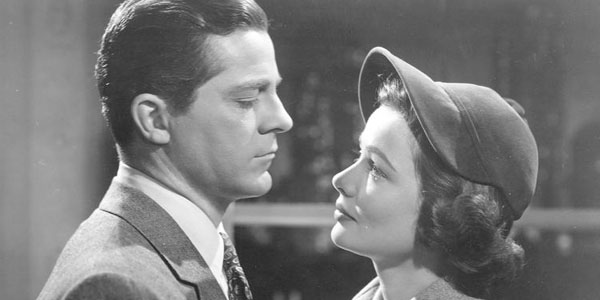
Directed by: Otto Preminger Mark Dixon (Dana Andrews) became a cop to atone for the sins of his father, a thief who died trying to escape from jail. Dixon tries to do right by the law, but when neither his colleague nor criminals can let him forgot his father's path, he can't seem to shake it off either. He's more than just a no nonsense cop, he cherishes the possibility of violence, looking for any opportunity to beat suspects. When he gets tangled up in a gang war over $19,000, he's put in a bad situation when he kills a crook in self defense. Knowing he's already under investigation for violence by the new precinct commander (Karl Marlden), he has to find a way to cover it up. Of course, it's even more complicated than all that, as Dixon gets involved with the dead man's wife, Morgan (Gene Tierney), whose father Jiggs Taylor, becomes the number one suspect in the murder of his daughter's abusive husband. Dixon's confliction about whether or not to allow the father of the woman he loves to be arrested for a crime that Dixon committed is pitch perfect. The movie is anchored by Dana Andrews. He's able to convey his character so well that the lines between virtue and vice are never clear; he's wracked with guilt over everything he does, but also finds strength and purpose in his actions. Mark Dixon is not a nice guy, he's not even as good as Philip Marlowe is - there's a brooding violence that undergirds his character, and the same violence seems to undergird the film as well. The lines between the good and bad are blurred, and the world is not a simple place.

2. The Prowler (1951)

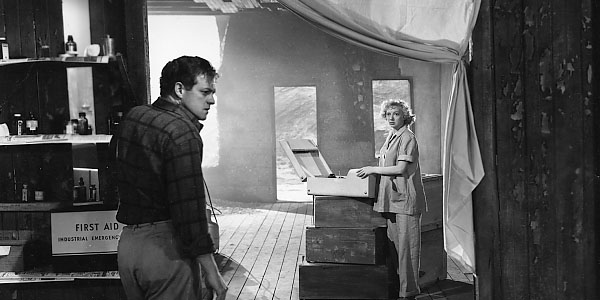
Directed by: Joseph Losey Imagine your significant other is away at work for a late night radio station, and you suddenly hear a noise outside: you know someone is creeping around outside. You call the cops, one of whom arrives, reassures you, and then proceeds to fall in love with you. The cop becomes the one creeping around outside, spying on your marriage and dreaming up ways to get rid of your S.O. That's the first half of The Prowler, and it's done fairly well, with nifty cinematography designed to almost echo the plot as it carries on. The cop, Webb Garwood (Van Heflin) invariably finds out about the life insurance policy on the husband of the woman he's having an affair with, Susan Gilray (Evelyn Keyes). Because, hey, what's a list about Film Noir without at least one insurance scam-murder plot? Naturally, Webb does what any good policeman in love with a married man would do; he kills the husband and stages it as self defense. Then he marries Susan. Now, in a conventional film, the plot would be done here. Caput. But The Prowler is edgier than that. It devolves into some of the more interesting and uniquely dark twists and turns of the genre. Now, when Susan is pregnant (before the two got married), they run away to a ghost town in the middle of the desert, and prepare for a birth in one of the deserted homes. The setting around them is lifeless, and a high strung tension pervades every shot. Webb goes into town and gets a doctor when Susan goes into premature labour, but tries to kill him to remove anyone to be traced back to him - but the doc escapes, along with the newborn, sending Webb into a rage and his true colours painted vividly on screen. By now Susan is scared for her life and beginning to realize that Webb is not as good a person as she thought, and she yells at him to get out. He goes on the run, only to find that the doctor's called the police, who are coming straight for him. It all ends with Webb being shot to death in the middle of the desolate desert landscape by his former partner. The film is daring because of its commentary on society. It builds up the American dream and then proceeds to deconstruct and psychoanalyze its characters until nothing pure remains. Author James Ellroy described it best when he called it ""a masterpiece of sexual creepiness, institutional corruption and suffocating, ugly passion."

1. Laura (1944)

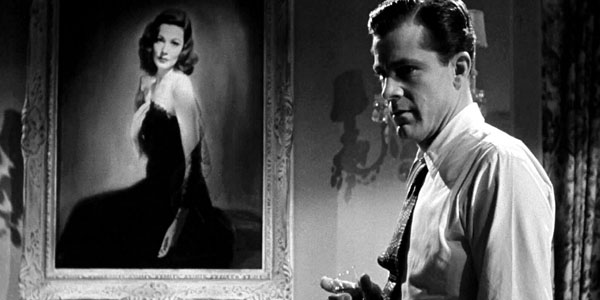
Directed by: Otto Preminger Not only was Laura nominated for five Oscars, but it also made multiple American Film Institute(AFI) lists, including scoring fourth in the mystery genre for AFI's 10 Top 10, in such company as Chinatown and The Third Man. So you may have heard of it. But for some reason it still flies under the radar in discussions about the classic Film Noirs. The second film on this list directed by Austrian director Otto Preminger, it was also the first Preminger film to star both Dana Andrews and Gene Tierney, laying the groundwork for the later Where the Sidewalk Ends. Laura follows NYC detective Mark McPherson (Dana Andrews) as the investigation of the murder of Laura Hunt (Gene Tierney) sends him round in circles, playing games with his mind. It's not like most noirs €“ instead of a dour gloom it has an elegant air to it, a mix between a British and American crime fiction. The murder itself was brutal; a shotgun blast blew away Laura's face, but the dialogue, especially from the dandy Waldo Lydecker, played to perfection by Clifton Webb, manages to spin a debonair air with lines like: "I cannot stand these morons any longer. If you don't come with me this instant I shall run amok," and "I should be sincerely sorry to see my neighbor's children devoured by wolves." He adds that sense of class and style that comes with the British fiction from the likes of Dorothy Sayers and G.K. Chesterton. It's even further set apart from most noirs at its time because of its descent into madness. Detective McPherson's sanity begins to slip as he falls in love with the deceased Laura, whose portrait looms ominously over her fireplace, watching the affairs of the living. The plot itself gets away from itself, like most Noirs, but it more than makes up for it with tone, atmosphere, and subtext.

Contributor
Contributor

Josh is a freelance writer and editor from Vancouver, B.C.