5 Essential Wrestling Movies Every Fan Should See
 Containing elements of athletic competition, show business and performance magic, professional wrestling is a secretive world of handshakes, industry-jargon and solid, unflinching dedication to a craft that thrills the dedicated fan as much as it bewilders the casual onlooker. It isn't a straight fight; that much ought to be obvious to anyone who's ever been in an actual fight, but then again, it certainly isn't the phoney baloney silliness that many people deride it as either. Pro wrestling is as hard (or harder) than any other sport on this Earth. It has no off-season and wrestlers routinely work while struggling with injuries that would send a bus driver or office worker into early retirement (no, I'm not exaggerating). Because this insular world of performance art was so secretive for so many years (some would-be wrestlers even had their eyes gouged out by overzealous pros looking to "protect the business"), it has often called out by journalists, cultural commentators, dour-faced academics and other interested parties. In the 1950's, French academic Roland Barthes did a great study of wrestling as an insight into the values and prejudices of Western culture (and he's not the only one). Books and movies about wrestling range from insightful to completely clueless. Best selling wrestling autobiographies have been written by ghost-writers with seemingly no interest in wrestling as a business, before being summarily rejected by fans, whilst films that feature wrestling in them (including one or two listed here) have often been mercilessly savaged by the industry itself. Filmmakers routinely struggle to realistically portray wrestling's delicately balanced mixture of reality and fiction (a line so blurred that even the wrestlers themselves can get confused). It is hard to capture wrestling's world of simple, black and white morality plays that are, almost always, blighted by real-life excursions into gray areas that would have the average rock band running for cover in shock and awe. Some of these filmmakers, however, did the industry justice and left me, a long-time fan, satisfied, enthralled and excited. Rather than crassly attempting to expose the business (like the risible cash-in crap-fests like Secrets of Pro Wrestling Revealed and its ilk), these films focused on the human drama at the heart of the squared circle, celebrating the wrestlers as artists or craftsmen and praising their work. Here, then, are the five wrestling movies that every true fan needs to see...
5. Bloodstained Memoirs
 As a film, Bloodstained Memoirs isn't actually very good - there, I said it (please address all hate mail to Chris Quicksilver, C/O What Culture.com). However, it does provide us with an insightful set of interviews featuring some of wrestling's biggest stars, past and present. Over 155 minutes, fan-turned director David Sinnott treats us to in-depth, uninterrupted one-on-ones with stars of the past like Rowdy Roddy Piper and Superfly Jimmy Snuka, as well as today's WWE Main Eventers like Rob Van Dam, Chris Jericho and Christian (two of which were contracted to TNA at the time). The real coup of the entire film, however, is getting Japanese stars Keiji Muto and Yoshihiro Asai (aka Ultimo Dragon) to open up in about their careers in a relaxed and intimate manner (despite Dragon still wearing his mask). The interview footage, however, is horribly shot, with numerous 'arty' close-ups of the wrestler's eyes, or, bizarrely, their teeth (unlike a well-developed body and good mic skills, oral hygiene is obviously not a pre-requisite of making it big in the business). Also, rather than being presented as cutaways, these shots are often the results of clumsy mid-sentence zoom-ins which detract from the interviews, as opposed to adding to them. The end result is as if the film was shot by a first year college student who got bored of all the talking and decided to get "experimental" on us for no justifiable reason at all. On the other hand, as a piece of oral history, the film is interesting, even engaging, but it is so dense and so lacking in narrative, that only dedicated fans need apply. Having said that, long-time fans will enjoy Jimmy Snuka recounting the famous coconut incident yet again and fans of early 2000's WWE will enjoy seeing Rob Van Dam, Chris Jericho and Molly Holly, but very little is on sale here that can't already be seen for free on YouTube. Al Snow does a great job of presenting a series of in-between segments designed to make the film look more like a cohesive whole and less than a bunch of DVD special features or interview outtakes sewn together on a miniscule budget. Ultimately, the end result is less a film and more a collection of interviews which are not inventive enough to hold the interest of casual fans. The final segment, which features Hardcore Legend Mick Foley, is simply a candid 15 minutes or so of the man signing autographs and meeting fans, with no interview conducted at the end. What we get, then, is not much better than something that could have been filmed on a smartphone. So no, I don't think Bloodstained Memoirs is a good movie. Why have I listed it here? Well, as I said, for long time fans, any access to our heroes is good access. To hear Roddy Piper recount that he didn't bludgeon Bret Hart during their Wrestlemania VIII match is a genuine treat. To see Chris Jericho speaking so eloquently about his music career is uplifting and inspiring and watching Mick Foley interact with his fans in such a genuine way is truly heartwarming. Also, I am a huge Ultimo Dragon fan, so it was great to hear what he has to say. For all its faults, Bloodstained Memoirs did bring us a little closer to some of our wrestling heroes; it didn't offer anything new, but it did allow us to share a few laughs with some seasoned pros as they recounted old (and much embellished) war stories. The interviewees are calm, at ease and comfortable, that is the real achievement of Bloodstained Memoirs.
4. The Unreal Story of Pro Wrestling
 Produced by A&E at the tail end of the 1990's, this wrestling documentary is the best visual representation of sports-entertainment's elaborate history that I've ever seen. Tracing professional wrestling right back to the days of legitimate contests at carnival "at" shows, before bringing us bang up to date (for the time), this meticulously researched film features a slew of illuminating interviews with all-time wrestling legends like Harley Race, Lou Thesz, Dusty Rhodes, Killer Kowalski and Verne Gagne, as well as latter day legends like Ric Flair, Hulk Hogan, Shawn Michaels, Big Show and many more. Entire sections dedicated to Ed "The Strangler" Lewis (arguably the most important wrestler who ever laced up a pair of boots) and Andre The Giant (the most beloved wrestler of all time), allow the viewer to trace wrestling's lineage from the carnival tent all the way to the sold out arena. Along the way, modern day fans have a chance to see some of the all-time legends in action, people like Argentina Rocca, Angelo Poffo (father of Macho Man Randy Savage), Nature Boy Buddy Rogers, Gorgeous George and Fritz Von Erich, who are all seen in their barrel-chested prime, fighting fit before unruly, fired up crowds. Academics, psychologists, amateur wrestlers and cultural commentators join in the fun, but far from being rendered as finger waggers or talking heads, their input is weighty and well considered. However, despite the sometimes academic tone of this film, it is the wrestlers who are given the last say on their business and their profession, with none other than Vince McMahon telling us "it's a magic show and we're not gonna tell you how we make our magic" as one of the bespoke academics takes his lumps from septuagenarian female wrestling legends Fabulous Moolah and Mae Young. Writer Chris Mortensen approaches wrestling as a piece of American cultural history, leaving no stone uncovered in his thoroughly objective and professional appraisal of wrestling as a captivating art form and/or guilty pleasure. Despite being (to the best of my knowledge) a made-for TV movie, The Unreal Story of Pro Wrestling is the kind of serious study that sports-entertainment not only needs, but also thoroughly deserves. Beginning with the first big World title bout between Georg Hackenschmidt and Frank Gotch and going up to today's packed pay-per-view events, wrestling has remained popular for over a hundred years, bookending the 20th century with huge surges in popularity. The Unreal Story of Pro Wrestling is a great piece of historical documentation. Possibly the best film of its kind ever made.
3. Hitman Hart: Wrestling With Shadows
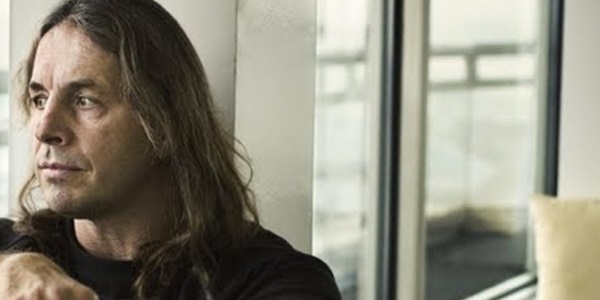 With Wrestling with Shadows, director Paul Jay was hoping to get up close and personal with one of the biggest professional wrestling stars of all time; multi-time WWF Champion Bret The Hitman Hart. Hart was being courted at the time by rival company WCW and was in the midst of contract re-negotiations. As a term of his contract, Hart requested that Jay and his team be allowed a great deal of access to the WWF, its archives and, crucially, its wrestlers. It is fortunate for Hart that he did so. The first hour of the film chronicles, cleanly and respectfully, the backstage process that goes into putting on a major wrestling show. Hart is seen working out his matches with Pat Pattersen, whilst Big Van Vader (at the time the biggest monster in the wrestling business) is shown nonchalantly discussing his real estate ventures as he laces up his boots. Life on the road is juxtaposed against footage of Hart at home with his family (in particular his youngest son, Blade). Elsewhere, Jay gets up close and personal with wrestlers like Mick Foley, Goldust, Jim The Anvil Neidhart, British Bulldog Davey Boy Smith and several others. Without the (now famous) ending, Jay would already have delivered an intimate portrait of the WWF Champion's life and career, as well as a (then rare) look inside the wrestling business. Once again, this was no tacky expose, as so many subsequent wrestling "documentaries" have been, this was an intrepid and utterly journalistic voyage into a fascinating industry. However, to use Jay's words "the Gods of documentary filmmaking were smiling on us" as the film manages to capture the incident now known as The Montreal Screwjob in its entirety. Now, the screwjob was actually a far more complicated affair than the movie makes out, but it does do a wonderful job of showing us that the wrestling business has sharp teeth and that Vince McMahon's fangs are the sharpest of all... After 14 years with the WWF, during which time Bret had struggled as hard as anyone to make it to the top of his profession, all The Hitman wanted to do was bow out gracefully before he moved to the WCW, (a company that he was so unenthusiastic about working for he'd even turned down a multi-million dollar offer to stay with Vince and the WWF). Instead of being able to leave with his head held high, the company switches on him, forcing him to lose to real-life rival Shawn Michaels in front of his family, his fans and his legendary father, Stu Hart. The WWF had even turned Bret heel (wrestling slang for a bad guy) in an attempt to alienate his fanbase and devalue his character. They had clearly been planning to get rid of him for some time. McMahon just wanted to ruin him first so that WCW would have a harder time promoting him as a star. We know this today, only because it was captured on camera by Paul Jay and High Road Productions. Without this film, Vince McMahon's po-faced fabrications that Bret "sold out" and left for the money, or that he was unwilling to be professional and lose his belt when told to (he just didn't want to lose in Canada or to Shawn Michaels for personal reasons) would have quite possibly become accepted as facts. A touching portrait of Bret Hart in his prime that then gives way to a detailed account of one of the most shocking events in wrestling's long history, Wrestling With Shadows is powerful, earnest and utterly heartbreaking. Exquisitely cinematic, the final scenes of this film will haunt you for years, whether you are a wrestling fan or not.
2. The Wrestler
A powerful, brutally resonant film, Darren Aronofsky's The Wrestler is a stark, warts-and-all character study of a fictional wrestler called Randy "The Ram" Robinson. Robinson, magnificently portrayed by Mickey Rourke, is an 80's wrestling star whose limelight has faded sufficiently enough to have him working in a supermarket and spending his nights with middle-aged mum-turned-stripper, Cassidy (played by George Costanza's favourite actress, Marissa Tomei). Dragging elements wholesale from several other films on this list lent the movie a credibility with wrestling fans that it wouldn't otherwise have and, whilst many wrestlers rushed to bury the film, even more of them openly praised its harrowing, yet sadly accurate, portrayal of the life of a washed-up wrestler. The film isn't really about wrestling, though. It is a dramatic piece about a man coming to terms with his demons (or not, as the case may be). There are problems with the believability of events (at least there are if you are a long time wrestling fan), but when viewing this movie, you have to understand that The Wrestler is about all wrestlers, and none, at the same time. Brilliantly directed, with excellent sound editing and a superb script, The Wrestler was another film that handled the wrestling industry with dignity, poise and heartfelt understanding. A career-best performance from Rourke (that none other than Bret Hart described as "clairvoyant"), gave us a character that we could relate to, whether we wanted to or not. The film is touching, poignant and incredibly humane. It is also an absolutely gutwrenching tragedy that will leave you overwhelmingly moved.
1. Beyond The Mat
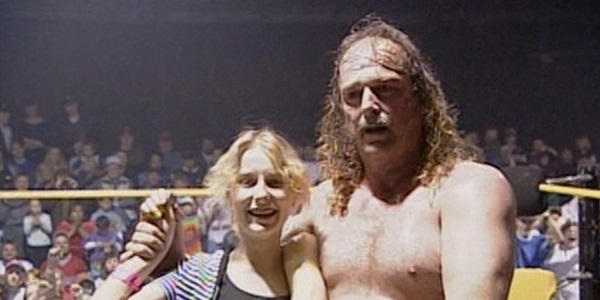 In my opinion (and if you disagree, write your own article), the best wrestling movie ever made is Beyond The Mat. Released in the final days of the 20th century, Beyond The Mat was a labour of love undertaken by Hollywood screenwriter and lifelong wrestling fan Barry W. Blaustein. Although a writer by trade, Blaustein proves himself to be an excellent director, especially when it comes to handling human drama. Delivered with personality, humour and an underlying sense of pathos, Beyond the Mat emerges as easily the definitive wrestling documentary. This movie represents the high water mark in wrestling movies. Put simply: it is the one to beat. BTM is consistently fascinating from start to finish. Like a nature documentary, we switch between several "characters", forming a narrative structure that is as clever as it is compelling. Blaustein understands that observation is only the first step towards making a good documentary film. By interweaving personal profiles of several wrestlers (in particular Jake "The Snake" Roberts, Mick Foley, Droz, Chyna, Terry Funk and New Jack), he is able to avoid turning the film into a study of any one person and instead shines a light on the entire wrestling industry. The narrative succeeds by interweaving autobiographical elements from Blaustein's own life ("growing up, my favourite wrestler was Terry Funk", he tells us, before we meet Funk for the first time) with his own responses to what his camera captures (his concern for Mick Foley's well-being still appears to be 100% genuine, even all these years later). In this way, Blaustein adds a personal flavour to his film, putting us in his place behind the camera, rather than forcing us to simply observe the (sometimes harrowing) goings on. Blaustein also conducts superb interviews, getting very personal discussions out of people who are usually a lot more tight-lipped with outsiders. Jake The Snake appears at his most tragic and cathartic, caught in a freefall of cocaine, family problems and aching regret (although, I am delighted to point out that Mr. Roberts has since bounced back and is petitioning WWE to appear in next year's Royal Rumble PPV sign the petition HERE). Terry Funk is seen openly weeping at his daughter's wedding and Mick Foley is candidly captured playing with his children in scenes that are especially sweet when juxtaposed against brutal images of the proud dad having his head split open by The Rock and being thrown from the roof of the Hell in a Cell structure by the aptly-named Undertaker. Elsewhere, we see great interview footage of Vince McMahon, as well as rare glimpses of Stone Cold Steve Austin out of character. A personal favourite moment is the circular conversation (that my brother and I love to re-create) between Terry Funk and "The Cockroach King" Dennis Stamp, it goes something like this...
Terry: "I want you to be there, why won't you be there?" Dennis: "I'm not booked. I'm not on the card." Terry: "But I want you to be there. Please be there." Dennis: "I told you, I'm not booked." Terry: "But I want you to be there, why won't you be there?" Dennis: "I really have to be involved in some way, and I'm not." Terry: "But I really want you to be there." Dennis: "I'm not booked!" Etc, etc...We also get to go behind the scenes at ECW's first-ever pay-per-view, as well as numerous Indie shows, as Blaustein interviews wrestlers, promoters and managers from all levels of the sport, with profiles ranging from starstruck dreamers to retiring legends, all handled with care and dignity. In my opinion, no wrestling film has been as hard-hitting, as honest, or as savagely compelling as Beyond The Mat. This is truly a thorough, passionate dissection of the modern wrestling business by a very gifted film maker. At its core, however, Beyond the Mat is just the story of a true wrestling fan trying to do justice to the business he loves, (and, in turn, trying to explain why he loves it, both to himself and to his audience). There may be a lot of blood, guts, barbed wire (and even fire) in this movie, but beyond all of that is a beating, human heart, a heart in love with wrestling. So that's it, the top 5 wrestling movies that every fan should see. Have I missed any out? Or do you just hate the movies I chose? Let me know in the comments section (steel chairs provided as you sign in, courtesy of the management).