50 Essential Sci-Fi Films of the 21st Century (So Far)
20. Minority Report (2002)

Steven Spielberg’s second-best sci-fi of the 21st century takes Tom Cruise before he was an adrenaline junkie, and uses his star power and acting chops in equal measure to deliver a tense and action-packed version of Philip K. Dick's 1956 novella The Minority Report.
Set in a future where serious crime is predicted by psychic humans (precogs) and stopped by the elite Precrime police program before it can ever happen, Minority Report focuses on Chief John Anderton (Cruise), the commanding officer of Precrime, who runs afoul of the system. When the precogs predict the chief will kill a man he has never met, Anderton goes on the run from DoJ agent Danny Witwer (Colin Farrell) and his team, while attempting to clear his name.
Rather than a run-of-the-mill action hero, Minority Report deftly offers a flawed lead, one besieged by the tragedy of his lost son, the departure of his wife, and his addiction to drugs. With elements of noir, cyberpunk, mystery, thriller, and other genre elements, the story is sprawling and layered, and in the hands of a less seasoned director could have been an absolute mess. As things stand, Spielberg manages the material with grace, elegance, and the dramatic visual storytelling we expect from him - and the relative brevity of Dick’s novella allowed him and writers Scott Frank and Jon Cohen to flesh the film out into something gripping but with that signature feel-good Spielberg ending.
19. Moon (2009)

Duncan Jones’ Moon pays homage to the history of science fiction while creating something new.
Sam Rockwell plays Sam Bell, a miner on the dark side of the moon who lives a solitary existence, waiting for his work cycle to end so he can get back to Earth and see his family again. But just like any hard-boiled cop on the last case of his career, there’s no way he’s getting out of this alive. Sam uncovers a unit full of his doppelgängers on the base where he lives, ready to replace him in the very likely event of his death. Thus, he is thrust into action, seeking a way to outlive his limited lifespan, break the cycle, and get home.
A wry commentary on capitalism, filtered through science fiction, Moon wraps up a compelling story with grounded, believable characters in a nifty, 97-minute package. The retro aesthetic no doubt stemmed from budget constraints, but it works perfectly for the material, and while the Kevin Spacey-voiced AI companion may not have aged so well in light of more recent events, this is all too easy to overlook.
A small, satisfying indie flick, Moon still feels fresh thanks to its charismatic lead, smart writing, and central mystery. And it beat Bong Joon Ho’s Mickey 17 to the punch by over a decade and a half.
18. Coherence (2013)

Despite having been with us for 12 years now, James Ward Byrkit’s micro-budget feature (seriously, this was made for $50k!) has still not enjoyed the airing it deserves, despite being widely regarded as an outstanding contribution to the science fiction genre.
The setup is simple: a group of eight friends (including Nicholas Brendon and Lorene Scafaria) attend a dinner party on the night of Miller's Comet, where they laugh, tease, flirt, and argue, before the power goes out. Everyone takes a coloured glowstick, and things immediately ratchet up a notch as they investigate one house on their block that still has its lights on. Inside this house is another group of eight revellers - or, the same group, but from another reality - and this is where the fun begins, as they discover more houses from other versions of reality, and their members converge and clash, losing their points of origin and sabotaging each other in a quest to be in the one remaining reality when the comet has gone.
Coherence takes a dinner table drama and transports it across dimensions, using the character flaws and quirks of everyone involved with the cosmic-level event to build a tense and unrelenting narrative, beginning to end. Byrkit’s script packs a punch in every scene, keeping us on our toes as the strangeness expands and the established rules go out the window. And it looks, sounds, and is acted like a production with, quite literally, 100x the budget.
17. Dredd (2012)

With Pete Travis behind the lens, Alex Garland on the pen, and Karl Urban locked up tight under that iconic helmet, Dredd arrived in 2012, taking us forward to the year 2080, where the Earth is now comprised of sweaty, steamy, overpopulated Mega-Cities with state-of-nature wastelands in between. The only law is the Judges, a policing force who judge, sentence, and execute criminals at their pleasure.
Urban is Dredd, a seasoned Judge tasked with clearing out a slum tenement and assassinating the drug lord at its top, Ma-Ma (Lena Headey). Along for the ride is rookie Judge Anderson (Olivia Thirlby), whose psychic abilities throw something helpful, new, and interesting into the mix in what is essentially The Raid on steroids. The visuals are crisp, the kills bloody, and the humour wry as hell.
A nigh-perfect cinematic adaptation of the 2000 AD source material, which nails the tone and feel of Judge Dredd while bringing his world into a mesmerising three dimensions, Dredd has sadly yet to be followed up with a sequel 13 years later, thanks mainly to poor fan attendance in cinemas.
16. Snowpiercer (2013)

Seamlessly adapted from French graphic novel Le Transperceneige by Jacques Lob, Benjamin Legrand, and Jean-Marc Rochette, Bong Joon Ho’s Snowpiercer touches down on the titular train, a self-sustaining circumnavigational train that batters across the face of a wintry Earth, keeping the last vestiges of humanity alive.
On board, things are not a cushty socialist paradise where everyone works together for the greater good, but a strictly divided system, running from the rich and spacious forward carriages to the cramped, poverty-stricken conditions in the rear. Chris Evans is Curtis Everett, a survivor from the wrong end of the train who leads his fellow passengers in revolt against the upper classes, battling forward through carriage after carriage to take control of the engine and overthrow the tyrannical Wilford (Ed Harris).
Bong's English-language debut manages to keep most of the themes of the graphic novel intact, especially its focus on the impact of man-made climate change, but expands the focus more to look at social class. Due to a conflict of opinion between Bong and Harvey “Scissorhands” Weinstein, Snowpiercer was held up for release in the West, and after switching distributors and going through hell, it got a release - but never the one this 21st-century 1984 deserved.
15. Ex Machina (2014)
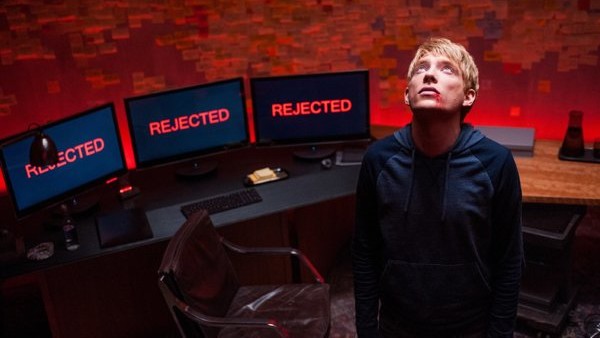
Yet another Alex Garland joint, Ex Machina is what you would get if you took the first scene of Blade Runner, mixed in a big helping of Her, and capped it all with a few shots of Westworld.
Caleb Smith (Domhnall Gleeson) wins an invite to his boss, wacko tech CEO Nathan Bateman’s private underground space (Oscar Isaac). Here, he gets the opportunity to meet the big guy's alluring android Ava (Alicia Vikander), whose AI has been developed to a near-human spec, and on whom Caleb is tasked with administering a series of ongoing, face-to-face tests to see if she can really pass for a person. What Caleb doesn’t realise is that he’s the one being tested by Nathan, who has brought the two of them together to see if Ava will seek escape, and if she is capable of manipulating Caleb’s emotions to do so. And yet there is another, further layer to proceedings, as Ava has an agenda all her own.
Ex Machina takes the Turing test and turns it into a rather sinister feature film, in which every conversation and connection is a test, challenging us to engage at every twist and turn, to keenly observe every interaction, and to decide for ourselves what constitutes consciousness.
14. Timecrimes (2007)

Nacho Vigalondo’s low-budget, Spanish-language sci-fi horror may not have made a big splash at the time of its release (taking only around a fifth of its budget at the box office), but in the years since it has earned its status as a modern cult classic.
The indie time travel flick follows Héctor (Karra Elejalde), a man who just wants to live a quiet life with his wife in their home in the Spanish countryside. However, when he spots a woman stripping off in the woods, he can’t help but investigate, and is drawn into a fatal game of cat and mouse with a bandaged man, whom he tries to combat - repeatedly - using a time machine.
Like Predestination, Timecrimes deals in the consequences of a single, fixed timeline that can’t be changed, no matter how many times you go back - because everything that you’re going to do, you have already done. So Héctor finds out, as he makes error after error, spurred on by the blunders of his future selves.
Despite the lofty context of time travel, Vigalondo uses a cold, realist palette and keeps his action grounded - no space lasers, no neons, no explosive setpieces; just a man, his mistakes, and his conscience.
13. Her (2013)

Lost in Translation and Her: Two films about the (end of the) same marriage, but only one of them is science fiction, and it’s a doozy. While Sophia Coppola was basking in the praise she rightfully deserves for her moody alt-romance back in 2003, Spike Jonze was biding his time, waiting a whole decade to unleash the best sci-fi romance movie ever made - and his solo screenwriting debut to boot.
Her stars Joaquin Phoenix as Theodore Twombly, a gentle, reclusive man who, in the wake of a failed relationship, finds himself in love with his operating system. She’s got a lot more going for her than the latest Linux, though, with an AI core, the voice of Scarlett Johansson, and the very human name Samantha. One might be forgiven for thinking she was made to fall in love with.
Jonze places us in an ever-more recognisable near-future, with a story that puts AI to use in turning the tragic and profoundly human plight of its protagonist into a conundrum on the meaning and limits of personal connection, and the over-reliance on technology. Samantha helps Theo grow, but ultimately, he must face reality: for all intents and purposes, she is not real, and he needs to rejoin the world.
And, as if that, the magnificent lead performances and the soft, artful cinematography weren’t enough, wait for the final sequence when - true to Jonze’s absurdist leanings - the OSes all up and leave for a better place.
12. Spider-Man: Into the Spider-Verse (2018)

With most Marvel content designed by studio executives and financiers to fit into a 35-film, 10-year plan, with its aesthetic, tone, and characters all cut from the same template, Spider-Man: Into the Spider-Verse came out of nowhere. And this is in no small part because everyone involved - including producer Christopher Miller, writer Phil Lord, and directors Bob Persichetti, Peter Ramsey, and Rodney Rothman - had a vision, a new style, and the trust of the major players.
Into the Spider-Verse gives us our first cinematic outing with Miles Morales (Shameik Moore), and sidesteps the tired Peter Parker origin, diving into a fresh mythos. Miles is a high-schooler with a cop father and a crook for an uncle, whose brush with a radioactive spider gives him the classic powers plus a few new ones. However, while discovering his new abilities, he faces his first big challenge, as other Spideys - including Peter Parker (Jake Johnson), Spider-Gwen (Hailee Steinfeld), and an assortment of weird and wonderful Web-heads, including Nic Cage’s sublime Spider-Man Noir - join him to save the multiverse.
The script is familiar yet inventive, offering a plethora of new sci-fi elements and alternate characters that jell well with the world we know. The soundtrack uses hip-hop and R&B artists almost exclusively, both capturing and setting the zeitgeist. And the animation style is groundbreaking, blending computer graphics with hand-drawn comic book techniques for a vibrant, kinetic appearance that pays more than lip service to the source material. Excelsior!
11. Inception (2010)
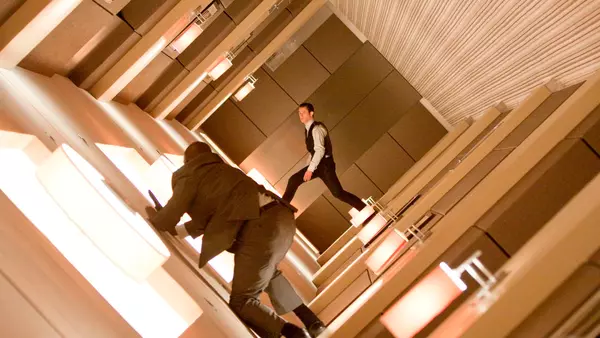
Post-Dark Knight, there wasn’t a budget Warner Bros. wouldn’t trust Christopher Nolan with, and Inception is the proof of that. The director’s first mega-budget, all-star feature that wasn’t a superhero movie, Inception marries his bold conceptual and philosophical ideas with blockbuster filmmaking, as the first in a strong run of epically cinematic sci-fi films.
Leonardo DiCaprio’s Dom Cobb is a professional thief who steals classified information and corporate secrets from the subconscious of his targets’ minds. But when he’s hired to do the opposite - to implant an idea in the head of business empire heir Robert Fischer (Cillian Murphy) - he must hire a crack team of Nolan regulars, including Michael Caine, Tom Hardy, and Joseph Gordon-Levitt, to plan and execute a descent through the many layers of the mind. As if that wasn’t enough, he’s being stalked through these dreamworlds by the memory of his dead wife, Mal (Marion Cotillard).
A grand analogy for filmmaking that doesn’t get too bogged down in this one idea, Inception offers a multitude of philosophical entry points, while bedding the whole thing in explosive action setpieces (and the deafening audio design to go with it), sharp dialogue, top-tier performances, and a twisty yet ultimately sensical plot. And that’s without saying anything of the technical wizardry necessary to bring some of these dream-state scenes to life; all but unmatched across the science fiction canon.